
Care-E-Well Insights
Swim Diapers: What They Do and Do Not Contain
Swim diapers help contain stool but do not work like absorbent diapers. Learn what they can and cannot do, plus safe pool hygiene.
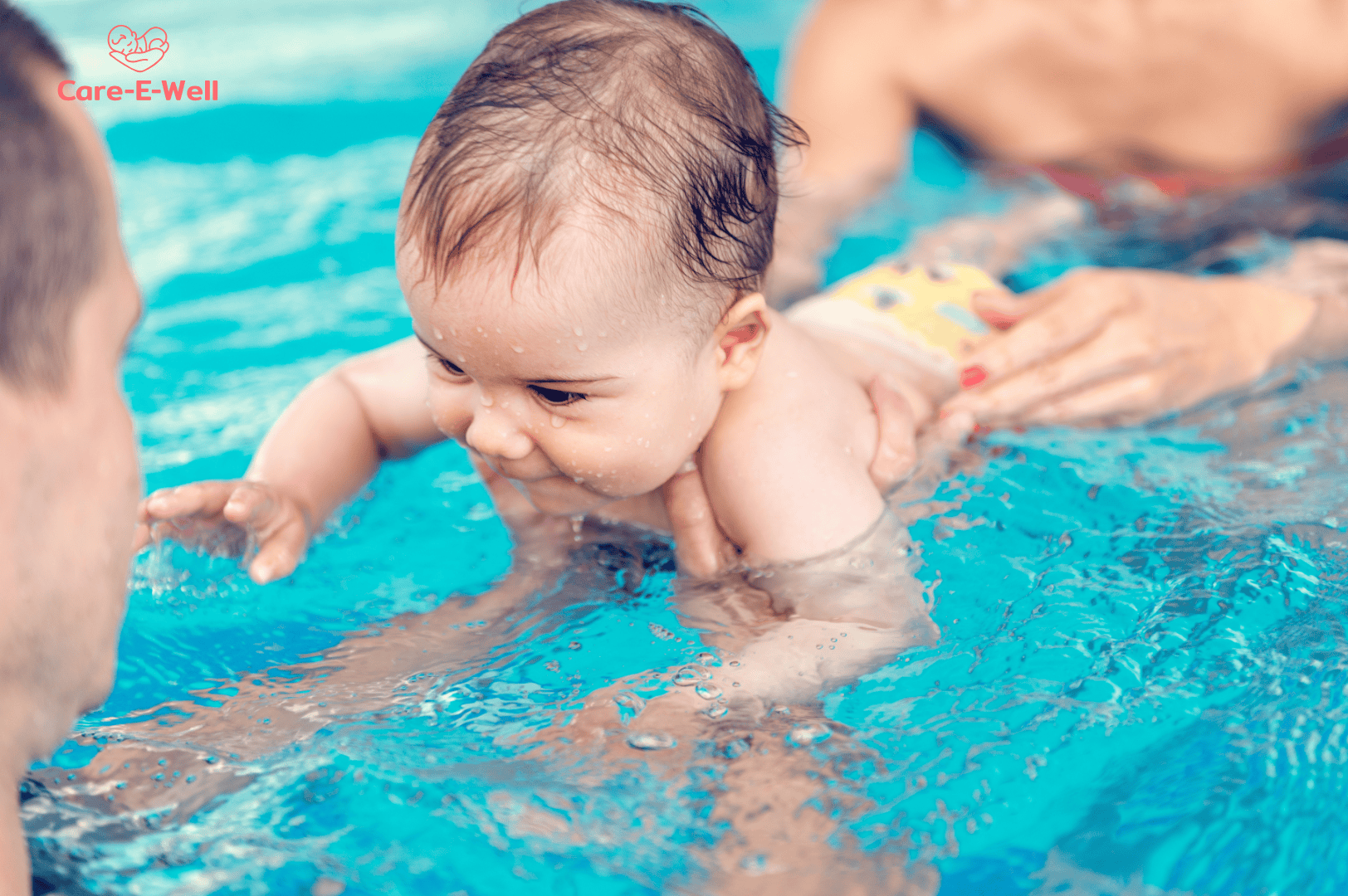
Swim diapers are designed for water, but they are not ordinary diapers that happen to be waterproof. Their main practical purpose is to reduce the chance that solid stool escapes into a pool or other swimming area. They are not designed to hold urine the way a highly absorbent daytime diaper does.
That distinction matters because parents can otherwise expect too much from them. A swim diaper does not make a baby hygienically “sealed,” does not prevent every faecal leak, does not protect against drowning and does not make swimming appropriate when a child has diarrhoea. Think of it as one layer of containment within a wider water-safety and hygiene routine.
A swim diaper can help contain solid stool, but it is not a urine-proof seal, a substitute for changing, or a water-safety device.
What is a swim diaper?
A swim diaper is a reusable or disposable garment made for use in water. Unlike a standard absorbent diaper, it is designed to stay relatively light and functional when wet rather than swelling dramatically with pool or bath water.
Most designs use snug elastic around the waist and legs to help contain stool. Reusable versions often use washable fabric and an inner layer; disposable versions use lighter single-use materials.
The exact construction differs by brand, so always read the size, fit, washing and disposal instructions for the product you use.
What do swim diapers actually contain?
Their main useful role is containing formed or semi-formed stool long enough for a caregiver to notice and remove the child from the water. A close fit around the thighs and waist helps reduce leakage.
They are not perfect barriers. Loose stool can escape through gaps, and a large bowel movement can overwhelm the diaper. That is why pool hygiene rules usually require immediate removal from the water after a bowel movement.
No swim diaper should be treated as permission for a child with diarrhoea to enter a pool.
Do swim diapers hold urine?
Not in the same way as ordinary absorbent diapers. A swim diaper has to function while surrounded by water, so it cannot rely on a large highly absorbent core without also absorbing the pool or sea water around it.
This means urine can pass into the surrounding water. Parents should not expect a swim diaper to keep a swimsuit, pool or caregiver completely dry before or during swimming.
For the journey to the pool, use a normal diaper and change into the swim diaper shortly before entering the water.
Why not use a normal diaper in the pool?
A standard disposable diaper is designed to absorb liquid. In water it can become very heavy and bulky, which may distort the fit and make movement awkward.
A saturated ordinary diaper can also sag away from the legs and waist, reducing its ability to contain stool. The design is simply not intended for swimming.
If the child needs a normal absorbent diaper before entering the water, change into the swim diaper at the poolside and put a fresh normal diaper on after swimming.

Can a swim diaper prevent pool contamination?
It can reduce the chance of an obvious stool release, but it cannot eliminate contamination risk. Recreational water can transmit illness when faecal contamination occurs, which is why water-quality management, hygiene rules and exclusion during diarrhoeal illness matter.
WHO recreational-water guidance treats faecal contamination as a public-health concern. A swim diaper is therefore a practical containment tool, not a substitute for facility hygiene or illness precautions.
Should a baby swim with diarrhoea?
No. A child with active diarrhoea should stay out of shared swimming water until the illness has resolved according to local public-health or facility guidance.
Watery stool is much more difficult for any swim diaper to contain, and diarrhoeal illness can spread through contaminated water. The child may also be at risk of dehydration and may not feel well enough for swimming.
Seek medical advice for repeated watery diarrhoea with markedly fewer wet diapers, poor drinking or feeding, repeated vomiting, blood in the stool, unusual sleepiness or a child who looks unwell.
How should a swim diaper fit?
It should fit closely around the waist and thighs without deep pressure marks, pain or restricted movement. Gaps at the legs make stool leakage more likely.
- choose the size from the product's own guide
- check both leg openings while the child is standing or being held upright
- make sure the waistband stays in place when the child moves
- avoid a size so tight that elastic digs deeply into the skin
- replace reusable swim diapers when elastic becomes loose
Do not choose a larger size simply to make dressing easier if it creates visible gaps.
Should you wear a swimsuit over a swim diaper?
You can, and many families do. A swimsuit can help keep a reusable swim diaper in place and provides sun or warmth coverage depending on the design.
The swimsuit is not an extra stool barrier unless it has a specific integrated swim-diaper function. Do not rely on a loose swimsuit to correct a poorly fitting diaper.
Disposable or reusable swim diapers?
Both can work. The practical difference is mainly convenience and washing.
- disposable swim diapers are easy for travel and require no laundering
- reusable swim diapers create less single-use waste and can be used repeatedly
- reusable options require hygienic washing and complete drying
- either type must fit closely
- neither type makes diarrhoeal swimming appropriate
Choose the system that is easiest for your family to use correctly.
How often should you check a swim diaper?
Check it regularly and whenever you suspect a bowel movement. Do not leave a soiled swim diaper on a child because the garment is “for swimming.”
Pool rules may specify particular checking or changing intervals. Follow the facility's hygiene requirements even if they are stricter than your normal routine.
What should you do if the child poops in the swim diaper?
- Remove the child from the water immediately.
- Move to the designated changing area.
- Remove the swim diaper carefully so stool does not spread onto surrounding surfaces.
- Clean the child's skin thoroughly but gently.
- Place a disposable diaper in the appropriate waste bin or store a reusable one securely for washing.
- Wash your hands with soap and water after handling stool.
- Follow the pool's instructions about when the child may return to the water.
If stool has escaped into the pool, tell staff rather than trying to hide the accident. The facility may need to follow a water-treatment protocol.
Can you change a swim diaper beside the pool?
Use the designated changing area whenever possible. Changing directly on poolside furniture, tables or eating surfaces can spread faecal contamination.
Prepare a clean mat, fresh diaper, wipes or water, clean clothes and a bag for the used garment before starting.
What should you use to clean the child after swimming?
Rinse chlorine, salt or lake water from the skin when practical, especially if the child has sensitive skin. Dry skin folds gently and put on a fresh normal diaper.
You do not need harsh antiseptic soap after every swim. A mild child-appropriate cleansing routine is usually enough.
Can a swim diaper cause diaper rash?
It can contribute if wet fabric rubs the skin for a long time. Pool chemicals, salt, sand, heat and prolonged moisture can add irritation.
Change out of the swim diaper after leaving the water, rinse or clean the diaper area, pat dry and use a fresh normal diaper. If the skin is already sore, consider shortening water time and simplifying skin products.
Persistent, spreading or severe rash needs professional assessment rather than repeated product changes.
Are swim diapers safe for newborns?
The bigger question is whether swimming itself is appropriate for that newborn. Very young babies lose heat easily and need careful thermal protection. Pools also vary in temperature, hygiene and admission rules.
Ask your maternity or paediatric care team if you are uncertain about swimming with a very young, premature or medically vulnerable baby.
A swim diaper does not protect a newborn from cold, infection or drowning.
Do swim diapers make water play safe?
No. Drowning prevention is separate from diaper choice. WHO identifies young children as a particularly high-risk group and emphasizes close adult supervision around water.
Stay within immediate reach of a baby or young child in or near water. A swim diaper, inflatable aid or swimming lesson does not replace active adult supervision.
Can babies wear swim diapers in a paddling pool?
Yes, if the pool is being used for swimming or water play and the diaper fits correctly. The same hygiene principles apply: no swimming during diarrhoea, remove the child after stooling, clean the child promptly and wash hands.
Paddling pools also create a drowning risk. Empty or secure them when not in use so a child cannot access standing water unsupervised.

Can a swim diaper be worn under a wetsuit?
Usually yes if the wetsuit and diaper still fit comfortably, but check the swim-diaper and wetsuit instructions. Too many tight layers around the groin can increase friction.
Make sure you can still check and change the diaper without keeping the child in wet clothing for an unnecessarily long time.
How do you wash a reusable swim diaper?
Remove stool first and wash according to the manufacturer's instructions. Use a suitable detergent, rinse adequately and dry completely before reuse.
Do not assume every reusable swim diaper tolerates bleach, very hot water or tumble drying. Waterproof coatings and elastics differ.
Wash your hands after handling a stool-soiled swim diaper.
What should you pack for swimming with a diapered child?
- normal diaper for the journey
- correctly sized swim diaper
- spare swim diaper
- changing mat
- wipes or clean water and cloths
- fresh normal diaper for after swimming
- dry clothes
- bag for wet reusable items
- waste bag if appropriate
- towel
A spare swim diaper matters because a bowel movement can end the useful life of the first one immediately.
What about hotel pools and holiday rentals?
Do not assume every pool follows the same hygiene rules. Check local signs or ask staff about swim diapers, changing areas and exclusion after diarrhoea.
Water safety also deserves a fresh assessment in unfamiliar accommodation. WHO emphasizes barriers, supervision and safe interaction with water; a “family-friendly” label does not remove those responsibilities.
Frequently asked questions
Can a swim diaper hold pee for the drive to the pool?
It is not designed like a normal absorbent diaper. Use a standard diaper for travel and change shortly before swimming.
Do I need a reusable cover over a disposable swim diaper?
Some pools require a second fitted cover. Follow the facility's policy and the product instructions.
How many swim diapers should I bring?
Bring at least one spare. A single bowel movement may require an immediate change.
Can a child with loose stool wear two swim diapers?
Doubling diapers does not make active diarrhoea appropriate for shared swimming water. Keep the child out of the pool while ill.
Does a swim diaper prevent drowning?
No. It has no flotation or rescue function. Active adult supervision remains essential.
The key takeaway
Swim diapers are designed mainly to help contain stool while a baby or young child is in water. They do not hold urine like a standard absorbent diaper, cannot guarantee that faecal material will stay contained and must never be treated as a safety device. Use a normal diaper before and after swimming, check the swim diaper regularly, keep children with diarrhoea out of shared water and stay within immediate reach whenever a young child is in or near water.
Sources and References
- World Health Organization — Guidelines on recreational water quality: Volume 1 Coastal and fresh waters
- World Health Organization — Drowning
- World Health Organization — Seven strategies to prevent drowning: technical package for policy-makers
- World Health Organization — WHO guideline on the prevention of drowning through provision of day-care and basic swimming and water safety skills
- World Health Organization — Preventing drowning
- World Health Organization — Diarrhoeal disease
- World Health Organization — Keeping newborns and children under 5 years clean and safe
- World Health Organization — Guidelines on hand hygiene in community settings
- UNICEF Parenting — How to teach your kids handwashing
Did this Insight help?
A little love for something worth reading.


