Care-E-Well Insights
Cradle Cap: Gentle Care and When to Seek Advice
Learn gentle cradle cap care, what to avoid, what evidence says about treatment, and when your baby's scalp needs medical advice.

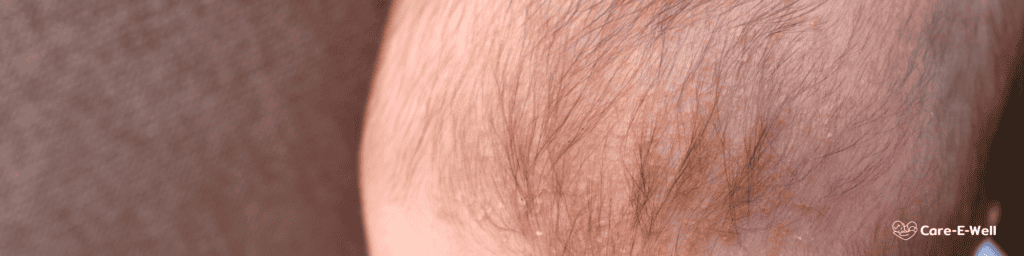
Cradle cap is the familiar name for infantile seborrhoeic dermatitis on the scalp. It usually appears as greasy, yellowish or whitish scales and may sit on slightly pink skin. In most otherwise well babies, it is harmless and gradually settles without intensive treatment.
The useful goal is not to remove every scale immediately. Gentle washing and careful loosening of flakes can improve the appearance while protecting the skin underneath. Picking, scraping and repeatedly treating the scalp with strong products can create more irritation than the cradle cap itself.
Cradle cap usually needs patience rather than aggressive treatment. Soften and loosen scales gently, keep the scalp clean, and seek advice if the skin becomes very inflamed, broken, weeping or uncomfortable.
What is cradle cap?
Cradle cap is a form of infantile seborrhoeic dermatitis that commonly affects the scalp during early infancy. Typical scales can look oily or waxy and may form patches or a more continuous layer. Some babies also have seborrhoeic dermatitis around the eyebrows, behind the ears, beside the nose or in body folds.
Its exact cause is not fully settled. Sebaceous-gland activity and Malassezia yeasts that normally live on human skin have both been implicated, but cradle cap is not simply a sign that a baby's scalp is dirty or that parents have washed it incorrectly.
Does cradle cap bother babies?
Mild cradle cap often looks more dramatic than it feels. Unlike atopic eczema, it is frequently not very itchy. A content baby with greasy scalp scales and little inflammation usually does not need urgent treatment.
Significant itching, obvious pain, extensive redness or repeatedly broken skin makes the picture less typical. Those features can occur with another condition or with more severe dermatitis and deserve professional assessment.
What does the research say about cradle cap treatment?
Evidence is surprisingly limited. A Cochrane review of treatments for infantile seborrhoeic dermatitis found only a small number of trials and judged the certainty of evidence for treatment comparisons to be very low. That means parents should be cautious about claims that one shampoo, cream or oil is a proven best treatment.
Later reviews have reached a similar practical conclusion: cradle cap is self-limiting for many babies, and inexpensive gentle measures are reasonable first steps. Medicated options may help selected cases, but they are not necessary for every infant.
Improvement often happens with time, so a treatment that seems to “cure” cradle cap may partly coincide with its natural resolution. This is one reason the evidence for specific products is difficult to interpret.
How can you care for mild cradle cap at home?
- Wash your hands and choose a calm time when your baby is comfortable.
- Wet the scalp with comfortably warm water.
- Wash gently with a mild baby shampoo or cleanser, using your fingertips rather than your nails.
- If scales are firmly attached, soften them first with a small amount of a plain, fragrance-free emollient or petrolatum for a short period.
- Use a very soft baby brush or soft cloth to loosen only the scales that release easily.
- Wash or rinse away the loosened scale and any remaining emollient.
- Pat the scalp dry and leave any stubborn patches for another day rather than forcing them off.
You do not need to complete all the scale removal in one session. Treating a small area gently over several washes is kinder to the skin than trying to lift a thick crust at once.
Should you use oil on cradle cap?
Parents are often advised to soften scales before washing, but “oil” is a broad term. A plain fragrance-free emollient or petrolatum gives you a more predictable option than a fragranced cosmetic oil or essential-oil blend. Apply only enough to soften the scale and wash it away afterwards.
Avoid essential oils on a baby's scalp. They are not necessary for cradle cap, can irritate sensitive skin and may contain potent fragrance compounds. Food oils are also not automatically suitable for infant skin simply because they are natural.
Should you wash cradle cap every day?
More washing is not always better. Some babies tolerate gentle scalp washing frequently, while others become dry or irritated. Base the routine on how oily the scalp is, how the skin responds and whether scale is building up.
Use a mild baby-appropriate cleanser and rinse thoroughly. If the scalp becomes increasingly red or dry after more frequent shampooing, reduce the frequency and simplify the products rather than scrubbing harder.
Can you brush or comb cradle cap out?
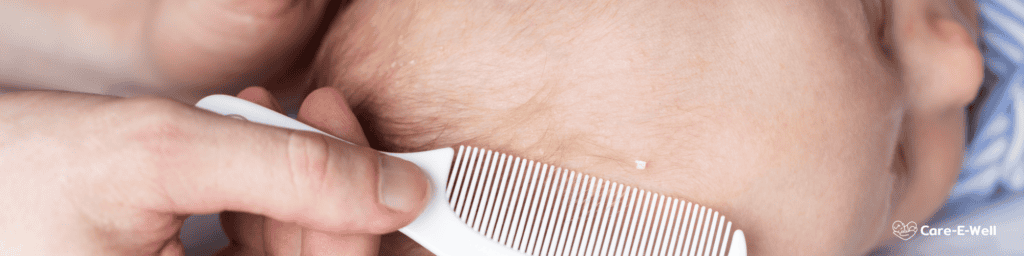
A soft brush can help after scales have been softened, but it should glide over the scalp rather than scrape it. Stop if the skin becomes red or a scale resists gentle movement.
Fine-toothed combs, fingernails and hard brushes can lift attached skin as well as scale. That can cause tiny wounds, bleeding and secondary irritation.
What should you never do to cradle cap?
- Do not pick or peel firmly attached scales.
- Do not scratch the scalp with fingernails.
- Do not use adult anti-dandruff shampoo unless a clinician specifically recommends a product and explains how to use it.
- Do not apply essential oils or strongly fragranced products.
- Do not repeatedly use medicated creams left over from another family member.
- Do not assume every scaly scalp rash is cradle cap if the baby is uncomfortable or the skin looks infected.
When might a clinician recommend medication?
If cradle cap is persistent, extensive or significantly inflamed, a clinician may consider an antifungal treatment or a short course of an appropriate low-potency anti-inflammatory treatment. These medicines have a role in selected infants, but the choice, strength, formulation and duration matter.
The evidence does not justify routinely treating every case with a medicated shampoo or steroid. Young infant skin absorbs topical products differently from adult skin, and treatment should match the actual diagnosis.
Do not start a steroid cream, antifungal medicine or medicated dandruff shampoo on a young baby simply because it is available at home. Ask a healthcare professional which product, concentration and duration are appropriate.
How can you tell cradle cap from eczema?
Cradle cap tends to produce greasy scales and often causes little itch. Atopic dermatitis more often brings dry, inflamed and itchy skin, although the two conditions can overlap and early presentations are not always easy to distinguish.
Seborrhoeic dermatitis can also affect the eyebrows, folds around the nose, behind the ears and the nappy or body-fold areas. Because several infant rashes share these locations, appearance alone is not always enough for a confident diagnosis when the rash is extensive.
Can cradle cap cause hair loss?
Scales can trap loose hairs, so some hair may come away when flakes lift. Forceful picking or brushing can also pull hair. This does not mean cradle cap has permanently damaged the hair follicles.
If you notice sharply defined bald patches, broken hairs, scalp swelling or progressive hair loss that does not fit with gentle shedding, ask a healthcare professional to examine the scalp.
When should you seek advice about cradle cap?
Mild, non-irritated cradle cap can usually be managed with gentle care. Seek professional advice when the diagnosis is uncertain, the rash is not improving, or the skin becomes increasingly inflamed.
Arrange prompt medical assessment if the scalp becomes very red, swollen, painful, hot, cracked or weeping; develops pus, a foul smell or rapidly spreading redness; or if your baby has fever, poor feeding, unusual sleepiness or seems unwell. These are not features to manage as routine cradle cap alone.
Also ask for advice if the rash covers large areas of the body, causes marked itch or distress, or persists despite a simple gentle routine. A clinician can check for eczema, psoriasis, fungal infection or another diagnosis that may look similar.
Does cradle cap mean your baby will develop dandruff later?
Not necessarily. Infantile seborrhoeic dermatitis and later-life seborrhoeic dermatitis share some features, but cradle cap usually resolves during infancy. Having it does not mean a child is destined to have chronic dandruff.
There is no need to continue special scalp products after the skin has returned to normal. Resume ordinary gentle baby hair care.
FAQ
How long does cradle cap last?
There is wide variation. Many cases improve over weeks or months as infancy progresses. A rigid deadline is less useful than watching the direction of change: mild scales that slowly lessen are different from a rash that becomes increasingly red, wet or uncomfortable.
Is cradle cap caused by poor hygiene?
No. It can occur in babies who are washed carefully and regularly. Excessive washing or scrubbing will not correct the underlying process and may irritate the scalp.
Can I leave cradle cap completely alone?
Yes, if it is mild and your baby is comfortable. Treatment is mainly cosmetic in many cases. Gentle washing is enough, and scales can be allowed to shed naturally.
Is cradle cap contagious?
Cradle cap is not considered a contagious infection. Malassezia yeasts are normal inhabitants of human skin and their possible role does not mean the condition spreads from baby to baby like a typical infection.
Should I remove scales before every bath?
No. Only loosen scales when they come away easily. Persistent scales can wait. Protecting the skin barrier matters more than achieving a perfectly clear scalp after one wash.
The key takeaway
Cradle cap is usually a benign, temporary scalp condition. Start with the least intensive approach: gentle washing, brief softening of firmly attached scales when needed, and a soft brush or cloth without scraping. Because evidence for specific treatments remains limited, avoid chasing quick cures. Seek professional advice when the rash is severe, uncomfortable, widespread, infected-looking or simply does not behave like ordinary cradle cap.
Sources/References
- Victoire A, Magin P, Coughlan J, et al. — Interventions for infantile seborrhoeic dermatitis (including cradle cap)
- Hassan S, Szeto MD, Sivesind TE — From the Cochrane Library: Interventions for infantile seborrheic dermatitis (including cradle cap)
- Dall'Oglio F, Nasca MR, Gerbino C, et al. — An Overview of the Diagnosis and Management of Seborrheic Dermatitis
- Chang C, Stein SL — Malassezia-associated skin diseases in the pediatric population
- Napolitano M, Fabbrocini G, Martora F, et al. — Children atopic dermatitis: Diagnosis, mimics, overlaps, and therapeutic implication
- Chiriac A, Wollina U — Pediatric Dermatitis Seborrhoica – A Clinical and Therapeutic Review
- Micali G, Pulvirenti N, Dall'Oglio F, et al. — Treatment of cradle cap in infants with a new cosmetic non-steroidal gel cream: Clinical, laboratory, and instrumental evaluation
- Leung AKC, Barankin B — Seborrheic Dermatitis
- Blume-Peytavi U, Lavender T, Jenerowicz D, et al. — Recommendations from a European Roundtable Meeting on Best Practice Healthy Infant Skin Care
Did this Insight help?
A little love for something worth reading.