
Care-E-Well Insights
How to Sponge-Bathe a Newborn Before the Cord Falls Off
Learn how to sponge-bathe a newborn before the cord falls off, keep your baby warm and care for the umbilical stump safely.
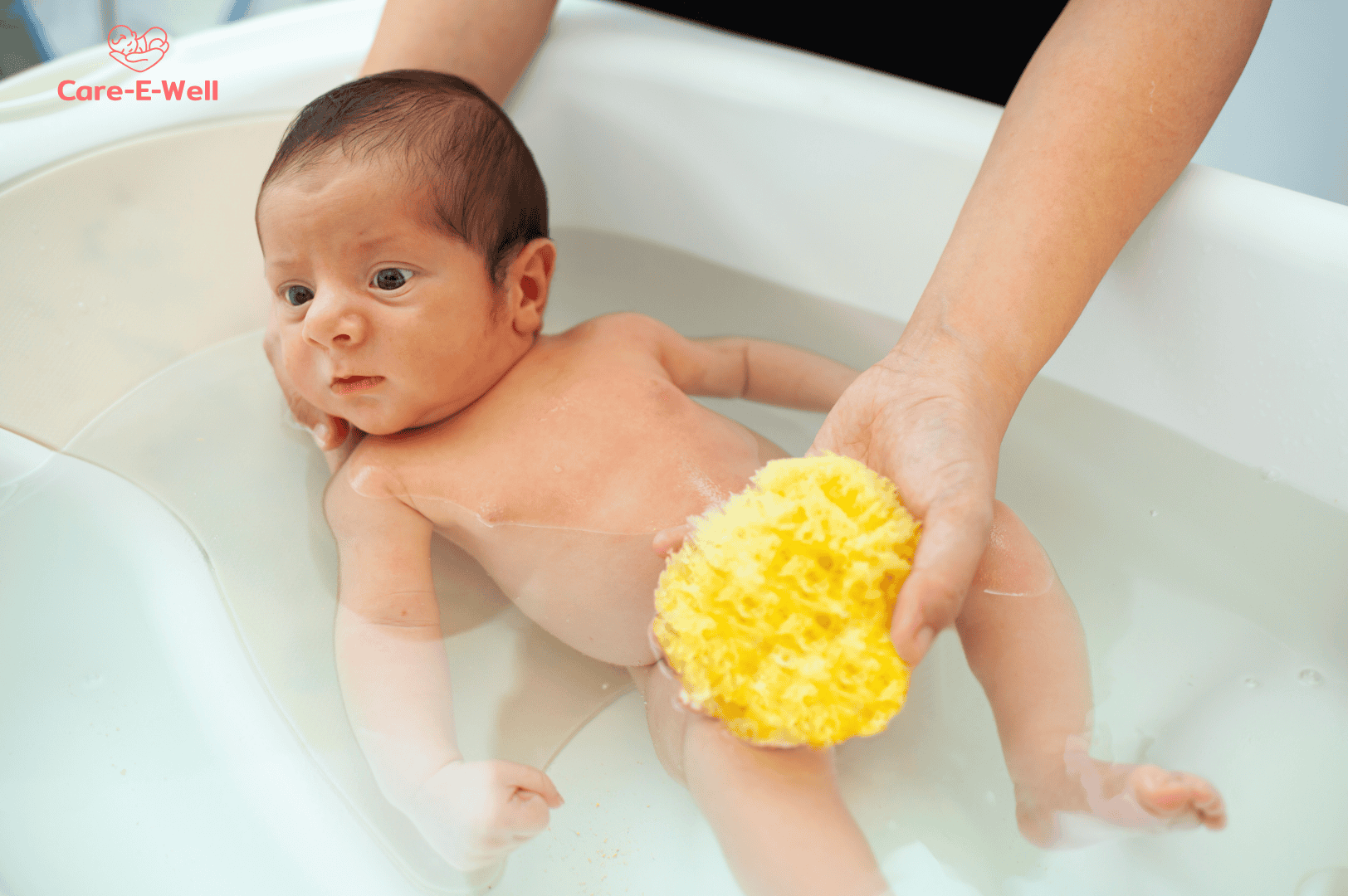
Learning how to sponge-bathe a newborn before the cord falls off is mostly about keeping your baby warm, cleaning only what needs cleaning and avoiding prolonged wetness around the umbilical stump. You do not need a sink full of water or a complicated routine. A warm room, a soft cloth, a towel and a calm few minutes are enough.
WHO recommends keeping the umbilical cord clean and dry. Sponge bathing is one practical way to clean a newborn while limiting how wet the stump becomes, and some UNICEF newborn-care guidance specifically recommends partial sponge washing until the cord has separated. However, evidence comparing sponge and tub bathing does not show that immersion bathing is automatically dangerous for every healthy term newborn, so follow the cord-care advice given by your maternity or paediatric team.
Sponge bathing before cord separation is a practical hygiene option, not a test of perfect parenting. Keep the baby warm, clean gently and keep the stump clean and dry.
What do you need for a newborn sponge bath?
Gather everything before you undress your baby. Newborns can cool quickly, and preparation prevents you from walking away while your baby is wet or lying on a raised surface.
- A warm, draft-free room.
- A flat, secure surface at floor level or another safe changing area.
- A bowl of comfortably warm water.
- Two soft washcloths if you prefer one for the face and one for the body.
- A clean towel.
- A clean nappy and clothes.
- A small amount of mild infant cleanser if needed.
- Clean cotton pads or gauze only if your local cord-care instructions call for them.
You do not need cotton buds, powder, oils, alcohol or antiseptic on the cord unless a healthcare professional has specifically advised a product for your baby and setting. WHO recommends clean, dry cord care for babies born in health facilities and in low-neonatal-mortality settings.
How warm should the water be?
Use comfortably warm water, close to body temperature. A bath thermometer can help you check it; around 37–38°C is a practical target used in UNICEF bath-safety guidance. Mix the water well before you start.
The baby is not sitting in the water during a sponge bath, so the bigger temperature issue is heat loss from exposed, damp skin. Keep most of the body covered and uncover one area at a time.
How to sponge-bathe a newborn before the cord falls off step by step
- Wash your hands and make sure all supplies are within reach.
- Place your baby on a secure flat surface and keep one hand close whenever needed.
- Keep your baby wrapped in a towel and expose only the area you are washing.
- Start with the face using a clean damp cloth and plain water.
- Wipe around the ears and neck folds, where milk and moisture often collect.
- Clean the chest, arms and hands, then pat the area dry before moving on.
- Wipe the back, legs and feet, again drying as you go.
- Clean the nappy area last, wiping gently from front to back.
- Clean around the umbilical area only if needed, without soaking or scrubbing the stump.
- If the cord gets wet, gently pat it dry with a clean cloth or gauze.
- Put on a clean nappy, keeping the top from rubbing tightly against the stump.
- Dress and cuddle your baby promptly so they stay warm.
A sponge bath can be very short. The aim is not to wash every square centimetre of skin every day; it is to remove milk, stool, urine, sweat and visible dirt while keeping the newborn comfortable.
How should you wash a newborn’s face?
Start with the cleanest area. Use a soft cloth dampened with plain warm water. Wipe gently rather than rubbing. Clean around the eyes only when there is visible residue, using a fresh area of the cloth for each eye.
Move to the cheeks, around the mouth and under the chin. Milk often collects in neck folds, so lift the chin gently and check that the folds are clean and dry afterward.

How should you clean the umbilical cord during a sponge bath?
In most healthy newborns in high-resource, low-neonatal-mortality settings, the core principle is dry cord care. WHO advises keeping the stump dry and not routinely applying ointments. The stump does not need to be scrubbed simply because you are giving a sponge bath.
If urine, stool or other dirt gets onto the cord area, clean it gently according to the instructions from your maternity team, then dry it carefully. Fold the front of the nappy down if needed so it does not sit tightly over the stump.
The umbilical stump does not need aggressive cleaning. Keep it clean, dry and exposed to air when practical, and avoid applying unprescribed substances.
Should you use alcohol or chlorhexidine on the cord?
Not routinely in every setting. WHO recommends clean, dry cord care for newborns born in health facilities and at home in low-neonatal-mortality settings. WHO recommends daily 4% chlorhexidine during the first week for babies born at home in settings with high neonatal mortality, where the balance of benefit is different.
This is why advice found online can appear contradictory. Cord-care recommendations depend partly on infection risk and local health systems. In low-neonatal-mortality settings, do not start chlorhexidine, alcohol or another antiseptic simply because you read about it; follow local maternity or paediatric guidance.
Is sponge bathing safer than a tub bath before the cord falls off?
Sponge bathing is convenient because it makes it easier to keep the stump relatively dry. Some newborn-care guidance uses this approach until cord separation.
But research comparing sponge and tub bathing in healthy term babies has not established that tub bathing before cord separation inevitably causes infection. A Turkish comparative study examined cord separation and infection outcomes between bathing methods, while other cord-care studies show that keeping the stump clean and dry is more important than using routine antiseptics in low-risk settings.
So the useful message is not “water touching the cord is dangerous.” It is “avoid unnecessary soaking, keep the stump clean and dry afterward, and follow your baby’s local care plan.”
How often should you sponge-bathe a newborn?
You can clean the nappy area and visibly dirty skin every day without giving a full-body sponge bath every day. UNICEF Uruguay describes daily partial washing before cord separation, while broader infant skin-care evidence does not establish one compulsory daily full-body routine.
For many families, a complete sponge bath every few days plus targeted cleaning works well. If your baby gets sweaty, has frequent spit-up or has stool on the skin, clean those areas sooner. If the skin becomes dry or irritated, review how often you wash, how long the skin stays wet and which products you use.
Do you need soap during a sponge bath?
Usually not on the face, and not over the whole body every time. Plain water is enough for many areas. If milk, stool or oily residue does not come away easily, use a small amount of mild cleanser formulated for infant skin.
Avoid strongly fragranced products and harsh soap. Newborn skin is still adapting after birth, so gentle cleansing is preferable to scrubbing.
How do you keep a newborn warm during sponge bathing?
Keep the room comfortably warm and remove clothing only when you are ready to start. Leave most of your baby wrapped in a towel while washing one section at a time.
- Work from one small area to the next.
- Use a damp rather than dripping-wet cloth.
- Pat each area dry promptly.
- Keep the head and body covered when you are not washing them.
- Dress the baby as soon as the sponge bath is finished.
- Use skin-to-skin contact afterward if your baby enjoys it and needs extra warmth.
If your baby is premature, low birth weight or has trouble maintaining temperature, ask the neonatal team how and when to wash them. Their thermal-care needs may differ from those of a healthy term newborn.
What should the cord stump normally look like as it dries?
The stump typically changes from moist and pale soon after birth to darker, drier and more shrivelled before it separates. A small spot of blood around the time it falls off can occur.
What matters is the surrounding skin and your baby’s overall condition. Redness that spreads onto the abdominal skin, pus, a strong foul smell, persistent bleeding or a baby who seems unwell deserves medical assessment.
Seek prompt medical advice if redness is spreading from the cord onto the abdomen, there is pus or foul-smelling discharge, bleeding does not stop, your baby has fever or temperature instability, feeds poorly, is unusually sleepy or seems unwell.
When does the umbilical cord usually fall off?
Cord separation time varies. Studies in healthy newborns commonly report separation within the first couple of weeks, but some cords take longer. Antiseptic products can also influence separation time, which is another reason not to apply products without a clinical indication.
If the stump remains attached longer than expected or the area looks abnormal, ask your baby’s healthcare professional rather than trying to pull, twist or cut it off.

What should you do after the cord falls off?
Let the stump separate on its own. Once it has fallen and the navel is dry and healing normally, you can move to a regular baby bath if you wish. Continue to keep the area clean and gently dry while it finishes healing.
You still do not need to bathe a young baby every day. A short bath every few days with cleaning between baths is enough for many babies.
Common sponge-bath mistakes to avoid
- Starting before all supplies are ready.
- Leaving the baby unattended on a changing table, bed or other raised surface.
- Exposing the whole body for the entire wash and letting the baby become cold.
- Using water that is hot rather than comfortably warm.
- Scrubbing delicate skin or the cord stump.
- Applying powders, oils, alcohol or antiseptics without a clear recommendation.
- Pulling at a cord that is partly detached.
- Keeping a damp nappy or clothing pressed against the stump.
FAQ
Can the umbilical cord get a little wet?
Accidental wetting is not an emergency. Gently pat the stump dry. The priority is to avoid leaving it damp or repeatedly soaking it and to follow the cord-care advice given for your baby.
Can I wash my newborn’s hair before the cord falls off?
Yes, if needed. Keep your baby warm, support the head securely and dry the hair and scalp promptly. Hair does not need shampoo at every wash.
Do I need a sponge specifically?
No. A soft, clean washcloth works well and can be easier to wash and dry hygienically.
Can I use baby wipes for a sponge bath?
Wipes are useful for nappy changes, but a soft cloth and warm water give you better control for a whole-body sponge wash. If you use wipes, choose products intended for infant skin and stop if they cause irritation.
When can I switch from sponge baths to tub baths?
Many families switch once the cord has fallen off and the navel is dry. Local maternity advice can vary, and evidence does not show that every brief tub bath before cord separation is harmful. Follow the plan given for your baby, especially if there are cord or skin concerns.
The key takeaway
The simplest way to sponge-bathe a newborn before the cord falls off is to prepare everything first, keep most of the baby covered, clean one area at a time and dry as you go. Keep the umbilical stump clean and dry rather than scrubbing or routinely treating it. If your maternity team has given different cord-care instructions because of your baby’s health or local infection risk, follow those individual recommendations.
Sources/References
- World Health Organization — Caring for a newborn
- World Health Organization — WHO recommendations on maternal and newborn care for a positive postnatal experience
- World Health Organization — Essential newborn care course, second edition
- World Health Organization — Chlorhexidine 7.1% digluconate aqueous solution or gel: Reports of serious eye injury due to errors in administration
- UNICEF Uganda — Key practice: Newborn care
- UNICEF Uruguay — Cuidados del recién nacido: 10 consejos
- Kuzlu Ayyıldız T, Kulakçı H, Ayoğlu FN, et al. — The Effects of Two Bathing Methods on the Time of Separation of Umbilical Cord in Term Babies in Turkey
- Gras-Le Guen C, Caille A, Launay E, et al. — Dry Care Versus Antiseptics for Umbilical Cord Care: A Cluster Randomized Trial
- Quattrin R, Iacobucci K, De Tina AL, et al. — 70% Alcohol Versus Dry Cord Care in the Umbilical Cord Care
- Basnet R, Manandhar SR, Bhatta A — Effect of dry cord care versus chlorhexidine cord care on cord separation time in healthy newborns: A comparative study
Did this Insight help?
A little love for something worth reading.


