Care-E-Well Insights
Umbilical Cord Care: How to Keep the Stump Clean and Dry
Learn safe umbilical cord care, what to avoid, how to keep the stump clean and dry, and which warning signs need medical advice.

Umbilical cord care is usually much simpler than it looks. For a healthy newborn born in a health facility or a low-risk setting, the World Health Organization recommends clean, dry cord care: keep the stump clean, allow it to stay dry, and avoid routinely putting products on it. The stump does not need scrubbing, bandaging or help to fall off.
In the days after birth, the cord stump naturally dries, shrivels and changes colour before separating. Your job is mainly to protect that normal process while watching for signs that the surrounding skin may be becoming infected.
The basic cord-care routine is simple: clean hands, a clean and dry stump, the nappy folded below it, and no routine ointments, powders, oils or antiseptics unless your healthcare team has given a specific instruction.
What does clean and dry umbilical cord care mean?
“Dry cord care” does not mean you should panic if a drop of water touches the stump. It means avoiding unnecessary soaking, keeping the area free from urine and stool where possible, and drying it gently if it becomes wet. WHO guidance also advises not applying substances such as ointments to the cord as part of routine care.
This approach is supported by research from higher-income and hospital settings. A cluster-randomised trial in full-term newborns found dry care was not inferior to antiseptic care for preventing omphalitis in a developed-country setting. Systematic reviews also show that the best cord-care approach depends partly on the setting and baseline infection risk rather than one product being necessary for every newborn.
Umbilical cord care step by step
- Wash your hands with soap and water before touching the stump or the skin around it.
- Look at the cord and surrounding skin during nappy changes without repeatedly pulling, twisting or lifting it.
- Keep the stump exposed to air when practical and fold the top of the nappy below it so urine and stool are less likely to reach it.
- If the area is visibly soiled, clean it gently with clean water as advised by your maternity team rather than scrubbing.
- Pat the area dry carefully with a clean cloth or gauze if it becomes wet.
- Let the stump separate on its own. Do not pull it off, even when it appears to be hanging by a small piece of tissue.
A simple routine also reduces unnecessary handling. There is no benefit to repeatedly “checking” whether the cord is ready to come away by moving it from side to side.
What should you avoid putting on the cord stump?
For routine clean, dry cord care, avoid putting alcohol, antiseptic solutions, antibiotic creams, baby powder, talc, oils, herbal preparations, ash or other household substances on the stump unless a qualified healthcare professional has specifically advised them. Applying a product simply to make the cord fall off faster is not necessary.
Research has compared dry care with alcohol, chlorhexidine and other antiseptic approaches. The findings cannot be transferred blindly between settings because infection risk, birth environment and access to clean care differ. In a low-mortality, facility-based context, routine antiseptic use is generally unnecessary.
What about chlorhexidine?
Chlorhexidine is an important exception in particular public-health settings. WHO recommends daily chlorhexidine application during the first week of life for babies born at home in settings with high neonatal mortality, and it may also replace harmful traditional cord applications. That is different from routine care for a healthy facility-born baby in a low-risk setting.
Do not improvise with chlorhexidine products. WHO has reported serious eye injuries when high-concentration chlorhexidine intended for cord care was mistakenly put into newborns’ eyes. Use it only when it is part of the newborn-care protocol you have been given, and store it separately from eye products.
What does a normal healing cord stump look like?
Soon after birth, the stump may look pale, moist and fleshy. Over the following days it usually becomes darker, drier and smaller. Many healthy cords separate during roughly the first one to two weeks, although some take longer.
A tiny spot of blood at separation can occur, much like a small scab coming away. A little dried blood around the base is different from ongoing bleeding. The skin beneath should gradually look like a healing belly button rather than becoming increasingly red, swollen or wet.
Colour change from yellowish or pale tissue to brown or black as the stump dries is usually part of normal separation. Increasing redness of the skin around the stump is not the same thing and deserves attention.
What if the cord stump gets wet?
If the stump gets splashed during washing or a nappy leak, gently pat it dry and continue normal care. One accidental wetting does not mean you have caused an infection. The practical aim is to avoid leaving the area damp for long periods.
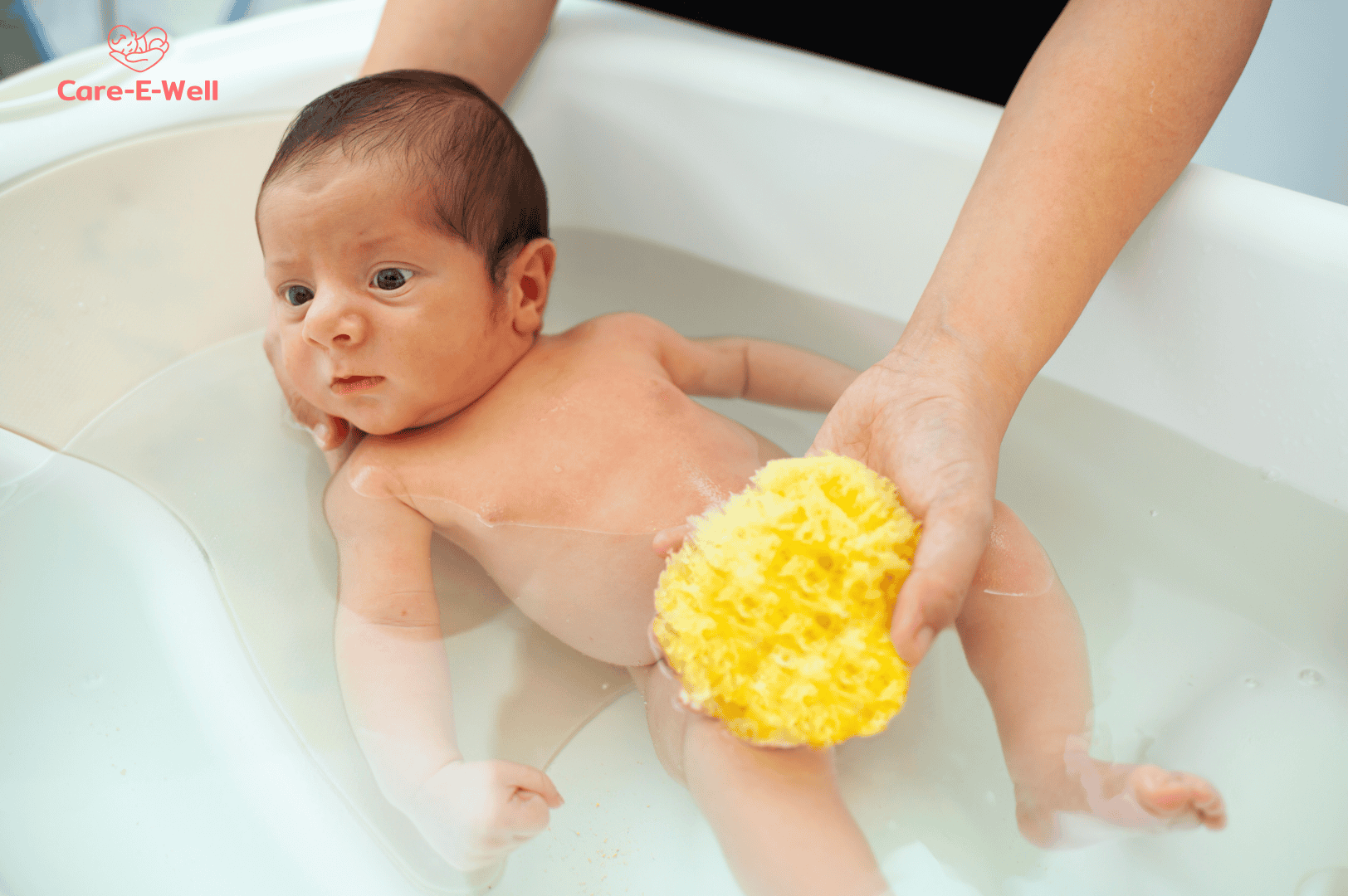
Families receive different advice about sponge bathing versus immersion before the cord falls off. Evidence on bathing methods is mixed, and modern newborn skin-care guidance does not support treating brief contact with clean bath water as automatically harmful. If you want the easiest way to keep the stump dry, a sponge or spot-cleaning routine is a practical choice until separation.
How should the nappy sit around the cord?
Fold the front edge below the stump or use a newborn nappy with an umbilical cut-out if you have one. This reduces rubbing and helps keep urine away from the healing tissue. Avoid tight waistbands directly over the stump.
If urine or stool reaches the area, clean the contamination promptly and gently, then dry the skin and stump. Good hand hygiene matters as much as the cleaning itself.
When should you seek medical advice about the cord?
The most important complication to recognise is omphalitis, an infection of the umbilical stump and surrounding tissues. It can progress quickly in a newborn, so worsening local inflammation or illness should not be managed only with home cleaning.
Seek prompt medical assessment if redness spreads onto the skin around the navel, the area becomes swollen, hot or increasingly tender, there is pus or a foul-smelling discharge together with inflammation, bleeding does not stop, or your baby seems unwell. A newborn with fever, unusual sleepiness, poor feeding, breathing difficulty or reduced activity needs urgent medical assessment regardless of how the cord looks.
A small moist lump that persists after the stump has separated can have causes other than infection, such as an umbilical granuloma. Do not treat it with salt, chemicals or home remedies unless a clinician has assessed it and specifically recommended a method.
What should you do after the stump falls off?
Continue gentle hygiene while the navel finishes healing. If there is a little dried blood, leave it alone or soften it during normal washing rather than picking at it. Keep the area clean and dry, and watch for persistent wetness, discharge, swelling or spreading redness.
Once the base is dry and healed, the belly button can simply be cleaned as part of ordinary bathing. It does not need routine antiseptic treatment.

Why do recommendations differ between countries?
Cord-care recommendations reflect local infection risks. Community trials in parts of South Asia found benefits from chlorhexidine where newborn infection risk and neonatal mortality were high. In contrast, evidence from developed-country hospital settings supports dry care without routine antiseptics.
This is why advice on the internet can appear contradictory while both sources are describing valid practices for different circumstances. For an individual baby, follow the discharge instructions from the maternity or neonatal team, especially after premature birth, intensive-care treatment, an umbilical catheter or another medical complication.
FAQ
Should I clean the stump every day even if it looks clean?
Usually not. Clean, dry cord care does not require routine scrubbing. Wash your hands before handling the area, keep it dry and clean visible contamination gently when necessary.
Can I use alcohol to make the cord fall off faster?
Routine alcohol use is not recommended for a healthy newborn in a standard dry-care setting. Research has not shown a need for antiseptics in low-risk hospital settings, and some antiseptic regimens can delay cord separation.
Is a bad smell always an infection?
The drying stump can have an odour as tissue separates, so smell alone cannot diagnose infection. Foul discharge together with spreading redness, swelling, tenderness or an unwell baby is more concerning and should be assessed promptly.
Can I pull off the stump when it is nearly detached?
No. Let it fall away by itself. Pulling can cause pain or bleeding and may damage tissue that is still attached.
The key takeaway
Good umbilical cord care is mostly about doing less, not more. Keep your hands clean, keep the stump clean and dry, protect it from nappy contamination, and let it separate naturally. Avoid routine products unless your healthcare team has given a reason to use one, and seek prompt help if the surrounding skin becomes increasingly inflamed or your newborn seems unwell.
Sources/References
- World Health Organization — Caring for a newborn
- World Health Organization — Chlorhexidine 7.1% digluconate: reports of serious eye injury due to errors in administration
- World Health Organization — Essential newborn care
- Gras-Le Guen C, Caille A, Launay E, et al. — Dry Care Versus Antiseptics for Umbilical Cord Care: A Cluster Randomized Trial
- López-Medina MD, Linares Abad M, López Araque AB, et al. — Dry care versus chlorhexidine cord care for prevention of omphalitis: systematic review with meta-analysis
- Imdad A, Mullany LC, Baqui AH, et al. — The effect of umbilical cord cleansing with chlorhexidine on omphalitis and neonatal mortality in community settings in developing countries: a meta-analysis
- Coffey PS, Brown SC — Umbilical cord-care practices in low- and middle-income countries: a systematic review
- Al-shehri H — The Use of Alcohol versus Dry Care for the Umbilical Cord in Newborns: A Systematic Review and Meta-analysis of Randomized and Non-randomized Studies
- Basnet R, Manandhar SR, Bhatta A — Effect of dry cord care versus chlorhexidine cord care on cord separation time in healthy newborns: A comparative study
- Nangia S, Dhingra U, Dhingra P, et al. — Effect of 4% chlorhexidine on cord colonization among hospital and community births in India: a randomized controlled study
Did this Insight help?
A little love for something worth reading.