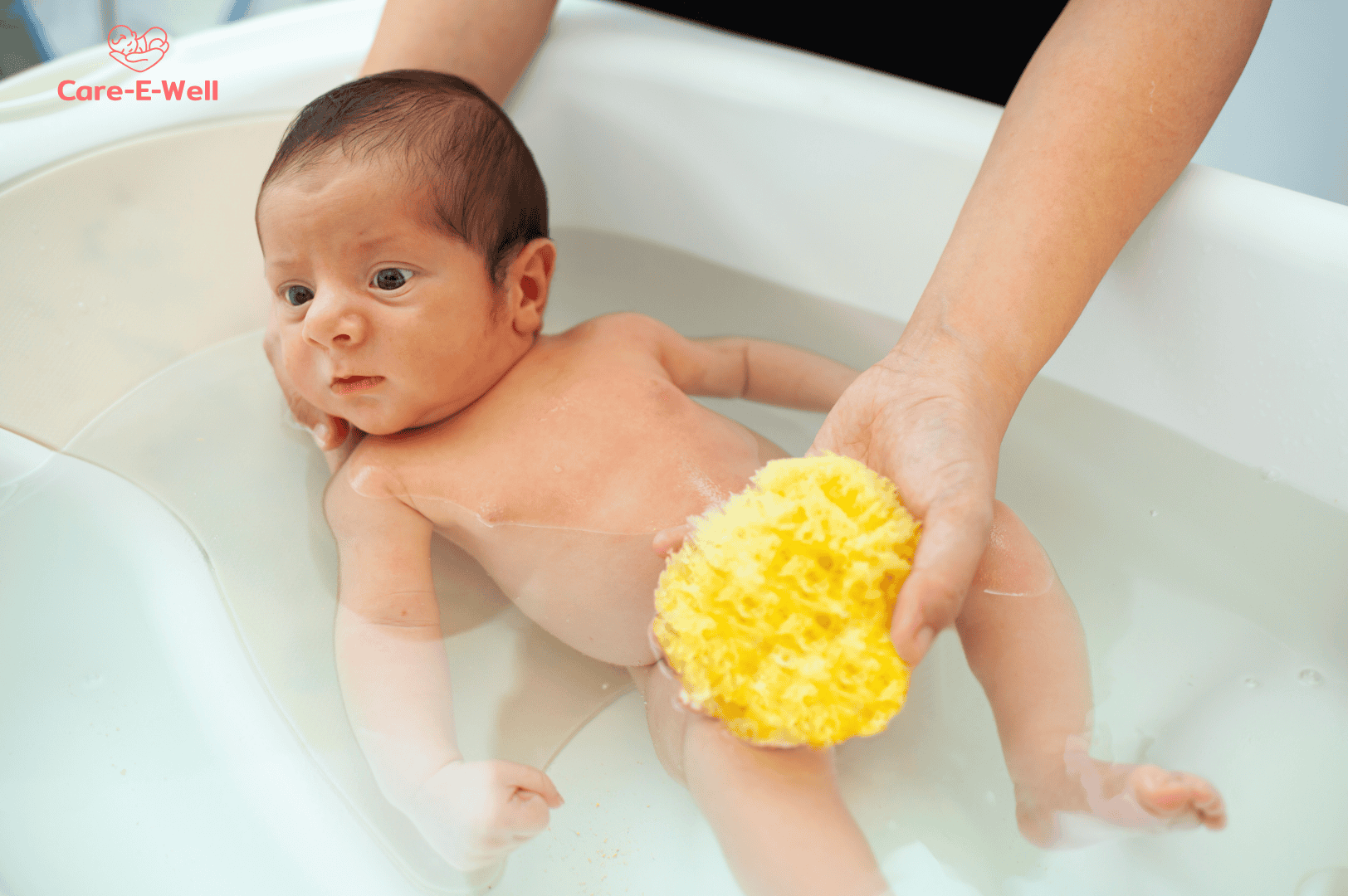
Care-E-Well Insights
How to Wash a Baby’s Hair and Scalp
Learn how to wash a baby's hair and scalp safely with gentle steps, suitable products, secure support and simple scalp care.

Learning how to wash a baby's hair and scalp is mostly about using a gentle touch, supporting the head securely and keeping the routine simple. A healthy baby does not need vigorous scrubbing or a large amount of shampoo. Warm water and, when needed, a mild baby cleanser are usually enough.
Newborn and infant skin is still adapting after birth, including the skin on the scalp. Gentle cleansing helps remove milk, sweat, skin flakes and everyday dirt without unnecessarily stripping or irritating the skin barrier.
You do not need to make a baby's scalp “squeaky clean.” Use comfortably warm water, a small amount of a mild product if needed, gentle fingertip massage and thorough rinsing.
How often should you wash a baby's hair?
There is no single schedule that suits every baby. Hair and scalp can be washed during regular baths when they are sweaty, oily, visibly dirty or coated with milk or spit-up. For many young babies, this does not need to happen every day.
Evidence on infant skin care supports gentle routines rather than aggressive cleansing. European infant skin-care recommendations allow water alone or an appropriately formulated liquid cleanser, and studies of healthy term babies have not shown that a mild baby wash necessarily disrupts normal skin-barrier maturation. The important details are formulation, frequency, water temperature and how gently the skin is handled.
What do you need before washing a baby's hair?
- A warm, draft-free room
- Comfortably warm bath water
- A soft washcloth or your clean hand
- A mild, baby-appropriate liquid cleanser or shampoo if you plan to use one
- A dry towel within reach
- Clean clothes and a nappy for afterwards
Gather everything before you start. Once your baby is in the bath, keep one hand available for support rather than reaching across the room for shampoo or a towel.
How to wash a baby's hair and scalp step by step
- Wash your hands and prepare the bath before undressing your baby.
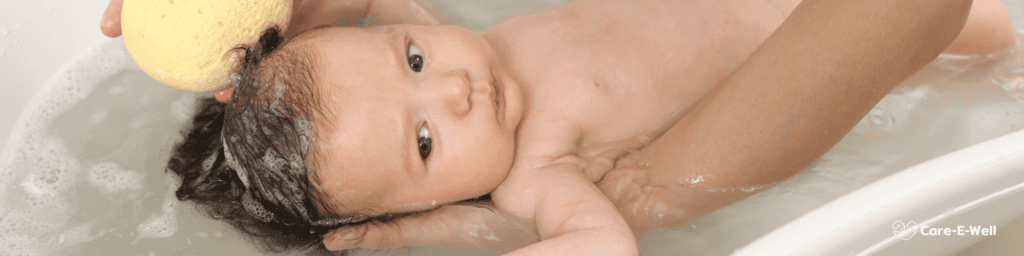
- Support your baby's head and neck securely with one arm while keeping the face well above the water.
- Wet the scalp gradually with your free hand or a soft washcloth. Avoid pouring a sudden stream of water over the face.
- If using shampoo or cleanser, place a very small amount in your hand first rather than directly onto the baby's head.
- Massage the scalp gently with the pads of your fingertips. Use small circular movements and do not scratch with your nails.
- Rinse carefully with clean bath water, directing water backwards and away from the eyes and mouth.
- Lift your baby out securely, wrap them in a towel and gently pat the hair and scalp dry.
A short wash is enough. Long soaking and repeated washing are not required for cleanliness and may be more drying for some babies.

Should you use baby shampoo or water only?
Either can be reasonable for a healthy baby's routine. Water alone may be enough when the scalp is not oily or dirty. If you use a product, choose one intended for babies, preferably soap-free and gently formulated rather than a strongly fragranced adult shampoo.
Research comparing water with appropriately formulated infant cleansers has generally found that mild products can be well tolerated by healthy full-term newborn skin. That does not mean more product is better. Use only as much as you need and rinse it away completely.
What does “gentle” cleanser mean?
Infant skin-care reviews favour products that avoid harsh soap and are designed around the mildly acidic to neutral environment of baby skin. Labels such as “natural” or “organic” do not automatically make a product less irritating, and fragrance is not necessary for cleaning.
If a particular product repeatedly leaves the scalp red, dry or itchy, stop using it and return to a simpler routine while you seek advice if the irritation persists.
How should you hold a baby while washing the hair?
The safest position is one in which the head and neck remain fully supported and you can control your baby's movement throughout the wash. Young babies can become slippery very quickly when wet.
Never leave a baby unattended in or beside bath water, even briefly. If you need to answer the door, get a towel or deal with another child, lift your baby out and take them with you.
You can wash the hair while your baby is in a small baby bath, or you can support the head over the bath while keeping the body warm and wrapped. Choose the method that gives you the most stable grip and keeps your baby comfortable.
How do you keep water and shampoo out of the eyes?
Tilt the head slightly back while maintaining neck support, and use your hand or a damp washcloth to wet and rinse the hair in small amounts. Pouring from the forehead backwards makes it easier to keep water away from the eyes.
If a little clean bath water reaches the face, simply wipe it gently. If cleanser gets into the eyes, rinse with plenty of clean lukewarm water. Persistent redness, pain or difficulty opening the eye needs medical advice.
What about the soft spot on a baby's head?
The fontanelles, often called “soft spots,” are normal gaps between skull bones covered by strong tissue. You can wash the scalp over them gently. There is no need to avoid the area entirely, but there is also no reason to press firmly or scrub.
Use the same light fingertip pressure you would use on the rest of the scalp. If you notice swelling, a wound, unusual tenderness or another concern on the scalp, ask a healthcare professional to assess it rather than massaging over it.
What if the scalp has flakes or cradle cap?
Fine dry flakes can occur on baby scalps. Cradle cap, or infantile seborrhoeic dermatitis, more typically produces greasy yellow or white scales. It is usually benign and self-limiting, but it should not be picked or scraped off.
Gentle regular washing may help loosen surface scales. If the scale is thick, widespread, very red, weeping, uncomfortable or extends beyond the scalp, get professional advice before using medicated shampoo, antifungal products or steroid creams on a young baby.
Should you brush a baby's hair after washing?
You can use a very soft baby brush if your baby enjoys it. Brush gently and stop if the scalp becomes red. A brush is not needed to stimulate hair growth, and rubbing or brushing harder will not make hair grow faster or thicker.
Baby hair often changes naturally in the first months, including temporary shedding. Normal hair changes do not need special shampoos or scalp treatments.
How should you dry the scalp?
Pat rather than rub. A soft towel is enough, and the scalp does not need to be completely friction-dried. Pay attention to moisture behind the ears and in neck folds, where water, milk and sweat can remain trapped.
Avoid using a hot hair dryer on a baby's scalp. A towel and room-temperature air drying are sufficient for most babies.
What should you avoid when washing baby hair?
- Adult anti-dandruff or medicated shampoos unless a clinician recommends them
- Strongly fragranced shampoos or essential oils on the scalp
- Scratching scales with fingernails
- Picking at crusts or scabs
- Cotton buds inside the ears
- Very hot water
- Leaving shampoo residue on the scalp
- Leaving a baby alone in the bath
“Natural” oils deserve the same caution as other products. Some plant oils and essential oils can irritate sensitive skin, and essential oils should not be used casually on newborn skin.
When should scalp changes be checked by a professional?
Ask for medical advice if the scalp develops spreading redness, swelling, warmth, pus, open or weeping skin, a bad smell, significant pain, marked itch, circular areas of hair loss, or a rash that is worsening despite gentle care.
Seek prompt assessment if a newborn seems unwell alongside a skin problem, especially with fever, poor feeding, unusual sleepiness or reduced activity. Do not assume that every crusted or red scalp condition is simply cradle cap.
FAQ
Can I wash a newborn's hair on the first bath?
Yes, once your baby is ready for the first bath and is warm and stable, the scalp can be cleaned gently as part of the bath. WHO recommends delaying the routine first bath for at least 24 hours after birth for a healthy newborn.
Do babies need a separate shampoo and body wash?
Not necessarily. A mild baby cleanser suitable for both skin and hair may be enough. The ingredient profile and tolerability matter more than having several different products.
Can I wash my baby's hair if there is very little hair?
Yes. You are mainly cleaning the scalp, not the hair itself. Use the same gentle method even if your baby has only fine hair or almost none.
Why does my baby's hair look oily soon after washing?
Scalp oil production varies between babies and can change with age. Washing more aggressively can irritate the scalp without solving the cause. If oiliness comes with thick greasy scale or significant redness, ask a healthcare professional whether cradle cap or another skin condition may be present.
The key takeaway
The best way to wash a baby's hair and scalp is gentle, brief and secure. Support the head and neck, use comfortably warm water, add only a small amount of mild baby cleanser when needed, massage with fingertips rather than nails, rinse well and pat dry. Your baby's scalp does not need aggressive cleaning to stay healthy.
Sources/References
- World Health Organization — Caring for a newborn
- World Health Organization — Keeping newborns and children under 5 years clean and safe
- Blume-Peytavi U, Hauser M, Stamatas GN, et al. — Skin Care Practices for Newborns and Infants: Review of the Clinical Evidence for Best Practices
- Blume-Peytavi U, Lavender T, Jenerowicz D, et al. — Recommendations from a European Roundtable Meeting on Best Practice Healthy Infant Skin Care
- Garcia Bartels N, Mleczko A, Schink T, et al. — Influence of Bathing or Washing on Skin Barrier Function in Newborns during the First Four Weeks of Life
- Lavender T, Bedwell C, Roberts SA, et al. — Randomized, Controlled Trial Evaluating a Baby Wash Product on Skin Barrier Function in Healthy, Term Neonates
- Visscher MO, Adam R, Brink S, et al. — Newborn infant skin: Physiology, development, and care
- Oranges T, Dini V, Romanelli M — Skin Physiology of the Neonate and Infant: Clinical Implications
- Wilborn D, Amin R, Kottner J — Skin Care in Neonates and Infants: A Scoping Review
- Gupta P, Nagesh K, Garg P, et al. — Evidence-Based Consensus Recommendations for Skin Care in Healthy, Full-Term Neonates in India
Did this Insight help?
A little love for something worth reading.