
Care-E-Well Insights
How to Reduce or Increase Formula Amounts as Baby’s Needs Change
Baby formula needs change with growth and appetite. Learn when to increase or reduce amounts safely without forcing feeds.
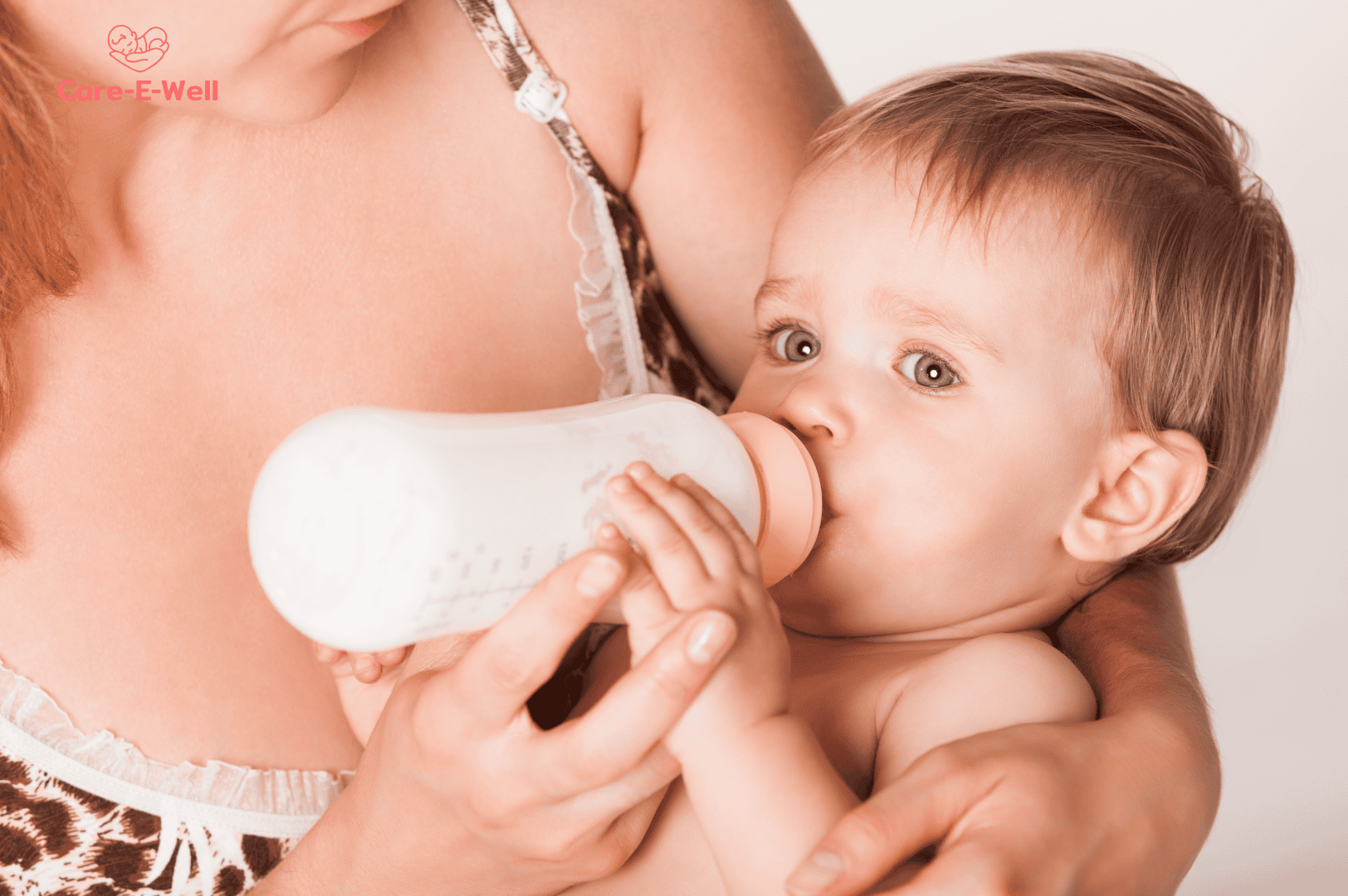
How to reduce or increase formula amounts as baby's needs change is less about following a perfect age chart and more about watching the baby. Appetite changes with growth, activity, illness, sleep and the introduction of complementary foods, so the amount taken at one feed—or on one day—will not always be identical.
Use formula tables as broad orientation, not a target the baby must finish. Increase amounts when the baby repeatedly shows hunger after appropriate feeds, and reduce what you prepare when milk is consistently left because the baby is clearly full. Keep the formula recipe exactly the same: change the volume offered, never the powder-to-water concentration.
Adjust the amount in the bottle, not the formula recipe. Hunger and fullness cues matter more than an empty bottle.
Do babies need the same amount of formula every day?
No. Even healthy babies with steady growth can have larger and smaller feeds across the day. Appetite can temporarily rise during periods of rapid growth and fall during minor illness, teething or hot weather.
What matters more is the overall pattern: whether the baby feeds comfortably, has appropriate wet nappies, remains well hydrated and follows an expected individual growth trajectory.
A single unfinished bottle is not a reason to reduce every feed, just as one unusually large feed does not mean every bottle should become bigger.
What are signs a baby may need a little more formula?
Consider offering more when hunger cues repeatedly continue after the baby finishes the amount normally prepared. Useful cues include continued rooting, active searching for the nipple, sucking hands with other hunger signs, or becoming alert and ready to keep feeding.
Before assuming volume is the problem, check the whole feed. A very slow nipple can make a baby tire before taking enough, while a very fast flow can cause gulping, coughing or early distress that looks like fullness.
- Hunger continues after several feeds, not just one unusual feed
- The baby finishes comfortably and still actively seeks more milk
- Feeding frequency has increased together with clear hunger cues
- Growth or a clinical feeding plan indicates that intake should increase
- The current bottle size repeatedly leaves no room to offer a little more when the baby remains hungry
If these signs are consistent, prepare the next permitted formula volume according to the manufacturer’s measuring instructions rather than adding an extra partial scoop to the current bottle.
How much should you increase a bottle by?
There is no universal increment that fits every formula because scoop sizes and preparation instructions differ. The safest practical step is to move to the next volume that can be prepared using the exact water-to-powder ratio on the label.
Some products are designed around fixed water increments. Do not improvise half scoops, heaped scoops or extra powder unless the manufacturer explicitly provides that preparation method.
Never make formula more concentrated because a baby seems hungry. Extra powder changes the nutrient and fluid concentration and can be dangerous.
What are signs you may be preparing too much?
A baby who repeatedly stops well before the bottle is empty may simply need less prepared at that time. Fullness cues include slowing sucking, turning away, pushing the nipple out, relaxing, closing the mouth or losing interest in the feed.
Responsive bottle feeding means respecting those cues. Do not keep repositioning the nipple, jiggling the bottle or repeatedly encouraging the baby to finish because a chart or bottle marking says more should be taken.
If substantial formula is consistently left over, prepare a smaller safe volume at future feeds and offer more only if hunger cues continue.
Leftover milk is information, not a feeding failure.
Can you reduce the amount by diluting the formula?
No. Reducing formula intake means offering a smaller correctly prepared feed, not adding extra water.
Never dilute infant formula to make it last longer or to reduce calories. Extra water lowers energy and nutrient concentration and can disturb the baby’s fluid and electrolyte balance.
The reverse is also true: do not reduce the water to make a smaller or “stronger” feed. Always use the exact preparation ratio.

Should you increase formula every time a baby cries after a feed?
No. Crying is not specific to hunger. Babies also cry because they are tired, uncomfortable, overstimulated, need closeness, have trapped air or are struggling with a feed that was too fast.
Look for a cluster of hunger cues rather than using crying alone. If the baby has just taken a comfortable feed and shows no active feeding cues, try settling, holding or checking other needs before automatically preparing another full bottle.
If crying regularly occurs during or after feeds together with arching, coughing, choking, vomiting or poor growth, increasing formula may worsen the problem and the feeding pattern should be assessed.
What about growth spurts and suddenly bigger appetites?
Babies can have short periods when they ask to feed more frequently or take more milk than usual. Parents often call these growth spurts, although there is no precise timetable that predicts exactly when every baby’s appetite will change.
Follow cues rather than pre-emptively increasing every bottle by a large amount. If the larger appetite persists, the regular amount you prepare can gradually catch up with the baby’s new pattern.
Appetite may settle again after several days. You do not need to keep offering a larger bottle if clear fullness cues appear earlier.
Can formula amounts go down as a baby gets older?
Yes. Formula intake does not rise indefinitely. Once complementary foods are introduced at around 6 months, milk remains nutritionally important, but the balance between milk and food gradually changes as the child eats a wider variety of foods.
The transition should be gradual and responsive. Starting solids is not a reason to suddenly remove large amounts of formula from a young baby’s diet.
WHO recommends complementary foods from around 6 months alongside continued milk feeding. For formula-fed babies, use an age-appropriate regulated formula and follow local professional guidance about the transition through the first year.
Should you reduce formula when starting solids?
Let solid-food intake build gradually rather than cutting bottles according to a fixed calendar. In the early weeks of complementary feeding, babies may eat only small amounts and still rely heavily on milk.
As meals become more substantial, some babies naturally take a little less formula or drop a milk feed. Others continue similar milk intake for longer.
Follow appetite, growth and the baby’s ability to eat a varied diet. Do not pressure solids in order to force formula volumes down.
How does combination feeding change formula amounts?
In combination feeding, formula needs depend partly on how much breast milk the baby receives. Because milk transfer at the breast is rarely measured, exact formula requirements cannot usually be calculated from a simple subtraction formula.
If breastfeeding increases, the baby may naturally take less formula. If regular breastfeeds are replaced or breast milk supply decreases, formula intake may rise.
Use hunger and fullness cues together with weight gain and hydration. If supplementation was prescribed for poor growth or another medical reason, make changes with the clinician who is following the baby.
Does a bigger bottle help a baby sleep longer?
Not reliably. Night waking has many causes, and feeding beyond fullness does not guarantee longer sleep.
Research on bottle-feeding practices suggests that larger bottles and pressure to empty them can increase formula intake. Responsive feeding aims to preserve the baby’s opportunity to stop when satisfied rather than using volume as a sleep strategy.
Offer enough milk to respond to hunger, but do not encourage a baby to finish extra formula simply because bedtime is approaching.
What if a baby suddenly drinks much less during illness?
Temporary appetite reduction can happen with common illnesses, nasal congestion, fever or oral discomfort. A baby may prefer smaller, more frequent feeds for a short time.
Hydration becomes particularly important. Watch wet nappies, alertness, tears, mouth moisture and the baby’s ability to keep feeds down.
Seek prompt medical advice if a young baby is taking much less than usual, has clearly fewer wet nappies, repeatedly vomits, seems unusually sleepy, has a dry mouth or shows other signs of dehydration.
Do not compensate for reduced intake by making formula more concentrated.
What if a baby suddenly wants much more formula?
A temporary increase can be normal, but very large or persistent changes deserve context. Check whether the baby is genuinely showing hunger, whether the nipple flow is appropriate and whether feeds are being used automatically for every episode of distress.
If intake has risen sharply together with vomiting, unusual thirst, poor growth or other symptoms, discuss it with the baby’s clinician rather than continually enlarging bottles.
Why does responsive bottle feeding matter when changing amounts?
Bottle measurements make it easy for adults to focus on millilitres. Responsive feeding shifts attention back to the baby.
Research shows that infants give behavioural signals of satiation and that caregiver pressure can influence intake. Interventions teaching parents to recognise hunger and fullness cues can improve feeding practices, although infant growth is influenced by many factors and no single feeding technique guarantees a particular weight outcome.
Hold the baby close, keep the bottle relatively horizontal, allow pauses and stop when the baby shows sustained fullness cues.

Should you track every millilitre?
Detailed tracking can be useful for a premature baby, a baby with growth concerns or a short-term clinical feeding plan. For a thriving healthy baby, recording every millilitre is not usually necessary unless it helps the family.
If tracking makes you feel that every prepared amount must be consumed, it can work against responsive feeding. A broader record of usual intake, wet nappies and growth is often more meaningful.
Use measurements as information rather than as a score.
How can you adjust amounts with less waste?
- Notice the baby’s usual range over several feeds rather than reacting to one bottle.
- Prepare the smaller amount the baby commonly finishes using the exact label ratio.
- Keep extra clean equipment and formula available if the baby remains hungry.
- Offer more only when hunger cues continue.
- Stop when clear fullness cues appear.
- Discard leftovers from a bottle the baby has already drunk from.
This approach may require an occasional second small bottle, but it can reduce the pattern of preparing a large bottle and then pressuring the baby to finish it.
Can you change formula amounts and formula type at the same time?
Avoid changing several variables at once unless there is a clear clinical reason. If you change formula type, nipple flow and bottle volume together, it becomes harder to understand why feeding behaviour or stools changed.
For an otherwise well baby, change only what needs changing and observe the pattern. A different appetite does not automatically mean the formula itself is unsuitable.
When should formula amounts be reviewed by a professional?
Ask for assessment if the baby is not gaining weight as expected, repeatedly takes very little, needs persistent pressure to feed, coughs or chokes during feeds, has recurrent forceful vomiting, has blood in the stool or seems unusually thirsty.
Seek urgent medical help for severe lethargy, breathing difficulty, blue or grey colour, green vomit, repeated projectile vomiting or signs of significant dehydration.
Premature babies and infants with cardiac, metabolic, swallowing or growth conditions may need individual feeding volumes or concentrated medical formulas. Their plan should not be adjusted using general household advice.
Frequently asked questions
Should I increase formula if my baby always finishes the bottle?
Finishing can be one clue, but look for continued hunger cues as well. If the baby repeatedly finishes comfortably and still actively seeks milk, prepare the next safe volume according to the label.
Should I reduce formula if my baby leaves 30 mL?
One leftover bottle is not important. If similar amounts are consistently left together with clear fullness cues, preparing less at future feeds can reduce waste.
Can I use half a scoop to make a smaller bottle?
Only if the manufacturer explicitly gives that preparation method. Otherwise use the permitted water and scoop increments on the product label.
Does my baby need less formula after starting solids?
Often gradually, but not immediately or by a fixed amount. Milk remains important while complementary food intake develops, so let the balance change with appetite and dietary progress.
Is a fixed feeding chart more reliable than hunger cues?
Charts are useful orientation, especially for recognising unusually low or high patterns, but they cannot account for every baby. Combine them with cues, hydration, growth and clinical advice when needed.
The key takeaway
How to reduce or increase formula amounts as baby's needs change is a responsive process rather than a schedule of mandatory bottle sizes. Look for repeated hunger or fullness patterns, consider the baby’s growth and stage, and change the volume you prepare gradually.
Never alter the formula concentration to change intake. Respect fullness cues, prepare extra milk only when the baby remains hungry, and seek professional review when a major intake change is accompanied by poor growth, dehydration, persistent vomiting or feeding difficulty.
Sources and references
- World Health Organization. Infant and young child feeding. https://www.who.int/news-room/fact-sheets/detail/infant-and-young-child-feeding
- UNICEF UK Baby Friendly Initiative. Infant Formula and Responsive Bottle Feeding: A Guide for Parents. https://www.unicef.org.uk/babyfriendly/baby-friendly-resources/bottle-feeding-resources/infant-formula-responsive-bottle-feeding-guide-for-parents/
- European Commission. Commission Delegated Regulation (EU) 2016/127 on infant formula and follow-on formula. https://eur-lex.europa.eu/eli/reg_del/2016/127/oj
- Appleton J, Russell CG, Laws R, et al. Infant formula feeding practices associated with rapid weight gain: A systematic review. https://doi.org/10.1111/mcn.12602
- Size D, Rossiter C, Cheng H, et al. Comprehensiveness of infant formula and bottle feeding resources. https://doi.org/10.1111/mcn.13309
- Savage JS, Hohman EE, Marini ME, et al. INSIGHT responsive parenting intervention and infant feeding practices: randomized clinical trial. https://doi.org/10.1186/s12966-018-0700-6
- Ventura AK, Hernández A. Effects of opaque, weighted bottles on maternal sensitivity and infant intake. https://doi.org/10.1111/mcn.12737
- Ventura AK, Inamdar L, Mennella JA. Consistency in infants' behavioural signalling of satiation during bottle-feeding. https://doi.org/10.1111/ijpo.250
- Mennella JA, Papas MA, Reiter A, et al. Early rapid weight gain among formula-fed infants: Impact of formula type and maternal feeding styles. https://doi.org/10.1111/ijpo.12503
- Lindholm A, Bergman S, Alm B, et al. Nutrition- and feeding practice-related risk factors for rapid weight gain during the first year of life: a population-based birth cohort study. https://doi.org/10.1186/s12887-020-02391-4
Did this Insight help?
A little love for something worth reading.


