
Care-E-Well Insights
Anti-Reflux Formula: When It May Be Recommended
Anti-reflux formula may reduce troublesome spit-up in some babies. Learn when it helps, how it works and which reflux signs need review.
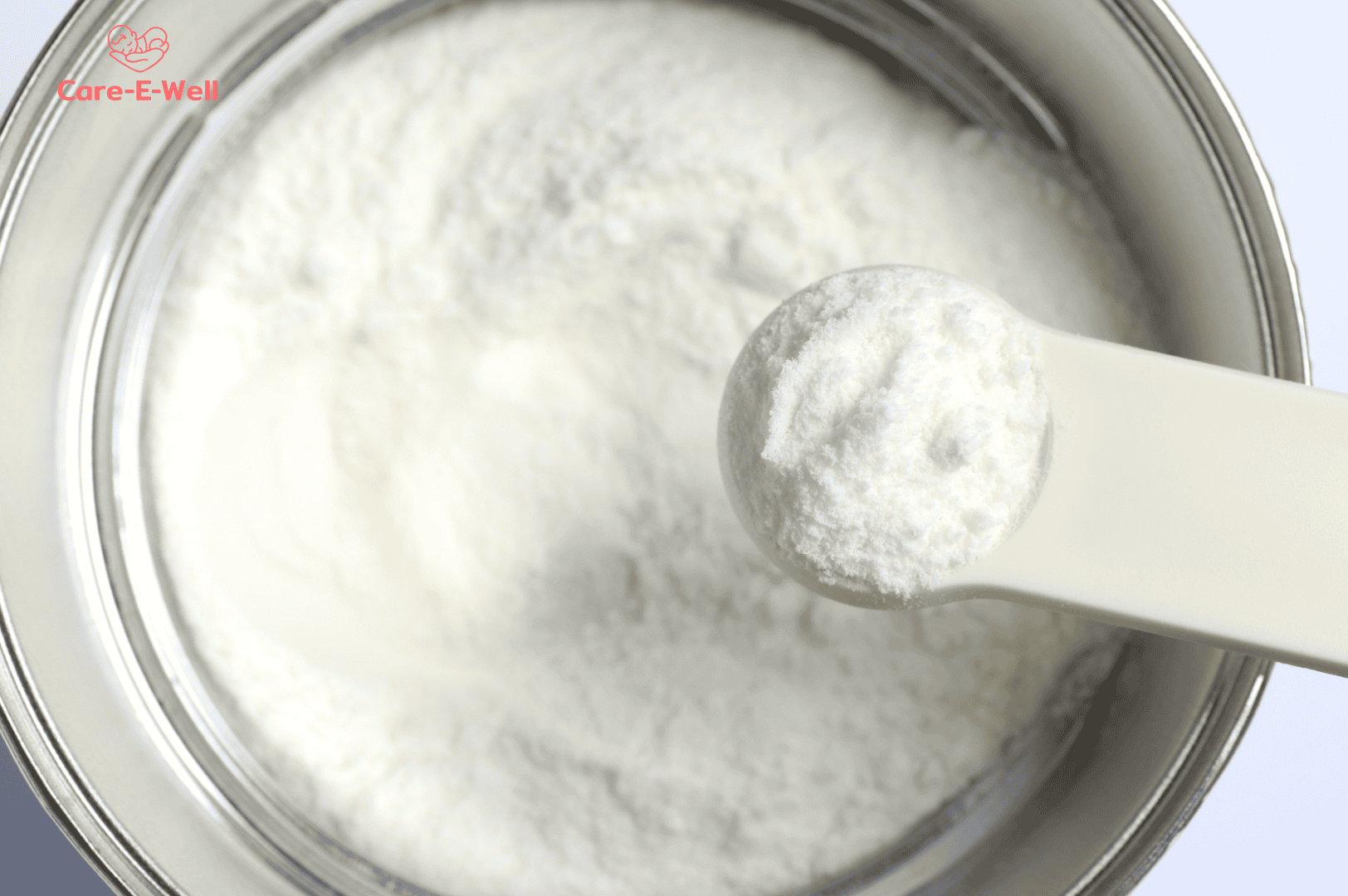
Anti-reflux formula may be useful for some formula-fed babies with frequent, troublesome regurgitation, but it is not necessary for every baby who spits up. Most infant reflux is physiological, especially when a baby is comfortable, feeds well and grows as expected.
Anti-reflux formulas are commercially thickened so milk is less likely to come back up visibly. Evidence suggests they can reduce the number of regurgitation episodes in selected infants, but they do not diagnose gastroesophageal reflux disease, do not treat every cause of vomiting and do not replace assessment when red flags are present.
Anti-reflux formula is mainly intended to reduce visible regurgitation. A baby who spits up happily and grows well often needs reassurance rather than a special formula.
What is anti-reflux formula?
Anti-reflux formula, sometimes labelled AR or anti-regurgitation formula, is infant formula made thicker than standard formula. Manufacturers may use starch, locust bean gum or another approved thickening system.
The greater viscosity can make milk less likely to flow back out of the stomach and mouth. The 2024 ESPGHAN position paper on formulas for functional gastrointestinal disorders concludes that thickened formulas can reduce visible regurgitation in formula-fed infants.
That effect is different from eliminating all reflux events inside the oesophagus. A baby can have fewer visible spit-ups without every underlying reflux episode disappearing.
When might anti-reflux formula be considered?
A clinician may consider anti-reflux formula when regurgitation is frequent enough to be genuinely troublesome after simpler feeding factors have been reviewed.
- The baby has frequent visible regurgitation that is difficult for the family to manage
- Bottle volumes may already have been adjusted to the baby’s appetite and fullness cues
- Nipple flow and bottle-feeding technique have been reviewed
- The baby is not being routinely pressured to finish bottles
- There are no red flags suggesting obstruction, infection or another illness
- The clinical picture fits uncomplicated regurgitation rather than another diagnosis
The purpose is symptom management, not to make every healthy baby completely spit-up free.
What should be checked before changing formula?
Start with how the baby feeds. Large volumes, fast nipple flow, hurried feeds and pressure to finish can all increase stomach distension or make feeding more difficult.
Responsive bottle feeding means offering milk when the baby shows hunger cues, allowing pauses and stopping at fullness cues. UNICEF guidance recommends holding the baby close and semi-upright and keeping the bottle mostly horizontal so the baby can better control the flow.
If regurgitation increased when bottle volumes became larger or a faster teat was introduced, correcting that mismatch may be more useful than changing formula immediately.

How does anti-reflux formula work?
Thickening increases the viscosity of the feed. Depending on the product, starch may thicken before or after reaching the stomach, while gums such as locust bean gum behave differently during digestion.
Clinical trials and reviews have generally found fewer visible regurgitation episodes with thickened feeds compared with standard formula. Evidence is less consistent for changes in measured acid exposure or the total number of internal reflux events.
This explains why parents may see less milk on clothes even though anti-reflux formula is not an acid treatment.
Does anti-reflux formula treat GERD?
Not by itself. Gastroesophageal reflux disease, or GERD, means reflux is causing troublesome symptoms or complications. Visible spit-up alone does not establish GERD.
Feeding pain, poor growth, recurrent respiratory symptoms, blood in vomit or significant feeding difficulty require a broader assessment. A special formula may form one part of management, but the diagnosis should not be made simply because an anti-reflux product reduces spit-up.
Is anti-reflux formula the same as acid medicine?
No. Thickened formula changes the physical properties of the feed. Acid-suppressing medicines change stomach acidity.
Acid suppression does not stop the mechanical movement of stomach contents into the oesophagus, and uncomplicated infant regurgitation does not routinely need acid-suppressing medication. Medicine decisions belong with a clinician when the history suggests GERD or another condition.
Can anti-reflux formula make stools different?
Yes. Thickening ingredients can change stool consistency, frequency or colour. Locust bean gum, for example, is a fermentable carbohydrate and can produce softer or more frequent stools in some babies, while starch-containing products may affect stools differently.
A stool change after switching is not automatically a sign of allergy or intolerance. Look at the baby’s comfort, hydration, feeding and overall stool pattern.
Persistent watery diarrhoea, blood, hard painful stools or poor growth deserve assessment rather than repeated formula switching.
Do you need a faster teat with anti-reflux formula?
A thicker formula can flow more slowly through some bottle nipples, but there is no universal teat size that works for every AR product or baby.
Follow the formula and bottle manufacturer instructions. Watch how the baby sucks, swallows and breathes. If the baby has to work excessively hard or, conversely, milk flows too quickly, the teat may not be appropriate.
Do not cut, pierce or enlarge a bottle teat yourself. An unpredictable larger opening can produce dangerously fast milk flow and increase coughing or choking.
Can you make your own anti-reflux formula by adding cereal?
Do not improvise a thickened feed by adding cereal, starch or gum to standard formula unless a qualified clinician has prescribed a specific thickening plan.
Commercial anti-reflux formulas have controlled composition. Adding cereal or extra powder at home changes viscosity, nutrient concentration and potentially calorie delivery in ways that are difficult to predict.
Never change the powder-to-water ratio to make formula thicker. Prepare infant formula exactly according to the product instructions.
Can anti-reflux formula cause overfeeding?
The formula itself does not force overfeeding, but feeding practice still matters. Some starch-thickened formulas can have different energy characteristics, and a baby may suck differently when the feed is thicker.
Do not use a target bottle volume as something the baby must finish. Follow hunger and fullness cues and review growth if a specialised formula is used for a prolonged period.
Is anti-reflux formula suitable for cow's-milk protein allergy?
Not automatically. Most anti-reflux formulas are designed for regurgitation, not for cow’s-milk protein allergy. A product can be thickened and still contain intact cow’s-milk protein.
Cow’s-milk allergy can sometimes produce reflux-like symptoms, but isolated spit-up is not enough to diagnose it. Allergy becomes more plausible when regurgitation occurs alongside features such as hives, significant eczema, blood in stool, persistent diarrhoea, repeated vomiting, feeding refusal or poor growth.
If allergy is suspected, the formula needs to be appropriate for allergy management, usually an extensively hydrolysed formula or another therapeutic option selected according to the clinical situation.
Is anti-reflux formula the same as comfort formula?
No. The terms describe different intended uses. Anti-reflux formula is primarily thickened to reduce regurgitation. Comfort formulas may use partially hydrolysed protein or altered carbohydrate composition for digestive symptoms.
Some products combine several modifications, so the front label alone is not enough. Check the full product type and intended use.
How quickly should anti-reflux formula work?
Visible regurgitation can improve within days in some babies, but there is no universal response time that proves the formula is correct. Reflux also changes naturally with age.
A planned trial should have a defined reason and review point. If there is no meaningful improvement, or if new pain, poor feeding, vomiting or growth concerns appear, the baby should be reassessed rather than simply trying a series of increasingly specialised formulas.

Should you keep a baby upright after feeding?
Holding a baby upright while awake for a short period can be comfortable and avoids vigorous movement immediately after a feed. It is reasonable if it helps.
Safe sleep is different. Reflux does not make inclined sleep, wedges, pillows or propped mattresses safer. A sleeping baby should be placed on an appropriate firm, flat infant sleep surface according to safe-sleep guidance.
Do not use cot wedges, pillows, sleep positioners or an inclined sleeping product to treat reflux.
What vomiting signs are not normal reflux?
Regurgitation usually comes up with little effort. Repeated forceful or projectile vomiting, green vomit, blood or a baby who becomes unwell needs a different level of attention.
Seek prompt medical assessment for green or bilious vomit, repeated projectile vomiting, blood in vomit, marked abdominal swelling, severe lethargy, dehydration, breathing difficulty or poor weight gain.
A practical decision path for parents
- Check whether the baby is otherwise comfortable, hydrated and growing well.
- Review hunger and fullness cues rather than aiming for fixed bottle completion.
- Check teat flow and allow pauses during feeding.
- Avoid very large feeds if the baby consistently shows fullness earlier.
- Keep the baby calmly upright while awake for a short period if helpful.
- Discuss persistent troublesome regurgitation with the baby’s clinician.
- Use anti-reflux formula only when there is a clear reason and prepare it exactly as directed.
- Reassess if symptoms do not improve or if red flags appear.
Change one factor at a time when possible. If formula, bottle, teat and feeding volume all change together, it becomes harder to understand what actually helped.
Frequently asked questions
Does anti-reflux formula stop all spit-up?
No. It can reduce visible regurgitation in some babies, but occasional spit-up may continue and can still be normal.
Can I use anti-reflux formula without seeing a doctor?
For a thriving baby with uncomplicated spit-up, product availability varies and some formulas may be sold without prescription. Persistent or distressing symptoms are still worth discussing with a clinician so red flags and feeding problems are not missed.
Is anti-reflux formula thicker before it reaches the stomach?
It depends on the thickener. Some formulas are already more viscous in the bottle, while some starch systems thicken further under gastric conditions. Follow the specific product instructions.
Does a baby need reflux medicine as well?
Usually not for uncomplicated regurgitation. Medication is considered only when a clinician identifies a specific indication.
Can anti-reflux formula be used at night?
Yes if it is the baby’s prescribed or chosen formula, but preparation and storage safety rules remain exactly the same. Do not pre-mix bottles and leave them at room temperature for convenience.
The key takeaway
Anti-reflux formula can be useful when a formula-fed baby has persistent troublesome regurgitation despite sensible feeding adjustments. Its strongest evidence is for reducing visible spit-up, not for proving GERD or treating every cause of vomiting.
Review bottle flow, volumes and responsive feeding first, never improvise thickening or alter the powder-to-water ratio, and seek assessment if regurgitation is painful, forceful, green, bloody or associated with feeding or growth problems.
Sources and references
- Haiden N, Savino F, Hill S, et al. Infant formulas for the treatment of functional gastrointestinal disorders: A position paper of the ESPGHAN Nutrition Committee. https://doi.org/10.1002/jpn3.12240
- Barbieur J, Levy EI, Vandenplas Y. Efficacy and safety of medical and nutritional management of gastroesophageal reflux in formula-fed infants: a narrative review. https://doi.org/10.1097/MOP.0000000000001147
- Tounian P, Meunier L, Speijers G, et al. Effectiveness and Tolerance of a Locust Bean Gum-Thickened Formula: A Real-Life Study. https://doi.org/10.5223/pghn.2020.23.6.511
- Riezzo G, Giordano P, Ficarella M, et al. Effect of a Partially Hydrolysed Whey Infant Formula Supplemented with Starch and Lactobacillus reuteri DSM 17938 on Regurgitation and Gastric Motility. https://doi.org/10.3390/nu9111181
- Bellaïche M, Ludwig T, Arciszewska M, et al. Safety and Tolerance of a Novel Anti-Regurgitation Formula. https://doi.org/10.1097/MPG.0000000000003289
- Miyazawa R, Tomomasa T, Kaneko H, et al. Effect of Locust Bean Gum in Anti-regurgitant Milk on the Regurgitation in Uncomplicated Gastroesophageal Reflux. https://doi.org/10.1002/j.1536-4801.2004.tb12206.x
- Dupont C, Vandenplas Y. Different thickening complexes with pectin in infant anti-regurgitation formula. https://doi.org/10.1111/apa.15015
- UNICEF UK Baby Friendly Initiative. Infant Formula and Responsive Bottle Feeding: A Guide for Parents. https://www.unicef.org.uk/babyfriendly/baby-friendly-resources/bottle-feeding-resources/infant-formula-responsive-bottle-feeding-guide-for-parents/
- World Health Organization. Making sure newborns and children under 5 years sleep safely. https://www.who.int/tools/your-life-your-health/life-phase/newborns-and-children-under-5-years/making-sure-newborns-and-children-under-5-years-sleep-safely
Did this Insight help?
A little love for something worth reading.


