
Care-E-Well Insights
Baby and Child First Aid: The Essential Parent Guide
Baby and child first aid essentials for parents: what to do first, when to call for help, and safe responses to common emergencies.
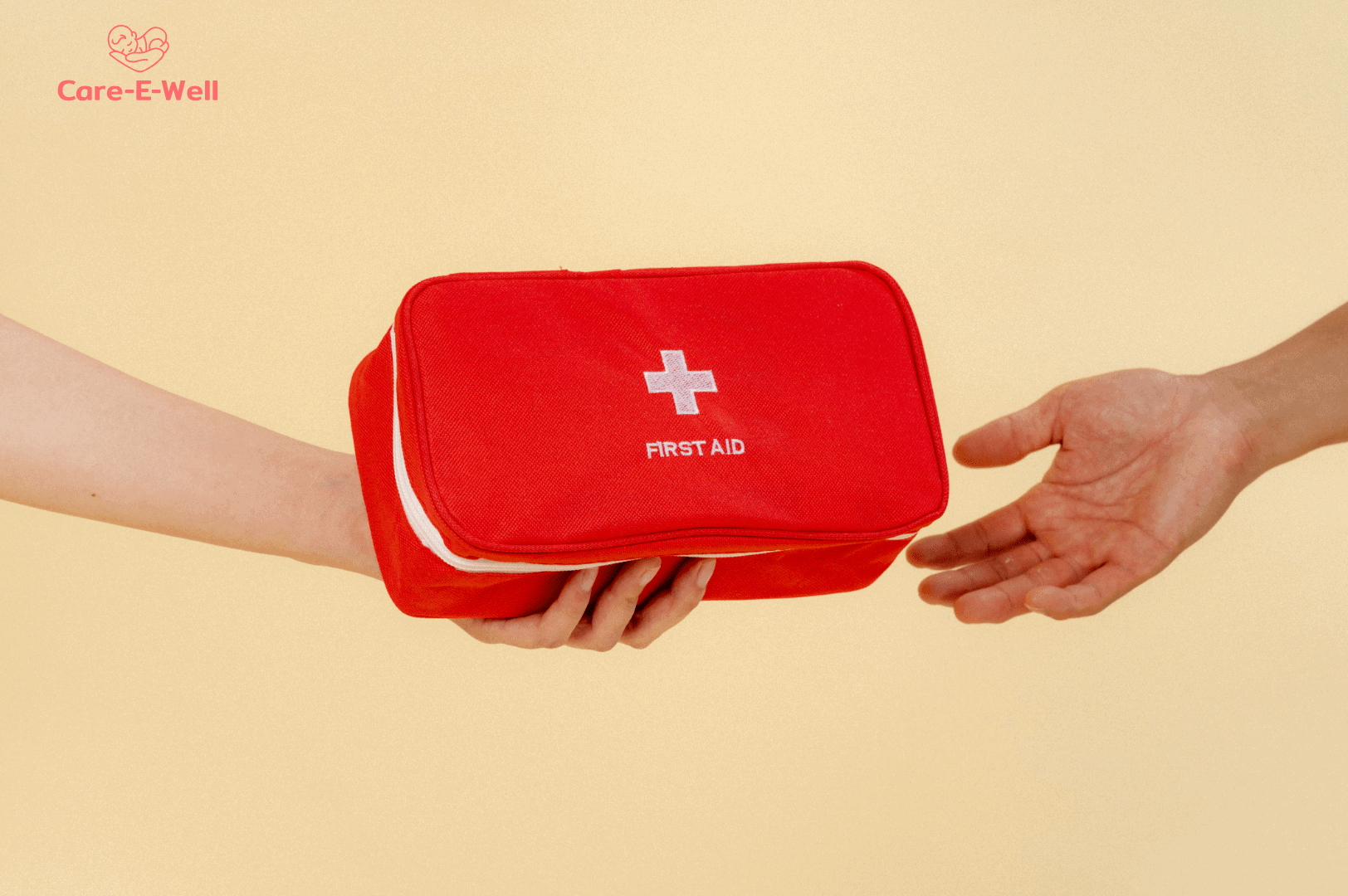
Baby and child first aid is not about memorising dozens of treatments. In an emergency, the priorities are simpler: make sure the scene is safe, recognise when the child may be seriously ill or injured, call for professional help early, and give the first aid you know while help is on the way.
Parents can learn useful skills from a practical paediatric first-aid course, especially CPR and choking management. This guide explains key decisions but does not replace hands-on training or emergency-dispatch instructions.
The best first-aid response is often a short sequence: protect, assess, call, act and reassess. You do not need to diagnose the problem before asking for emergency help.
What should you do first in a baby or child emergency?
Check for immediate danger before rushing in. Traffic, electricity, fire, smoke, water, chemicals, aggressive animals or unstable objects can injure the rescuer as well as the child.
Once it is safe to approach, quickly assess the child's response and breathing. A child who is unresponsive, not breathing normally, severely struggling to breathe or collapsing needs emergency help immediately.
- Make the scene as safe as you reasonably can.
- Check whether the child responds to you.
- Check whether breathing appears normal.
- Call the local emergency number when a life-threatening problem is present or suspected.
- Follow dispatcher instructions and begin the first aid you are trained to provide.
- Reassess the child while waiting for help.
If a baby or child is unresponsive and not breathing normally, activate emergency medical services and start age-appropriate CPR according to your training or the emergency dispatcher's instructions. Do not delay because you are uncertain about the exact cause.
Why is a paediatric first-aid course worth taking?
Studies of parents, teachers and childcare staff repeatedly identify gaps in choking, resuscitation, seizures, burns and other childhood emergencies. Training improves knowledge and confidence, but skills can decline over time, so hands-on practice and periodic refreshers matter.
If more than one adult regularly cares for the child, it is useful for several caregivers—not only one parent—to know what to do.
When should you call emergency services?
Call your local emergency number when the child has a potentially life-threatening problem, when breathing or consciousness is significantly affected, after major trauma, or whenever the situation is deteriorating quickly.
- unresponsiveness, collapse or abnormal breathing
- severe breathing difficulty or blue, grey or very pale colour
- severe choking or inability to breathe, cry or speak effectively
- uncontrolled major bleeding
- a severe allergic reaction with breathing, airway or circulatory symptoms
- a significant drowning or submersion event
- a serious burn, electrical injury or smoke inhalation
- a prolonged or concerning seizure, especially with breathing or recovery problems
- major head, neck or multiple trauma
- suspected severe poisoning with symptoms or a particularly dangerous substance
Emergency systems differ between countries. When in doubt about a rapidly worsening child, calling the emergency service allows a trained dispatcher to triage the situation and give immediate instructions.

What should parents know about CPR?
CPR supports circulation and breathing when a child is in cardiac arrest. Paediatric cardiac arrest often follows respiratory failure or other deterioration, which is one reason early recognition of abnormal breathing matters.
Technique differs by age and rescuer circumstances, and resuscitation guidelines are periodically updated. Learn infant and child CPR in an accredited course and follow current local guidance.
In a real emergency, put the phone on speaker if possible so the dispatcher can guide you. Do not postpone action while searching online for a perfect sequence.
CPR is a practical skill. Reading helps you understand why it matters; hands-on training helps you perform it when stress is high.
What should you do if a baby or child is choking?
First decide whether air is still moving. A child who is coughing forcefully, breathing and making sound may be able to clear a partial obstruction and should be closely observed while coughing.
Severe choking is different. If the child cannot breathe effectively, cannot make normal sounds, becomes blue or loses responsiveness, use age-appropriate choking first aid and activate emergency help according to current training.
Choking techniques differ for infants and older children. Do not use an adult manoeuvre automatically on a baby. A paediatric first-aid course should include supervised practice of the correct age-specific response.
Do not perform blind finger sweeps in a child's mouth. Remove an object only when you can clearly see it and can remove it safely without pushing it deeper.
What should you do for severe bleeding?
Significant external bleeding needs prompt control. Apply firm direct pressure to the wound with suitable clean material if available and maintain pressure while arranging emergency care.
If material becomes soaked, keep controlling the bleeding rather than repeatedly lifting it to inspect the wound. Follow emergency-dispatch instructions for additional measures when bleeding is severe.
Call emergency services for uncontrolled or spurting bleeding, a child becoming pale, weak or unresponsive, a deep wound with major tissue damage, or any injury where severe blood loss is possible.
What is the correct first aid for a burn?
Stop the burning process and move the child away from the heat source. Cool a thermal burn promptly with cool running water and remove jewellery or loose clothing near the area if it is not stuck to the skin.
Do not place ice directly on a burn and do not apply butter, oil, toothpaste or other household remedies. After cooling, protect the area from contamination and seek medical assessment when the burn is significant.
Urgent assessment is important for deep or extensive burns, burns involving the face, airway, hands, genitals or major joints, electrical or chemical burns, smoke inhalation, or a child who appears seriously unwell.
What should you do during a seizure?
Protect the child from nearby hazards, place them where they cannot fall, and note when the seizure starts. Do not restrain the movements and do not put food, medicine, fingers or objects into the child's mouth.
When the movements stop, check breathing and responsiveness. If the child is breathing normally but remains drowsy, monitor them closely and position them safely according to your first-aid training and the circumstances.
Call emergency services if the child has serious breathing difficulty, does not recover appropriately, is severely injured, has repeated seizures without recovery, or the seizure meets the emergency criteria in the child's existing medical plan. A first seizure also requires medical assessment.
What should you do for a severe allergic reaction?
Anaphylaxis can affect breathing, the airway and circulation and may occur with or without prominent skin symptoms. Signs can include difficult or noisy breathing, swelling of the tongue or throat, sudden collapse, marked dizziness or widespread symptoms after exposure to a likely allergen.
If the child has a prescribed adrenaline auto-injector and the situation matches their emergency plan, use it promptly as trained and call emergency services. Position and monitor the child according to their plan and dispatcher instructions.
Do not wait for a rash before treating suspected anaphylaxis. Breathing difficulty, throat swelling or circulatory collapse after an allergen exposure can be life-threatening even when skin symptoms are minimal.
What should you do after a possible poisoning?
Move the child away from the substance and identify what may have been involved. Keep the original packaging, label, plant or product information if this can be done safely.
Contact your regional poison information service or emergency medical service for case-specific advice. The correct response depends on the substance, amount, route of exposure, child's age and symptoms.
Do not induce vomiting and do not give a home “antidote” unless a poison specialist or medical professional specifically directs you to do so. Severe drowsiness, breathing problems, seizures, collapse or a dangerous known ingestion require urgent emergency assessment.
What about button batteries and strong magnets?
Some ingestions are time-critical even before symptoms appear. A swallowed button battery can cause serious internal injury, and multiple strong magnets can trap bowel tissue between them.
Suspected button-battery ingestion or ingestion of more than one strong magnet needs urgent medical assessment. Do not wait for symptoms to develop or rely on the child appearing well.
What should you do after a head injury?
Many childhood bumps are minor, but the mechanism and symptoms matter. Observe the child closely and seek medical assessment for concerning changes such as repeated vomiting, worsening drowsiness, confusion, seizure, loss of consciousness, abnormal behaviour, weakness, balance problems or a significant high-energy injury.
Call emergency services for an unresponsive child, serious breathing problems, seizure with impaired recovery, major trauma, signs of severe neurological deterioration or suspected neck injury where safe movement is uncertain.
What should you do after drowning or submersion?
Remove the child from the water only when it is safe for you to do so. Check responsiveness and breathing immediately. If the child is not breathing normally, emergency activation and resuscitation are urgent.
Drowning resuscitation has important paediatric considerations, and rescue breathing is particularly relevant because oxygen deprivation is central to drowning. Follow your training and dispatcher instructions.
A child who has experienced significant submersion may require medical assessment even after apparently recovering. Seek emergency guidance rather than waiting for delayed symptoms at home.
What should be in a family first-aid kit?
A useful kit is organised, accessible to adults and inaccessible to children. It should support basic care, not replace professional treatment.
- disposable gloves
- sterile or clean dressings and gauze
- adhesive plasters in suitable sizes
- a roller bandage
- clean water or sterile saline for irrigation where appropriate
- a thermometer
- simple wound-cleaning supplies
- any child-specific emergency medicine prescribed by their clinician
- emergency contact and medical information
Check expiry dates and replace used supplies. Store medicines securely. If your child has an emergency plan, keep prescribed equipment available and make sure caregivers know how to use it.

What information should you have ready during an emergency call?
Be ready to give the exact location, child's age, what happened, whether the child is responsive and breathing, and what first aid is already being given. Stay on the line when instructed and follow dispatcher guidance.
What common first-aid mistakes should parents avoid?
- delaying emergency help because you want to diagnose the problem first
- giving food or drink to an unresponsive or severely ill child
- putting objects into the mouth during a seizure
- inducing vomiting after poisoning
- applying ice directly to a burn
- using an age-inappropriate choking manoeuvre
- moving a seriously injured child unnecessarily when spinal injury is possible
- assuming a child is fine because they briefly stop crying
- relying on an expired or unfamiliar emergency medicine
First aid should make the situation safer while professional care is arranged. When a technique is complex or age-specific, current training and emergency-dispatch guidance are more reliable than memory from years ago.
Frequently asked questions
Do both parents need a first-aid course?
It is useful for every regular caregiver to have basic skills. Emergencies do not always happen when the most experienced parent is present.
How often should first-aid training be refreshed?
There is no single universal interval for every course, but research shows that practical skills can decline over time. Follow the refresher schedule of your recognised training provider and practise key skills periodically.
Can an online guide replace a CPR class?
No. Online material can reinforce knowledge, but CPR, choking response and other practical skills are best learned with hands-on instruction and feedback.
What if I panic in an emergency?
Call for help early, put the phone on speaker and follow the dispatcher's instructions. A simple structured response is more useful than trying to remember every detail at once.
The key takeaway
Baby and child first aid begins with recognising danger, checking responsiveness and breathing, activating professional help and giving simple evidence-based care. Learn CPR and choking management hands-on, know how to control bleeding and cool burns, never put objects in a seizing child's mouth, seek case-specific advice for poisoning, and treat severe breathing, consciousness or circulation problems as emergencies. Preparation does not remove every risk, but it makes the first minutes more organised and useful.
Sources and References
- Hewett Brumberg EK, Douma MJ, Alibertis K, et al. — 2024 American Heart Association and American Red Cross Guidelines for First Aid
- Perkins GD, Gräsner J-T, Semeraro F, et al. — European Resuscitation Council Guidelines 2021: Executive summary
- Wyckoff MH, Singletary EM, Soar J, et al. — 2021 International Consensus on Cardiopulmonary Resuscitation and Emergency Cardiovascular Care Science With Treatment Recommendations
- Dilruk Madura Arachchige HMDM — Knowledge and awareness of paediatric basic life support among parents in the Lady Ridgeway Hospital for Children, Colombo, Sri Lanka
- Li F, Jiang F, Jin X, et al. — Pediatric first aid knowledge and attitudes among staff in the preschools of Shanghai, China
- Li F, Sheng X, Zhang J, et al. — Effects of pediatric first aid training on preschool teachers: a longitudinal cohort study in China
- Cheng YH, Yeung CY, Sharma AD, et al. — Non-resuscitative first aid training and assessment for junior secondary school students
- Montana A, Salerno M, Feola A, et al. — Risk Management and Recommendations for the Prevention of Fatal Foreign Body Aspiration: Four Cases Aged 1.5 to 3 Years and Mini-Review of the Literature
- Dezfulian C, McCallin T, Bierens J, et al. — 2024 American Heart Association and American Academy of Pediatrics Focused Update on Special Circumstances: Resuscitation Following Drowning
- Hong D — Burn and Scald Injuries: Prevention and Anticipatory Guidance
Did this Insight help?
A little love for something worth reading.


