
Care-E-Well Insights
Baby Bath Safety: Preventing Slips, Burns and Drowning
Make baby bath time safer with practical steps to prevent drowning, scalds and slips, plus guidance on water temperature and supervision.
Baby bath safety depends on three things more than any special product: close supervision, safe water temperature and a secure grip. A bath can be calm and enjoyable, but it combines water, slippery surfaces and a baby who can move unexpectedly. Preparation is what turns those risks into a manageable routine.
Before your baby goes into the water, have everything within reach, check that the bath is around 37–38°C, and make sure you can keep one hand on a young baby whenever needed. Once your child is in the bath, stay close, attentive and within arm’s reach until they are completely out of the water.
The safest bath is one you are fully prepared for. Gather everything first, check the water, stay within arm’s reach and never leave a baby alone in the tub.
Why does baby bath safety need so much attention?
Young children have little ability to protect themselves in water. WHO’s 2026 drowning fact sheet identifies children aged 0–4 years as the age group with the highest drowning rates globally and notes that risk rises when children interact with water without active adult supervision.
The bath also creates risks that are not related to drowning. Children can slip, fall against hard surfaces or be scalded by excessively hot water. Research on bathtub and shower injuries has identified falls, hot-water scalds and submersion among important injury mechanisms.
None of this means bath time should feel frightening. It means the routine should be designed so that supervision and safe handling do not depend on luck.
What does safe supervision look like during a baby bath?
UNICEF describes effective water supervision as close, constant and attentive. For a young child in water, stay within arm’s reach. Do not use a phone, answer the door, prepare food or leave the bathroom to collect something you forgot.
If you genuinely need to leave, take your baby with you. A few seconds alone is not made safe by shallow water, a bath seat or a sibling watching nearby.
Never leave a baby or young child unattended in a bath, even for a moment. There is no safe amount of bath water in which a child can be left alone.
Can an older sibling watch the baby?
No. Another child should not carry the responsibility for bath supervision. An adult caregiver needs to remain present and attentive. Research on fatal bath drownings has repeatedly identified supervision lapses as a central factor.
How much water is safe in a baby bath?
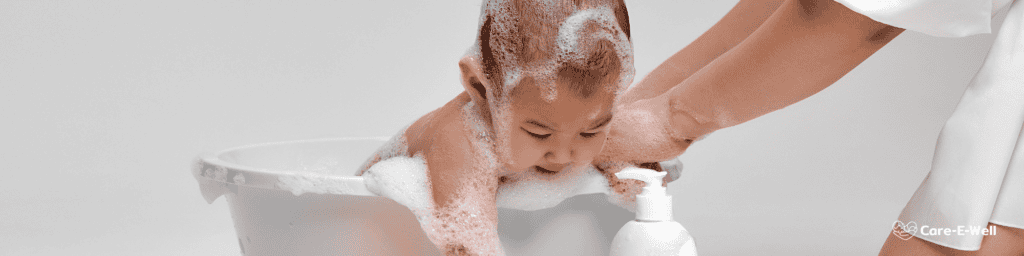
Use only the amount of water needed for a comfortable wash, but do not treat shallow water as protection against drowning. UNICEF notes that a toddler or child can drown in about 5 cm of water. Research reviewing fatal bath drownings has likewise found deaths in very shallow bath water.
The practical safety rule is therefore not “find a safe depth.” It is “keep the water modest and supervise continuously.” Empty the tub, basin or baby bath as soon as you finish so it does not remain an accessible water hazard.
Water depth does not replace supervision. A child can drown in very shallow water, so keep the bath modest and your attention continuous.
Are baby bath seats safe?
A bath seat may help position a baby, but it is not a safety device and never makes it acceptable to step away. Published case reports and drowning-prevention reviews have described fatal and non-fatal incidents involving bath seats when infants were left unattended.
A baby can tip, slide, climb or become trapped in a position that compromises breathing. If you use a bathing support, follow its instructions and age limits, but keep the same close supervision you would use without it.
How do you prevent slips while bathing a baby?
Slips can happen to the baby, but they can also happen to the adult lifting a wet child. Make the whole bathing area stable before you start.
- Place the baby bath or basin on a stable surface intended for that use.
- Keep the floor as dry and uncluttered as possible.
- Put towels, clothes and nappy supplies within reach before the bath begins.
- Remove jewellery or objects that may scratch the baby or interfere with your grip.
- Support a young baby’s head and neck securely.
- Keep a steady hand on the baby rather than relying on the shape of the tub.
- Lift slowly, because wet skin becomes very slippery.
- Wrap the baby immediately in a towel instead of carrying them wet across the room.
If you use a full-size bathtub, a suitable non-slip surface can reduce sliding, but it does not replace holding and supervising your child. As babies learn to sit or stand, assume that a new movement can happen before you expect it.
What bath water temperature is safest?
UNICEF recommends about 37–38°C (98.6–100.4°F), close to body temperature. Check the water before your baby enters by using a bath thermometer or running an open hand through the water after mixing it thoroughly.
Hot tap water can cause serious scalds, particularly in young children. WHO includes lowering hot-water tap temperatures among burn-prevention measures, while UNICEF recommends a home water-heater setting no higher than 50°C (122°F) where appropriate, or the use of a thermostatic mixing valve when the heater temperature cannot be changed.
How can you prevent hot spots in the bath?
Fill and mix the bath completely before putting your baby in. Swirl the water so hotter and cooler areas combine, then check the temperature in more than one place. Turn the taps off before the baby enters.
Never add hot water while your baby is sitting in the bath. If the water has cooled too much, take your baby out first, adjust and remix the bath, and test it again.
What should you do if a bath scald happens?
Remove your child from the heat source immediately. WHO advises cooling a thermal burn with cool running water and advises against using ice, oils or household pastes. UNICEF also recommends prolonged cooling with running water and medical assessment for significant, deep or sensitive-area burns.
Because babies are small and burns can be difficult to judge, seek prompt professional advice after a meaningful scald. Call emergency services for a severe or extensive burn, breathing problems, reduced responsiveness or any other life-threatening situation.
What should you have ready before the bath?
One of the simplest ways to prevent supervision lapses is to make forgetting something almost impossible.
- A clean towel opened and ready.
- A clean nappy and clothes.
- A washcloth or soft cloth.
- Any gentle cleanser you plan to use.
- A bath thermometer if you use one.
- A safe place to set your baby down after the bath.
- A phone nearby only for emergencies, not for scrolling or calls during the bath.
UNICEF specifically advises having everything needed for bath time at hand before putting a young child in the tub. If something non-essential is missing, finish the bath without it rather than leaving to fetch it.
What is the safest way to put a newborn into the bath?
- Confirm that the room is comfortably warm and the water is about 37–38°C.
- Place yourself in a stable position where you can reach the entire bath easily.
- Undress your baby only when the bath and towel are ready.
- Support the head, neck and upper body securely.
- Lower your baby gradually into the water, keeping the face well clear.
- Maintain a secure hold throughout the bath.
- Wash gently without vigorous rubbing.
- Lift your baby out with both attention and grip focused on the child.
- Wrap and dry promptly.
Keep the routine slow. Trying to bathe a baby while also answering messages, managing another task or rushing to a deadline increases opportunities for distraction and slips.
When does bath safety change as a baby gets older?
The hazards change faster than many parents expect. A baby who sat quietly last week may suddenly roll, pull to stand, reach for a tap or lean over the side. Developmental progress should make you more alert to new movement, not less concerned about supervision.
Once a child can sit independently, you may need less physical support every second, but you still need continuous adult presence. Swimming ability later in childhood also does not make an unsupervised bath appropriate for a young child.
Should you use bath toys?
A small number of suitable bath toys can make washing easier, but keep the bath area uncluttered. Too many objects can get in the way of your hands or tempt an older baby to reach, twist or stand suddenly.
Drain and dry toys after use when possible. Discard damaged toys or objects with sharp edges or small detachable parts that are unsuitable for your child’s developmental stage.
What about bathing two children together?
Shared bath time can be practical, but it does not reduce the supervision required. A baby should not be considered safe because an older child is in the tub with them. In fact, managing two moving children can divide an adult’s attention.
If you cannot safely support the baby and supervise the older child at the same time, bathe them separately or have another responsible adult help.

What distractions are most risky?
Research into childhood drowning has examined why supervision lapses happen. Distraction can come from phones, conversations, household tasks, other children or simply believing a safety product will take over the supervising role.
Treat bath time as a short period of single-task care. Put the phone on silent unless you need it available for an emergency. If the doorbell rings, let it wait or take the child out of the bath with you.
What should you do if a child slips under the water?
Lift the child out immediately and assess breathing and responsiveness. If the child is not breathing normally, is unresponsive or you are concerned about a drowning event, call emergency services and begin appropriate resuscitation if you are trained to do so.
Any child with breathing difficulty, persistent coughing, unusual sleepiness, confusion, blue or grey colour, or reduced responsiveness after submersion needs urgent medical assessment. Do not rely on the child simply “seeming fine” if concerning symptoms are present.
A quick baby bath safety check
- Everything is within reach before the baby enters the water.
- Water is mixed and checked at about 37–38°C.
- Taps are off before the bath starts.
- The adult is within arm’s reach and fully attentive.
- The baby has secure physical support appropriate for their age.
- The floor and lifting area are stable and uncluttered.
- No bath seat or sibling is being used as a substitute for adult supervision.
- The bath will be emptied immediately after use.
FAQ
Can I leave my baby in the bath for 30 seconds?
No. If you need to leave the bathroom, take your baby out of the water and bring them with you. Drowning can be rapid and quiet.
Is a bath seat enough if my baby can sit?
No. Bath seats and supports do not replace an attentive adult within arm’s reach. A sitting baby can still tip, slide or reach unexpectedly.
Is a very shallow bath safe without supervision?
No. UNICEF warns that children can drown in around 5 cm of water. There is no safe bath depth for leaving a young child unattended.
What temperature should a baby bath be?
About 37–38°C is ideal according to UNICEF. Mix and check the water before putting your baby in.
Should I answer the phone during bath time?
Keep your attention on your child. If a call is not an emergency, let it wait. If you must deal with something urgent, remove your baby from the bath first.
The key takeaway
Baby bath safety is less about complicated equipment and more about removing predictable hazards. Stay within arm’s reach, keep your attention on the child, prepare everything before the bath, use water around 37–38°C and maintain a secure grip on wet, moving babies. When supervision, temperature control and stable handling are built into the routine, bath time can stay both safe and relaxed.
Sources/References
- World Health Organization — Drowning
- World Health Organization — Burns
- UNICEF Parenting — Drowning prevention tips
- UNICEF Parenting — How to babyproof your home
- UNICEF Parenting — Burns, scalds and fire-related injuries
- Peden AE, Franklin RC, Pearn J — Unintentional fatal child drowning in the bath: A 12-year Australian review (2002–2014)
- Byard RW, Donald T — Infant bath seats, drowning and near-drowning
- Mao S, McKenzie LB, Xiang H — Injuries Associated With Bathtubs and Showers Among Children in the United States
- Ashraf L, Zia N, Vincenten J, et al. — Effectiveness of interventions to prevent drowning among children under age 20 years: a global scoping review
- Peden AE, Franklin RC — Causes of distraction leading to supervision lapses in cases of fatal drowning of children 0–4 years in Australia: A 15-year review
- Conover K, Romero S — Drowning Prevention in Pediatrics
Did this Insight help?
A little love for something worth reading.


