
Care-E-Well Insights
Baby-Led Weaning vs Spoon Feeding: Pros, Cons and Evidence
Baby-led weaning vs spoon feeding: compare evidence, nutrition, choking risk, pros and cons, and learn why a flexible approach can work.
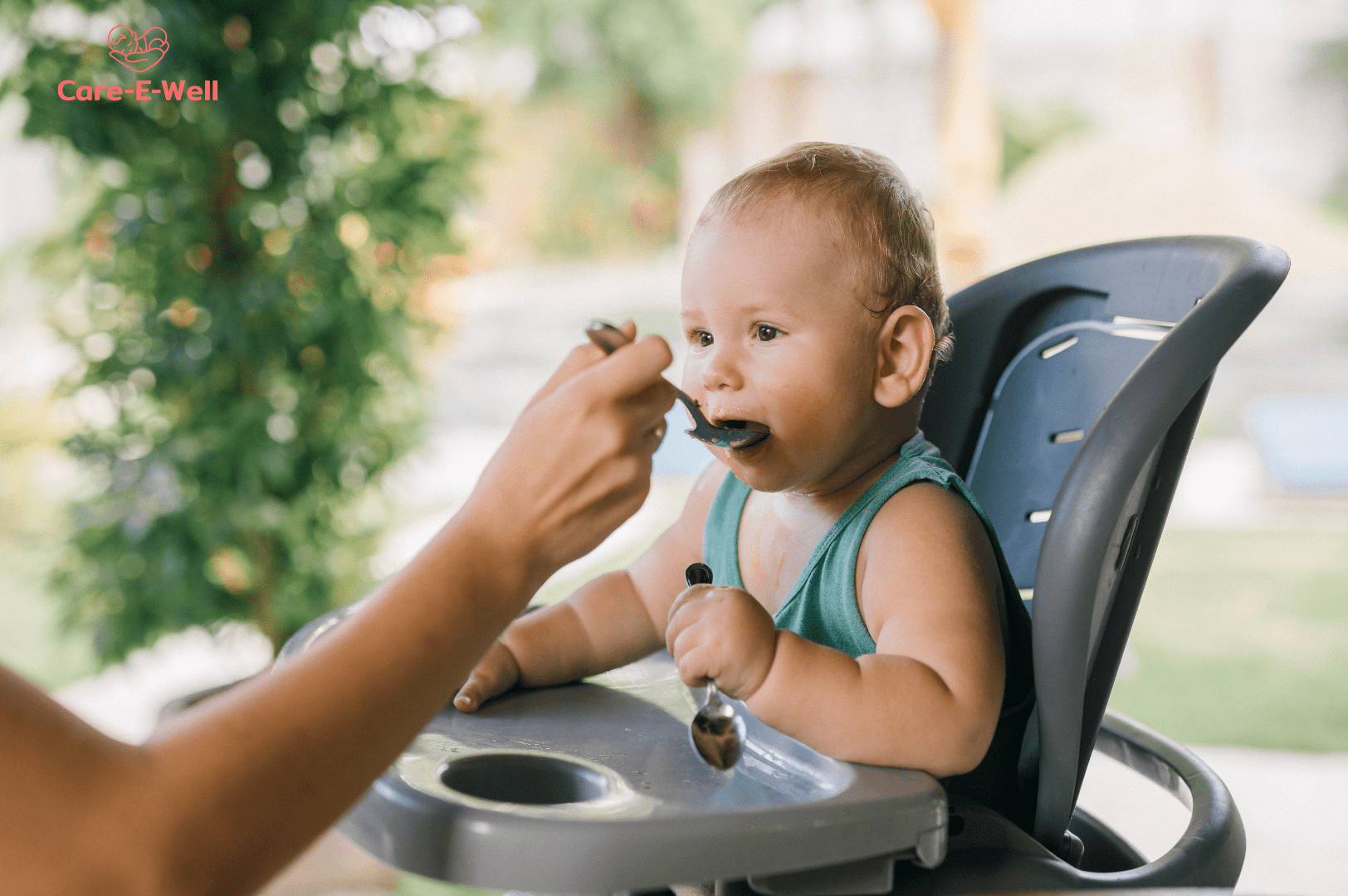
Baby-led weaning vs spoon feeding is not a contest with one universally superior winner. Healthy babies can learn to eat through self-feeding, responsive spoon feeding, or a combination of both. What matters most is that foods are developmentally appropriate, nutrient-dense, safely prepared and offered without pressure.
Research comparing the two approaches is still smaller than the confidence of many online claims. The strongest trials of a modified baby-led approach suggest that self-feeding can support adequate growth and nutrient intake when parents deliberately include iron-rich, energy-dense and low-choking-risk foods. Spoon feeding can also be responsive and developmentally supportive when the baby controls whether and how much to eat.
You do not have to choose a feeding identity. A flexible approach that follows your baby's skills and appetite can combine the strengths of self-feeding and spoon feeding.
What is the difference between baby-led weaning and spoon feeding?
Baby-led weaning usually means offering graspable pieces of family foods so the baby brings food to their own mouth. Traditional spoon feeding usually begins with smooth or mashed foods offered by a caregiver, then progresses toward lumpier textures and self-feeding.
In real families, the boundary is often much less neat. A baby may self-feed soft broccoli at lunch, accept iron-rich lentil mash from a spoon at dinner and hold a preloaded spoon the next day. Evidence does not show that mixing methods is harmful.
Does baby-led weaning mean no purées or spoons?
Strict definitions sometimes describe baby-led weaning as almost entirely self-feeding with little or no caregiver spoon feeding. That is a research definition, not a safety requirement. A spoon is simply a tool; the important distinction is whether feeding remains responsive.
Responsive spoon feeding means offering food, watching the baby's cues, allowing pauses and stopping when the baby signals they have had enough. It is different from repeatedly putting a spoon into a closed or turning-away mouth.
What does the evidence say about baby-led weaning?
A 2018 systematic review found promising but limited evidence around baby-led feeding, with many studies relying on parent-reported feeding style. It highlighted the same practical questions parents still need to consider: energy intake, iron, growth, choking, dietary quality and feeding behaviour.
The BLISS randomised controlled trial tested a modified baby-led approach designed specifically to reduce concerns about low iron intake, low energy intake and choking. Families were encouraged to include an iron-rich food, an energy-rich food and a food prepared to minimise choking risk at meals.
Growth and weight
In the BLISS trial, a baby-led approach did not produce a meaningful difference in body-mass-index z-score at 24 months compared with traditional spoon feeding. This is important because baby-led weaning is sometimes promoted as a proven way to prevent obesity; the available randomised evidence does not support that claim.
Babies naturally vary in appetite, growth pattern and pace of eating. Feeding method should therefore not be used as a substitute for monitoring growth or discussing concerns with a healthcare professional.
Iron and other nutrients
Iron is one of the most important nutritional considerations once complementary feeding begins. Some observational studies of unmodified baby-led feeding have found lower iron intake than in traditionally spoon-fed babies. However, the modified BLISS approach did not increase iron deficiency when families were specifically taught to offer iron-rich foods.
This means the useful lesson is not that self-feeding is nutritionally unsafe. It is that finger foods should be planned with the same nutritional care as spoon-fed meals. Soft strips of meat, flaked fish, egg, pulses in a graspable form and iron-fortified foods can all contribute, depending on the family's diet and the baby's abilities.
Choking
Randomised evidence from modified baby-led feeding has not shown a higher choking rate than traditional feeding when parents receive practical guidance. That does not make choking risk disappear. Both spoon-fed and self-feeding babies can be offered unsafe foods.
A baby eating solids should be upright, awake and directly supervised. Foods must be prepared in a texture and shape appropriate to the baby's developmental skills. Never rely on a feeding method, gagging experience or previous success as protection from choking.
What are the possible advantages of baby-led weaning?
Self-feeding gives babies frequent opportunities to practise reaching, grasping, bringing food to the mouth and managing different textures. It may also make it easier for the baby to control the pace of eating because the caregiver is not deciding when each mouthful enters the mouth.
- The baby can explore food with hands, lips and mouth at their own pace.
- Family foods can sometimes be adapted rather than prepared as a separate purée.
- Meals may naturally include more shared eating and observation of other family members.
- The caregiver can focus on offering suitable foods while the baby decides what and how much to eat.
These are practical possibilities rather than guaranteed developmental advantages. Claims that baby-led weaning reliably prevents picky eating, obesity or feeding problems go beyond current evidence.
What are the possible disadvantages of baby-led weaning?
The main concerns are not the absence of a spoon itself. They are whether the food offered supplies enough energy and micronutrients, whether the texture is safe and whether the baby is developmentally ready to self-feed effectively.
- Iron-rich foods can be overlooked if meals mainly consist of fruit, vegetables, bread or low-iron finger foods.
- Some babies eat very small amounts at first and may need a wider range of energy-dense options.
- Food preparation requires attention to choking hazards.
- Babies born prematurely or with oral-motor, developmental or growth concerns may need an individual feeding plan.
A baby-led approach also does not require the baby to manage every texture alone. If the baby tires easily or struggles with a particular food, responsive assistance can be appropriate.
What are the advantages of spoon feeding?
Spoon feeding can make soft, mashed and mixed foods easy to offer, including iron-fortified cereals, lentil dishes, yoghurt and combinations that would be difficult for a new eater to scoop independently. It can also help families introduce complementary foods while the baby's grasping skills are still emerging.
Spoon feeding does not have to be passive. Give the baby time to open their mouth, let them touch the spoon, offer a preloaded spoon when practical and gradually increase opportunities for self-feeding.
What are the disadvantages of spoon feeding?
The main risk comes from non-responsive feeding rather than from the spoon. If a caregiver focuses on finishing a bowl, distracts the baby into eating, scrapes food from the lips back into the mouth or continues after clear refusal cues, the baby's own hunger and satiety signals become less central to the meal.
Staying on completely smooth purées for too long can also limit texture experience. Complementary feeding should progress in consistency and variety as the baby's skills develop.

Can you combine baby-led weaning and spoon feeding?
Yes. For many families, combining approaches is the most practical option. The baby can self-feed some foods and accept other foods from a spoon, while the caregiver responds to cues in both situations.
A mixed approach can also make nutritional planning easier. For example, breakfast might include iron-fortified cereal on a preloaded spoon plus soft fruit, while lunch includes soft vegetables and shredded or tender meat.
The most evidence-aligned question is not "Which method am I doing?" but "Is my baby safe, ready, receiving nutrient-dense foods and allowed to control appetite?"
How to choose an approach for your baby
Start with your baby's developmental abilities and your family's practical needs. A baby who can sit with good head control, reach accurately and bring food to the mouth may enjoy substantial self-feeding. Another baby may prefer more assisted meals at first.
- Offer developmentally suitable textures rather than choosing texture by ideology.
- Include an iron-rich food regularly from the start of complementary feeding.
- Include energy-dense foods, not only fruit and vegetables.
- Progress texture as skills develop.
- Let hunger and satiety cues guide the amount eaten.
- Keep milk feeds appropriate for age while solids gradually increase.
If your baby was born prematurely, has poor growth, known anaemia, swallowing difficulty, low muscle tone, significant developmental delay or recurrent coughing during meals, ask a qualified healthcare professional about an individual plan before relying on a standard feeding approach.
Frequently asked questions
Is baby-led weaning safer than spoon feeding?
No feeding method is inherently free from choking risk. Research on modified baby-led feeding has not shown more choking than traditional feeding when foods are prepared safely, but safe texture, upright positioning and direct supervision are essential with either method.
Does spoon feeding cause overeating?
A spoon does not cause overeating by itself. Pressure, ignoring fullness cues and feeding to a predetermined portion can make feeding less responsive. Spoon feeding can be fully responsive.
Does baby-led weaning prevent picky eating?
Some studies report differences in food enjoyment or fussiness, but the evidence is not strong enough to promise that baby-led weaning prevents picky eating.
Can I use purées and still let my baby self-feed?
Yes. You can offer a preloaded spoon, let the baby touch and explore purées, and combine spoonable foods with safe finger foods.
Conclusion
Baby-led weaning and spoon feeding are both tools, not nutritional philosophies that parents must follow perfectly. Choose the mix that suits your baby's development, prioritise iron and nutrient density, advance textures safely and keep the baby in charge of appetite.
Sources and References
- World Health Organization. WHO Guideline for complementary feeding of infants and young children 6–23 months of age. https://www.who.int/publications/i/item/9789240081864/
- European Food Safety Authority. Appropriate age range for introduction of complementary feeding into an infant's diet. https://www.efsa.europa.eu/en/news/age-start-complementary-feeding-infants
- D'Auria E, Bergamini M, Staiano A, et al. Baby-led weaning: what a systematic review of the literature adds on. Italian Journal of Pediatrics. 2018. DOI: https://doi.org/10.1186/s13052-018-0487-8
- Taylor RW, Williams SM, Fangupo LJ, et al. Effect of a Baby-Led Approach to Complementary Feeding on Infant Growth and Overweight. JAMA Pediatrics. 2017. DOI: https://doi.org/10.1001/jamapediatrics.2017.1284
- Erickson LW, Taylor RW, Haszard JJ, et al. Impact of a Modified Version of Baby-Led Weaning on Infant Food and Nutrient Intakes: The BLISS Randomized Controlled Trial. Nutrients. 2018. DOI: https://doi.org/10.3390/nu10060740
- Daniels L, Taylor RW, Williams SM, et al. Impact of a modified version of baby-led weaning on iron intake and status: a randomised controlled trial. BMJ Open. 2018. DOI: https://doi.org/10.1136/bmjopen-2017-019036
- Doğan E, Yılmaz G, Çaylan N, et al. Baby-led complementary feeding: Randomized controlled study. Pediatrics International. 2018. DOI: https://doi.org/10.1111/ped.13671
- Morison BJ, Taylor RW, Haszard JJ, et al. How different are baby-led weaning and conventional complementary feeding? BMJ Open. 2016. DOI: https://doi.org/10.1136/bmjopen-2015-010665
- Rowan H, Lee M, Brown A. Estimated energy and nutrient intake for infants following baby-led and traditional weaning approaches. Journal of Human Nutrition and Dietetics. 2022. DOI: https://doi.org/10.1111/jhn.12981
Did this Insight help?
A little love for something worth reading.


