
Care-E-Well Insights
Baby Refuses Solid Food: Common Reasons and What to Try
Baby refusing solids? Learn common reasons, low-pressure feeding strategies, texture tips and when to seek professional advice.
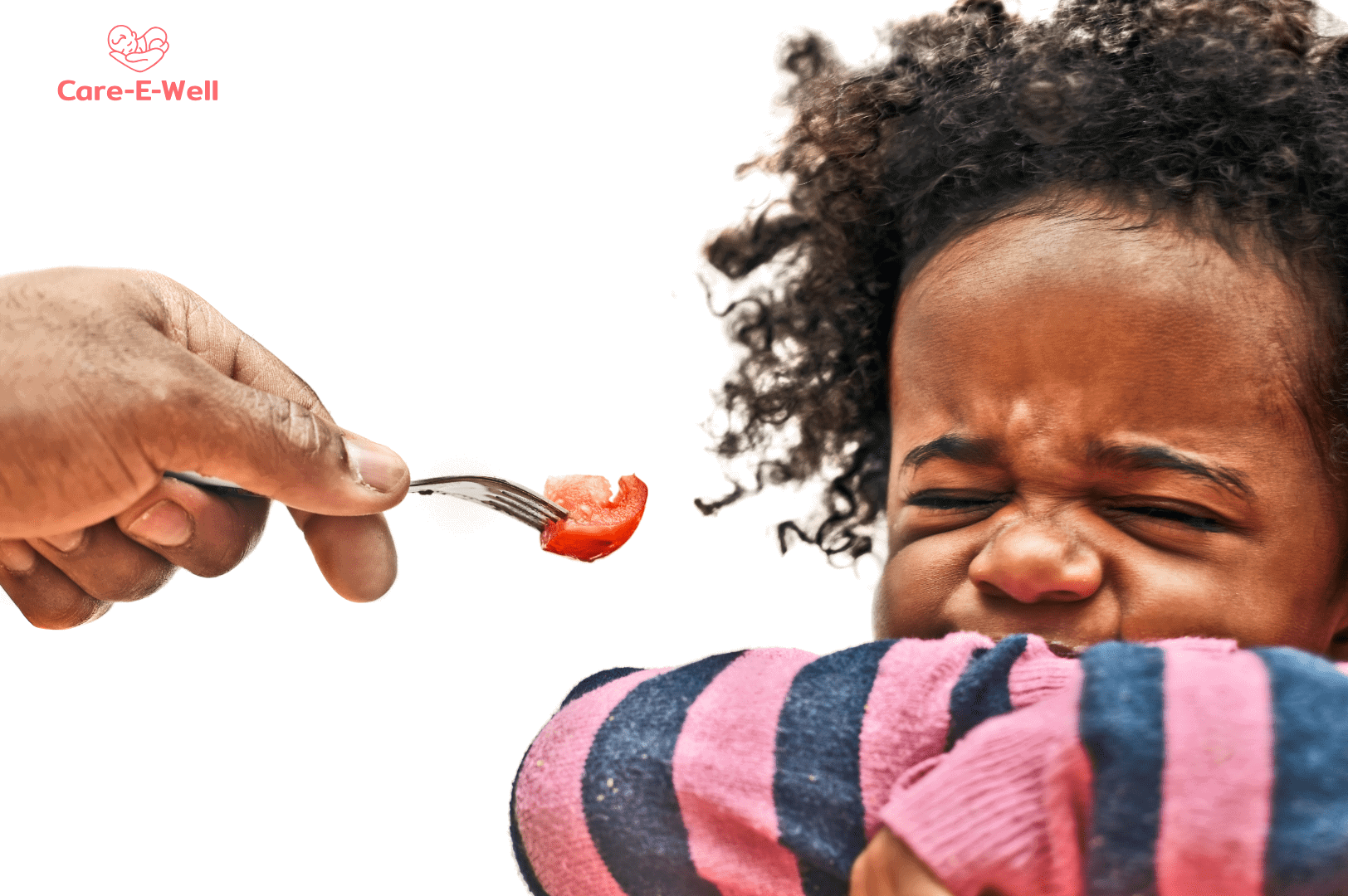
When a baby refuses solid food, it can feel as though every meal has become a test. In the early months of complementary feeding, however, refusal is often part of learning rather than proof that something is wrong. Babies are meeting unfamiliar tastes, textures, smells, utensils and routines while still relying heavily on breast milk or infant formula.
The most useful first response is usually not to push harder. WHO and UNICEF guidance on responsive feeding emphasises patience, encouragement and attention to hunger and fullness cues. A baby may need repeated, calm opportunities with a food before accepting it, and one difficult meal tells you very little about how feeding will go next week.
A baby refusing solid food does not automatically mean they dislike solids. Often they are learning a new skill, adjusting to texture, or simply not hungry at that moment.
Why might a baby refuse solid food?
There is rarely one universal reason. The pattern matters: whether refusal happens with every food or only certain textures, whether the baby is interested in touching food, whether milk was offered just before the meal, and whether the baby looks comfortable while eating.
The baby may simply not be hungry
Complementary feeding adds foods alongside breast milk or formula. Early on, babies still get a large share of their nutrition from milk, so appetite for solids can vary from meal to meal. A substantial milk feed immediately before food can leave little interest in a second meal.
Instead of withholding needed milk to create hunger, look at the overall rhythm of the day. Offer solids when the baby is awake, comfortable and showing some appetite, while continuing milk feeds appropriately for age and feeding method.
The taste or texture is unfamiliar
New foods are a sensory experience. A baby may grimace, spit food out, close their mouth or turn away even when they are not permanently rejecting the food. UNICEF advises parents not to force a refused food and to try again later; WHO likewise recommends responsive feeding rather than pressure.
Repeated exposure can mean offering the same food again on another day, changing its texture appropriately, or pairing a familiar taste with something new. It does not mean repeatedly putting food into a baby's mouth after they have clearly signalled that they are finished.
The texture may not match current feeding skills
WHO recommends gradually increasing food consistency and variety as a baby's abilities develop. EFSA's assessment of complementary feeding also recognises that developmental readiness varies between infants. A baby who manages smooth mash comfortably may need time before handling lumpier foods, while another may be keen to grasp soft finger foods.
Avoid assuming that refusal means you must go back permanently to very smooth food. Instead, adjust texture enough for safety and current skill while continuing gradual progression. The goal is not to make every meal effortless; it is to give manageable practice.

The baby may be tired, distracted or uncomfortable
Feeding is harder when a baby is exhausted, upset, overstimulated or struggling to sit comfortably. A short, calm meal can work better than a long session that frustrates everyone.
Check the basics before changing the entire feeding plan: Is the baby alert? Is the seating stable and supportive? Is the food too hot? Is the baby being rushed? Is the environment so busy that eating cannot hold their attention?
Teething, illness or temporary discomfort can change appetite
Appetite often changes when children are unwell or uncomfortable. A brief dip in interest in solids may occur without signalling a lasting feeding problem. During these periods, keep meals low pressure and continue appropriate milk feeds and fluids.
If refusal is persistent or feeding appears painful, do not keep escalating pressure at the table. A health professional can help assess whether illness, oral discomfort, growth concerns or a feeding or swallowing difficulty may be contributing.
What to try when your baby refuses solid food
1. Make the meal easier to say yes to
Start with a small amount. A large bowl can make parents feel there is a target to finish, even though complementary feeding is meant to be responsive. Put a small amount on the tray or spoon and add more if the baby remains interested.
Keep the baby upright and well supported. Offer food when they are calm and awake. Remove obvious distractions when possible, but normal family conversation is fine; WHO describes feeding as an interactive experience in which caregivers respond to the child.
2. Follow cues instead of chasing bites
Opening the mouth, leaning towards food, reaching, watching the spoon or bringing food to the mouth can indicate interest. Turning away, closing the mouth, pushing food away, becoming upset or losing interest can indicate a pause or finish.
You do not need to interpret every movement perfectly. The principle is simple: offer, observe and respond. If the baby refuses, pause. You can try once more gently, but persistent refusal is a signal to end the attempt rather than turn the meal into a contest.
3. Repeat foods without pressure
Acceptance often develops over multiple exposures. Offer a rejected food again on another day alongside something familiar. Change one variable at a time, such as texture, temperature or presentation, so you can see what makes the food easier to manage.
Do not replace every rejected nutritious food with a sweet or highly preferred alternative. WHO's complementary-feeding guideline recommends prioritising diverse, nutrient-dense foods and limiting foods high in sugar, salt and unhealthy fats.
4. Let your baby participate
Babies learn by looking, touching, squeezing and bringing food to their mouths. Mess is not evidence that the meal failed. Depending on development, offer a preloaded spoon, soft finger food or a small amount of food on the tray so the baby can explore.
Spoon feeding and self-feeding do not have to be competing philosophies. A responsive meal can include both. The useful question is whether the baby can participate safely and whether the caregiver remains attentive to cues.
5. Keep expectations realistic in the first weeks
At the beginning, a few tastes can be meaningful practice. WHO recommends starting with small amounts at around 6 months and increasing quantity, variety and meal frequency gradually. Early complementary feeding is not a race to replace milk.
Progress often comes unevenly. A baby can eat enthusiastically one day and barely taste anything the next. Look at the pattern across days rather than judging feeding by a single meal.
Could milk timing be affecting solids?
It can. If a baby has just had a full milk feed, they may not want much solid food. Yet deliberately cutting milk too quickly is not the answer, especially in the first year when breast milk or infant formula remains important.
A practical approach is to create some natural space between milk and solids when the baby's routine allows it. As complementary feeding develops, the balance changes gradually rather than through an abrupt switch.

What if the baby accepts purées but refuses lumps or finger foods?
Treat this as a texture-progression question rather than a behavioural battle. WHO advises increasing consistency as the child develops. Offer safe, manageable textures regularly, but step down slightly if the current texture repeatedly overwhelms the baby's skills.
Watch what happens during refusal. Gagging can occur while babies learn to manage texture, but persistent coughing, choking, breathing changes, obvious pain or difficulty swallowing deserves professional assessment rather than repeated home experimentation.
Seek professional advice if feeding refusal is persistent and you are worried about growth or hydration, if eating appears painful, or if your baby repeatedly coughs, chokes or struggles to swallow during meals.
What not to do
- Do not force the baby's mouth open or continue spooning after clear refusal.
- Do not use distraction as the only way to get food into the baby.
- Do not assume one rejected food is permanently disliked.
- Do not compare portions with another baby's portions as a measure of success.
- Do not rush texture progression beyond safe current skills, but also avoid freezing the diet at one texture without reason.
A simple reset for the next three meals
- Choose a time when your baby is awake and comfortably hungry.
- Offer one familiar food and one appropriate new or less familiar option.
- Keep the portion small and let the baby touch or self-feed where developmentally appropriate.
- Watch cues and stop when the baby consistently turns away or becomes upset.
- Note what seemed easier: texture, temperature, timing, utensil or self-feeding.
- Try again at the next planned meal without compensating with pressure.
This short reset helps you observe rather than react. If refusal continues across many meals, the pattern you notice will also be useful information to share with your child's health professional.
Frequently asked questions
Should I skip a milk feed so my baby eats more solids?
Usually not as a routine strategy. Families introduce complementary foods alongside breast milk or formula, and milk remains nutritionally important during the transition. Adjust timing gently rather than abruptly removing milk feeds.
Is it normal for a baby to spit food out?
Yes, especially while learning. Spitting can reflect unfamiliar taste, immature oral skills, fullness or simply exploration. What matters is the overall feeding pattern and whether the baby can safely manage increasingly varied textures.
How many times should I offer a food before giving up?
There is no evidence-based magic number for every baby or every food. Repeated, pressure-free exposure is more important than reaching a target count.
What if my baby only wants fruit?
Continue offering a varied diet rather than using fruit as the automatic replacement for every rejected food. Pair familiar foods with iron-rich, savoury and varied options so the baby's experience broadens gradually.
Conclusion
When a baby refuses solid food, the best first steps are usually to reduce pressure, check timing and comfort, match texture to current skills, and keep offering varied foods calmly. Complementary feeding is a developmental process, and uneven progress is common.
If refusal is persistent, feeding looks difficult or painful, or you have concerns about growth, hydration or swallowing, seek individual assessment rather than trying to solve the problem by pushing more food.
Sources and References
- World Health Organization — WHO Guideline for complementary feeding of infants and young children 6–23 months of age — https://www.who.int/publications/i/item/9789240081864
- World Health Organization — Infant and young child feeding — https://www.who.int/news-room/fact-sheets/detail/infant-and-young-child-feeding
- World Health Organization — Complementary feeding — https://www.who.int/health-topics/complementary-feeding
- World Health Organization — Appropriate complementary feeding — https://www.who.int/tools/elena/interventions/complementary-feeding
- World Health Organization — Child health: Recommended food for the very early years — https://www.who.int/news-room/questions-and-answers/item/child-health-recommended-food-for-the-very-early-years
- UNICEF Parenting — Feeding your baby: 6–12 months — https://www.unicef.org/parenting/food-nutrition/feeding-your-baby-6-12-months
- UNICEF — Your baby's first foods — https://www.unicef.org/lac/en/parenting-lac/food-nutrition/babys-first-foods-video
- UNICEF Parenting — 7 tips for winning over a picky eater — https://www.unicef.org/parenting/food-nutrition/7-tips-winning-over-picky-eater
- EFSA — Age to start complementary feeding of infants — https://www.efsa.europa.eu/en/news/age-start-complementary-feeding-infants
Estimated reading time: 9 minutes
Did this Insight help?
A little love for something worth reading.


