
Care-E-Well Insights
Baby Sleep While Travelling: How to Protect Routines Without Perfection
Baby sleep while travelling can be flexible. Protect safe sleep, familiar cues and light-dark rhythms without chasing a perfect schedule.
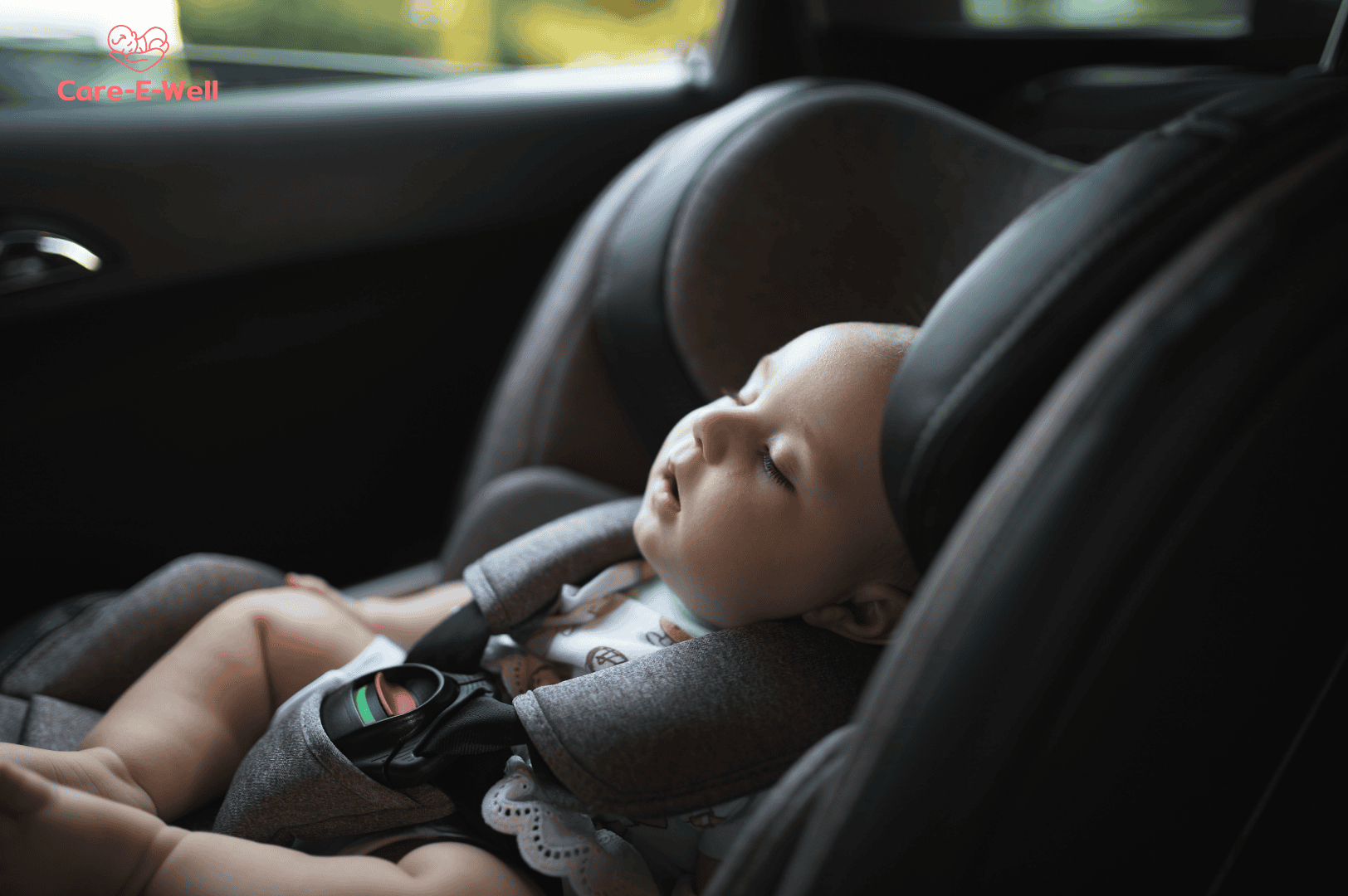
Baby sleep while travelling will often look different from sleep at home, and that is not a failure. New surroundings, transport, missed naps, social activity and time-zone changes can all temporarily shift sleep. The most useful goal is to protect a few strong cues and safe-sleep basics rather than reproduce the home schedule minute by minute.
Keep feeding responsive, offer naps when your baby needs them, use a familiar bedtime sequence and move toward the local light-dark schedule when crossing time zones. A few disrupted sleeps do not erase a routine or permanently create a new sleep habit.
Travel sleep works better when you protect the anchors—safe sleep, feeding, familiar cues and local day-night signals—rather than chasing a perfect timetable.
Why does travel disrupt baby sleep?
Sleep depends on more than tiredness. Babies and toddlers respond to light, darkness, feeding, activity, familiar sensory cues and repeated routines. Travel can change several of those signals at once.
- Naps may happen earlier, later or in transit
- The room may sound, smell and feel unfamiliar
- Bedtime may be delayed by meals, flights or family plans
- Daylight exposure may shift
- A different time zone may conflict with the child's biological clock
- The baby may need extra contact or reassurance in an unfamiliar place
None of these changes means sleep development has gone backwards. Infant sleep normally varies, and circadian organisation develops gradually over the first months of life.
Which parts of the routine are worth protecting?
Keep the elements that are portable. A long routine with exact timings may be difficult to reproduce, but a short sequence can travel almost anywhere.
For example: feed, nappy or toileting care, sleep clothing, dimmer light, the same short song or phrase, then settling. The order becomes the cue even when the room is different.
If your baby normally uses a suitable sleep bag, taking the same type can add familiarity. Use it only according to its fit and temperature guidance, and do not add loose bedding to recreate the home cot.
Do naps need to stay exactly on schedule?
No. Try to preserve enough daytime sleep to prevent severe tiredness, but allow timing to flex around travel. A nap that starts later than usual or happens in a different setting does not ruin the day.
Very young babies often have variable, fragmented sleep anyway. Older babies with more predictable naps may show the disruption more clearly, particularly if travel pushes a nap so late that bedtime shifts.
Look at the whole 24-hour pattern rather than one imperfect nap. If the baby is clearly tired, offering sleep is more useful than keeping them awake simply to protect the clock.
Should you wake a baby to protect bedtime while travelling?
Sometimes a very late nap can affect bedtime, but there is no universal rule requiring you to wake a sleeping baby during travel. Age, recent sleep, feeding needs and the day's disruption all matter.
If your baby has had very little sleep, allowing recovery may be more helpful than enforcing the usual schedule. If an older baby has already slept well and begins a long late nap, gently limiting that nap may suit some families, but exact nap caps are not evidence-based universal prescriptions.
Avoid treating travel as a test of whether your baby can tolerate being kept awake. Overtired babies can be harder, not easier, to settle.
What should you do on the first night away?
Make the sleep environment safe first, then familiar. Check the travel cot or other infant sleep space before everyone is exhausted.
- Assemble the sleep space exactly as intended.
- Use the supplied or approved firm, flat mattress without extra padding.
- Remove pillows, bumpers, nests, toys and loose soft items.
- Check the room for reachable blind cords, monitor cables and heater cords.
- Keep the familiar bedtime sequence short and calm.
- Expect that your baby may need more feeding, holding or reassurance than at home.
Extra support on the first night does not mean you must provide that exact level of assistance forever. Babies can respond differently in unfamiliar settings and settle differently again after returning home.

Is a travel cot safe for baby sleep?
A travel cot can be appropriate when it is intended for infant sleep, correctly assembled and used according to its instructions. Use the mattress or sleep surface supplied or approved for that product.
Do not add a thick mattress, pillow or folded blanket because the base feels firm. Extra mattresses can create gaps between the sleep surface and cot sides, introducing entrapment hazards.
Check the product's size, weight and developmental limits just as you would for a cot or bassinet at home.
Can a baby sleep overnight in a car seat while travelling?
A car seat is a transport restraint, not a routine overnight sleep destination. A baby may fall asleep while travelling in a correctly installed and correctly used car seat, but seated positioning differs from a firm, flat infant sleep surface.
Research on infant sleep practices notes concerns about airway position and straps when sitting devices are used as sleep environments. Once the journey is over and it is practical to do so, move the baby to an appropriate sleep surface rather than leaving the car seat to function as the bed.
Do not place a car seat, bouncer, rocker or swing on a bed or other soft surface and use it as an improvised overnight sleep setup.
What about sleeping on a plane?
Air travel inevitably involves periods when the ideal home sleep setup is unavailable. Follow airline safety instructions, use any approved infant restraint or bassinet according to its requirements and keep the baby's airway unobstructed.
Do not use loose pillows, bulky blankets or improvised positioning devices around the baby's face to make a plane seat or bassinet feel more comfortable.
Once you reach accommodation, return to an appropriate firm, flat infant sleep surface for routine sleep.
How should you handle travel within the same time zone?
Same-time-zone travel is mostly an environmental and routine change rather than true jet lag. Keep morning wake time, meals or feeds, naps and bedtime in roughly familiar parts of the day, but allow reasonable flexibility.
Normal daylight, activity and social interaction during the day help maintain day-night cues. In the evening, return to the familiar wind-down sequence even if bedtime is not exact.
If the first night is poor, avoid rebuilding the whole schedule the next day. Offer normal daytime light and age-appropriate sleep opportunities, then try the usual bedtime range again.
What changes when you cross time zones?
Crossing several time zones creates a mismatch between the destination clock and the body's circadian timing. Adult jet-lag research clearly demonstrates this mechanism; infant-specific travel trials are limited, so parents should be cautious about rigid jet-lag protocols marketed for babies.
The main non-drug time cue is light. Once you arrive, expose your child to ordinary destination daytime and make night-time darker and quieter. Meals, feeds, activity and social routines can also be moved toward local time.
You do not need to force an exhausted baby to stay awake for many hours to “reset” the clock. Gradual adjustment can be more practical, especially for babies who still need multiple naps and night feeds.
Do newborns get jet lag?
Newborns have immature circadian rhythms, so the adult concept of jet lag fits them less neatly. Their sleep is naturally distributed across day and night, and feeding remains a major organiser of their 24-hour pattern.
Early-life research shows that light-dark information begins contributing to circadian development, but organisation emerges gradually. Keep daytime reasonably bright and active and night-time care calmer and dimmer rather than trying to impose a strict destination schedule on a newborn.
Feed a newborn according to need and any medical feeding plan. Do not delay necessary feeds for the sake of a clock change.
How can daylight help after a long journey?
Light is one of the strongest signals to the circadian system. Research in infants and young children shows links between light exposure, sleep timing and developing circadian organisation.
Use ordinary natural daylight during the destination day, especially after the child wakes. In the hours approaching bedtime, reduce unnecessary bright light and keep the routine calmer.
You do not need a therapeutic bright-light device for a baby. Normal environmental daylight and a consistent light-dark pattern are the appropriate practical tools unless a specialist has advised otherwise for a medical reason.
Should you start shifting the schedule before travel?
For a large time-zone change, some families find it easier to move bedtime and wake time gradually in the direction of the destination before departure. This is optional rather than essential.
Small adjustments are more realistic than attempting to move a baby's day by several hours at once. If the trip is short, changing the schedule before departure may create more disruption than simply adapting after arrival.
There is no evidence-based infant formula specifying exactly how many minutes to shift each day. Use your baby's response as the guide.
What if the baby wakes at 2 a.m. ready to play?
After a time-zone change, the baby's body may still interpret local night as part of the previous daytime. Keep the environment dark or dim, interaction quiet and feeding responsive.
Do not turn an ordinary jet-lag wake into a battle. If the baby is fully awake, calm interaction may be necessary. The stronger reset comes from the following destination day: normal light, activity, feeds and age-appropriate naps.
As circadian timing adjusts, the long awake period should become less likely. If unusual night waking continues long after the trip or comes with symptoms, review other causes rather than assuming travel is still responsible.
Should you use white noise in a hotel?
If your baby already uses low-level white noise, it can be a portable cue and can mask unfamiliar sounds. Keep the device away from the baby's head and use the lowest useful volume.
Do not turn it up to cover every hotel noise. Excessive sound exposure is unnecessary, and a sound machine should remain outside the infant sleep space.
If your baby does not normally use white noise, travel is not a reason you must introduce it.
What if feeding changes during travel?
Feeding often shifts during long travel days. Breastfed babies may ask for more frequent feeds for comfort or hydration; bottle-fed babies may also feed differently when sleep and activity change.
Respond to hunger rather than stretching feeds to protect nap or bedtime timing. In the early months, adequate intake is more important than maintaining a particular sleep schedule.
If feeding becomes difficult, urine output seems reduced, the baby is persistently vomiting or you are worried about hydration or growth, seek appropriate medical advice.

How can you handle a late family event?
One later bedtime is usually easier to recover from than a day spent trying to force a baby to nap or stay awake against their needs. If you attend an event, protect feeding and offer sleep when possible.
The next morning, return toward the usual local-day routine rather than compensating with a dramatically different schedule. A slightly earlier bedtime may be useful after a poor night if the baby is clearly tired.
Think in trends, not isolated nights. Sleep habits develop from repeated patterns, not one wedding, flight or family dinner.
A disrupted travel day is an event, not a new permanent sleep pattern. Return to familiar cues when you can and allow the schedule to settle again.
What should happen when you return home?
Reintroduce the home routine immediately without expecting instant timing. Use normal morning daylight, familiar meals or feeds, usual nap opportunities and the established bedtime sequence.
If the baby has shifted substantially, move toward home timing over several days rather than forcing a dramatic change in one evening. Extra settling support is reasonable while the environment and body clock realign.
Once sleep begins moving back toward baseline, you can reduce any temporary travel assistance if you want to.
Safe sleep still matters on holiday
Holiday accommodation often contains unfamiliar beds, soft furniture and improvised sleeping arrangements. Check the baby's sleep space before bedtime rather than assuming a hotel-provided cot is automatically ready to use.
WHO advises back sleeping during the first year and unobstructed breathing. Keep the infant sleep surface firm, flat and clear wherever you are.
Never plan to sleep with a baby on a sofa or armchair, including in a hotel or holiday rental. If you are exhausted after travel, prioritise getting the baby onto an appropriate infant sleep surface before you settle yourself.
When should travel-related sleep difficulty be assessed?
Travel itself can explain temporary changes, but it should not be used to dismiss symptoms.
Seek medical advice if sleep changes come with breathing difficulty, repeated pauses in breathing, blue or grey colour, repeated choking, poor feeding, significant vomiting, fever, unusual lethargy, poor urine output, significant pain or a marked change in responsiveness.
Frequently asked questions
Will one trip ruin my baby's sleep routine?
No. A few different days do not erase months of familiar cues. Return to your usual routine after travel and allow sleep timing to settle.
Should I keep my baby on home time during a holiday?
For a short trip across a small time difference, that may be practical. For larger changes or longer stays, moving toward destination time usually fits daylight, family activity and sleep better.
Can I let naps happen in the pram while sightseeing?
Transport naps may happen, but routine unattended sleep is better on an appropriate infant sleep surface. Follow the product instructions and monitor the baby's position and airway.
How long does jet lag last in babies?
There is no reliable infant-specific number. Adjustment varies with the number and direction of time zones crossed, age, sleep pattern and light exposure.
Should I give my baby melatonin for jet lag?
Do not give a baby melatonin or another sleep aid for travel unless a qualified clinician has specifically prescribed or advised it for that child. Travel adjustment should usually rely on time, routine and light-dark cues.
The key takeaway
Baby sleep while travelling does not need to look like home sleep to remain healthy and manageable. Protect safe sleep, feeding, a few familiar cues and the local light-dark pattern, then let nap and bedtime timing flex around the realities of the journey.
Expect temporary disruption rather than perfection. When you return home—or settle at the destination—re-establish the usual anchors and allow the body clock and routine to catch up gradually.
Sources and references
- World Health Organization. Making sure newborns and children under 5 years sleep safely. https://www.who.int/tools/your-life-your-health/life-phase/newborns-and-children-under-5-years/making-sure-newborns-and-children-under-5-years-sleep-safely
- UNICEF UK Baby Friendly Initiative. Sleep and night-time resources. https://www.unicef.org.uk/babyfriendly/baby-friendly-resources/sleep-and-night-time-resources/
- Dias CC, Figueiredo B, Rocha M, Field T. Reference values and changes in infant sleep-wake behaviour during the first 12 months of life: a systematic review. https://doi.org/10.1111/jsr.12654
- Wong SD, Wright KP Jr, Spencer RMC, et al. The development of the circadian system in early life: maternal and newborn perspectives. https://doi.org/10.1186/s40101-022-00294-0
- Iwata S, Fujita F, Kinoshita M, et al. Dependence of nighttime sleep duration in one-month-old infants on alterations in natural and artificial photoperiod. https://doi.org/10.1038/srep44749
- Thomas KA, Burr RL, Spieker S. Light and maternal influence in the entrainment of activity circadian rhythm in infants 4–12 weeks of age. https://doi.org/10.1007/s41105-015-0046-2
- Dodson ER, Zee PC. Therapeutics for Circadian Rhythm Sleep Disorders. https://doi.org/10.1016/j.jsmc.2010.08.001
- Akacem LD, Wright KP Jr, LeBourgeois MK. Bedtime and evening light exposure influence circadian timing in preschool-age children: A field study. https://doi.org/10.1016/j.nbscr.2016.11.002
- Cassanello P, Ruiz-Botia I, Sala P, et al. Comparing infant and toddler sleep patterns prior to and during the first wave of home confinement due to COVID-19 in Spain. https://doi.org/10.1007/s00431-022-04376-0
- Cole R, Young J, Kearney L, Thompson JMD. Infant care practices and parent uptake of safe sleep messages: a cross-sectional survey in Queensland, Australia. https://doi.org/10.1186/s12887-020-1917-5
Did this Insight help?
A little love for something worth reading.


