
Care-E-Well Insights
Babywearing Safety Checklist: Airway, Position and Visibility
Use this babywearing safety checklist to check airway, visibility, fit, hip position, temperature, carrier condition and caregiver safety.
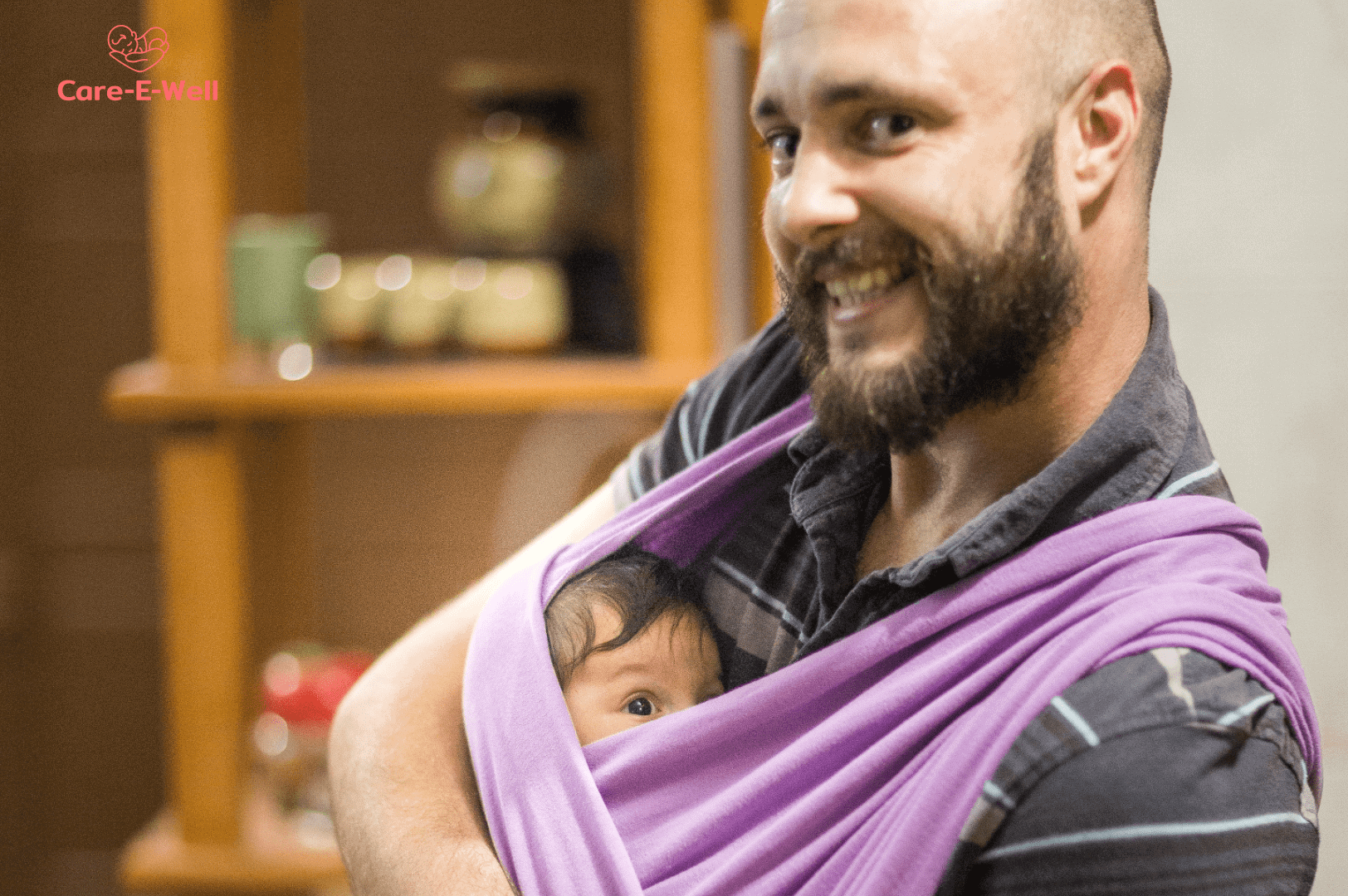
A baby carrier should make close contact easier without making breathing, positioning or monitoring harder. The safest babywearing setup is one in which the baby is securely supported, the face is visible, the nose and mouth are clear, the chin is away from the chest, and the caregiver can respond immediately if the baby changes position.
Most serious babywearing risks are not about a particular brand. They arise when a young or vulnerable baby slumps, the face becomes covered or pressed into the caregiver, the carrier is too loose, or the adult cannot see and monitor the baby. A short safety check before every carry is therefore more useful than relying on memory or marketing labels.
The core babywearing rule is simple: you should be able to see, hear and feel that your baby is breathing comfortably throughout the carry.
The essential babywearing safety checklist
- Baby is carried in a position allowed by the carrier manufacturer for the baby's size and development.
- Face is visible and not covered by fabric, clothing, a coat or the caregiver's body.
- Nose and mouth are completely clear.
- Chin is not forced onto the chest.
- Head and neck are supported appropriately for the baby's developmental stage.
- Baby is close enough that the trunk does not slump away from the caregiver.
- Pelvis and thighs are supported without forcing the legs straight or excessively wide.
- Carrier fabric and straps are secure, untwisted and correctly tightened.
- Baby is not too hot and clothing matches the combined warmth of weather, carrier and adult body heat.
- Caregiver can walk, bend and move without losing balance or compromising baby's position.
Why is airway position the first priority?
Young infants have relatively heavy heads and limited neck strength. If the head falls forward, the chin can press toward the chest and narrow the airway. A baby's face can also become obstructed if it is buried in carrier fabric, clothing or the caregiver's chest.
Published reports of serious carrier incidents include suffocation and positional asphyxia. Babies under about four months and babies with low tone, prematurity or medical vulnerability deserve especially close attention because they may be less able to correct a compromised position themselves.
If your baby's breathing becomes noisy in a new way, the face changes colour, the baby becomes limp or unusually unresponsive, or you cannot immediately free the airway, remove the baby from the carrier and seek urgent help as appropriate.
What does a clear airway look like?
The baby's nose and mouth should be visible and unobstructed. The head may turn gently to one side in a young inward-facing baby, but the face should not be pressed flat into the caregiver.
You should not need to move fabric out of the way each time you check the baby's breathing. If the carrier panel, hood or clothing repeatedly covers the face, change the setup.
How do I prevent chin-to-chest positioning?
Support the baby's trunk so the body does not collapse into a deep curl. The neck should remain in a neutral or slightly extended position that leaves space between the chin and upper chest rather than folding sharply forward.
A very loose carrier can allow the whole body to slump. Over-tightening around the head can also be a problem if fabric pushes the head into flexion. Aim for firm trunk support with enough freedom for a natural head position.

How high should the baby be?
High enough that you can easily see and monitor the face without bending awkwardly. “Close enough to kiss” is a useful practical reminder, but the more important point is easy airway access and a secure centre of gravity.
A baby hanging very low may pull away from the adult's torso, increasing slump and making the face harder to inspect. Raise or refit the carrier rather than accepting a low position because the straps feel tight.
How tight should a carrier be?
Snug enough to prevent the baby from sagging or bouncing away from your body, but not so tight that breathing, circulation or comfortable positioning is restricted.
A useful test is whether the baby's trunk stays supported when you move normally. If you feel the need to hold the baby's back with one hand constantly because the carrier is loose, refit it before continuing.
A carrier is not secure because every strap feels tight. It is secure when the baby's whole body is supported in the intended position without slump, pressure points or airway compromise.
What is a safe hip and leg position?
For young inward-facing babies, the thighs should usually be supported with the hips and knees flexed in a natural position. This is often described as an M-position, with the knees around the level of or above the bottom.
Research on healthy infants shows that well-fitted inward-facing carriers can produce hip positions compatible with healthy development. However, do not force the legs into an extreme spread, and remember that diagnosed hip dysplasia needs individual clinical guidance.
Should the carrier support baby's head?
Yes, when the baby cannot maintain head control independently—but support should not cover the face or force the head forward. The upper carrier panel can support the back of the head or neck while leaving the nose, mouth and side of the face visible.
Once a baby has reliable head control, the carrier may require a different panel height or setting. Follow the manufacturer's developmental criteria rather than changing modes based only on age.
What about sleeping in the carrier?
Babies commonly fall asleep while being worn. Sleep itself is not the problem; loss of airway position is. A sleeping baby can relax more deeply, making slumping and chin-to-chest flexion more likely.
Recheck a sleeping baby's airway frequently and immediately correct any position in which the face becomes covered or the head drops forward. A carrier should not be used as an unattended sleep space, and the caregiver should not sleep while wearing the baby.
How do I check temperature and overheating?
Babywearing adds warmth because the baby is close to the adult and surrounded by carrier material. A small experimental study found that carrier use adds thermal insulation, and research does not support blindly adding extra clothing layers just because the passenger is a baby.
- Consider the adult's body heat as part of the baby's warmth.
- Count the carrier fabric and any shared coat or cover as layers.
- Check the baby's chest or upper back rather than judging only from hands or feet.
- Remove a layer or stop carrying if the baby is hot, sweaty, flushed or unusually uncomfortable.
- Keep the face uncovered even in cold weather.
What should I check before putting the baby in?
Inspect the carrier quickly each time. Look for damaged stitching, loose seams, cracked buckles, worn fabric or rings that do not function correctly. Confirm that the carrier is assembled in the correct mode and that inserts or accessories are being used exactly as instructed.
If the carrier has been bought second-hand, verify that you have the correct model instructions and that no safety-critical component is missing or altered.
What should I check after the baby is in?
- Check face visibility and airway first.
- Confirm the chin is away from the chest.
- Check that the baby's trunk is supported and not slumped.
- Confirm the pelvis is centred and both thighs are supported evenly.
- Check straps, knots, rings and buckles.
- Make sure fabric is not pressing across the back of the knees or cutting into skin.
- Reassess your own balance and posture before walking.
- Recheck after several minutes because babies and fabric can settle.
What activities are unsafe while babywearing?
Babywearing changes your centre of gravity and puts the baby close to hazards that may normally be farther from your body. Avoid activities with fall, burn, impact or entrapment risk.
- Cooking over an open flame or leaning over hot pans.
- Carrying hot drinks close to the baby.
- Cycling, running or high-impact exercise unless a specific activity and carrier are designed and approved for it.
- Climbing ladders or using unstable stools.
- Driving or riding in a moving vehicle instead of using an approved child restraint.
- Any activity where you could fall onto the baby or the baby could strike a surface.
Walking on ordinary terrain is one thing; performing a task that requires both hands, divided attention or rapid balance corrections is another.
How should I bend while wearing a baby?
Keep one or both hands ready to support the baby, bend at the knees and hips, and avoid folding sharply at the waist. A deep forward bend can change head position and place pressure on the baby's airway or abdomen.
If you need to reach the floor repeatedly, it is often safer to put the baby down in a secure place first.
What changes with a newborn?
Newborns need the strictest airway monitoring because they cannot reliably reposition their own heads. Use only carrier modes that are approved for the baby's weight, size and developmental stage, and make sure the panel does not over-spread the legs or cover the face.
Premature, low-birth-weight or medically complex newborns need individualized advice. Ordinary commercial babywearing should not be assumed to be equivalent to medically supervised kangaroo mother care.

What about feeding in the carrier?
Feeding can require loosening and lowering the baby, which changes the safe carrying position. The safest default, especially for newborns, is to remove the baby, feed in a supported position and then refit the carrier.
If an older baby is fed in a carrier, the caregiver must remain stationary, keep the airway visible and restore the normal secure position immediately afterward.
When should I stop using the carrier during a session?
Stop and reassess if the baby repeatedly slumps, seems unusually distressed, becomes excessively hot, develops concerning skin pressure marks, has difficulty breathing, or cannot maintain the intended position despite adjustment.
Also stop if you become dizzy, significantly fatigued, painful or unsteady. Babywearing safety depends on the condition of both people in the carrier system.
Key takeaway
A good babywearing safety checklist starts with airway, position and visibility. The baby should be high, close, supported and easy to monitor, with the face uncovered and the chin away from the chest.
Recheck the fit after the baby settles, during sleep, after feeding, when clothing changes and whenever the carrier feels different. Safe babywearing is an ongoing observation task, not a one-time buckle check.
Frequently asked questions
How often should I check my baby's airway?
There is no evidence-based timer. Check continuously through easy visual access and make deliberate rechecks after the baby falls asleep, after movement, after feeding or whenever the position shifts.
Can a baby's face touch my chest?
The cheek may rest against you, but the nose and mouth must remain clear. The face should never be pressed flat into the chest or hidden by clothing.
Should I use a carrier if I am very tired?
Only if you can stay alert, balanced and responsive. If fatigue makes you unsteady or likely to fall asleep, use another safe way to care for the baby.
Sources and references
- Lovell-Kennedy SR, Strong RLJ, Grieve LM et al. — Safety and benefits of adult-worn slings and baby carriers: a narrative systematic review to inform guidance for parents
- Strong RLJ, Lovell-Kennedy S, Grieve LM et al. — Adult-worn sling and baby carrier safety: exploring parental practices, knowledge and information needs
- Jenik A, Grad E — Babywearing practice and unnoticed danger
- Sidharthan S, Kehoe C, Dodwell ER — Post-Natal Positioning through Babywearing: What the Orthopaedic Surgeon Needs to Know
- Siddicky SF, Wang J, Rabenhorst BM et al. — Exploring infant hip position and muscle activity in common baby gear and orthopedic devices
- Siddicky SF, Eckels J, Rabenhorst BM et al. — Ultrasonographic evaluation of infant hips in the Pavlik harness compared to body-worn commercial baby carriers
- Filingeri D, Cowley H, Merrick C et al. — The effects of clothing layers on the thermoregulatory responses to short duration babywearing in babies under 12 months old
- Reynolds-Miller RL, Bedwell S, Laubach LL — What Is the Experience of Babywearing a NICU Graduate?
- Taboada-Iglesias Y, Domínguez-Estévez A, Rodríguez-Gude C et al. — Physical and Physiological Consequences of Babywearing on the Babywearer: A Systematic Review
Did this Insight help?
A little love for something worth reading.


