
Care-E-Well Insights
Babywearing With Reflux: Positions That May Feel More Comfortable
Babywearing with reflux: safer upright positioning, fit adjustments, post-feed comfort tips and red flags that need medical advice.
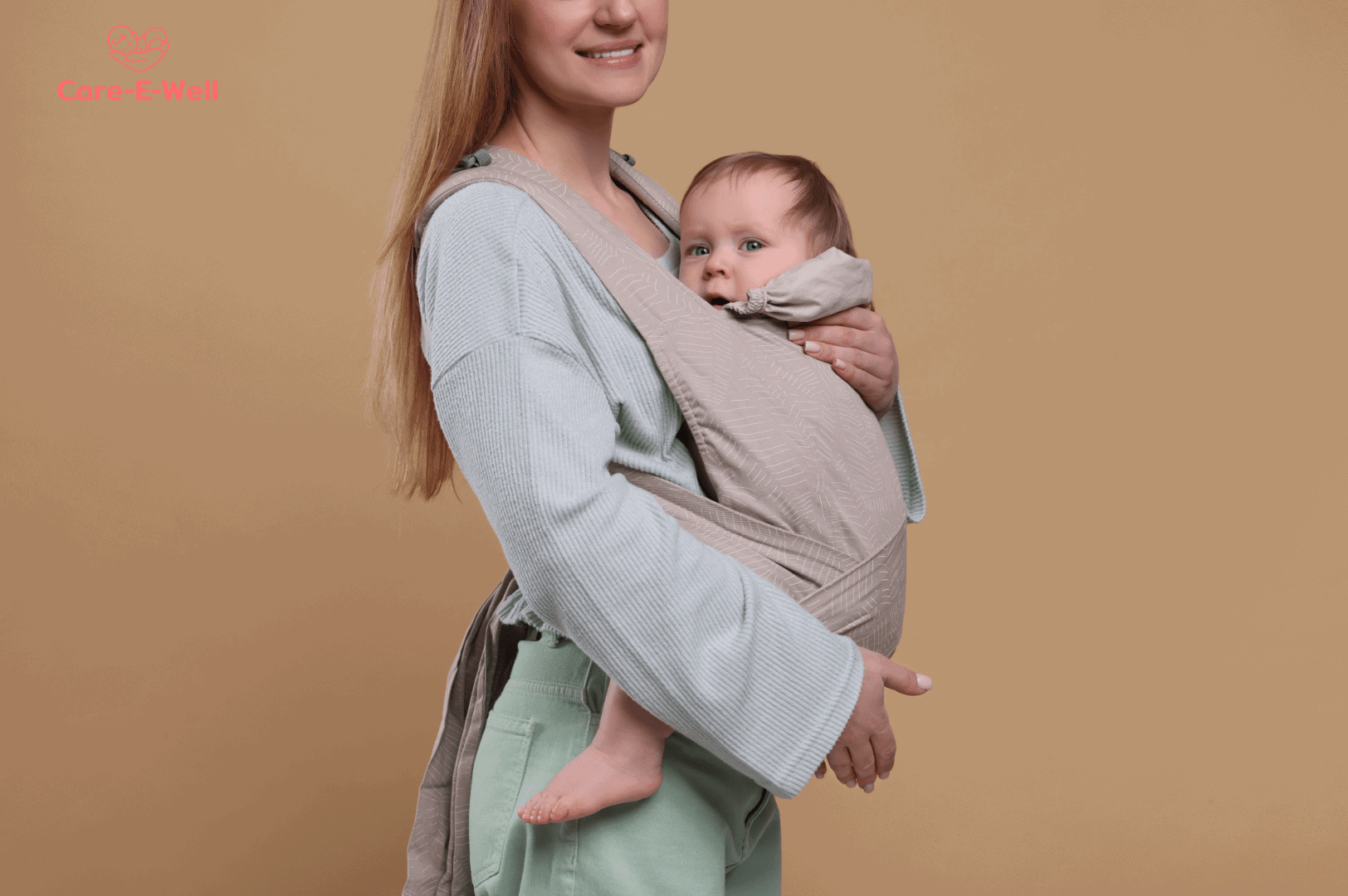
If your baby spits up often or seems uncomfortable after feeds, carrying them upright against your chest may feel soothing. Some families notice less immediate regurgitation when the baby is calmly held upright, but babywearing is not a treatment for gastroesophageal reflux and it does not remove the need to assess feeding problems or red flags.
The safest approach is to use babywearing for comfort and closeness, not to “fix” reflux. Keep the baby upright enough to protect the airway, avoid pressure across a full stomach, and never use a carrier to create a tilted or curled sleep position.
Upright carrying may feel comfortable for some babies with reflux, but comfort is not the same as proven treatment.
What is reflux in babies?
Gastroesophageal reflux happens when stomach contents move back into the esophagus and sometimes into the mouth. In young infants, occasional regurgitation is common because the digestive system is still developing and babies spend much of the day feeding and lying down.
When a baby is otherwise well, feeds effectively and gains weight, frequent spit-up can still be normal. Gastroesophageal reflux disease, or GERD, is different: it refers to reflux associated with troublesome symptoms or complications and needs clinical assessment rather than a babywearing solution.
Can an upright carrier reduce reflux?
Evidence for positioning as a reflux treatment is mixed and limited. Some studies have examined upright or other body positions, but results do not support promising that an upright carrier will reduce reflux in every baby.
What parents often notice is a difference in comfort. A supported upright position may reduce the sensation of being compressed after a feed, help a baby stay calm and make it easier for the caregiver to respond to early discomfort. That practical benefit can be worthwhile even when it does not change the underlying reflux physiology.
What babywearing position is usually most practical with reflux?
For a young baby, front inward carrying is generally the easiest position to monitor. The baby's chest rests against the caregiver, the head and face remain visible, and the body can be supported in a naturally upright position.
- Keep the baby's head high enough that the face stays fully visible.
- Make sure the chin is not pressed firmly onto the chest.
- Keep the nose and mouth clear of fabric and the caregiver's body.
- Support the pelvis and thighs so the baby does not slump downward.
- Avoid tightening the waistband or panel in a way that presses strongly across the baby's abdomen.
“Upright” does not mean rigidly straight. Young babies normally have a softly rounded spine. The goal is a supported trunk with an open airway, not forcing the back flat.

Should I put my baby in the carrier immediately after feeding?
You can if the baby is comfortable and the carrier fit remains safe, but many families find it easier to pause briefly after a full feed. A very full stomach plus a tight waistband, bouncing or repeated bending may increase spit-up simply because of mechanical pressure and movement.
If your baby regularly vomits when transferred into the carrier, try a gentler sequence: finish the feed, burp if your baby benefits from it, hold them calmly upright, then place them into the carrier without compressing the abdomen.
The best post-feed carrier routine is the one that keeps your baby comfortable without loosening airway safety or creating abdominal pressure.
Can babywearing replace holding a baby upright after feeds?
It can sometimes be a practical way to continue upright contact, but there is no universal evidence-based requirement that every baby must be held upright for a fixed number of minutes after feeding. Recent reviews have questioned routine “reflux precautions” when they are applied to all infants without clear benefit.
If your clinician has recommended a specific feeding or positioning plan because your baby has diagnosed GERD, poor growth, swallowing difficulties or another medical condition, follow that plan rather than generic babywearing advice.
What carrier adjustments can make a refluxy baby more comfortable?
Avoid excessive abdominal compression
A carrier should be snug enough to support the baby, but snug does not mean squeezing the stomach. Check that the waistband position and panel tension support the pelvis rather than pushing directly into the abdomen.
Reduce bouncing just after a feed
Walking is often soothing, but vigorous bouncing, stairs taken quickly or repeated bending at the waist may trigger more visible spit-up in some babies. Slow, steady movement is usually easier immediately after feeding.
Keep the torso supported
A baby who collapses into a deep slump may have both a poorer airway position and more pressure across the abdomen. Adjust the carrier so the trunk remains supported and the head does not fall forward.
Watch clothing bulk
Thick layers between the baby's body and the carrier can change the fit. If the baby sits lower or becomes more curled after adding clothing, refit the carrier rather than simply tightening everything harder.
Is reflux a reason to carry the baby higher?
The baby should already be carried high enough for easy airway monitoring and close enough that you can see and check the face. Reflux does not justify an exaggeratedly high or rigid position.
If the baby is so low that you cannot easily monitor breathing, or if the chin drops onto the chest, the fit is unsafe regardless of reflux.
Can a baby sleep in the carrier if reflux is worse lying flat?
A baby may fall asleep while being actively worn, but reflux is not a reason to use a carrier as an alternative sleep surface. Safe sleep recommendations still take priority. When you are ready to put the baby down for sleep, use the safe sleep environment recommended for infants rather than trying to keep the baby inclined in a carrier, nest or other positioning device.
Do not deliberately position a sleeping baby prone, tightly curled or with the head flexed forward in a carrier to “keep milk down”. Airway safety is more important than preventing spit-up.
Does pressure on the stomach matter?
It can. Reflux episodes are influenced by several factors, including feeding volume, timing and body mechanics. A carrier that presses strongly across the abdomen may be uncomfortable after feeds even if it looked acceptable before feeding.
If the baby repeatedly arches, pushes away, cries only after being placed in the carrier post-feed, or spits up much more when the carrier is tightened, reassess the fit and timing rather than assuming the carrier is helping.
What if my baby arches in the carrier?
Arching can have many explanations: discomfort, tiredness, wanting to look around, a poor carrier fit, trapped air, feeding distress or reflux-related discomfort. It is not specific enough to diagnose GERD.
Take the baby out, settle them, check the diaper and feeding needs, then inspect the carrier fit. If arching happens frequently with feeds or is accompanied by pain, feeding refusal or poor growth, discuss it with a healthcare professional.
Can babywearing make reflux worse?
Yes, if the carrier is poorly fitted. Excessive abdominal pressure, a slumped trunk, vigorous movement straight after a large feed or repeated bending can all make regurgitation more noticeable.
A well-fitted carrier should distribute pressure across the baby's body, support the thighs and pelvis, and leave enough room for comfortable breathing and normal abdominal movement.
What symptoms are not just normal spit-up?
Most uncomplicated infant regurgitation improves with maturation, but some symptoms need medical assessment because they can point to conditions other than simple reflux.
Seek prompt medical advice for poor weight gain, persistent feeding refusal, recurrent breathing problems, dehydration, blood in vomit, green or bilious vomit, or repeated forceful vomiting. Urgent assessment is appropriate if your baby appears very unwell, unusually sleepy, has breathing difficulty or cannot keep feeds down.
Does babywearing help babies with diagnosed GERD?
It may still be useful for comfort, regulation and caregiver closeness, but the medical plan should address the actual problem. Depending on the baby, management may involve feeding assessment, avoiding overfeeding, thickened feeds in selected cases, evaluation for cow's-milk protein allergy or other interventions chosen by the clinician.
A carrier can be part of daily care, but it should never delay assessment of pain, poor growth or swallowing and breathing symptoms.

What about premature babies with reflux?
Preterm infants deserve extra caution because reflux is common in that population and their airway control, muscle tone and respiratory history may differ from those of healthy term infants. Do not assume that an ordinary carrier position is appropriate simply because upright kangaroo care has benefits in neonatal settings.
If your baby was premature, had apnea, oxygen needs, swallowing problems or low muscle tone, ask the neonatal or paediatric team whether and how babywearing should be used at home.
A practical reflux-friendly babywearing routine
- Feed the baby in the position that works best for feeding itself.
- Pause and burp if your baby seems to benefit from burping.
- Check that the baby is calm enough to be transferred safely.
- Place the baby front inward in a correctly fitted carrier.
- Keep the face visible and the chin away from the chest.
- Avoid strong pressure across the abdomen.
- Start with calm walking rather than vigorous bouncing.
- Recheck the baby's comfort, breathing and temperature frequently.
Key takeaway
Babywearing with reflux can be comfortable when the carrier keeps the baby supported, visible and gently upright without compressing the stomach. The strongest reason to use it is comfort and closeness, not a promise that it will reduce reflux.
If your baby is thriving and simply spits up, small fit and timing adjustments may be enough. If feeds are painful, weight gain is poor or vomiting is unusual, focus on medical assessment rather than positional tricks.
Frequently asked questions
Is a carrier better than a sling for reflux?
Not necessarily. The better option is the one that fits your baby securely, keeps the airway visible and avoids abdominal compression. Carrier type matters less than correct fit and appropriate use.
Should I loosen the carrier after feeding?
Do not loosen it enough for the baby to slump. If it feels too tight across the stomach, refit the carrier so support comes from the pelvis and trunk rather than leaving the baby unsupported.
Can I use an outward-facing position for reflux?
Front inward carrying is usually easier for monitoring a young baby and supporting the trunk. Outward-facing is not a reflux treatment and should only be used when the baby and carrier meet the developmental requirements for that position.
Does spit-up in the carrier create a choking risk?
Spit-up itself is common, but airway position still matters. Keep the face visible, avoid chin-to-chest flexion and stop to assess the baby if there is coughing, colour change, breathing difficulty or repeated distress.
Sources and references
- Lovell-Kennedy SR, Strong RLJ, Grieve LM et al. — Safety and benefits of adult-worn slings and baby carriers: a narrative systematic review to inform guidance for parents
- Jung WJ, Yang HJ, Min TK et al. — The Efficacy of the Upright Position on Gastro-Esophageal Reflux and Reflux-Related Respiratory Symptoms in Infants With Chronic Respiratory Symptoms
- Indrio F, Riezzo G, Raimondi F et al. — Regurgitation in healthy and non healthy infants
- Kornfeld B, Wild BM — Reflux: When Is It More Than a Laundry Problem?
- Rosen R — Gastroesophageal Reflux Treatment in Infancy Through Young Adulthood
- Degan A, Walters J — Things We Do for No Reason: Teach caregivers reflux precautions
- Akhouri R, Imdad A, Patel L et al. — Diagnosis and Management of Pediatric Gastroesophageal Reflux in the Emergency Department
- Sidharthan S, Kehoe C, Dodwell ER — Post-Natal Positioning through Babywearing: What the Orthopaedic Surgeon Needs to Know
Did this Insight help?
A little love for something worth reading.


