
Care-E-Well Insights
Bed-Sharing With a Baby: What Parents Need to Know About Risk
Bed-sharing with a baby carries different risks in different situations. Learn the major hazards, evidence and lower-risk alternatives.
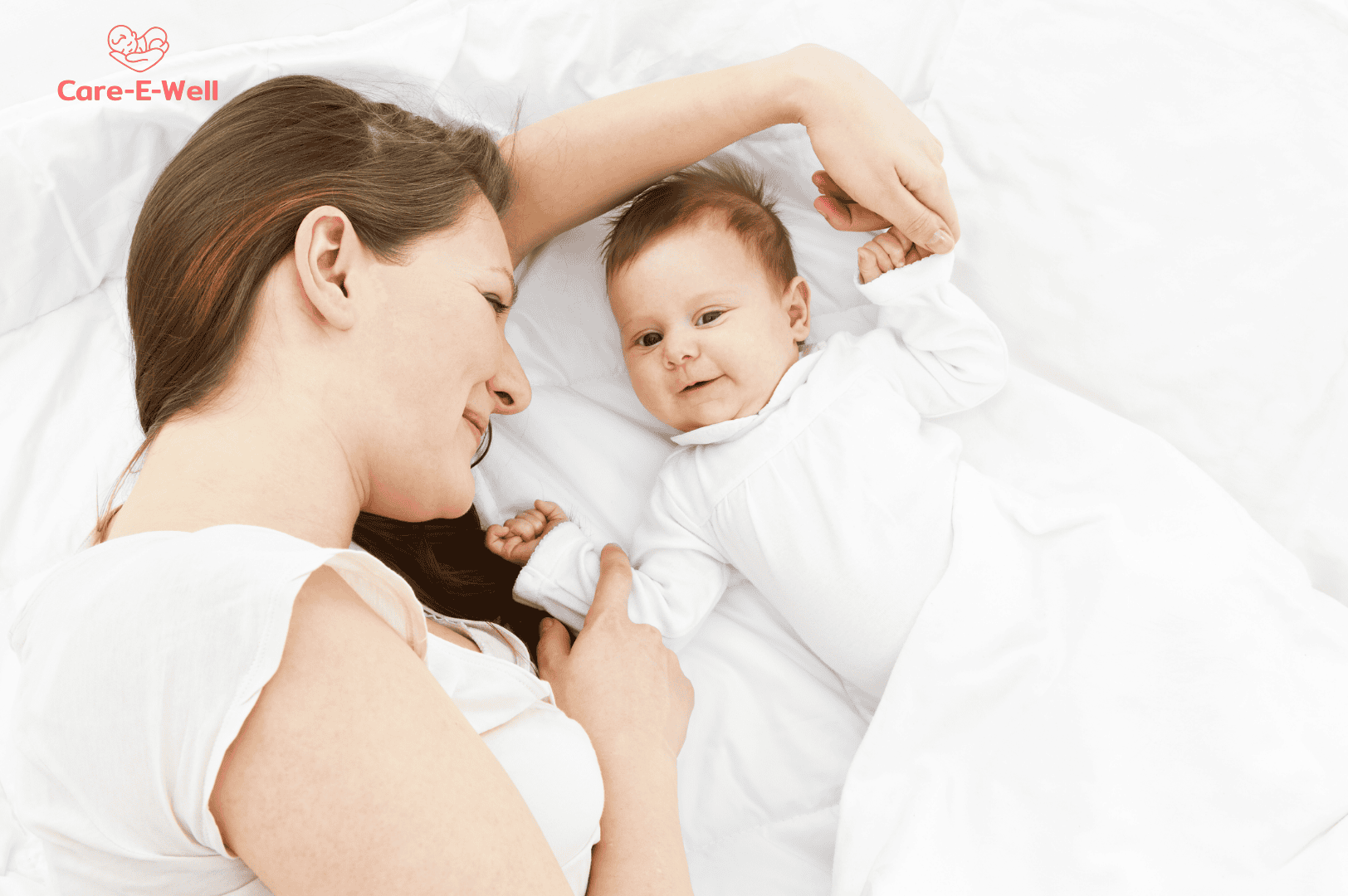
Bed-sharing with a baby means an adult and infant sleep on the same surface, usually an adult bed. It is different from room-sharing, where the baby sleeps nearby on a separate infant sleep surface. The lower-risk default is a separate, firm, flat, clear sleep space for the baby close to the caregiver.
Bed-sharing risk is not identical in every situation. Research consistently shows much greater danger when smoking, alcohol, sedating or recreational drugs, sofas or armchairs, soft bedding, prematurity or low birth weight are involved. Researchers continue to debate how much independent risk remains when these hazards are absent, particularly for very young infants.
“Risk varies” does not mean “bed-sharing is risk-free.” A separate infant sleep surface remains the lower-risk option, while honest harm-reduction information matters because some parents will bed-share intentionally or fall asleep unexpectedly.
What is the difference between bed-sharing and room-sharing?
Bed-sharing means sharing the same mattress or sleep surface. Room-sharing means the baby is in the same room but has a separate cot, bassinet or other appropriate infant sleep space.
These terms are often blurred under the word “co-sleeping,” which can create confusion. For safety discussions, it is more useful to name the exact situation because sleeping in the same room on separate surfaces is not the same exposure as sharing an adult bed.
WHO recommends back sleeping during the first year and unobstructed breathing. UNICEF UK resources also emphasise clear, flat infant sleep spaces and proportionate discussion of the circumstances surrounding shared sleep.
Is bed-sharing with a baby safe?
No shared adult bed can be described as completely risk-free for an infant. Adult mattresses, pillows, duvets, gaps and sleeping adults create conditions that differ from a dedicated infant sleep surface.
At the same time, research does not support treating every bed-sharing situation as identical. Case-control studies repeatedly show that certain circumstances multiply concern, especially sofa sharing, smoking and adult impairment from alcohol or drugs.
This is why useful guidance needs two messages at once: a separate infant sleep surface is the lower-risk default, and parents who may bed-share need clear information about the hazards that make the situation substantially more dangerous.
Which situations make bed-sharing especially dangerous?
Several factors appear consistently across SIDS and sudden unexpected infant death research.
- An adult has smoked during pregnancy or currently smokes, even if not smoking in bed
- The adult has consumed alcohol
- The adult has taken recreational drugs or medication that causes marked drowsiness or reduces awareness
- The baby was born prematurely or had a low birth weight
- The baby is very young, with risk generally greatest in early infancy
- The sleep surface is a sofa or armchair
- The mattress is soft, sagging or has gaps where the baby could become trapped
- Pillows, duvets, heavy bedding or other soft objects are near the baby's face
- Other children or pets share the surface
- The adult is so exhausted that normal awareness and responsiveness may be reduced
Do not bed-share if the baby was born prematurely or at low birth weight, if anyone in the bed smokes, or if an adult has used alcohol, recreational drugs or strongly sedating medication. Never sleep with a baby on a sofa or armchair.
Why are sofas and armchairs particularly hazardous?
Sofas and armchairs combine several dangerous features: soft surfaces, cushions, narrow spaces and gaps where an infant can become wedged. They also make it easier for a sleeping adult's body to trap the baby against a backrest or cushion.
Studies of unexpected infant deaths repeatedly identify sofa sharing as a high-risk circumstance. This risk matters especially during night feeding because an exhausted caregiver may sit down intending to stay awake and then unintentionally fall asleep.
If you feel yourself becoming drowsy while holding or feeding your baby, moving the baby to a clear infant sleep surface is safer than trying to fight sleep on a sofa or chair.
How does smoking affect bed-sharing risk?
Smoking is one of the clearest interacting risk factors. Studies consistently associate parental smoking and prenatal smoke exposure with increased SIDS risk, and the combination with bed-sharing is particularly concerning.
Opening a window, changing clothes or avoiding smoking in the bedroom does not erase prenatal or household smoke exposure. If either parent smokes, bed-sharing should be avoided.
Reducing smoke exposure benefits the baby beyond sleep safety as well, so support to stop smoking is worthwhile even when the baby always sleeps separately.

What about alcohol, cannabis, drugs or sedating medicines?
Anything that reduces an adult's arousal, judgement or ability to respond can increase risk during shared sleep. This includes alcohol, recreational drugs and some prescription or over-the-counter medicines that cause significant drowsiness.
The issue is not whether the adult “feels drunk.” An impaired or unusually deeply sleeping adult may be slower to notice that a baby has moved into a dangerous position or become covered.
If you are unsure whether a medicine affects alertness, ask the prescriber or pharmacist. Do not use a sleeping tablet or sedative as part of a plan to sleep beside a baby.
Does breastfeeding make bed-sharing safe?
No. Breastfeeding is associated with a lower risk of SIDS in meta-analytic research, but it does not cancel hazards such as smoking, alcohol, drugs, sofas, soft bedding or infant vulnerability.
Breastfeeding and bed-sharing are closely related in many families because frequent night feeding can make proximity convenient. Some research also suggests that breastfeeding mothers and babies may adopt characteristic sleep positions and interactions. Those observations are important for understanding real family behaviour, but they do not turn an adult bed into the same environment as a dedicated infant sleep surface.
Breastfeeding is protective in its own right, but it should never be treated as permission to ignore other safer-sleep factors.
Is bed-sharing always independently linked with SIDS?
This is where the evidence is contested. Some analyses find elevated risk from bed-sharing even when major hazards such as smoking and alcohol are excluded, especially in very young infants. Other well-known UK analyses found no significant increase in the absence of hazardous circumstances and argued that risk is concentrated in specific combinations.
These studies use observational case-control data, and they differ in definitions, populations, adjustment methods and which hazards are included. That makes a single absolute statement difficult.
A responsible interpretation is that the separate infant sleep surface remains the lower-risk default, while the magnitude of residual risk from hazard-free bed-sharing is uncertain and debated. Parents should not be told that all bed-sharing carries identical risk, but neither should it be described as proven safe.
Why does the baby's age matter?
Young infants have limited head and body control and cannot reliably move away from an obstructed position. Several studies report that vulnerability associated with shared sleep is greater during the earliest months.
Age does not create a sharp point at which an adult bed becomes safe. Motor development, body size and sleep physiology change gradually, while risks from soft bedding, entrapment, adult impairment and smoking remain relevant.
This is another reason not to use a rule such as “bed-sharing is safe after X months.”
What if the baby was premature or small at birth?
Prematurity and low birth weight increase vulnerability to sleep-related infant death. Bed-sharing should be avoided for these infants, even if the baby now appears healthy and is gaining weight.
If a premature baby's hospital sleep setup included special positioning or monitoring, ask the clinical team what should continue at home. Medically supervised hospital practices are not automatically appropriate for unattended home sleep.
What makes an adult bed different from an infant cot?
Adult beds are designed for adult comfort, not infant airway and entrapment safety. They may have softer mattresses, pillows, duvets, mattress toppers, headboards, gaps near walls and other features that can surround or trap a small baby.
A dedicated infant sleep space uses a firm, flat mattress that fits its frame and remains clear around the baby's face. Firmness matters because softer surfaces can conform around the head and make rebreathing or obstruction more likely.
Pushing an adult bed against a wall is not a simple solution; it can create an entrapment gap. Adding rails, nests or positioners can introduce new hazards as well.
What if a parent knows they may fall asleep while feeding?
This is an important real-world question. Telling exhausted parents simply “never fall asleep” does not prevent accidental sleep.
The first choice remains feeding and then returning the baby to a separate infant sleep space. But if a caregiver believes there is a real chance of falling asleep, avoiding a sofa or armchair is especially important because those surfaces are repeatedly associated with severe risk.
UNICEF UK's guidance encourages open conversations about this reality so families understand how smoking, alcohol, drugs, soft bedding and other hazards change the situation. Harm-reduction information is not an endorsement of bed-sharing; it is an attempt to prevent even more dangerous accidental sleep environments.
If parents bed-share, what hazards should they remove?
The safest recommendation remains a separate infant sleep surface. If bed-sharing nevertheless occurs, reducing avoidable hazards matters.
- Always place the baby on the back to begin sleep
- Keep pillows, duvets and loose bedding away from the baby's head and face
- Make sure the mattress is firm and flat rather than soft or sagging
- Remove gaps where the baby could become trapped between the mattress, wall or furniture
- Keep other children and pets out of the shared sleep surface
- Keep the baby away from the edge of the bed
- Never wrap or swaddle the baby for bed-sharing
- Avoid overheating and head covering
- Do not leave the baby alone on an adult bed
None of these steps makes bed-sharing equivalent to a cot. They address specific preventable hazards when shared sleep happens.
Is a bedside sleeper the same as bed-sharing?
Not necessarily. A correctly designed bedside sleeper can provide the baby with a separate surface immediately next to the adult bed. That is different from placing the baby directly on the adult mattress.
Product design matters. Follow the bedside sleeper's instructions for attachment, mattress height, gap prevention, permitted age and developmental limits. Do not improvise a sidecar arrangement that creates spaces where the baby could become trapped.
What about twins or multiples?
Multiple babies add complexity because one infant can become another source of obstruction and sleep spaces may become crowded. Do not assume that practices used under hospital monitoring should be copied at home.
Use appropriate infant sleep spaces and follow individual clinical advice for babies born prematurely or at low birth weight, which is common among multiples.

Can a baby sleep on an adult bed alone?
An adult bed does not become an infant sleep surface simply because no adult is present. Softness, pillows, duvets, gaps, falls and entrapment remain concerns.
A baby who needs an unattended sleep should be placed on an appropriate infant sleep surface rather than left alone on an adult mattress.
Does bed-sharing improve sleep?
Some breastfeeding families report easier night feeding and less fully waking when the baby is close. Other families sleep worse because they remain alert to every movement. Observational studies cannot establish one universal sleep benefit.
Convenience and sleep quality are legitimate family considerations, but they should be weighed separately from safety. A practice that feels easier does not automatically have the lowest risk.
How can families room-share without bed-sharing?
Keep a cot, bassinet or appropriate bedside sleeper close to the adult bed. This allows the caregiver to hear feeding cues and respond quickly without placing the baby on the same mattress for the whole sleep period.
After feeding or soothing, return the baby to the separate surface. Keeping the space ready and uncluttered before bedtime can make this easier when everyone is tired.
Another caregiver can help with transfers, nappy changes or settling when available so the feeding parent is less likely to fall asleep unintentionally while holding the baby.
When should sleep concerns be medically assessed?
Frequent night waking is common in infancy and does not by itself mean something is wrong. Do not use bed-sharing to mask symptoms that need assessment.
Seek medical advice if sleep is accompanied by breathing difficulty, repeated pauses in breathing, blue or grey colour, persistent loud snoring, repeated choking, poor feeding, significant vomiting, fever, unusual lethargy, poor growth, significant pain or a marked change in responsiveness.
Frequently asked questions
Is bed-sharing safer if neither parent smokes?
Avoiding smoking removes one major risk factor, but it does not make an adult bed risk-free. Alcohol, drugs, infant age, prematurity, bedding, mattress softness and entrapment hazards still matter.
Is bed-sharing safe if I do not use pillows or a duvet?
Removing soft bedding reduces particular hazards but does not make the shared surface identical to a separate infant cot. Adult mattress characteristics, entrapment and adult presence remain relevant.
Can I bed-share after drinking one glass of alcohol?
The safer choice is not to bed-share after drinking alcohol. There is no reliable household threshold that guarantees an adult's arousal and responsiveness are unaffected.
Is room-sharing safer than putting the baby in another room?
Room-sharing allows the baby to remain close for feeding and observation while preserving a separate infant sleep surface. It is different from bed-sharing and is the lower-risk arrangement discussed in safer-sleep guidance.
What if I accidentally fall asleep with my baby?
If you wake and realise you have fallen asleep with the baby, move the baby to an appropriate infant sleep space when you can do so safely. If this happens repeatedly, change the night-time setup so accidental sofa or chair sleep becomes less likely.
The key takeaway
Bed-sharing with a baby is not a single, uniform exposure. Smoking, alcohol, drugs, sofas, soft bedding, prematurity, low birth weight and very young age substantially change risk, and scientific debate continues about residual risk when major hazards are absent.
A separate, firm, flat infant sleep surface near the caregiver remains the lower-risk default. If shared sleep may happen, families deserve clear, non-judgemental harm-reduction information so they can avoid the combinations most strongly associated with infant deaths.
Sources and references
- World Health Organization. Making sure newborns and children under 5 years sleep safely. https://www.who.int/tools/your-life-your-health/life-phase/newborns-and-children-under-5-years/making-sure-newborns-and-children-under-5-years-sleep-safely
- UNICEF UK Baby Friendly Initiative. Co-sleeping and SIDS: A Guide for Health Professionals. https://www.unicef.org.uk/babyfriendly/baby-friendly-resources/sleep-and-night-time-resources/co-sleeping-and-sids/
- UNICEF UK Baby Friendly Initiative. Research on Bed Sharing, Infant Sleep and SIDS. https://www.unicef.org.uk/babyfriendly/news-and-research/baby-friendly-research/infant-health-research/infant-health-research-bed-sharing-infant-sleep-and-sids/
- Blair PS, Sidebotham P, Pease A, Fleming PJ. Bed-Sharing in the Absence of Hazardous Circumstances: Is There a Risk of Sudden Infant Death Syndrome? https://doi.org/10.1371/journal.pone.0107799
- Möllborg P, Wennergren G, Alm B. Bed sharing is more common in sudden infant death syndrome than in explained sudden unexpected deaths in infancy. https://doi.org/10.1111/apa.13021
- Marinelli KA, Ball HL, McKenna JJ, Blair PS. An Integrated Analysis of Maternal-Infant Sleep, Breastfeeding, and Sudden Infant Death Syndrome Research Supporting a Balanced Discourse. https://doi.org/10.1177/0890334419851797
- Osberg S, Kalstad TG, Stray-Pedersen A. Norwegian parents avoid placing infants in prone sleeping positions but frequently share beds in hazardous ways. https://doi.org/10.1111/apa.15797
- Pease A, Ingram J, Blair PS, et al. Changes in background characteristics and risk factors among SIDS infants in England: cohort comparisons from 1993 to 2020. https://doi.org/10.1136/bmjopen-2023-076751
- Horne RSC. Sudden infant death syndrome: current perspectives. https://doi.org/10.1111/imj.14248
- Young J, Downer T, D'Souza L, et al. Beyond the rules: an integrative review of parental perspectives on safer infant sleep in shared environments. https://doi.org/10.3389/fpubh.2025.1629678
Did this Insight help?
A little love for something worth reading.


