
Care-E-Well Insights
Best First Foods for Babies: What to Prioritise
Discover the best first foods for babies, why iron matters, how to build variety and which textures to prioritise when starting solids.
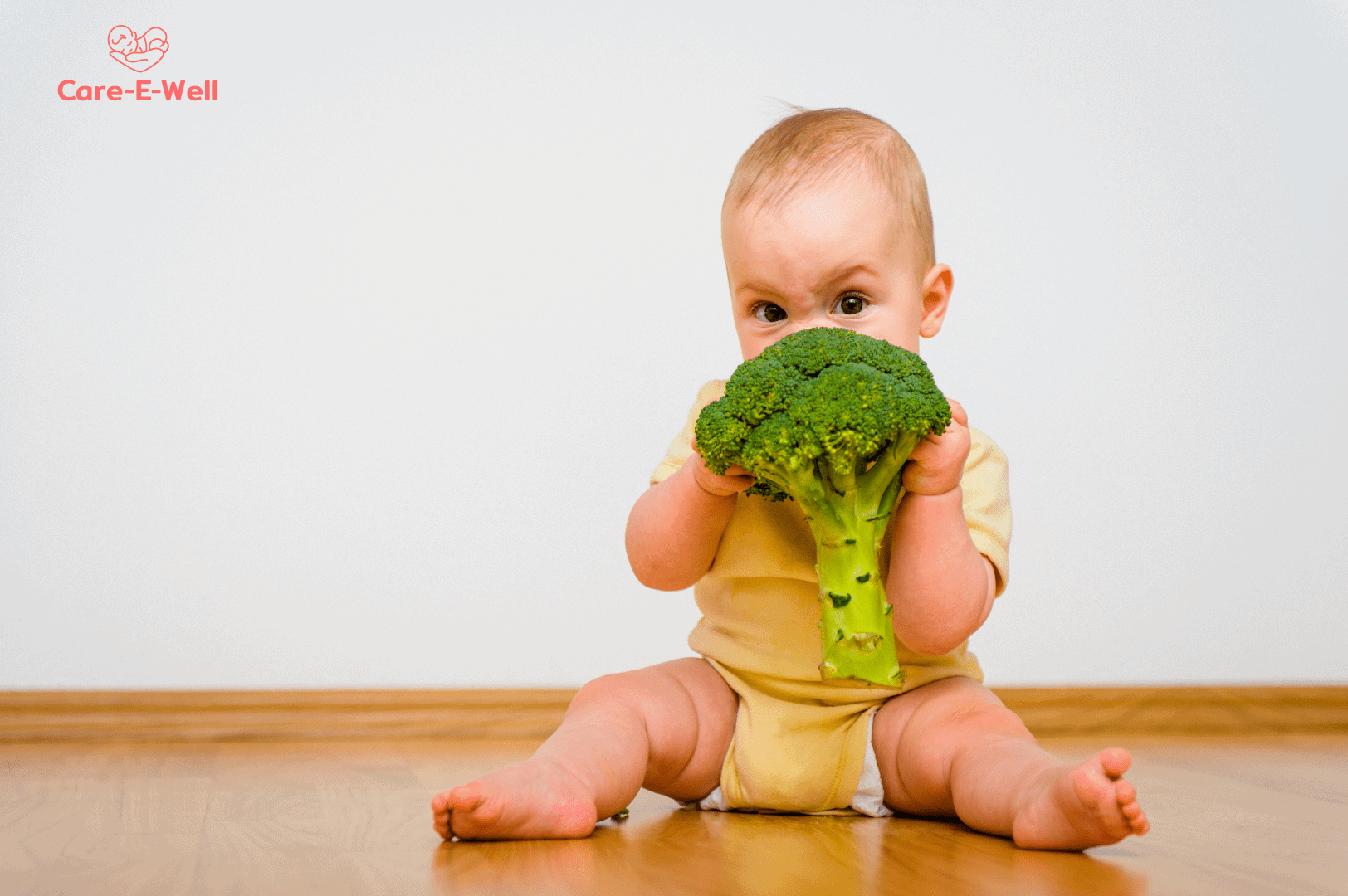
The best first foods for babies are not defined by one perfect fruit, vegetable or cereal. At around six months, the priority is to add nutrient-dense foods to breast milk or infant formula, with particular attention to iron, while gradually introducing a wide range of tastes and textures.
A useful first-food plan therefore looks broader than the classic idea of starting with only fruit or vegetable purée. Soft meat, egg, fish, pulses, iron-fortified cereal, vegetables, fruit, full-fat unsweetened dairy foods where appropriate, grains and other family foods can all have a place when prepared safely for the baby's developmental stage.
Think "nutrient-dense and varied" rather than "the perfect first food." Early complementary feeding is a gradual expansion of the diet, not a sequence you must get exactly right.
What should parents prioritise when choosing first foods?
WHO recommends beginning complementary foods around six months because energy and nutrient needs start to exceed what milk alone can provide. Foods should be adequate, safe, varied and offered responsively.
For a healthy term baby, practical priorities are nutrient density, iron, appropriate texture, variety and repeated opportunities to learn how to eat.
- Include iron-rich foods from the beginning.
- Offer foods with useful energy, protein and micronutrients rather than relying mainly on watery fruit or vegetable purées.
- Progress textures as the baby's oral-motor skills develop.
- Offer a variety of food groups across days and weeks.
- Avoid adding salt or sugar to baby foods.
- Keep feeding responsive: offer, observe and stop when the baby signals fullness.
Why iron deserves special attention
Iron requirements are high during late infancy because babies are growing rapidly. EFSA's population reference intake for iron is 11 mg per day for infants aged 7–11 months. That number is a population reference, not a reason to calculate every mouthful, but it illustrates why iron-rich complementary foods matter.
For breastfed babies, complementary foods become an increasingly important source of iron as stores from birth decline. Iron-fortified infant cereals and meats have both been studied as complementary iron sources. Formula-fed babies may obtain substantial iron from iron-fortified formula, so the dietary context differs.
Practical iron-rich first foods
- Soft, tender meat that is minced, shredded or prepared in a graspable texture.
- Flaked fish with bones carefully removed.
- Well-cooked egg.
- Lentils, beans and chickpeas mashed, blended or shaped safely for self-feeding.
- Iron-fortified infant cereal prepared to an appropriate consistency.
- Tofu or other iron-containing foods suitable for the family's diet.
Plant foods contain non-haem iron, which is absorbed differently from haem iron in meat. Offering vitamin-C-rich fruit or vegetables alongside plant iron sources is a practical way to build varied meals.

Do vegetables need to come before fruit?
There is no evidence-based rule that babies must eat vegetables before fruit or they will reject vegetables later. Offering vegetables early is sensible because babies benefit from repeated exposure to many flavours, including less sweet tastes, but fruit does not need to be delayed.
Variety matters more than a rigid sequence. You might offer broccoli one day, pear another, lentils with tomato, then egg with soft vegetables. Repeated exposure is normal because babies may initially make faces or eat very little when a flavour is unfamiliar.
Are purées good first foods?
Purées can be useful first foods, especially when a baby is learning to manage food from a spoon. They are not nutritionally superior to safe finger foods, and babies should not remain on completely smooth textures indefinitely.
EFSA notes that developmental readiness for complementary feeding varies. WHO recommends gradually increasing consistency and variety as the infant gets older. This means the texture should evolve with skills rather than being fixed to a calendar alone.
What about finger foods?
Finger foods can be introduced when the baby has the postural and motor skills to self-feed safely. Food should be soft enough for the baby to manage and shaped appropriately for their grasp and oral skills.
Avoid foods presented in forms that can block the airway, such as whole hard nuts, hard raw vegetable pieces and whole round foods that have not been modified appropriately. A baby eating solids should be upright, awake and directly supervised.
Should cereal be the first food?
Cereal can be one good option, particularly if it is iron fortified, but it does not need to be the only first food. A varied diet that includes animal-source foods or suitable plant alternatives, vegetables, fruit and grains can provide a broader nutrient profile.
If using infant cereal, check the preparation instructions and choose a consistency the baby can manage. Spoon feeding should remain responsive rather than aiming to finish a predetermined bowl.
What about meat as a first food?
Meat is a reasonable first complementary food when it fits the family's diet. Research has examined meat and iron-fortified cereal as early iron sources in breastfed infants, and both can contribute to iron intake.
The key is texture. Dry chunks of meat can be difficult to manage. Tender slow-cooked meat, finely minced meat mixed into a soft food, or appropriately prepared strips can be easier depending on the baby's feeding skills.
Do first foods need to be homemade?
No. Homemade and commercially prepared foods can both fit a healthy complementary diet. The nutritional quality, texture, ingredients and how the food is offered matter more than whether it came from a jar, pouch or home kitchen.
Frequent sucking directly from pouches can reduce opportunities to see, smell and handle food, so serving pouch contents on a spoon or alongside other textures can give a broader feeding experience.
How much should a baby eat at first?
Small amounts are normal. WHO practical guidance describes starting with a few spoonfuls and gradually increasing the quantity as the baby grows and appetite develops. The aim of the first meals is not to replace milk quickly.
Some babies enthusiastically eat several spoonfuls from the first week, while others mainly touch, lick and taste. Continue offering regular opportunities without pressure, while breast milk or infant formula remains nutritionally important.

What should a balanced first-food plate include?
You do not need a perfect plate at every meal. Across the day, think in simple building blocks: an iron-rich or protein-rich food, an energy-containing food, and fruit or vegetables.
- Iron-rich base: meat, fish, egg, pulses or iron-fortified cereal.
- Energy source: avocado, full-fat unsweetened yoghurt where appropriate, grain foods, potato or other starchy foods.
- Produce: vegetables or fruit in a safe texture.
- Variety over time: rotate flavours, colours and food groups rather than repeating one "safe" food at every meal.
A baby's first foods should become progressively more varied. Nutritional value and learning to eat matter more than creating picture-perfect meals.
Foods that deserve extra caution
Some foods are inappropriate because of choking form, added salt or sugar, or specific safety concerns. Whole nuts and other hard round foods are choking hazards. Honey should not be given before 12 months because of infant botulism risk; if this topic arises, follow local professional guidance.
Highly salty and sugary foods can displace more nutritious options and are not needed for babies. WHO recommends no added salt or sugars in foods for babies and young children.
Frequently asked questions
What is the single best first food for a baby?
There is no single best food. An iron-rich, nutrient-dense food prepared safely is an excellent place to start, but variety over the following days and weeks is more important than choosing one ideal item.
Should I give one food for several days before another?
Routine foods do not need a long waiting period between each new item. Introducing potential allergens may need a more deliberate approach, especially for babies with allergy risk factors, but that is a separate safety question from ordinary food variety.
Can babies eat family food from the start?
Often yes, if the family's food can be adapted to the baby's needs. Remove added salt where possible, modify texture and shape, and avoid choking hazards.
What if my baby eats almost nothing?
Very small intakes can be normal at the beginning. Continue milk feeds, provide regular low-pressure opportunities and watch the overall pattern. Seek professional advice if feeding is persistently difficult, growth is concerning, or the baby coughs, chokes or struggles to swallow.
Conclusion
The best first foods for babies are nutrient-dense, iron-conscious, varied and developmentally appropriate. Build from safe family foods, let textures progress with skills and allow your baby's appetite to set the pace.
Sources and References
- World Health Organization. WHO Guideline for complementary feeding of infants and young children 6–23 months of age. https://www.who.int/publications/i/item/9789240081864/
- World Health Organization. Complementary feeding. https://www.who.int/health-topics/complementary-feeding
- World Health Organization. Healthy diet: Keys to eating well. https://www.who.int/news-room/questions-and-answers/item/healthy-diet-keys-to-eating-well
- European Food Safety Authority. Appropriate age range for introduction of complementary feeding into an infant's diet. https://www.efsa.europa.eu/en/news/age-start-complementary-feeding-infants
- EFSA NDA Panel. Scientific Opinion on Dietary Reference Values for iron. EFSA Journal. 2015. DOI: https://doi.org/10.2903/j.efsa.2015.4254
- Krebs NF, Sherlock L, Westcott J, et al. Effects of Different Complementary Feeding Regimens on Iron Status and Enteric Microbiota in Breastfed Infants. Journal of Pediatrics. 2013. DOI: https://doi.org/10.1016/j.jpeds.2013.01.024
- Van Elswyk ME, Murray R, McNeill SH. Iron-Rich Complementary Foods: Imperative for All Infants. Current Developments in Nutrition. 2021. DOI: https://doi.org/10.1093/cdn/nzab117
- D'Auria E, Bergamini M, Staiano A, et al. Baby-led weaning: what a systematic review of the literature adds on. Italian Journal of Pediatrics. 2018. DOI: https://doi.org/10.1186/s13052-018-0487-8
- Roess AA, Jacquier EF, Catellier DJ, et al. Food Consumption Patterns of Infants and Toddlers: Findings from FITS 2016. Journal of Nutrition. 2018. DOI: https://doi.org/10.1093/jn/nxy171
Did this Insight help?
A little love for something worth reading.


