
Care-E-Well Insights
Blocked Duct or Mastitis? How to Recognise the Difference
Blocked duct or mastitis? Learn the key differences, gentle breast care, what to avoid and when fever or worsening pain needs medical help.

A tender, firm area in a breastfeeding breast is often called a blocked duct. If redness, fever or flu-like symptoms appear, parents may worry that it has become mastitis. The difference is not always a sharp line: current research increasingly describes these problems as part of a spectrum of breast inflammation.
The practical distinction is how extensive and severe the symptoms are, whether you feel systemically unwell, and whether the problem is improving or worsening. A small tender area without fever often responds to gentle supportive care. Increasing redness, significant swelling, fever, chills or feeling acutely ill deserves medical assessment.
A “blocked duct” is not necessarily a solid plug of milk that must be forced out. Gentle care is safer than aggressive massage or repeated pumping.
What is a blocked duct?
The traditional term “blocked duct” suggests that a discrete piece of thick milk physically obstructs a duct. Newer mastitis-spectrum models instead describe many of these episodes as localized inflammation and narrowing around milk ducts. For this reason, some clinicians now use terms such as ductal narrowing rather than plugged duct.
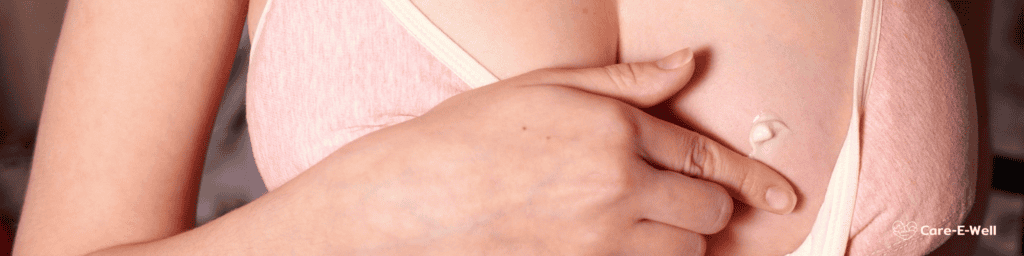
A typical localized episode may feel like a tender, firm or swollen area in one part of the breast. The skin may look normal or mildly pink, and you usually feel otherwise well. Milk may seem slower from that area, but the breast is not a simple system of tubes that can be manually “unblocked.”
What is mastitis?
Mastitis means inflammation of the breast. WHO guidance notes that mastitis may occur with or without bacterial infection. Symptoms can range from localized inflammation to more extensive redness, swelling, pain and systemic symptoms such as fever, chills or marked malaise.
Modern clinical guidance often describes a spectrum that can include ductal narrowing, inflammatory mastitis, bacterial mastitis and, less commonly, complications such as phlegmon or abscess. The exact boundaries between these categories are not always easy to identify at home.
Blocked duct or mastitis: what differences should you look for?
- Localized tenderness or firmness without systemic illness is more consistent with a limited inflammatory episode.
- Worsening redness, heat and swelling suggest more extensive inflammation.
- Fever, chills, body aches or feeling acutely unwell make mastitis more likely and warrant clinical advice.
- A growing, very painful lump or an area that feels fluid-filled can raise concern about an abscess.
- Symptoms that steadily improve with gentle supportive care are more reassuring than symptoms that intensify.
None of these signs can confirm bacterial infection by itself. If symptoms are substantial or progressing, a clinician can assess the whole picture and decide whether further treatment is needed.
Does a blocked duct always turn into mastitis?
No. A localized tender area can settle without progressing. It is therefore unhelpful to assume that every firm spot must be aggressively emptied before it “becomes infected.” Breast inflammation is influenced by milk production, tissue swelling, feeding patterns, nipple or pump trauma and other factors.
What matters is whether milk removal remains reasonably physiological and whether inflammation is settling. Repeated manipulation can irritate tissue and sometimes make swelling worse.
What can help a localized tender area?
Start with measures that reduce inflammation without overstimulating milk production.
- Continue breastfeeding responsively if feeding is comfortable and effective.
- Avoid deliberately adding extra feeds solely to drain the affected area.
- Use a cool pack wrapped in fabric for short periods if it feels soothing.
- Wear comfortable, supportive clothing that does not press on the tender area.
- If a feed is missed or the breast is painfully full, express only what is needed for comfort unless you have a different clinical plan.
- Check pump flange fit and suction if pumping is part of your routine.
- Rest, drink according to thirst and seek help if symptoms are worsening.
If your baby is not transferring milk effectively, the feeding problem itself deserves assessment. Correcting poor attachment, recurrent nipple trauma or an unsustainable pumping pattern can be more useful than repeatedly treating the same breast area.
Should you massage a blocked duct?
Forceful deep massage is not recommended. Swollen breast tissue can be bruised or further inflamed by hard kneading, knuckles, vibrating devices or attempts to “push a plug” toward the nipple.
Light, comfortable touch may feel soothing, but evidence for therapeutic breast massage is limited and some recommendations remain professionally debated. The safest principle is to avoid anything that increases pain, bruising or swelling.
More pressure is not better. If massage hurts, stop.
Should you pump until the breast feels empty?
Usually not. Breasts continuously produce milk and never become literally empty. Repeated extra pumping can signal the breast to maintain or increase production, particularly when oversupply is already contributing to recurrent fullness and inflammation.
Pump when milk removal is genuinely needed—for example, when the baby misses a feed, cannot transfer enough milk or you are following an individualized feeding plan. For simple discomfort, expressing a small amount for relief is often enough.
Does heat help a blocked duct?
Some parents like brief warmth immediately before feeding because it feels comfortable or helps milk begin flowing. However, prolonged or intense heat is not necessary to resolve inflammation and can feel worse in already swollen tissue.
Cooling after or between feeds may be more comfortable for swelling. Choose the approach that relieves symptoms without using extreme temperatures on the skin.
Can you keep breastfeeding with mastitis?
In most cases, yes. WHO and breastfeeding-medicine guidance support continued breastfeeding or milk removal when possible. Mastitis does not normally make the milk unsafe for a healthy baby, and abruptly stopping milk removal can create additional fullness and discomfort.
If pain is severe or the baby cannot feed effectively, ask for an individualized plan for expression and feeding while you recover.
Does mastitis always need antibiotics?
No. Mastitis is inflammation, and not every inflammatory episode is bacterial. Some cases improve with conservative measures. Antibiotics may be appropriate when bacterial mastitis is suspected, symptoms are severe or persistent, or the clinical course is worsening.
The decision should be made with a healthcare professional rather than from redness alone. Research has long shown that bacteria can be present in breast milk without perfectly predicting who needs antibiotic treatment.
Seek medical assessment if fever or systemic symptoms are significant, symptoms are worsening, or you are not improving with supportive care. Do not delay assessment because you hope to avoid antibiotics.
What about a white nipple bleb?
A white spot at a nipple pore is sometimes called a milk bleb. Current inflammatory models suggest that some blebs involve inflammation at the duct opening rather than a removable piece of dried milk.
Avoid piercing, scraping or repeatedly squeezing a bleb yourself. Damaging the nipple creates another inflammatory injury and a potential entry point for infection. Persistent or painful blebs are worth discussing with a clinician experienced in lactation-related breast problems.

When could a breast abscess be developing?
An abscess is a collection of infected fluid and requires medical assessment. Warning signs can include a persistent or enlarging painful lump, worsening localized swelling, continued fever or illness, or symptoms that fail to improve as expected.
Seek prompt medical care for a growing painful breast lump, spreading redness, pus-like drainage, persistent fever, severe focal pain or feeling significantly unwell. An abscess may need imaging and drainage rather than stronger massage or more pumping.
Why do these problems keep coming back?
Recurrent breast inflammation should prompt a look at the pattern around it. Possible contributors include persistent oversupply, abrupt changes in feeding frequency, extra pumping, pump trauma, ineffective milk transfer, nipple damage or repeated pressure from clothing or equipment.
Recurrence does not mean you failed to empty the breast well enough. In some parents, efforts to empty more aggressively can maintain oversupply and perpetuate the cycle.
What should you avoid?
- Deep or painful breast massage.
- Trying to squeeze out a supposed plug.
- Pumping repeatedly to achieve an “empty” breast.
- Piercing or scraping nipple blebs.
- Very hot compresses that irritate the skin.
- Tight bras or pressure over the inflamed area.
- Assuming every red breast needs antibiotics without assessment.
- Assuming every episode is harmless when fever or systemic illness is developing.
A practical blocked duct or mastitis plan
- Note whether symptoms are localized or spreading.
- Check whether you feel otherwise well or systemically ill.
- Continue normal responsive milk removal rather than extra drainage sessions.
- Use cooling and comfortable support for swelling.
- Avoid forceful massage and high-volume pumping.
- Address latch, pump fit, oversupply or feeding-pattern problems if present.
- Reassess over the next several feeds rather than repeatedly manipulating the breast.
- Seek medical care when symptoms are significant, worsening or not improving.
The important shift is from treating a “blocked duct” as something that must be physically forced out to treating breast inflammation gently and watching the clinical pattern. Localized tenderness can often settle with conservative care, while mastitis with systemic symptoms or worsening inflammation deserves timely medical assessment.
Frequently asked questions
Can I feed from the breast with a blocked duct?
Usually yes. Continue normal responsive breastfeeding if it is comfortable and your baby transfers milk effectively. You do not need to add excessive feeding or pumping solely to drain one area.
How do I know if a blocked duct has become mastitis?
Increasing redness, swelling, pain, fever, chills or feeling unwell suggest more extensive inflammation. Because bacterial and non-bacterial mastitis can overlap, significant or worsening symptoms should be assessed clinically.
Should I massage a hard breast lump toward the nipple?
No. Deep pressure can aggravate swollen tissue. Use gentle supportive care and seek assessment for a persistent or enlarging lump.
Can mastitis go away without antibiotics?
Some inflammatory mastitis episodes improve without antibiotics, but bacterial mastitis may require them. A clinician should assess severe, persistent or worsening symptoms.
Sources and references
- World Health Organization — Mastitis: Causes and Management
- World Health Organization — Breastfeeding
- UNICEF — Baby-Friendly Hospital Initiative
- Mitchell KB, Johnson HM, Rodríguez JM, et al. — Academy of Breastfeeding Medicine Clinical Protocol #36: The Mastitis Spectrum, Revised 2022
- Berens PD, Eglash A — Redefining the Terminology of “Plugged Ducts”
- Douglas P — Re-thinking benign inflammation of the lactating breast: Classification, prevention, and management
- Douglas P — Does the Academy of Breastfeeding Medicine’s Clinical Protocol #36 ‘The Mastitis Spectrum’ promote overtreatment and risk worsened outcomes for breastfeeding families?
- Kvist LJ, Wilde-Larsson B, Hall-Lord ML, et al. — The role of bacteria in lactational mastitis and some considerations of the use of antibiotic treatment
- Heron E, Maselli T, McArdle A, et al. — Exploring physiotherapists’ clinical definition and diagnosis of inflammatory conditions of the lactating breast in Australia
Did this Insight help?
A little love for something worth reading.


