
Care-E-Well Insights
Button Battery Safety: Why Tiny Batteries Are a Major Emergency
Button battery safety starts with secure storage and compartments. Learn why suspected swallowing needs immediate emergency care.
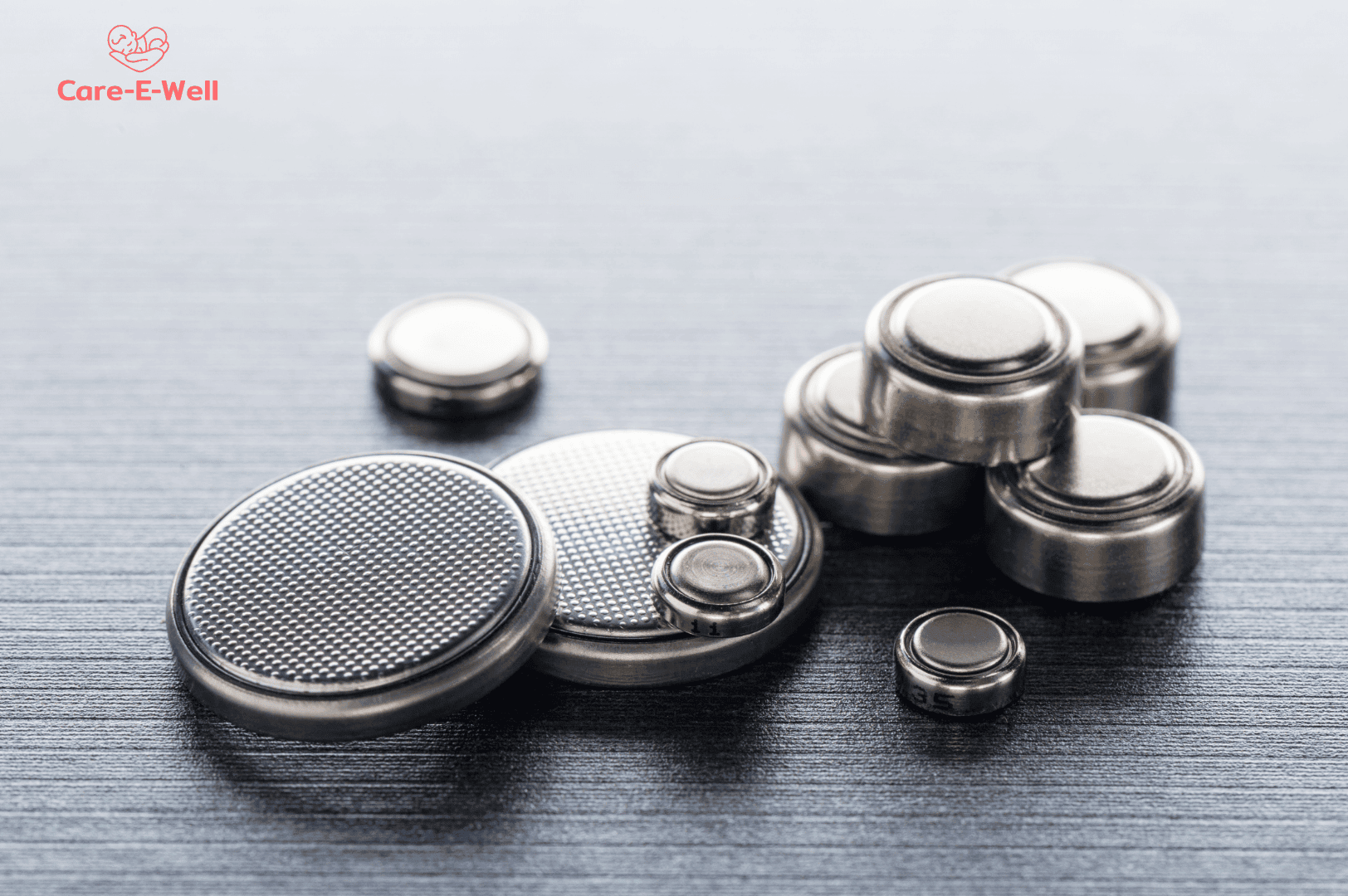
Button battery safety matters because a battery that looks like a harmless silver coin can cause severe internal injury after it is swallowed. If a button or coin cell becomes lodged in a child’s oesophagus, electrical current at the battery surface can generate a highly alkaline environment and damage tissue rapidly. The danger is not limited to leaking battery contents.
Prevention starts by finding where these batteries live in the home, securing battery compartments, locking spare and used cells away, and treating a missing battery seriously. If you suspect a child swallowed a button battery, seek emergency medical help immediately even if the child looks well and is breathing normally.
Suspected button battery ingestion is a medical emergency. Do not wait for symptoms, do not induce vomiting and do not delay assessment while trying to identify whether the battery was new or used.
Why can a tiny button battery cause such serious injury?
The oesophagus is a narrow, moist tube. When a button battery becomes stuck there, the surrounding tissue can connect the battery’s two poles. This allows current to flow and promotes production of hydroxide at the negative pole, creating an alkaline chemical environment that can injure the oesophageal wall.
Research on esophageal button-battery impaction describes tissue damage beginning quickly and severe injury developing within hours. Complications can extend beyond the oesophagus to the airway, nerves and major blood vessels. This is why clinicians treat an oesophageal battery differently from an ordinary swallowed coin.
A battery can therefore be dangerous while it still looks intact. Parents should not use visible leakage, corrosion or age as a test of whether a swallowed cell is safe.
A button battery does not need to leak to burn tissue. The electrical reaction created when it contacts moist tissue is a central part of the injury mechanism.
Where are button batteries found around the home?
Button and coin cells power many compact household products. Some are obvious children’s items; others belong entirely to adults and may be left on tables, bedside units or in drawers a toddler can open.
- key fobs and car remotes
- watches and small clocks
- kitchen and bathroom scales
- thermometers
- calculators
- small LED lights and electronic candles
- hearing aids and related accessories
- greeting cards and novelty products with sound or light
- remote controls
- small toys and electronic games
- trackers and compact electronic devices
- some medical or fitness devices
The exact battery type differs by product. The important question is whether a young child can open the battery compartment, whether the cover is damaged and whether loose replacement batteries are accessible nearby.
How should products with button batteries be childproofed?
Inspect the battery compartment rather than assuming the product is safe because it was sold for household use. A well-designed compartment should remain securely closed during normal handling and after the product has been dropped or used repeatedly.
- Check that every battery cover is present and undamaged.
- Use all screws or locking mechanisms specified by the manufacturer.
- Replace a stripped screw, cracked cover or broken latch rather than continuing to use the item near children.
- Keep products with easily opened compartments out of a young child’s reach.
- Recheck second-hand toys and electronics before use.
- Inspect frequently handled products such as remotes and key fobs after drops or impacts.
Do not rely on adhesive tape as a permanent substitute for a damaged battery cover unless the manufacturer specifically provides that solution. A repair that loosens can release the battery directly into a child’s environment.
How should spare button batteries be stored?
Store spare batteries in their original packaging where possible and place the package in a locked or otherwise reliably inaccessible location. A high shelf can help, but climbing toddlers can surprise families; a secure cabinet adds a stronger barrier.
Avoid loose batteries in kitchen drawers, handbags, bedside tables, toolboxes or open organisers. Packaging also helps adults identify the battery and reduces the chance that several loose cells are scattered during use.
Keep the storage location separate from toys and child-accessible household items. A battery should never be given to a child to hold while an adult changes another one.

Are used button batteries still dangerous?
Yes. A battery that can no longer power a device may still contain enough residual electrical energy to injure tissue if swallowed. Treat used cells as hazardous until they enter an appropriate disposal or recycling system.
Put removed batteries directly into secure temporary storage that children cannot access. Do not leave them on a counter “for later,” in an open rubbish container or in a pocket where they may fall onto the floor.
Follow local battery-disposal requirements. The safe-disposal route varies by country and municipality, but child access should be prevented throughout the period before disposal.
What should you do if a button battery goes missing?
Treat a missing cell as more than a housekeeping problem. Check the product, floor, furniture gaps and the area where the battery was changed. If a young child had access and you cannot account for the battery, seek urgent medical advice rather than assuming it rolled under furniture.
Young children may not be able to tell you what happened. An ingestion can be unwitnessed, and early symptoms may be absent or nonspecific.
Take the device, packaging or an identical battery with you if emergency clinicians request it and it can be done without delaying care. Knowing the size and type may help the medical team, but identifying those details should never postpone assessment.
What symptoms can button battery ingestion cause?
Symptoms depend on where the battery is and how long it has been present. A child may initially seem completely well. When symptoms occur, they can resemble common childhood illnesses.
- drooling or difficulty swallowing
- refusing food or drink
- vomiting or gagging
- chest, throat or abdominal discomfort
- coughing, wheezing or noisy breathing
- irritability or unusual distress
- blood in saliva, vomit or stool
- fever or later respiratory symptoms
Because serious injury can begin before dramatic symptoms appear, absence of symptoms cannot be used to rule out danger after a credible suspected ingestion.
Why should parents not wait to see whether the battery passes?
Ordinary blunt foreign bodies often follow different management pathways, but an oesophageal button battery is time-sensitive. The battery can continue producing local tissue injury while a child is waiting at home.
Imaging is generally used by clinicians to locate a suspected battery and distinguish it from objects such as coins. If a battery is in the oesophagus, emergency removal is typically required. These decisions belong to the medical team; parents should focus on getting the child assessed promptly.
Do not check nappies or stools first, wait for the child to complain, or postpone care until a family doctor appointment if a button battery ingestion is suspected.
“The child looks fine” is not a safe reason to wait after a suspected button battery ingestion. Early injury can be hidden.
Is a button battery the same as a swallowed coin?
No. Both can appear round and metallic, but their risk profiles differ. A coin can lodge in the oesophagus and require medical removal, yet a battery adds an active electrochemical injury mechanism.
Radiographs can show characteristic features that help clinicians distinguish batteries from coins, although overlapping objects can sometimes complicate interpretation. Parents should not try to make that distinction at home based on appearance alone.
If you are unsure whether the missing round object was a coin or battery, tell the emergency team that a button battery is possible.
Can a button battery cause problems in the nose or ear?
Yes. A battery inserted into the nose or ear can also cause local tissue injury. This is not a situation for repeated home removal attempts, especially when the battery is deep, the child is distressed or the object cannot be seen clearly.
Suspected button battery insertion into the nose or ear needs urgent medical assessment. Do not pour liquids into the ear or nose or repeatedly probe for the battery, because delay and additional trauma can worsen injury.
Which children are most at risk?
Toddlers and preschool children are especially vulnerable because they mouth objects, explore containers and cannot reliably explain what they swallowed. But button batteries can endanger older children too, particularly when batteries are used in experiments, placed in the mouth, mistaken for sweets or handled during device repairs.
Homes with several children need to consider how an older sibling’s electronics reach younger children. A gaming accessory, light-up craft project or battery-changing activity can introduce loose cells into a shared room.
How can older siblings help with button battery safety?
Older children can learn simple rules without becoming responsible for the younger child’s safety.
- never give a battery to a baby or toddler
- change batteries only with an adult when appropriate
- tell an adult immediately if a battery falls or goes missing
- keep electronic projects and small batteries in a child-free workspace
- return unused batteries to secure storage immediately
- do not put batteries in the mouth, even as a joke or temporary holding place
Adults should still perform the final floor check and storage step. Small shiny batteries are easy to overlook after a project or repair.
What about battery packaging and child-resistant compartments?
Better packaging and secured compartments can reduce access, but no safety feature should be treated as infallible. Packaging can be left open, screws can loosen and products can break.
Use the full prevention chain: buy compliant products, keep packaging intact, secure compartments, store spares and used cells inaccessible, and inspect the environment after battery changes.
If a product repeatedly loses its battery cover or requires makeshift repair, remove it from the child’s environment rather than relying on repeated warnings.

What should grandparents and visitors know?
Button battery risk follows devices into the home. Visitors may bring hearing aids, car keys, watches, calculators or medication devices that use coin cells. Grandparents may keep spare batteries in easy-open drawers that are normally safe for adults.
When a young child visits, place battery-powered personal items and spare batteries out of reach. Check guest rooms, side tables and handbags rather than focusing only on the nursery or playroom.
Holiday accommodation deserves the same scan. Decorative lights, remote controls and electronic key devices may be unfamiliar but accessible.
Should you keep old electronic devices as toys?
Not if the child can access the battery compartment or other small internal parts. An old remote, calculator or key fob may look like a harmless pretend toy but can contain a button battery behind a cover that has become loose with age.
If a device is no longer needed, remove it from the child’s play environment and manage the battery safely. Purpose-designed toys are easier to assess than discarded electronics that were never intended for mouthing or rough play.
What should you do immediately after suspected ingestion?
Seek emergency medical assessment immediately. Call local emergency services or follow your regional poison/emergency service instructions. Do not induce vomiting, do not give food or drink simply to “push the battery down,” and do not delay transport for home remedies. Follow any specific instructions given by medical professionals while help is being arranged.
If the child is choking and cannot breathe, cry, speak or cough effectively, treat the airway obstruction as an immediate emergency as well. The absence of choking does not make the swallowed battery safe.
Frequently asked questions
Can a dead button battery still hurt a child?
Yes. A battery that no longer powers a device may retain enough charge to cause tissue injury. Store and dispose of used cells with the same care as new ones.
How fast can a swallowed battery cause damage?
Research shows oesophageal injury can begin rapidly and serious damage can develop within hours. That is why suspected ingestion requires immediate assessment rather than symptom watching at home.
What if I am not sure whether my child swallowed it?
If a battery is missing and a child could have accessed it, contact emergency medical services or the appropriate poison service promptly. Uncertainty is not a reason to wait when the possible object is high risk.
Can I tell a battery from a coin without an X-ray?
Not reliably enough for a suspected ingestion. Clinicians use the history and imaging to identify and locate the object. Tell them clearly when a button battery is possible.
Is taping a battery compartment shut enough?
A manufacturer-secured compartment is preferable. Tape can loosen and should not be assumed to compensate for a damaged cover unless the product manufacturer specifically recommends that method.
The key takeaway
Button battery safety depends on preventing access and responding immediately when prevention may have failed. Secure battery compartments, lock spare and used cells away, inspect remotes, key fobs, scales, toys and other compact electronics, and account for every battery after a change. A swallowed button battery can injure the oesophagus rapidly even when the child looks well, so suspected ingestion is an emergency—not an event to monitor at home.
Sources and References
- Jatana KR, Rhoades K, Litovitz T, et al. — Evaluation of an Esophageal-Protective Lithium Coin-Cell Battery Within Current Management Paradigms
- Shaffer AD, Jacobs IN, Derkay CS, et al. — Management and Outcomes of Button Batteries in the Aerodigestive Tract: A Multi-institutional Study
- Sinclair EM, Agarwal M, Santore MT, et al. — Single-Center Retrospective Review of the Presentation and Initial Care of Esophageal Button Battery Impactions 2007–2020
- Philteos J, James AL, Propst EJ, et al. — Airway Complications Resulting From Pediatric Esophageal Button Battery Impaction
- Safavi A, Brook C, Sakai O, et al. — Urgency of Esophageal Foreign Body Removal: Differentiation Between Coins and Button Cell Batteries
- Dörterler ME — Clinical Profile and Outcome of Esophageal Button Battery Ingestion in Children: An 8-Year Retrospective Case Series
- Ruhl DS, Cable BB, Rieth K, et al. — Emergent Treatment of Button Batteries in the Esophagus
- Ott KC, Harris J, Barsness KA, et al. — Management of broncho-esophageal fistula after button battery ingestion
- Bettadahalli V, Kumar S, Shukla I, et al. — Evolving Trends of Button Battery Ingestion in Indian Children at a Tertiary Care Hospital
Did this Insight help?
A little love for something worth reading.


