
Care-E-Well Insights
Can You Reheat Formula? Safe Warming and Leftover Rules
Can you reheat formula? Learn safe warming, why used bottles should not be reheated, and when refrigerated formula must be discarded.
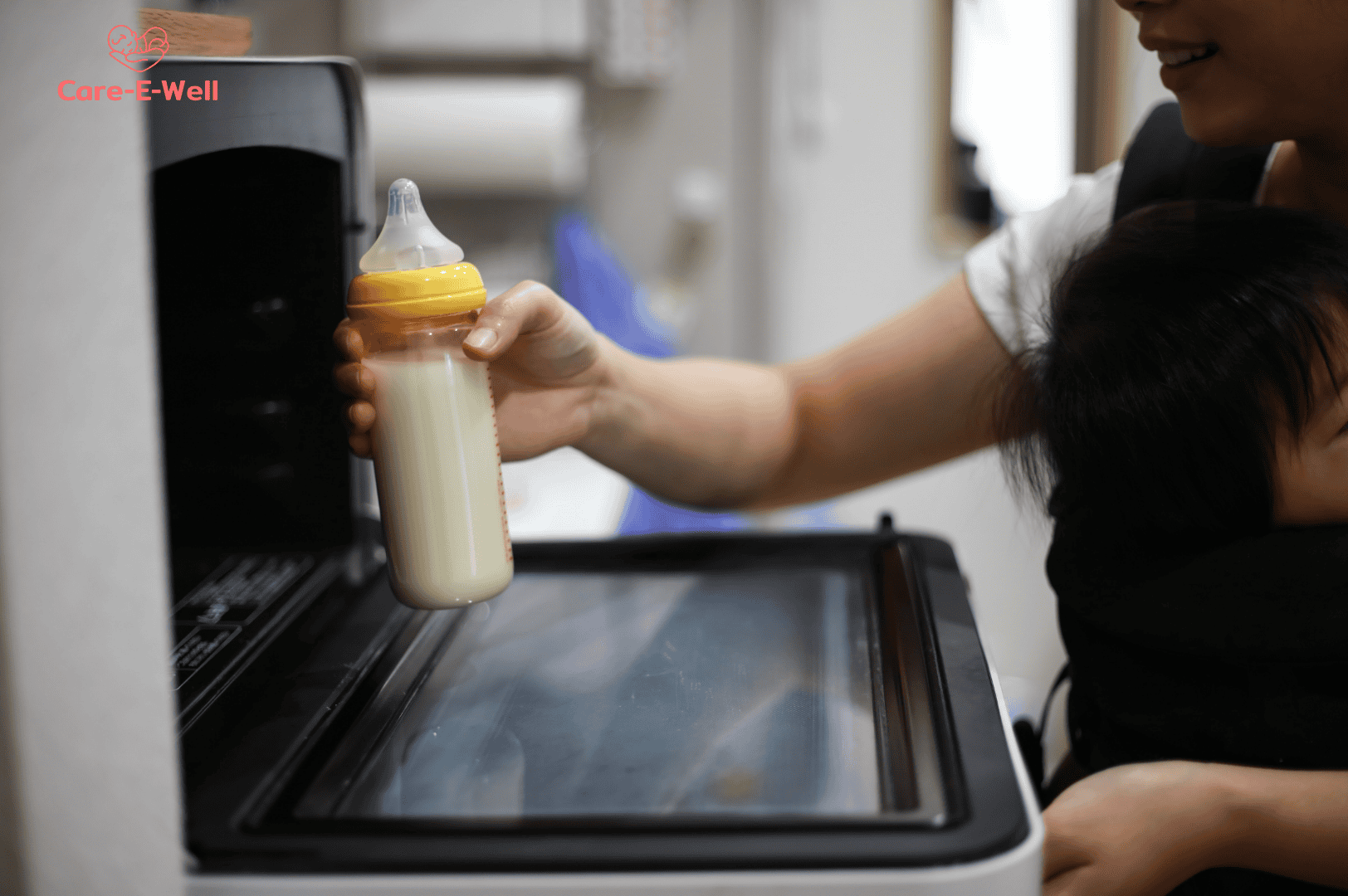
Can you reheat formula? The safest answer depends on what has already happened to the feed. A freshly prepared or safely refrigerated bottle can be warmed once for feeding, but reheating does not reset its storage clock, and a bottle the baby has already drunk from should not be cooled and reheated for another feed.
Formula does not need to be warm at all if your baby accepts it cool or at room temperature. Warming is about comfort, not nutrition or safety. The important rules are to protect the original preparation and storage timeline, avoid prolonged warm holding, and discard leftovers after the baby has fed.
Warming formula is optional. Reheating an old or partly used bottle is not a way to make it safe again.
What does “reheat formula” actually mean?
Parents use the word reheat for several different situations: warming a cold refrigerated bottle, warming a freshly prepared bottle that has cooled, warming the same bottle a second time, or trying to rescue formula that has been sitting out. These are not equivalent from a food-safety perspective.
Powdered infant formula is not sterile. Once mixed with water, it becomes a nutrient-rich liquid in which bacteria can multiply. Time and temperature therefore matter throughout preparation, storage and feeding.
WHO guidance recommends preparing feeds fresh whenever possible and minimising the time between preparation and consumption. When advance preparation is necessary, formula should be cooled promptly, refrigerated at 5°C or below and used within 24 hours.
Can you warm refrigerated prepared formula?
Yes. A bottle that was prepared hygienically, cooled promptly and kept continuously at 5°C or below can be removed from the refrigerator and warmed shortly before feeding.
Warm only the feed you need. A practical method is to place the closed bottle in a container of warm water or use a bottle warmer according to its instructions. Swirl rather than vigorously shake if you want to distribute heat evenly, then check the temperature before offering it.
The formula does not have to reach body temperature. It only needs to be comfortable for the baby if warming is desired.
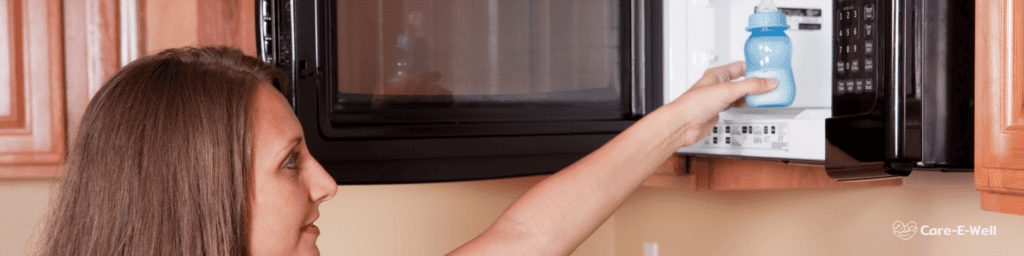
Never microwave infant formula. Microwaves can create uneven hot spots that can burn a baby’s mouth even when the bottle feels only warm from the outside.
Can formula be warmed twice?
Repeated warming and cooling is not recommended. Each temperature change adds handling and can create more time in a range where bacteria multiply faster.
If a refrigerated bottle has already been warmed for a feed, offer it promptly. Do not routinely return the remaining warmed feed to the refrigerator and heat it again later.
If your baby often drinks less than expected, warming a smaller portion can reduce waste. Keep the untouched remainder safely refrigerated in its original container or separate clean bottle only if it has never contacted the baby’s mouth or used teat and remains within the original storage limit.
The safest way to reduce waste is to warm less, not to reheat leftovers.
What if the baby has already drunk from the bottle?
Once the baby sucks from the teat, saliva can flow back into the formula. That introduces oral bacteria into a liquid that supports bacterial growth.

A partly used bottle should therefore be discarded after the feeding session rather than refrigerated, rewarmed or saved for the next feed. This applies even if the baby drank only a small amount.
Preparing smaller initial volumes and offering more if the baby remains hungry can be more practical than repeatedly throwing away large leftovers.
Do not refrigerate and reheat formula from a bottle the baby has already fed from.
Does reheating reset the two-hour room-temperature limit?
No. WHO guidance states that prepared powdered formula that has not been consumed within two hours of preparation should be discarded. Warming or reheating does not restart that clock.
For example, if a bottle was prepared at 20:00 and left at room temperature, warming it at 21:30 does not create a fresh two-hour window. The preparation time still matters.
If you do not know when the feed was made or how long it has been unrefrigerated, discard it rather than estimating.
Can you refrigerate formula after it has sat out and reheat it later?
Formula intended for later refrigeration should be cooled promptly after preparation. The refrigerator is not meant to rescue a bottle that has already spent most of its safe room-temperature period on the counter.
Cooling slows bacterial multiplication; it does not reverse growth that may already have occurred. A bottle that has been sitting warm for an uncertain or prolonged period should be discarded rather than moved into the fridge for later reheating.
Can reheating kill bacteria in old formula?
Ordinary bottle warming is not a sterilisation process. Bringing a feed to a comfortable drinking temperature does not reliably destroy harmful bacteria that may have multiplied during unsafe storage.
Even heating formula until very hot would not be an appropriate household rescue strategy because safety depends on the entire handling history, and excessive heating can create burn risks and affect feeding quality.
Formula that has exceeded its safe storage time should be discarded. Do not boil, microwave or repeatedly reheat it in an attempt to make it safe.
What temperature should warmed formula be?
There is no requirement to feed formula at exactly 37°C. Many babies accept formula cool, room temperature or gently warmed.
If you warm a bottle, aim for a comfortably lukewarm feed rather than a specific number. Test a small amount on the inside of your wrist or use another safe method recommended by your feeding team or product instructions.
The temperature used to prepare powdered formula is a different issue. WHO recommends water no cooler than 70°C when it contacts the powder to reduce microbiological risk. That preparation temperature is not the temperature at which the baby should drink the milk; the finished bottle must be cooled before feeding.
Is a bottle warmer safe?
A bottle warmer can be useful when it is used to warm one feed shortly before use. Follow the appliance instructions and keep the bottle under supervision.
A warmer should not be used to keep formula warm for hours. Prolonged warm holding creates conditions that can favour bacterial growth.
If the baby does not wake when expected, do not leave the bottle sitting in a warmer until the next feed.
Can you reheat ready-to-feed formula?
Unopened ready-to-feed formula is commercially sterile and needs no reconstitution. After opening, however, it can be contaminated and must follow the manufacturer’s refrigeration and after-opening instructions.
If an untouched portion has been refrigerated safely, it can generally be warmed once for feeding according to the product instructions. A bottle the baby has already drunk from should not be saved and rewarmed.
Do not apply the 24-hour prepared-powder rule automatically to every opened ready-to-feed container. The product label is the correct source for its after-opening storage limit.
Can you warm formula with hot tap water?
You can warm a closed bottle by standing it in warm water, but the water should not be so hot that it creates a burn hazard or overheats the feed. Keep water away from the teat and bottle opening.
Running warm water over the outside of a closed bottle is another practical option. Swirl the bottle afterwards to distribute heat evenly.
Whatever method you use, warming should be brief and immediately connected to a feeding session rather than becoming a storage method.
What about formula during night feeds?
Night feeding can make shortcuts tempting, especially when everyone is tired. The safest simplification is organisation rather than extending storage times.
- Keep clean feeding equipment ready before bedtime
- Store powder dry and portion only according to safe product instructions
- Prepare fresh feeds when possible
- If advance preparation is necessary, cool promptly and refrigerate at 5°C or below
- Warm only the bottle you are about to use
- Do not keep a prepared feed warm beside the bed
- Discard leftovers after the baby has fed
Sealed ready-to-feed formula can also reduce preparation steps at night if it is appropriate for your baby and used according to its opening and storage instructions.
Does warming change the nutrition in formula?
Normal gentle warming shortly before feeding is not expected to make a correctly prepared formula nutritionally inadequate. The bigger safety concern is overheating or extending holding time.
Repeated high-temperature exposure is unnecessary. Prepare formula correctly, store it safely and warm only as much as needed for comfort.
What if formula separates in the refrigerator?
Some formulas can show slight separation after standing. If the product has been stored safely and is still within its permitted storage time, gently swirling usually redistributes the contents.
Separation does not justify reheating several times. If the formula looks or smells unusual, the container is damaged, or you are uncertain about its storage history, discard it.
A practical warming decision guide
- Ask whether the feed is freshly prepared, safely refrigerated or already used.
- If freshly prepared and too warm, cool it safely rather than waiting for a long period at room temperature.
- If safely refrigerated and untouched, remove only the amount needed.
- Warm gently if your baby prefers it warm.
- Offer the feed promptly.
- Do not return a warmed used bottle to the refrigerator.
- Discard leftovers after feeding.
- If timing or temperature history is uncertain, prepare a fresh feed.
When should parents be extra cautious?
Newborns, premature babies and infants with impaired immunity are more vulnerable to severe infection from organisms such as Cronobacter. A neonatal or paediatric team may recommend sterile liquid formula or stricter preparation procedures for these babies.
Follow the baby’s clinical feeding plan rather than adapting general household advice when a medical team has given specific instructions.
Frequently asked questions
Can I reheat formula from the fridge?
You can warm an untouched bottle that was prepared and refrigerated safely. Warm it once shortly before feeding and keep the original storage time in mind.
Can I reheat a bottle my baby did not finish?
No. Once the baby has drunk from the bottle, saliva can contaminate the remaining formula. Discard the leftovers rather than reheating them.
Can I reheat formula after one hour?
The key issue is its full storage history. If it has been sitting at room temperature, reheating does not reset the time from preparation. If it was safely refrigerated and untouched, it can be warmed for feeding within the refrigerated storage limit.
Is cold formula safe?
Yes, if it was prepared and stored safely and your baby accepts it. Formula does not need to be warm.
Can I keep formula warm in a thermos or bottle warmer?
Do not keep prepared formula warm for extended periods. Warm holding encourages bacterial growth and is not a substitute for fresh preparation or refrigeration.
The key takeaway
Can you reheat formula? An untouched bottle that has been stored safely can be warmed once shortly before feeding, but warming does not extend its safe storage time. Formula that has sat out too long or has already been used should be discarded rather than reheated.
Keep the process simple: prepare safely, refrigerate promptly when necessary, warm only what you need, avoid microwaves and prolonged warm holding, and never save leftovers from a bottle the baby has drunk from.
Sources and references
- World Health Organization. Safe Preparation, Storage and Handling of Powdered Infant Formula: Guidelines. https://www.who.int/publications/i/item/9789241595414
- UNICEF UK Baby Friendly Initiative. Guide to Bottle Feeding. https://www.unicef.org.uk/babyfriendly/baby-friendly-resources/bottle-feeding-resources/guide-to-bottle-feeding/
- Losio MN, Pavoni E, Finazzi G, et al. Preparation of Powdered Infant Formula. https://doi.org/10.1097/MPG.0000000000002100
- Turck D. Safety Aspects in Preparation and Handling of Infant Food. https://doi.org/10.1159/000338215
- Agostoni C, Axelsson I, Goulet O, et al. Preparation and Handling of Powdered Infant Formula: A Commentary by the ESPGHAN Committee on Nutrition. https://doi.org/10.1002/j.1536-4801.2004.tb00858.x
- Kent RM, Fitzgerald GF, Hill C, et al. Novel Approaches to Improve the Intrinsic Microbiological Safety of Powdered Infant Milk Formula. https://doi.org/10.3390/nu7021217
- Sani NA, Hartantyo SHP, Forsythe S. Microbiological assessment and evaluation of rehydration instructions on powdered infant formulas, follow-up formulas, and infant foods in Malaysia. https://doi.org/10.3168/jds.2012-5409
- Chen PC, Zahoor T, Oh SW, et al. Effect of heat treatment on Cronobacter spp. in reconstituted, dried infant formula. https://doi.org/10.1111/j.1472-765X.2009.02733.x
- Chiang KV, Anstey EH, Abrams SA, et al. Infant burn injuries related to water heating for powdered infant formula preparation. https://doi.org/10.3389/fped.2023.1125112
Did this Insight help?
A little love for something worth reading.


