
Care-E-Well Insights
Car Seats and Winter Coats: Why Bulky Layers Are a Problem
Bulky coats can interfere with car seat harness fit. Learn how to keep babies and children warm while maintaining a snug restraint.
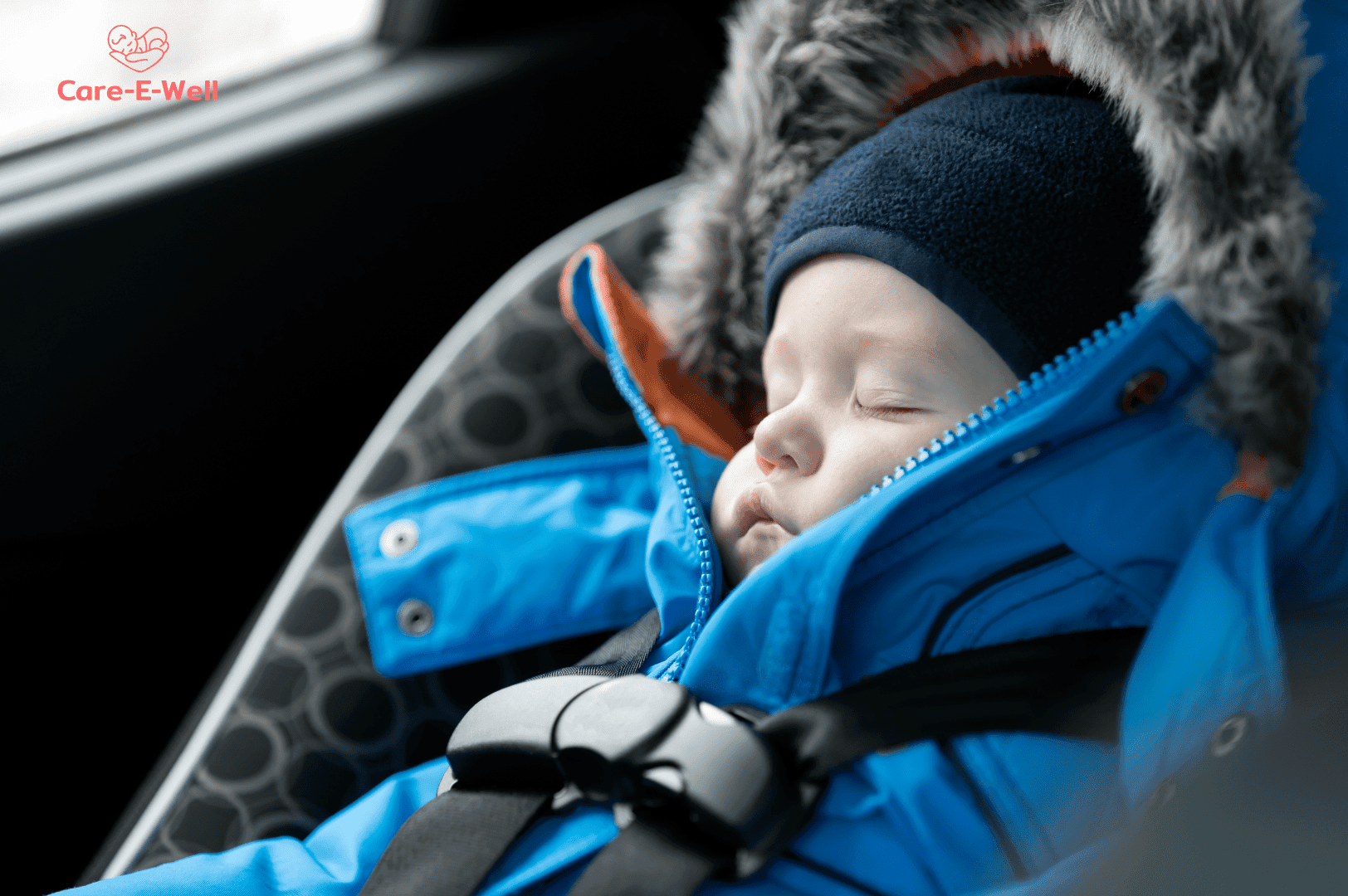
Bulky winter coats can interfere with car-seat harness fit because thick, compressible insulation creates extra space between the child's body and the harness. A harness that feels snug over a puffy coat may become looser when that material compresses during sudden loading.
The practical solution is not to let a child travel cold. Use thin, warm layers under the harness, tighten the harness against the child's actual body, and add a blanket or coat over the secured harness if needed. Always follow the specific car-seat manufacturer's clothing guidance.
Warmth should go around or over a correctly tightened harness, not create a thick compressible layer between the child and the restraint.
Why does a bulky coat change harness fit?
A child restraint works by controlling the child's movement early in a crash. The harness needs to lie in the approved position and excess slack needs to be removed before the crash begins.
Thick puffer jackets, heavily padded snowsuits and similar garments can hold the harness farther away from the body. Under load, the insulation can compress. That means the effective space between the harness and the child's torso may be greater than it seemed when you buckled the child in.
Direct peer-reviewed crash research specifically comparing winter coats is limited. However, broader child-restraint evidence consistently identifies loose harnesses and incorrect harness routing as important forms of misuse, and experimental work shows that webbing tension affects occupant response.
Is every winter jacket unsafe?
No. “Winter coat” covers a wide range of clothing. A thin fleece, wool layer or close-fitting insulated jacket may add little bulk, while a thick down-style coat can add substantial compressible volume.
The issue is not the season or the garment label. It is whether the layer prevents the harness from being adjusted close to the child as the restraint manufacturer intends.
If your manufacturer provides a clothing test or specific instructions, use those. Otherwise, choose layers that do not noticeably alter harness fit.
How can you check whether a coat is too bulky?
One practical comparison is to buckle and tighten the child while wearing the coat, then—without changing the harness adjustment—remove the coat and buckle the child again in thin clothing. If there is clearly substantial extra slack, the coat was affecting the fit.
This is a practical fit check, not a regulated laboratory test. The car-seat manual remains the primary authority for the exact restraint.
Do not repeatedly over-tighten a harness to compensate for thick compressible clothing. The better approach is to remove the bulky layer.

What should a baby wear in a car seat in winter?
Start with thin, close-fitting layers. A long-sleeved bodysuit, leggings or trousers, socks and a thin fleece or wool layer can provide warmth without creating the same bulk as a padded snowsuit.
After the harness is buckled and adjusted, add warmth over the baby. A blanket can go over the harness as long as it does not cover the face or interfere with the buckle, straps or visibility.
For an infant carrier, a shower-cap-style weather cover that goes over the outside of the seat may be acceptable if the manufacturer allows it and it does not route behind the baby or interfere with the harness. Avoid products that place thick material between the baby and the seat shell.
Never cover a baby's face or create a sealed warm enclosure around the car seat. Overheating and impaired airflow are separate safety concerns from harness fit.
What about a footmuff or bunting bag?
It depends on the product and the restraint manufacturer's approval. Many universal footmuffs route material behind the child's back or require harness straps to pass through slots that were not part of the restraint's tested configuration.
If a footmuff is supplied by or explicitly approved for the exact car seat, follow those instructions. If it is a generic product, do not assume that matching harness holes make it safe.
A blanket placed over an already secured child is usually simpler because it does not alter the restraint-to-body interface.
Why is harness slack important?
In crash research, loose harnesses and incorrect routing have been associated with increased head excursion or acceleration. Whyte and colleagues identified harness looseness and routing errors among restraint factors relevant to serious injuries.
A correctly adjusted harness begins controlling the child's motion sooner. Excess slack allows more movement before the webbing engages fully.
Experimental research by Wei on infant-carrier webbing tension also reinforces the principle that harness tension changes occupant loading. That study does not test winter coats specifically, but it supports why webbing fit should not be treated as cosmetic.
How tight should the harness be in winter?
Use the same manufacturer-approved snugness as in any season. The harness should lie flat and untwisted, follow the approved routing and have excess slack removed.
Do not leave it looser because the child is wearing more clothes. Instead, reduce clothing bulk so you can achieve the normal fit.
If the child complains that the harness is uncomfortable, first check strap position, twisted webbing, clothing seams and whether the restraint has been outgrown. Do not solve discomfort by leaving obvious slack.
Can the coat go on backwards over the harness?
Some families place a coat over the child's arms after the harness is secured, leaving the front open over the buckle area. This can provide warmth without putting the padded torso section under the harness.
Whether it works practically depends on the child's age and the coat. Make sure nothing interferes with the buckle release, harness adjuster or restraint side-impact components.
A simple blanket is often easier for babies.
What about very cold cars?
Pre-warm the vehicle when this can be done safely and legally, but never leave a baby unattended in a running vehicle. Bring the infant carrier indoors when permitted by the manufacturer so the seat itself is not extremely cold.
Use hats and thin insulating layers during loading, then remove the hat if the car becomes warm and the baby risks overheating. The head should remain visible, and nothing should obstruct the face.
Babies regulate temperature differently from adults, so avoid compensating for a cold start with excessive layers that remain in place after the cabin warms.

Does the same rule apply to booster seats?
Bulky clothing can also affect vehicle-belt positioning. A thick coat may change where the lap belt sits on the pelvis or cause the shoulder belt to sit differently across the torso.
Older children should still have the lap belt low across the pelvis and the shoulder belt crossing the chest and shoulder. If a coat shifts the belt away from those positions, remove or open the coat and place it over the child after buckling.
What does UN R129 say about clothing?
UN R129 sets performance and approval requirements for enhanced child restraint systems, but it does not provide a universal winter-outfit prescription for families. Clothing choices remain part of using the restraint according to the manufacturer's instructions.
This is why different brands may word their guidance differently. The underlying safety principle is consistent: the harness or belt must be able to restrain the child in the position for which the system was designed.
The key takeaway
The problem with car seats and winter coats is not that coats are inherently dangerous. It is that thick, compressible layers can hide or create harness slack and alter belt position. Keep bulky insulation out from under the restraint, secure the child in thin layers, then add warmth over the correctly fitted harness.
Frequently asked questions
Is a fleece jacket okay in a car seat?
Often, a thin close-fitting fleece adds little bulk, but check the harness fit and follow the manufacturer guidance for your restraint.
Can my baby wear a padded snowsuit in the car seat?
A thick padded snowsuit is more likely to interfere with harness fit. Thin layers plus warmth over the secured harness are generally preferable.
Can I put a blanket under the harness?
Do not put thick blanket material behind or under the child unless the car-seat manufacturer specifically permits it. Put the blanket over the secured harness instead.
Does this matter on short journeys?
Yes. Harness fit should be correct every time the vehicle moves because a crash can occur on any journey.
Sources/References
- UNECE — UN Regulation No. 129 – Rev.4
- World Health Organization — Occupant Restraints: A Road Safety Manual for Decision-Makers and Practitioners
- Whyte T et al. — Restraint Factors and Child Passenger Deaths in New South Wales, Australia
- Brown J et al. — The Characteristics of Incorrect Restraint Use Among Children Traveling in Cars in New South Wales, Australia
- Wei Z — Analysis of the Effect of Infant Carrier's Webbing Tension on 18-month-old Child Occupant's Chest Accelerations in Frontal Crash Accidents Based on Experimental Validations
- Budziszewski R et al. — Measuring the effectiveness of a car seat program in an urban, level one pediatric trauma center
- Hall A et al. — User-driven design of child restraint information to reduce errors in use: a pilot randomised controlled trial
- Bilston LE et al. — Cross-chest clips in child restraints: A crash testing study
- Giovannini E et al. — Pediatric motor vehicle crashes injuries: A systematic review for forensic evaluation
Did this Insight help?
A little love for something worth reading.


