
Care-E-Well Insights
Car Sickness in Babies and Toddlers: What Can Help?
Help a carsick baby or toddler safely with practical travel strategies, warning signs and advice on when recurrent vomiting needs assessment.
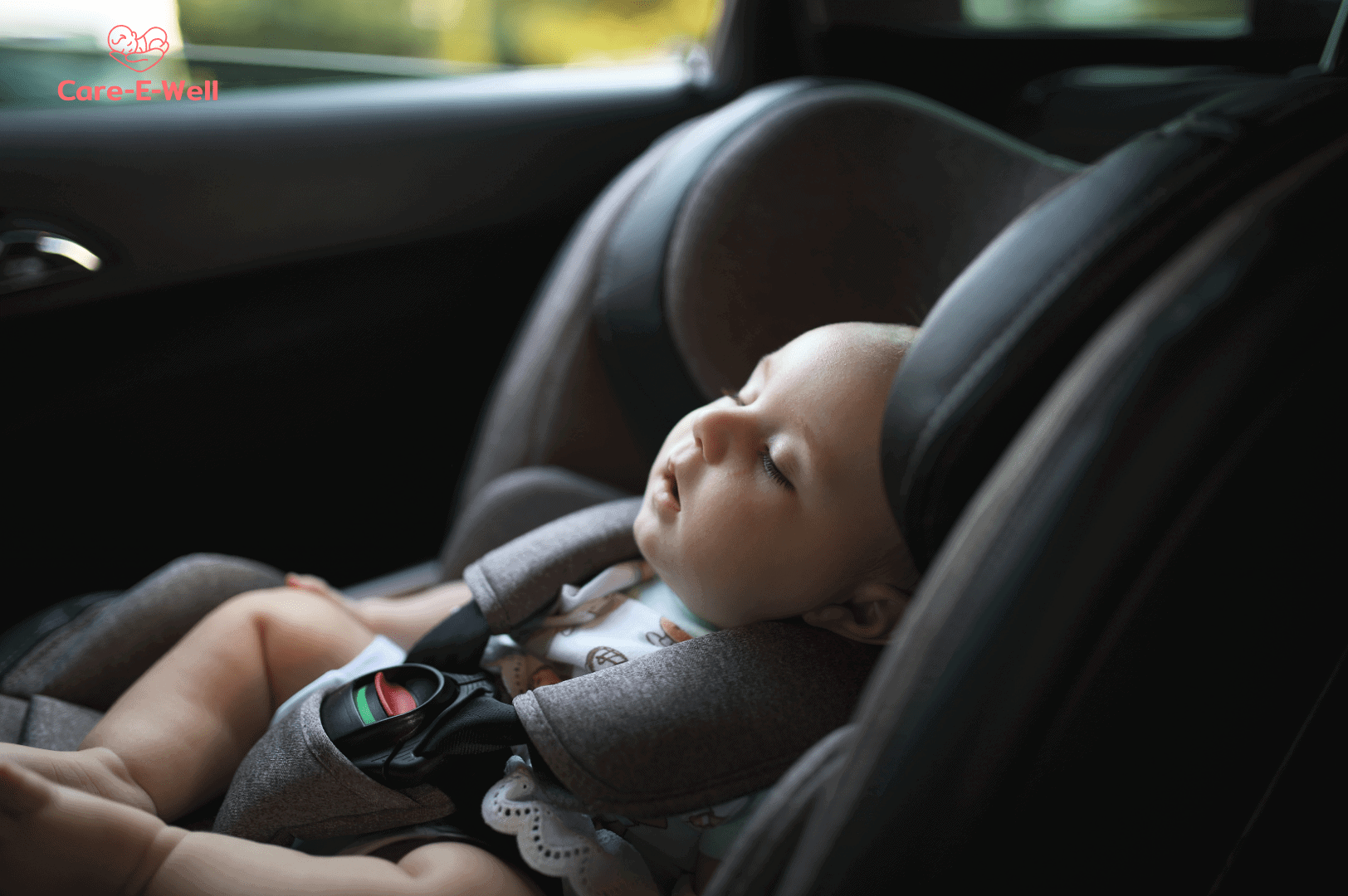
Car sickness in babies and toddlers can show up as sudden pallor, sweating, unusual quietness, fussiness, drooling, nausea or vomiting during travel. Young children often cannot describe the warning feeling adults recognise, so parents may notice the pattern only after several journeys.
The most useful first steps are practical: keep the child correctly restrained, reduce visually demanding activities such as screens or books when age-appropriate, provide comfortable airflow, plan breaks on longer journeys, and stop safely if the child becomes unwell. Do not turn a rear-facing seat forward early or loosen the harness to try to solve travel sickness.
Motion sickness is uncomfortable, but car-seat safety rules still apply. Comfort strategies should work around the correct restraint—not replace it.
What causes car sickness?
Motion sickness is commonly explained by sensory conflict. The brain combines information from the vestibular system in the inner ear, vision and body-position signals. During car travel, those signals can disagree—for example, the inner ear senses repeated acceleration and turning while the eyes focus on a stationary book or screen inside the vehicle.
Reviews of motion sickness describe nausea, pallor, cold sweating, increased salivation, dizziness, drowsiness and vomiting among typical symptoms. The exact combination varies widely, and a toddler may become quiet or irritable before vomiting rather than saying they feel nauseated.
Susceptibility also varies between people. A child who becomes sick on winding roads may tolerate a straight motorway journey well, while another child reacts mainly when reading or watching a close screen.
What can car sickness look like in a baby or toddler?
Babies cannot report dizziness or nausea, so signs are less specific. Look for a repeated travel-related pattern rather than assuming every episode of crying or vomiting is motion sickness.
- Becoming unusually pale
- Cold or clammy sweating
- Increased drooling or repeated swallowing
- Sudden quietness, yawning or drowsiness
- Fussiness or crying that builds during travel
- Retching or vomiting
- An older toddler saying their tummy hurts or they feel dizzy
These signs can also occur with illness, reflux, overheating or other problems. If vomiting happens when the child is not travelling, is unusually severe, or comes with other concerning symptoms, it deserves a broader medical assessment.
Should you change the car seat direction to reduce motion sickness?
Do not turn a child forward earlier than the restraint’s approved limits or current safety recommendations simply because they become carsick. Rear-facing orientation offers important head, neck and torso protection for young children in a crash, and UN R129 requires rear-facing travel for the youngest children within its framework.
Evidence for treating motion sickness by changing a young child’s restraint orientation is not strong enough to justify giving up the protection of a correctly used rear-facing seat. Work first with travel conditions and visual input while keeping the child properly restrained.
When the child genuinely reaches the approved transition point for their restraint, direction can be reconsidered for the normal safety reasons—not as an improvised medical treatment.

Reduce visual-vestibular conflict when possible
For an older toddler who can see outside, looking toward the road or distant scenery may be easier than focusing downward on a picture book, tablet or toy held close to the face. Reading while travelling is a well-known trigger in susceptible people because close visual information can conflict with vestibular signals from the moving vehicle.
This strategy is harder with young rear-facing babies, and parents should not add mirrors or accessories that interfere with the restraint or become unsafe objects. The practical aim is simply to avoid unnecessary close visual tasks if they consistently trigger symptoms.
Audio stories, singing and conversation can replace screens or books for a child who gets sick when looking down.
Keep the car cool and reduce strong smells
Warmth, stuffy air and strong odours can make nausea feel worse. Keep the cabin comfortably cool and ventilated without directing very cold airflow onto a young baby.
Avoid strong perfumes, heavily scented air fresheners and food smells if you notice that they precede symptoms. This is a comfort strategy rather than a cure, but it is low-risk and easy to test.
Check the child’s clothing too. A safely fitted harness does not require a child to be overdressed, and bulky coats should not sit under a harness. Add warmth over the secured child when needed rather than compressible layers underneath.
Does food before a car journey matter?
There is no single meal rule that prevents car sickness in every child. Very heavy meals may feel uncomfortable during travel, while travelling hungry can also make some children miserable. For a toddler who is prone to nausea, a familiar light meal or snack before travel may be more comfortable than a large, rich meal.
Avoid introducing a new food specifically before a long journey, especially if it could be difficult to distinguish a food reaction from travel-related vomiting. Keep hydration available at appropriate stops.
Never offer food that creates a choking risk while the vehicle is moving. A child strapped into a car seat cannot be reached or repositioned quickly if choking occurs.
Plan breaks before the child becomes very unwell
On a longer journey, regular stops give the child a change in sensory input, fresh air and time fully out of the restraint. There is no evidence-based universal break interval that prevents motion sickness for every baby or toddler, so use the child’s pattern and the overall journey length to plan conservatively.
If the child begins showing their usual early signs, stop in a safe place when possible rather than pushing until vomiting occurs. Once parked, take the child out, allow symptoms to settle, offer fluids if appropriate and restart only when they are comfortable and safely restrained again.
A break also helps parents inspect the harness and clothing if vomiting or sweating has made the child uncomfortable.
What should you do if your child vomits in the car?
The driver should prioritise road safety and pull over in a safe location rather than trying to reach the child while driving. Once stopped, remove the child from the restraint, make sure they are breathing comfortably and clean them up.
If the harness, buckle or cover becomes soiled, clean it using the exact restraint instructions. Do not soak harness webbing or use harsh disinfectants unless that method is specifically permitted for the seat.
Before continuing, make sure the child is alert enough to travel, the restraint is correctly reassembled, and the harness can again be adjusted securely.
Seek urgent medical help if vomiting occurs with breathing difficulty, blue or grey colour, unresponsiveness, seizure, severe lethargy, signs of serious dehydration, a major head injury or another acute emergency.
Can ginger or motion-sickness medicine help?
Evidence for ginger in motion sickness is mixed, and paediatric evidence is limited. It should not be treated as a proven routine solution for babies or young toddlers, and supplements can have age-specific dosing and safety issues.
Motion-sickness medicines also have age restrictions, contraindications and side effects such as sedation. Sedating a young child for car travel is not a harmless comfort measure.
If non-drug strategies are not enough and travel is frequently disrupted, discuss the child’s age, symptoms, other medicines and medical history with a paediatric clinician or pharmacist before giving an anti-motion-sickness product.

Could the car seat itself be making the problem worse?
A correctly installed car seat does not cause motion sickness by being a safety restraint, but poor fit can add discomfort. Check that the recline setting is approved for the child, the harness is flat and correctly tensioned, required inserts are being used only within their stated range, and the child is not overheating.
Do not add cushions, neck pillows, head bands or unapproved padding to make the seat “more comfortable.” These can change restraint fit and crash performance.
If a child suddenly begins resisting a seat they previously tolerated, also check whether they are approaching a stature or fit limit or whether the harness needs adjustment for growth.
When should car sickness be discussed with a doctor?
Recurrent motion sickness alone is often manageable, but persistent or unusual symptoms deserve assessment. Contact a healthcare professional if the pattern is severe, getting progressively worse, preventing necessary travel or difficult to distinguish from another condition.
Assessment is particularly appropriate when vomiting also occurs outside travel, the child has persistent dizziness or balance problems, severe or recurrent headaches, hearing changes, poor growth, dehydration, blood or green material in vomit, unusual neurological symptoms, or marked lethargy.
A clinician can also help if you are considering medicine, because age and individual health conditions strongly affect which options are appropriate.
A practical travel plan for a carsick toddler
- Keep the child in the correct approved restraint and orientation.
- Choose a time when the child is not overtired or unwell if possible.
- Use a familiar light meal rather than a heavy meal immediately before travel.
- Keep the cabin cool and avoid strong odours.
- Replace books or close screens with music, conversation or looking outside if visual tasks trigger symptoms.
- Plan safe stops on longer journeys and stop earlier when the child’s usual warning signs appear.
- Carry spare clothes, wipes, bags and restraint-safe cleaning supplies for unavoidable vomiting.
- Ask a healthcare professional before using medicines or supplements for a young child.
The key takeaway
Car sickness in babies and toddlers is usually best approached by reducing sensory conflict and improving travel comfort while preserving correct car-seat use. Watch for the child’s early pattern, reduce close visual activities, keep the cabin comfortable, plan sensible breaks and seek medical advice when symptoms are severe, unusual or occur beyond travel.
Frequently asked questions
Can a rear-facing baby get car sick?
Yes. Motion sickness can occur during travel regardless of restraint direction. Do not turn a child forward early solely because of suspected car sickness.
Do screens make car sickness worse?
They can in susceptible children because close visual focus may conflict with movement sensed by the inner ear. If symptoms cluster around screen use, try audio entertainment instead.
Should I let my child eat in the car to settle their stomach?
Avoid foods that pose a choking risk while the vehicle is moving. Offer food and fluids during safe stops instead.
Is vomiting on every car journey normal?
Recurrent travel-related vomiting can be motion sickness, but frequent or severe episodes are worth discussing with a healthcare professional, especially if vomiting also happens outside travel.
Sources/References
- Koch A et al. — The Neurophysiology and Treatment of Motion Sickness
- Zhong W et al. — Mechanisms of Nausea and Vomiting: Current Knowledge and Recent Advances in Intracellular Emetic Signaling Systems
- Gavgani AM et al. — Profiling subjective symptoms and autonomic changes associated with cybersickness
- Rova K et al. — Motion sickness whilst reading as a passenger in the car is highly predictive of vestibular migraine
- Kumar GP et al. — Motion Sickness Manifestations and Prevention
- Tadese Z et al. — Factors Affecting Car Sickness of Passengers Traveled by Vehicles
- Gura KM et al. — From the kitchen to the medicine cabinet: Examples of functional herbs and spices
- Nunes CP et al. — Clinical Evaluation of the Use of Ginger Extract in the Preventive Management of Motion Sickness
- Giovannini E et al. — Pediatric motor vehicle crashes injuries: A systematic review for forensic evaluation
Did this Insight help?
A little love for something worth reading.


