
Care-E-Well Insights
Child Pees in the Potty but Refuses to Poop There
Child pees in the potty but refuses to poop there? Learn why stool refusal happens, what helps, and when constipation needs attention.
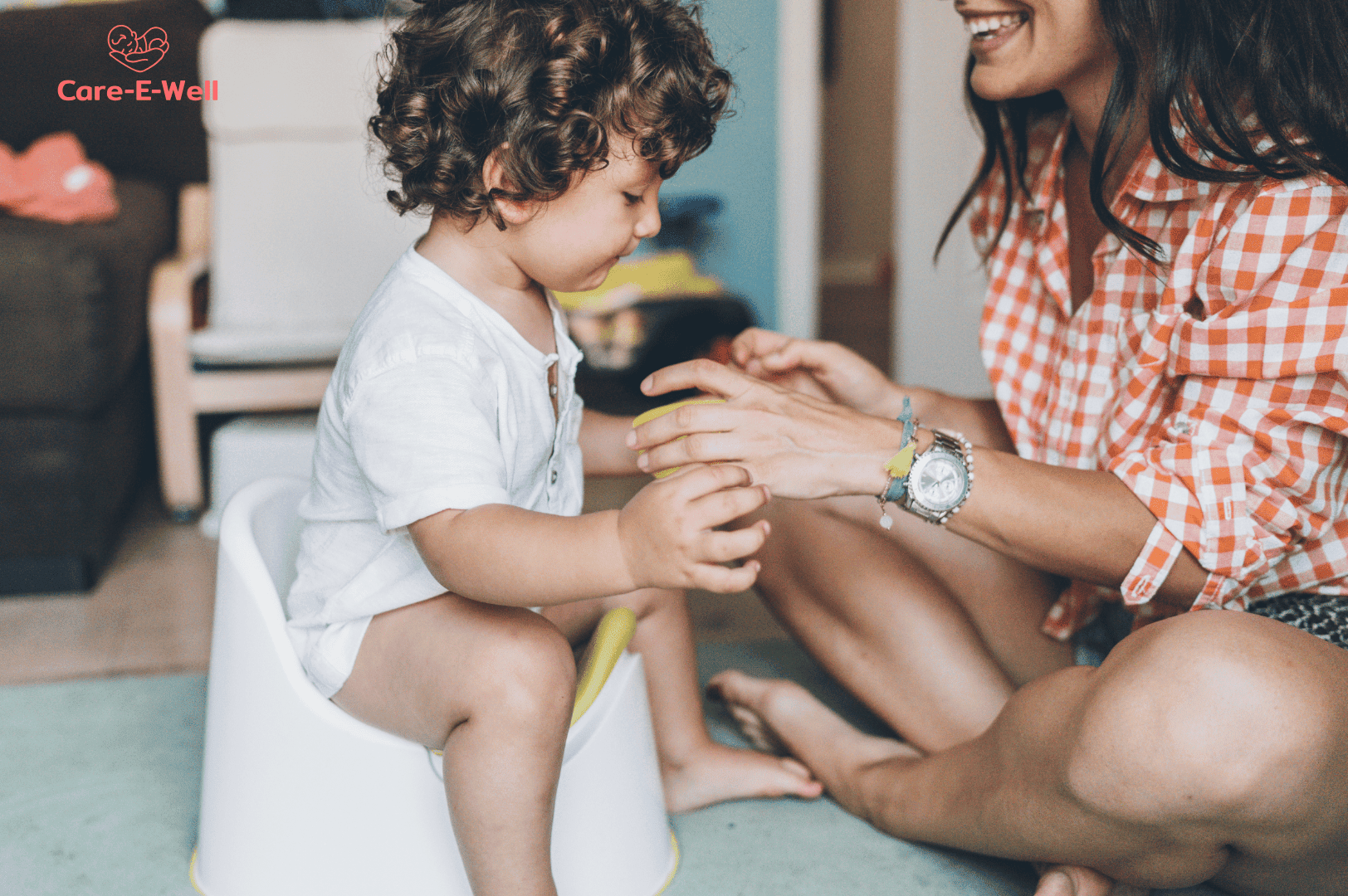
When a child pees in the potty but refuses to poop there, it does not mean toilet training has failed. Urination and bowel movements can develop as separate skills, and stool-only toilet refusal is a recognised pattern during toilet learning.
The first thing to check is whether pooping is comfortable. Constipation, a previous painful bowel movement, stool withholding, fear of the toilet, or a strong preference for pooping in a diaper can all make bowel movements feel very different from peeing.
A child who urinates successfully but refuses to poop in the potty has already learned an important part of toileting. Focus on the specific barrier to bowel movements rather than restarting everything.
Why will my child pee in the potty but not poop there?
Peeing and pooping ask different things of the body and the child. Urination happens several times a day, so toddlers get many chances to practise. Bowel movements are less frequent and often involve stronger sensations, a longer sit and more deliberate relaxation.
Some children also have a well-established poop routine before toilet training begins. They may stand, squat, hide or use a diaper in a particular place. Moving that routine onto a potty or adult toilet can feel like a much bigger change than learning where to pee.
Research on stool-toileting refusal has found strong links with constipation, painful defecation and stool withholding. It has also shown that children with stool-only refusal are not simply more behaviourally difficult than children who complete toilet training without this problem.
Stool-only toilet refusal is a recognised pattern
Researchers have described children who can urinate in the potty or toilet but continue to refuse bowel movements there. This pattern is often called stool-toileting refusal.
In prospective studies, many cases eventually resolved, but persistent refusal can delay full toilet independence. The important clinical concern is not the label itself; it is whether refusal is accompanied by withholding, constipation or pain.
If your child reliably pees in the potty, preserve that success. There is usually no reason to take away a skill they have learned simply because bowel training is taking longer.
Check for constipation before changing your training method
A child who expects pooping to hurt may reasonably avoid the place where adults keep asking them to do it. Prospective research found that constipation and painful defecation can precede stool-toileting refusal rather than appearing only after refusal begins.
- hard or very large stools
- crying or saying that pooping hurts
- going several days between bowel movements
- stiffening, crossing the legs or standing on tiptoe when the urge appears
- hiding to poop
- asking for a diaper and then passing stool soon afterward
- fecal smears or stool accidents in underwear
- repeated abdominal discomfort around bowel movements
Withholding can make the problem self-reinforcing. The longer stool stays in the colon, the more water can be absorbed from it, making the next bowel movement harder or larger.
Seek healthcare advice if your child has persistent hard or painful stools, repeated withholding, fecal soiling, blood in the stool, significant abdominal swelling, vomiting, severe or worsening pain, poor growth or appears unwell. Treating constipation may need to come before progressing bowel toilet training.
Why does my child ask for a diaper to poop?
A diaper can provide familiarity, privacy and a body position the child already knows. Some toddlers only feel able to relax while standing or squatting in a diaper, even though they are perfectly comfortable sitting to urinate.
Sensory-focused research on toileting difficulties has described behaviours such as asking for a diaper, refusing to sit for bowel movements, hiding and following rigid defecation routines. These behaviours can coexist with constipation and retention, although they do not automatically mean a child has a sensory disorder.
If the diaper is currently the only situation in which your child will pass stool, abruptly removing it can sometimes result in more withholding. Keeping stool moving comfortably is more important than winning a particular toilet attempt.

Do not turn pee success into a poop battle
It can be frustrating when a child seems fully capable of using the potty for urine but refuses bowel movements. Try not to interpret the difference as deliberate defiance.
Avoid long forced sits, shame, threats or taking away valued activities until the child poops. These approaches do not remove pain, fear or the difficulty of relaxing the pelvic floor.
Keep urine routines as normal as possible. Praise your child for recognising the need to pee and using the toilet, without adding, “Now you should be able to poop too.”
Urine success proves that your child understands the toilet routine. Stool refusal usually needs a targeted solution, not more pressure across the whole day.
Make bowel movements physically comfortable
A secure position matters more for pooping than many parents realise. A child sitting high on an adult toilet with dangling feet may feel unstable and have difficulty relaxing.
Use a stable potty chair or a properly fitted toilet reducer with firm foot support. The child should be able to sit without concentrating on balance.
A forward-leaning, relaxed posture with supported feet is commonly used in paediatric bowel-management routines. Equipment does not treat constipation by itself, but a comfortable setup removes one unnecessary barrier.
Offer predictable opportunities, especially after meals
Eating naturally stimulates activity in the colon. Research in toddlers has documented post-meal bowel activity, and bowel-management programmes commonly use toilet sitting after meals to take advantage of this response.
Offer a brief, relaxed sit after a meal or at another time when your child usually poops. Do not keep them there until stool appears. A calm sit that produces nothing can still be useful practice.
If the child is becoming anxious as soon as the invitation is made, reduce the frequency of prompting. Constant reminders can make bowel movements feel like a performance watched by the whole family.
How can we move from diaper pooping to the potty?
A gradual bridge can be useful when the child is comfortable pooping only in a diaper. There is no single scientifically proven sequence, so adapt the steps to your child's comfort and bowel health.
- Keep bowel movements soft and painless before making the transition harder.
- If necessary, allow the diaper for poop but move the routine into the bathroom.
- Once that feels normal, invite the child to sit on the potty or toilet while still wearing the diaper.
- Praise sitting, communication and relaxation rather than demanding stool in the toilet.
- Gradually reduce dependence on the familiar routine only when the child can continue passing stool without withholding.
- If progress stalls or the child becomes distressed, return to the last comfortable step and reassess constipation, fear and the toilet setup.
Some behavioural programmes use more detailed shaping techniques. If your child has prolonged stool refusal, developmental differences or significant constipation, a paediatric clinician or appropriately trained professional can help tailor the transition rather than relying on increasingly elaborate home experiments.
What if my child waits until bedtime or nap to poop in a diaper?
This often means the child can recognise the bowel urge but prefers a private, familiar moment when a diaper is available. It can also mean they have spent the day withholding.
Notice whether stools remain soft and easy to pass. If they are becoming harder, larger or less frequent, address possible constipation promptly rather than simply removing the bedtime diaper.
You can begin moving the preferred poop routine earlier and closer to the bathroom without making the diaper disappear all at once. The aim is to transfer the skill while preventing retention.
Should I use rewards for pooping in the potty?
Positive reinforcement can support toilet learning, but rewards cannot fix painful stooling or fear. If you use a sticker, praise or another small reward, connect it first to controllable steps such as entering the bathroom, sitting briefly or telling you they need to poop.
Avoid making the final bowel movement worth such a large prize that every attempt becomes a negotiation. Over time, toileting needs to become an ordinary self-care routine rather than a high-stakes transaction.
What if my child hides to poop?
Hiding is common enough to have been studied specifically. It has been associated with stool withholding, constipation and stool-toileting refusal.
Do not chase or physically move a child to the toilet while they are already trying to pass stool. That can increase tension and interrupt the body's attempt to release.
Instead, use the pattern to plan ahead. If your child usually hides shortly after dinner, offer a calm toilet opportunity before the hiding routine begins, while keeping the stool soft and the toilet setup comfortable.

When should I pause bowel toilet training?
Reduce active pressure if every poop attempt has become a fight, the child begins withholding, or fear is increasing. You can continue successful urine toileting while temporarily making bowel expectations gentler.
A pause does not mean ignoring constipation. If the child is holding stool or bowel movements hurt, seek healthcare guidance while reducing toilet conflict.
Once stooling is comfortable and the child can approach the potty without significant distress, rebuild the bowel routine gradually.
A practical plan when pee is easy but poop is not
- Keep the child's successful pee routine unchanged.
- Track stool consistency, pain and withholding behaviours for several days.
- Address constipation or painful defecation with appropriate healthcare guidance.
- Make sure the potty or toilet feels stable and the feet are supported.
- Offer short bowel-focused sits at predictable times rather than constant reminders.
- If the child needs a diaper to poop, avoid abrupt removal that triggers withholding.
- Move the diaper-poop routine toward the bathroom and toilet in small steps.
- Praise communication, sitting and relaxation.
- Keep accidents and refusals neutral rather than punitive.
- Seek professional support if stool refusal persists, constipation recurs or family conflict is escalating.
Progress may be uneven. A child may first stop hiding, then accept sitting with a diaper, then poop in the potty occasionally before the new habit becomes consistent. Those steps still count as progress.
Frequently asked questions
Is it normal to pee in the potty but refuse to poop there?
It is a recognised toilet-training pattern. Urination and bowel control do not always develop together, and stool-only refusal can occur even in children who use the potty well for pee.
Should I take diapers away completely?
Not if abrupt removal is causing stool withholding. Keep bowel movements moving comfortably while you work toward a gradual transition. Persistent diaper dependence for poop can be discussed with a healthcare professional.
Is stool refusal always constipation?
No, but constipation and painful defecation are important possibilities to check. Fear, sensory discomfort, privacy preferences and a familiar diaper routine can also contribute.
Should I put my child on the toilet every time they look like they need to poop?
Offer an opportunity, but avoid forcing or chasing. Frequent compulsory sits can increase resistance. Use predictable timing and the child's natural patterns instead.
When does stool refusal need professional help?
Ask for help when refusal is persistent, bowel movements are painful or hard, your child withholds repeatedly, soiling develops, or the problem is significantly disrupting eating, sleep, childcare or family life.
The key takeaway
When a child pees in the potty but refuses to poop there, preserve the urine success and solve the bowel-specific barrier. Check constipation first, make pooping physically comfortable, reduce pressure and transition from diaper routines gradually. Comfortable stooling matters more than forcing the timeline.
Sources and References
- Taubman B — Toilet Training and Toileting Refusal for Stool Only: A Prospective Study
- Blum NJ, Taubman B, Osborne ML — Behavioral Characteristics of Children With Stool Toileting Refusal
- Blum NJ, Taubman B, Nemeth NM — During Toilet Training, Constipation Occurs Before Stool Toileting Refusal
- Taubman B, Blum NJ, Nemeth NM — Children Who Hide While Defecating Before They Have Completed Toilet Training
- Taubman B, Blum NJ, Nemeth NM — Stool Toileting Refusal
- Beaudry-Bellefeuille I, Lane SJ, Ramos-Polo E — The Toileting Habit Profile Questionnaire: Screening for sensory-based toileting difficulties in young children with constipation and retentive fecal incontinence
- Niemczyk J, Equit M, El Khatib D, et al. — Toilet Refusal Syndrome in Preschool Children
- Kimball V — The Perils and Pitfalls of Potty Training
- Rajindrajith S, Devanarayana NM, Benninga MA — Childhood constipation: Current status, challenges, and future perspectives
- de Morais MB — Prevention of pediatric functional constipation: a narrative review
Did this Insight help?
A little love for something worth reading.


