
Care-E-Well Insights
How to Choose the Right Bottle Nipple Flow
Learn how to choose the right bottle nipple flow using baby’s feeding cues, not rigid age labels, and spot flow that is too fast or slow.
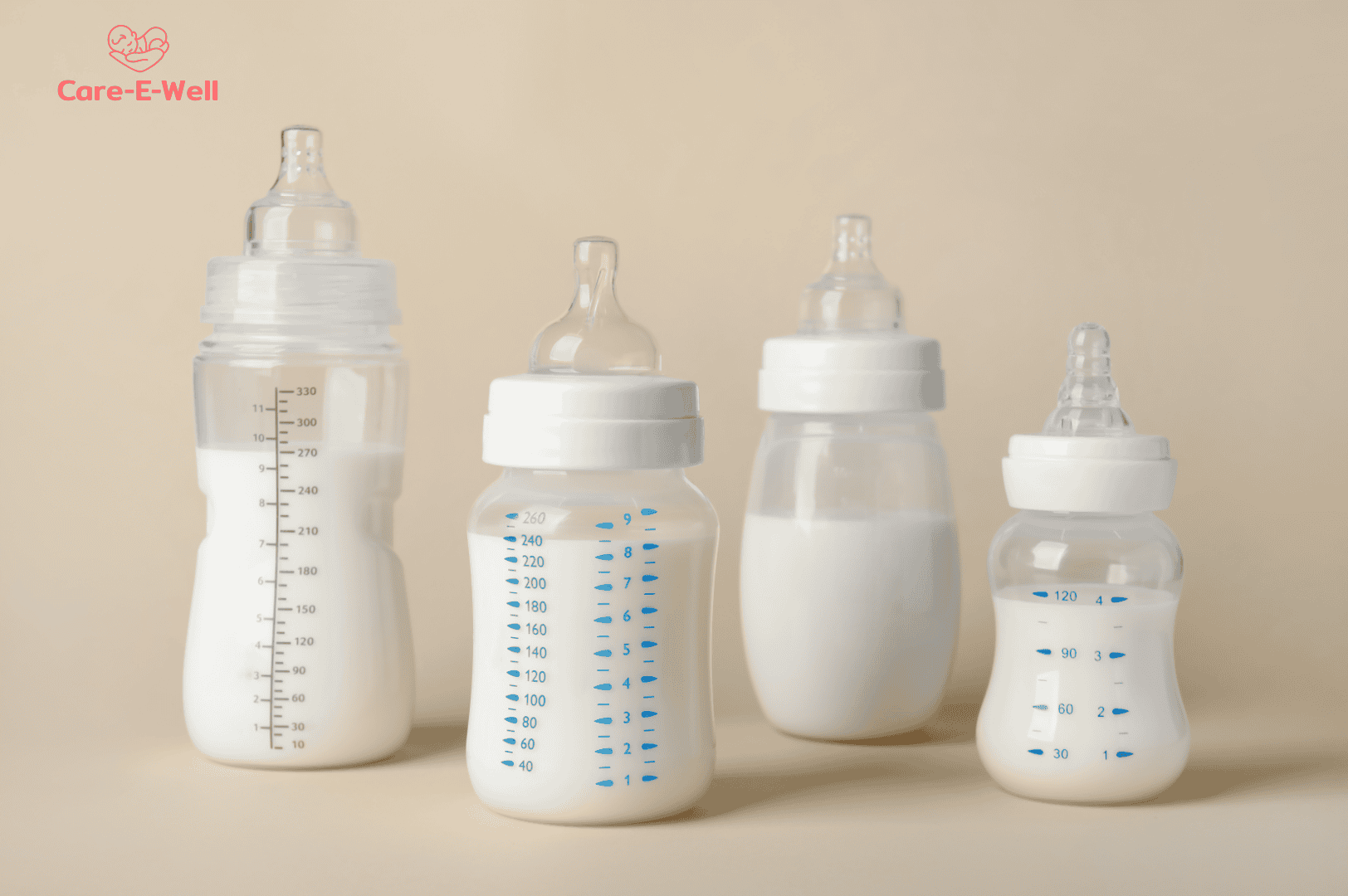
The right bottle nipple flow is the one your baby can manage comfortably—not necessarily the one printed for their age. During a good bottle feed, milk arrives fast enough for efficient drinking but slowly enough for the baby to coordinate sucking, swallowing and breathing without repeated gulping, coughing, leaking milk or struggling for pauses.
Bottle nipple flow is not standardised across brands. Research measuring commercial teats has found substantial differences between products, including products marketed with similar labels. That means “slow,” “newborn,” “level 1” or “medium” should be treated as manufacturer-specific starting points rather than universal flow categories.
Choose nipple flow by how your baby feeds, not by a birthday or number on the teat.
Why bottle nipple flow matters
Milk flow changes the work a baby has to do during a bottle feed. When flow is faster, the baby must swallow more frequently to clear milk from the mouth, which gives less time for breathing. When flow is slower, the baby may need stronger or more frequent sucking to transfer enough milk.
Healthy term babies can often adapt their sucking pattern to different teats, but adaptation has limits and varies between babies. Premature or medically fragile infants may have less reserve for managing an unsuitable flow.
The practical goal is therefore not the fastest teat your baby can tolerate. It is a flow that supports comfortable, efficient feeding while allowing natural pauses.
Are bottle nipple flow labels standardised?
No. A nipple labelled “slow” by one manufacturer can flow differently from a “slow” nipple made by another company. Laboratory studies have found wide variation between bottle nipples and, in some cases, variation within the same product type.
Shape, hole size, material stiffness, valve design, bottle pressure and how strongly a baby sucks can all influence milk delivery. Thickened feeds also change flow and should only be used when clinically appropriate and prepared as directed.
For this reason, switching brands while keeping the same printed nipple level can still produce a noticeably different feed.

What does a good nipple flow look like?
Watch the baby rather than the clock. A manageable flow usually allows a repeating suck-swallow-breathe rhythm, periods of active drinking and natural pauses without obvious stress.
- The baby can latch onto the teat and maintain the seal comfortably
- Swallowing is regular rather than frantic
- Breathing remains comfortable between sucking bursts
- Milk is not repeatedly flooding or pouring from the mouth
- The baby can pause without being overwhelmed by continuing flow
- The feed is effective without excessive effort or exhaustion
- Hunger and fullness cues remain visible and easy to respond to
Some milk leakage, variable sucking or occasional pauses can occur in normal feeds. Look for a persistent pattern rather than judging the nipple from one moment.
Signs the nipple flow may be too fast
A flow that is difficult to control can make feeding look hurried or stressful. Possible signs include:
- Repeated gulping or very frequent swallowing
- Coughing, spluttering or choking during feeds
- Milk leaking quickly from the corners of the mouth
- Pulling away while still appearing hungry
- Wide eyes, facial tension or frantic movements during milk flow
- Frequent loss of the teat because the baby needs a break
- Difficulty taking comfortable breathing pauses
- A feed that seems driven by continuous milk flow rather than the baby’s sucking
These signs are not specific to nipple flow. Position, nasal congestion, oral-motor skills, reflux symptoms and swallowing difficulties can produce similar behaviours. If symptoms persist after a sensible flow adjustment, the answer is not simply to keep changing teats.
Repeated coughing or choking, wet or noisy breathing during feeds, colour change, breathing difficulty, unusual fatigue or poor growth needs professional assessment. Seek urgent help if a baby cannot breathe, turns blue or grey, becomes limp or has a serious choking episode.
Signs the nipple flow may be too slow
A teat can also make feeding unnecessarily hard when milk transfer is too restricted. Possible clues include:
- The baby sucks very hard for relatively few audible swallows
- Feeding repeatedly becomes frustrating despite clear hunger
- The baby tires before taking enough milk
- Feeds are consistently very prolonged and effortful
- The teat repeatedly collapses, depending on the bottle design
- The baby falls asleep from fatigue before showing normal fullness cues
- Intake or growth becomes a concern despite frequent feeding opportunities
A long feed alone does not prove that the nipple is too slow. Young babies vary in feeding speed, and frequent pauses may be appropriate. Before increasing flow, check bottle assembly, vent function, positioning and whether the baby is actually hungry.
How to choose the right bottle nipple flow step by step
- Start with the manufacturer’s slower age-appropriate option unless your baby has an individual feeding plan.
- Hold your baby close and semi-upright so you can see the face and breathing clearly.
- Keep the bottle mostly horizontal or only slightly tipped so gravity does not unnecessarily accelerate milk flow.
- Watch several feeds for sucking, swallowing, breathing, leakage, coughing, stress and fatigue.
- If the baby consistently struggles with fast flow, move to a slower compatible nipple if available.
- If the baby consistently works very hard with poor transfer and no signs of swallowing difficulty, consider the next flow within the same system.
- After any change, reassess the whole feed rather than assuming the new nipple is automatically better.
Change one variable at a time when possible. If you change the bottle system, nipple level and formula together, it becomes difficult to know what affected the feed.
Should you choose nipple flow by age?
Age can be a rough starting point, but it should not decide the change. Manufacturer age bands are product guidance, not developmental deadlines.
A four-month-old who feeds comfortably on a nipple labelled for younger babies does not need a faster flow simply because the packaging suggests moving up. Likewise, a younger baby who has outgrown a very restrictive flow may benefit from a change if feeding performance clearly supports it.
Maturation does change sucking and swallowing patterns, but babies develop at different rates and bottle systems behave differently.
Is faster flow better as a baby gets older?
Not automatically. Faster flow can shorten feeding time, but speed is not the main goal. If a baby is feeding efficiently, growing well and showing no frustration, there may be no reason to change.
Moving up solely to finish bottles faster can make it harder for some babies to regulate the pace of feeding. A baby who was previously calm may begin gulping, leaking milk or finishing before fullness cues have time to emerge clearly.
Can nipple flow affect how much a baby drinks?
Yes, flow can influence sucking behaviour, swallowing frequency and the amount of control a baby has over the feed. Bottle characteristics can therefore affect intake, although the relationship is not identical for every baby.
Responsive bottle feeding helps keep the baby’s cues central. Offer the teat when hunger cues appear, allow pauses and stop when the baby repeatedly turns away or loses interest rather than encouraging bottle emptying.
Does paced bottle feeding mean you need the slowest nipple?
No. Paced bottle feeding is about manageable flow and responsiveness, not making milk transfer artificially difficult. A nipple that is too slow can cause fatigue and frustration just as an excessively fast nipple can overwhelm the baby.
The combination of nipple flow, bottle angle and the baby’s sucking determines what happens in the mouth. Aim for a comfortable rhythm rather than the slowest possible label.
What if the nipple collapses during feeding?
Nipple collapse can occur when pressure inside the bottle does not equalise properly or when the teat is very soft relative to the baby’s suction. Check that vents are assembled and functioning according to the manufacturer’s instructions and that the nipple is not damaged.
Do not automatically make the hole larger. Manually cutting, piercing or enlarging a nipple can create unpredictable flow and damage the teat.
Never alter a nipple hole yourself to increase milk flow. Replace damaged teats and use only manufacturer-approved components for the bottle system.
What if your baby coughs only with a new nipple?
If coughing began immediately after moving to a faster flow, return to the previously comfortable flow and observe. That temporal pattern can suggest the new flow is contributing.
However, repeated coughing during feeding should not simply be managed by trial-and-error nipple changes indefinitely. If it continues, especially with wet breathing, colour changes, respiratory symptoms or poor weight gain, arrange feeding or medical assessment.

What about premature or medically vulnerable babies?
Preterm infants and babies with neurological, cardiac, respiratory, craniofacial or swallowing conditions may need a specific bottle and flow selected by their neonatal or feeding team. Research in vulnerable infants shows that milk flow can materially affect physiological stability during feeding.
Do not move up nipple levels based on package age recommendations when a baby has been discharged with an individual feeding plan. Ask the clinical team before making a meaningful flow change.
Can anti-colic bottles solve a flow problem?
Vented bottle systems can change internal bottle pressure and sucking mechanics, and studies suggest they may alter patterns associated with air swallowing. But an “anti-colic” label does not guarantee the best flow for a particular baby or prove that the bottle will prevent colic.
Evaluate the actual feed: how the baby manages the milk, whether pauses are possible and whether feeding is comfortable.
Frequently asked questions
What nipple flow should a newborn use?
Start with a slow, newborn-appropriate option from the chosen bottle system unless your maternity or neonatal team recommends something different. Then judge the actual feeding performance rather than the label alone.
Should I move up if feeds take a long time?
Maybe, but duration alone is not enough. Look for persistent effort, few swallows, frustration or fatigue, and rule out assembly or feeding problems before increasing flow.
Should I move down if milk leaks from my baby’s mouth?
A slower flow may help when leakage accompanies gulping or difficulty managing milk. Leakage can also have other causes, so persistent problems deserve assessment.
Can I compare nipple levels between brands?
Not reliably. Flow measurements show that similarly named levels can behave differently across manufacturers. Treat a new bottle brand as a new feeding system and observe the baby closely.
The key takeaway
How to choose the right bottle nipple flow comes down to the baby’s feeding performance. The best flow supports efficient milk transfer without flooding, repeated coughing, frantic swallowing or excessive effort.
Use manufacturer labels as a starting point, not a deadline. Watch several feeds, make small changes, and seek professional assessment when feeding remains difficult despite an appropriate flow.
Sources and references
- UNICEF UK Baby Friendly Initiative. Infant Formula and Responsive Bottle Feeding: A Guide for Parents. https://www.unicef.org.uk/babyfriendly/baby-friendly-resources/bottle-feeding-resources/infant-formula-responsive-bottle-feeding-guide-for-parents/
- Pados BF, Park J, Thoyre SM, et al. Milk Flow Rates From Bottle Nipples Used for Feeding Infants Who Are Hospitalized. https://doi.org/10.1044/2015_AJSLP-15-0011
- Lagarde M, van Alfen N, de Groot SAF, et al. Adaptive capacity of 2- to 5-month-old infants to the flow, shape, and flexibility of different teats during bottle feeding. https://doi.org/10.1186/s12887-019-1859-y
- Bell N, Harding C. An investigation of the flow rates of disposable bottle teats used to feed preterm and medically fragile infants in neonatal units across the UK. https://doi.org/10.1080/2050571X.2019.1646463
- Crossley SL, Duthie K, Newton M, et al. Investigation into the flow rate of bottle teats typically used on an Australian neonatal unit. https://doi.org/10.1080/2050571X.2021.1914960
- Kotowski J, Fowler C, Hourigan C, Orr F. Bottle-feeding an infant feeding modality: An integrative literature review. https://doi.org/10.1111/mcn.12939
- Moral A, Bolibar I, Seguranyes G, et al. Mechanics of sucking: comparison between bottle feeding and breastfeeding. https://doi.org/10.1186/1471-2431-10-6
- Kreitschmann M, Epping LC, Hohoff A, et al. Sucking behaviour using feeding teats with and without an anticolic system: a randomized controlled clinical trial. https://doi.org/10.1186/s12887-018-1092-0
- Geddes DT, Kok C, Nancarrow K, et al. Preterm Infant Feeding: A Mechanistic Comparison between a Vacuum Triggered Novel Teat and Breastfeeding. https://doi.org/10.3390/nu10030376
- Cresi F, Maggiora E, Capitanio M, et al. Effects of a valved infant-bottle with ergonomic teat on the coordination of sucking, swallowing, and respiration in late-preterm infants. https://doi.org/10.3389/fped.2024.1309923
Did this Insight help?
A little love for something worth reading.


