
Care-E-Well Insights
Constipation After Starting Solids: What Can Help
Constipation after starting solids? Learn what may help, how to use water and fibre safely, and when your baby should be assessed.
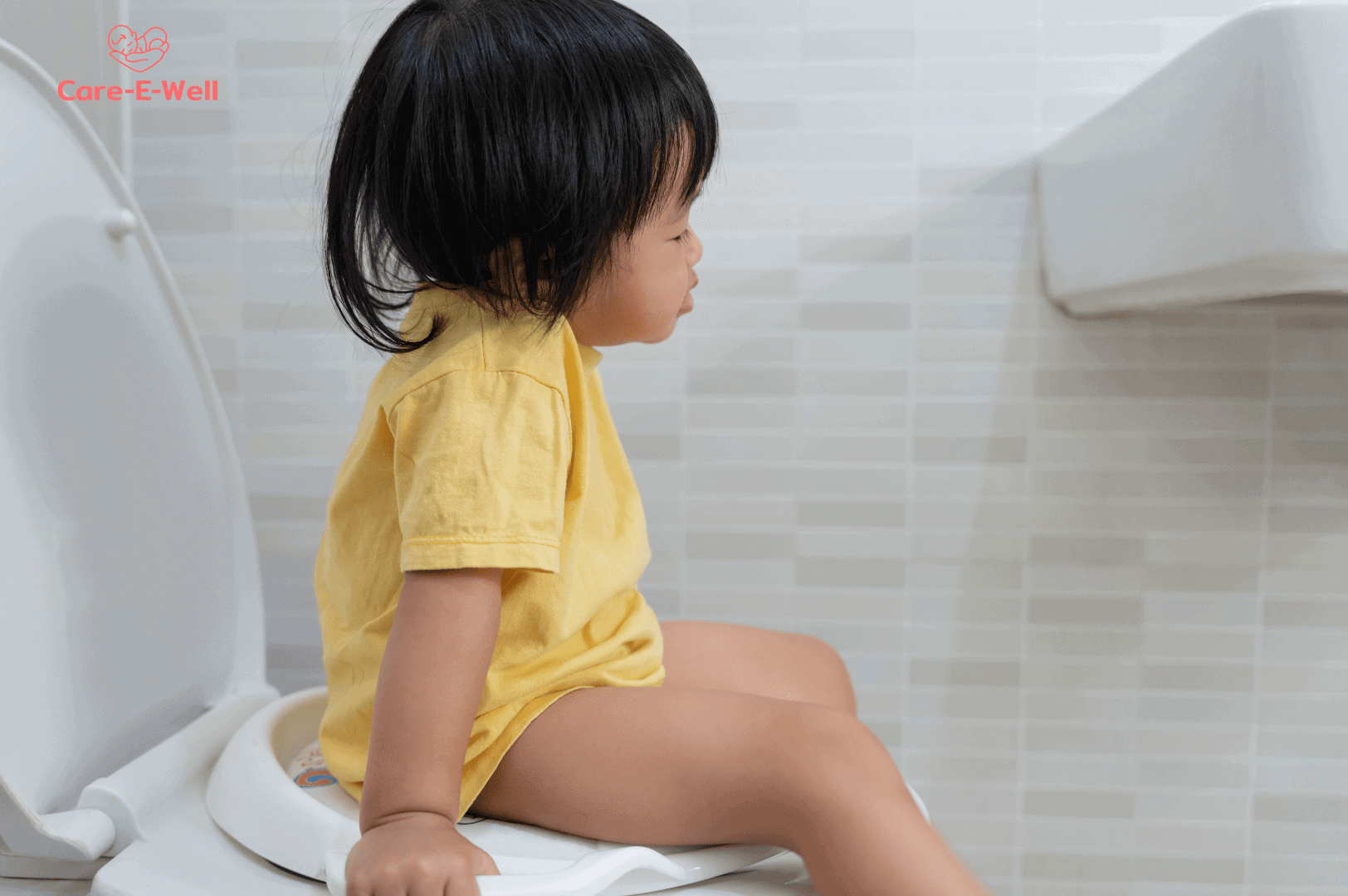
Constipation after starting solids can happen when a baby's diet changes from mostly milk to a growing mix of foods and new textures. The important question is not simply how often the baby poops, but whether stools have become hard, dry or painful to pass and whether the baby otherwise seems well.
Most mild feeding-related constipation can be approached gently: protect breast or formula intake, offer appropriate water once complementary feeding has started, include a variety of fruits, vegetables, pulses and other suitable foods, and avoid turning meals into a battle.
A baby can go longer between bowel movements without being constipated. Hard, pellet-like stools, repeated painful straining and obvious discomfort are more useful clues than frequency alone.
Why can constipation appear after starting solids?
Complementary feeding changes several things at once. The baby begins eating foods with different fibre, fluid and energy content; milk intake may shift; and the gut is adapting to a new dietary pattern.
Some babies also eat a fairly narrow range at first. If most meals are dry cereal, refined grains or low-fibre foods and very little fruit, vegetables or pulses are offered, stools may become firmer.
This does not mean a specific food always "causes" constipation. Babies respond differently, and the whole pattern matters more than blaming one banana, one bowl of rice or one new meal.
First check whether it is really constipation
Straining alone can be misleading. Babies often grunt, go red in the face or push noisily because coordinating abdominal pressure and pelvic-floor relaxation is a learned skill.
Constipation is more likely when the stool itself is consistently hard, dry, pellet-like or very large and difficult to pass. Pain, small anal fissures or a child beginning to hold back because passing stool hurts can reinforce the problem.
A breastfed baby who passes a soft stool after several days is not necessarily constipated simply because the interval was long.

Keep milk feeds important
Starting solids should not mean abruptly cutting breast milk or formula. WHO describes complementary feeding as adding foods when milk alone is no longer sufficient, not replacing the entire milk diet immediately.
Continue breastfeeding responsively if breastfeeding. If formula feeding, prepare formula exactly according to the manufacturer's instructions. Do not dilute formula to treat constipation; that changes the nutritional and electrolyte concentration.
Offer water with meals once solids have started
Once a baby is eating complementary foods, small drinks of water can be offered with meals. The purpose is to learn cup drinking and support overall fluid intake, not to push large volumes.
Milk still contributes substantially to total fluid intake during infancy. A baby who fills up on water may take less breast milk, formula or food, so more is not automatically better.
There is no single plain-water volume that every baby needs. Climate, milk intake, food moisture and activity all affect total fluid requirements.
Increase variety rather than chasing one "constipation food"
WHO encourages a diverse diet that includes fruits, vegetables, pulses and other nutrient-dense foods. For a constipated baby who is already eating solids, regularly offering soft plant foods can increase both water and fibre in the diet.
- pear, plum, peach or apricot in a safe texture
- soft cooked vegetables
- lentils, beans or chickpeas mashed to the baby's skill level
- oats and other less-refined grains
- ripe fruit offered mashed or as safe finger food
You do not need to serve every item on the list. Rotate foods the family already uses and that the baby tolerates.
Should I avoid banana, rice or dairy?
It is rarely useful to create a long blacklist after one hard stool. Some babies seem to pass firmer stools when their diet is dominated by refined rice products or low-fibre foods, but the broader pattern is more important.
Dairy can be part of complementary feeding, but it should not crowd out iron-rich foods, vegetables, fruit and other sources of dietary variety. If the baby is eating large amounts of yoghurt or cheese and very little else, rebalance the meals rather than assuming dairy is inherently constipating.
If a specific food repeatedly seems associated with symptoms, keep a simple record and discuss the pattern with a clinician rather than progressively restricting the diet on your own.
Does fruit juice help?
Whole or mashed fruit is usually a better everyday complementary food because it contributes texture, nutrients and fibre. WHO advises limiting juice so it does not displace more nutrient-rich foods.
For persistent constipation, some clinicians may recommend a specific amount of certain fruit juice for an individual child, but that becomes treatment advice rather than routine feeding guidance. Follow the child's healthcare professional if they have given a plan.
Movement and relaxed mealtimes can help too
Babies benefit from opportunities for active floor play and movement appropriate to their development. Gentle everyday movement supports overall gastrointestinal activity without requiring special exercises marketed as a constipation cure.
Keep feeding responsive. Pressuring a baby to eat extra fruit or drink a large volume of water can create feeding conflict and is not necessary for most mild cases.
What should parents not do at home?
- Do not dilute infant formula.
- Do not repeatedly stimulate the rectum with thermometers or other objects.
- Do not give laxatives, suppositories, enemas, herbal preparations or mineral oil without professional advice.
- Do not remove multiple food groups because of one or two hard stools.
- Do not force large amounts of water.
If dietary changes are not enough, a clinician can decide whether the baby actually has functional constipation and whether medication is appropriate.
When should constipation be assessed professionally?
Mild constipation that appears soon after solids begin and improves with feeding adjustments is different from persistent, severe or unusual constipation.
Arrange prompt medical assessment if constipation is accompanied by repeated vomiting, marked abdominal swelling, blood in the stool beyond a tiny surface streak from an obvious fissure, poor feeding, reduced activity, fever, poor growth, signs of dehydration, or if the baby appears significantly unwell. Very young infants and babies with ongoing constipation deserve a lower threshold for professional review.
WHO identifies inability to feed, repeated vomiting, lethargy or reduced activity and other signs of serious illness as reasons for urgent clinical assessment in young children. Parents do not need to determine the diagnosis before seeking help.

What if the baby has not pooped for several days?
Look at the whole baby. If the baby is feeding normally, comfortable, passing gas, has a soft abdomen and eventually passes a soft stool, the long interval alone may not represent constipation.
If the baby is increasingly uncomfortable, repeatedly passes hard stools, vomits, develops abdominal distension or feeds poorly, seek assessment.
A practical 48-hour feeding reset
- Keep normal breast or formula feeds.
- Offer small amounts of water with solid meals if the baby is already on complementary foods.
- Include at least one soft fruit or vegetable at meals rather than relying only on cereal or refined starch.
- Add a pulse or less-refined grain if these are already tolerated.
- Keep portions responsive and stop when the baby signals they are finished.
- Observe stool consistency and the baby's comfort rather than counting bowel movements alone.
This is a feeding approach, not a substitute for medical treatment. If the baby remains uncomfortable or the stools stay persistently hard, ask the child's healthcare professional for an individual plan.
Frequently asked questions
Is constipation normal when starting solids?
A change in stool pattern is common when solids begin, and some babies develop temporary hard stools. Persistent painful constipation should not simply be accepted as normal.
How much water should I give for constipation?
There is no universal treatment volume for every infant. Offer small drinks with meals once solids have started while maintaining breast or formula feeds. If constipation persists, ask a clinician rather than escalating water intake.
Are prunes necessary?
No single fruit is mandatory. Prunes can be useful, but pears, plums, peaches, apricots, vegetables, pulses and varied grains can also contribute fluid and fibre.
Can teething cause constipation?
Teething and constipation can happen at the same time, but teething should not automatically be used to explain persistent hard stools or a baby who is unwell.
Conclusion
Constipation after starting solids often improves when milk feeds remain protected, water is offered appropriately and the food pattern becomes more varied and plant-rich. Focus on stool hardness and comfort rather than frequency alone, and seek professional help when symptoms are persistent, severe or accompanied by signs that the baby is unwell.
Sources/References
- WHO — Guideline for complementary feeding of infants and young children 6–23 months of age. https://www.who.int/publications/i/item/9789240081864
- WHO — Complementary feeding. https://www.who.int/health-topics/complementary-feeding
- WHO — Infant and young child feeding. https://www.who.int/news-room/fact-sheets/detail/infant-and-young-child-feeding
- WHO — Healthy diet. https://www.who.int/news-room/fact-sheets/detail/healthy-diet
- WHO — Feeding an infant or young child. https://www.who.int/tools/your-life-your-health/life-phase/newborns-and-children-under-5-years/feeding-an-infant-or-young-child
- WHO — Exploratory meeting to review new evidence for Integrated Management of Childhood Illness danger signs. https://www.who.int/publications/i/item/WHO-MCA-19.02
- WHO Europe — Newborn health. https://www.who.int/europe/news-room/fact-sheets/item/newborn-health
- EFSA — Age to start complementary feeding of infants. https://www.efsa.europa.eu/en/news/age-start-complementary-feeding-infants
- EFSA — Dietary reference values. https://www.efsa.europa.eu/en/topics/topic/dietary-reference-values
- EFSA — Dietary reference values: advice on potassium. https://www.efsa.europa.eu/en/press/news/161025
Estimated reading time: 7 minutes
Did this Insight help?
A little love for something worth reading.


