
Care-E-Well Insights
Cuts and Bleeding: First Aid for Babies and Children
Cuts and bleeding first aid for children: use direct pressure, clean minor wounds safely and know when bleeding needs urgent medical care.
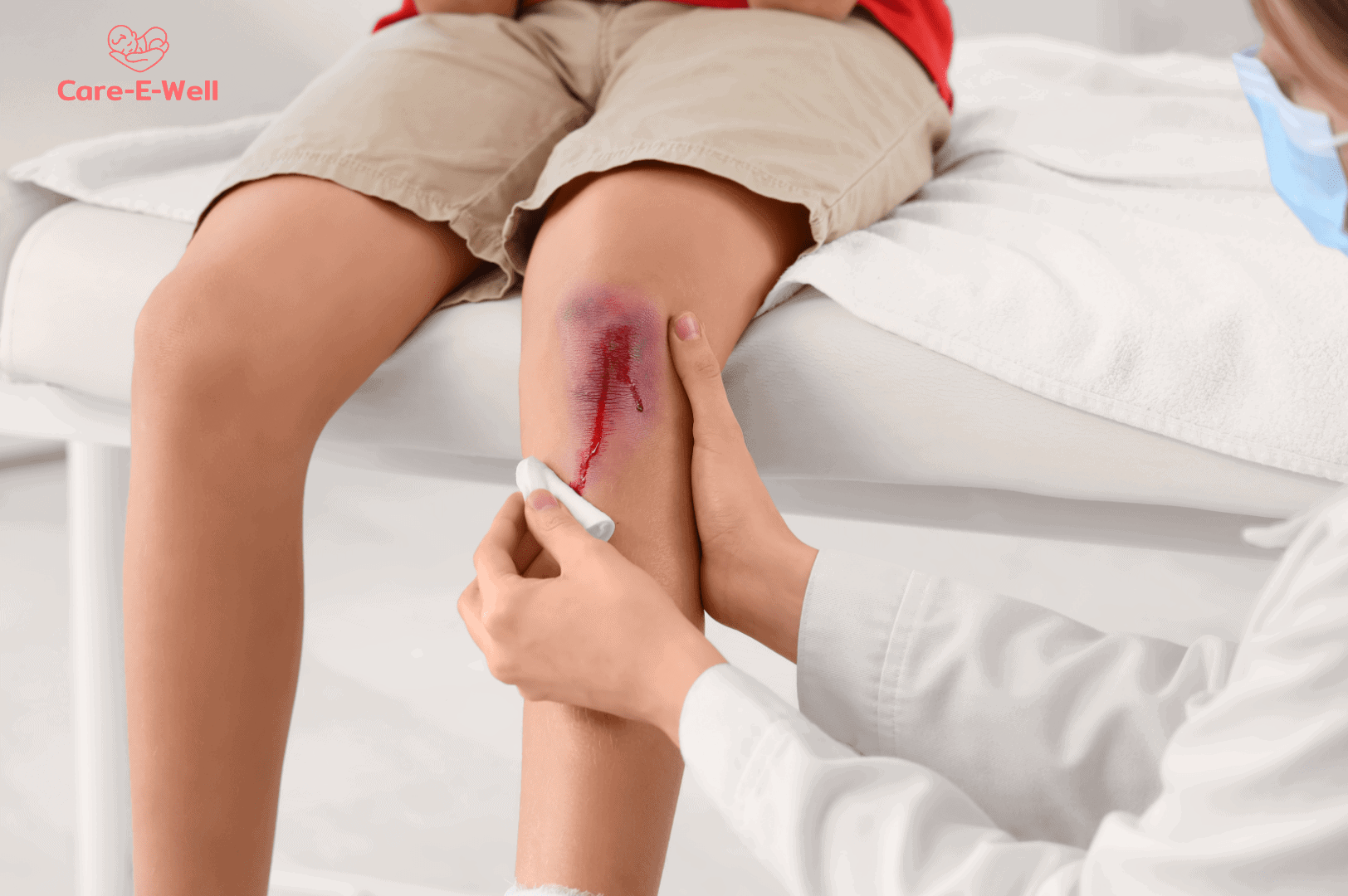
Cuts and bleeding in babies and children are usually manageable with simple first aid, but the first priority is always the same: control the bleeding. For an ordinary cut, firm direct pressure with clean gauze or cloth is usually the most useful first step. For bleeding that is heavy, spurting, pooling, soaking through dressings quickly or not slowing with pressure, treat it as a medical emergency.
Once bleeding is controlled, you can look at the wound more carefully, rinse a minor cut, cover it and decide whether medical assessment is needed. Avoid repeatedly lifting the dressing to “check” a wound that is still bleeding, because disturbing a forming clot can restart bleeding.
Bleeding first, cleaning second. Apply firm direct pressure and keep it there long enough to work before worrying about antiseptic, dressings or wound appearance.
What should you do first when a child is bleeding?
Make sure the scene is safe for both of you. Broken glass, traffic, sharp metal, an animal or another hazard can cause further injury. If possible, wash or sanitise your hands and use gloves, but do not delay lifesaving pressure for severe bleeding while searching for supplies.
- Sit or lie the child somewhere safe.
- Expose the wound enough to find where the blood is coming from.
- Place clean gauze, a clean cloth or another suitable dressing directly over the bleeding point.
- Press firmly and continuously with your hand.
- Keep steady pressure rather than lifting the dressing every few seconds.
- If bleeding is severe, activate emergency medical services while maintaining pressure.
Direct manual pressure is the main first-aid treatment for most external bleeding. Evidence-based first-aid guidance also supports haemostatic dressings as an adjunct for severe, life-threatening bleeding when available and when the rescuer knows how to use them.
Call emergency services for bleeding that is life-threatening, cannot be controlled with firm direct pressure, follows a traumatic amputation or major injury, or is accompanied by collapse, severe weakness, abnormal breathing, confusion, extreme paleness or other signs of shock.
How long should you hold direct pressure?
There is no useful “peek every 30 seconds” rule. Firm pressure needs time. Clinical wound literature shows that continuous manual pressure for several minutes can be required to obtain haemostasis, and repeatedly disturbing the wound can destabilise the clot.
For a small cut, pressure may work quickly. A deeper wound can take longer. Keep pressure constant and reassess only after a sustained period, unless the child's condition is worsening or emergency professionals direct you otherwise.
If blood comes through the first dressing, keep pressure over the bleeding point. You can place additional clean material over the top if needed rather than repeatedly removing the layer that is in contact with the wound.
How can you recognise life-threatening bleeding?
Parents do not need to estimate an exact volume of blood. Research shows that visual estimates of blood loss are unreliable even among adults trying to judge simulated bleeding. Instead, focus on what the bleeding is doing and how the child looks.
- blood that is flowing continuously and rapidly
- blood that is spurting or pulsing from a wound
- a pool of blood forming quickly
- dressings becoming saturated rapidly despite firm pressure
- a partial or complete traumatic amputation
- bleeding from a deep wound that cannot be controlled
- a child becoming pale, floppy, confused, very sleepy or difficult to rouse
- abnormal breathing, collapse or signs of poor circulation
Babies and small children have a smaller circulating blood volume than adults, so significant bleeding deserves prompt attention even when the absolute amount looks smaller.
Do not spend time washing a wound that is actively bleeding heavily. Control the bleeding and activate emergency help first.
Should you use a tourniquet on a child?
A manufactured tourniquet can be lifesaving for catastrophic bleeding from an arm or leg when direct pressure is ineffective or cannot be maintained. Paediatric evidence is more limited than adult evidence, but systematic reviews and first-aid guidelines support tourniquet use for life-threatening extremity haemorrhage in children when the device fits and the rescuer knows how to apply it.

Very small limbs create an important practical limitation. Research has shown successful pulse occlusion with some manufactured windlass tourniquets in children as young as about two years, but a standard adult device may not tighten adequately on an infant or very small toddler. Current guidance therefore places particular emphasis on direct manual pressure, with or without a haemostatic dressing, when a tourniquet cannot be fitted effectively.
This is not a technique to improvise casually for an ordinary cut. Parents who want to be prepared for major trauma should learn bleeding-control skills in a recognised first-aid course and use a manufactured device according to their training.
A tourniquet is for life-threatening extremity bleeding, not routine cuts. If one is required, call emergency services immediately and follow your training and dispatcher instructions.
What if something is stuck in the wound?
Do not pull out a large embedded object. It may be helping to limit bleeding, and removal can cause additional tissue or blood-vessel injury.
Instead, call for medical help, avoid pushing on the object itself, and apply pressure around it using padding or dressings to stabilise the area. Keep the child as still and comfortable as possible.
When should you clean a cut?
Clean a minor wound after active bleeding has stopped or is well controlled. Irrigation helps remove dirt and reduce the amount of foreign material in the wound. Clean running water is suitable for many uncomplicated cuts.
Let water flow over the wound and gently remove loose, visible dirt if it comes away easily. Do not aggressively scrub deep tissue or dig for embedded debris. If gravel, glass, wood or another material remains in the wound, medical cleaning may be safer.
Strong chemicals are not necessary inside a simple wound and can irritate tissue. The priorities are adequate irrigation, protection and assessment when the wound is deep, contaminated or difficult to clean.
Should you use antiseptic, alcohol or hydrogen peroxide?
Washing the surrounding skin is reasonable, but routine pouring of alcohol, hydrogen peroxide or harsh antiseptics into a fresh open wound is not required for good first aid and may damage viable tissue. For an uncomplicated cut, clean water irrigation and a clean dressing are usually more important.
If a healthcare professional recommends a particular wound-cleaning product for a specific injury, follow that advice. The treatment of bites, punctures and heavily contaminated wounds can differ from that of a clean kitchen or playground cut.
How should you cover a minor cut?
After cleaning, gently dry the surrounding skin and cover the wound with a clean dressing that will not stick excessively. The dressing protects against further contamination and rubbing.
Change it when it becomes wet, dirty or loose. Watch the wound over the following days for increasing redness, swelling, warmth, pain, pus or other signs that could indicate infection. A small amount of redness at the edge immediately after an injury is not the same as progressively spreading inflammation.
Which cuts may need stitches, glue or another closure?
A clinician decides whether a wound needs sutures, tissue adhesive, strips or another approach based on its depth, location, contamination, time since injury and whether deeper structures are involved. Parents do not need to judge the exact closure method at home.
Seek prompt assessment for a wound that is deep, gaping or difficult to bring together; exposes fat or deeper tissue; lies on the face or across a joint; involves the hand, eyelid, lip or another functionally important area; or was caused by a bite, puncture, dirty object or high-energy mechanism.
Numbness, weakness or difficulty moving a finger, toe or limb can suggest injury to a nerve, tendon or other deeper structure and should be assessed.
What about cuts on the scalp or face?
Scalp and facial wounds can bleed heavily because these areas have a rich blood supply. A dramatic amount of blood does not automatically mean the cut is deep, but it can make assessment difficult.
Apply direct pressure unless there is a reason to suspect a depressed skull injury or a foreign object is embedded. If the cut followed a significant head impact, evaluate the child for head-injury symptoms as well as the wound itself.
After head trauma, urgent assessment is needed for loss of consciousness, seizure, worsening confusion, repeated vomiting, abnormal behaviour, weakness, severe or worsening symptoms, or other neurological concerns.
What should you do for a cut inside the mouth?
Small lip, tongue and gum injuries often bleed more than expected. If the child is alert and the injury is accessible, gentle pressure with clean gauze can help. Cold can be applied externally to swelling, but avoid placing loose ice or small objects in the mouth of a young child.
Seek medical or dental assessment for a deep or gaping mouth wound, uncontrolled bleeding, a tooth that is displaced or missing after trauma, a wound that crosses the lip border, or concern that a piece of tooth or another object is embedded.
When does a bite need medical care?
Human and animal bites have a higher infection risk than a clean cut and can injure deeper structures even when the skin opening looks small. Wash the area and seek medical advice, particularly for bites to the hand, face or near a joint; deep punctures; significant crushing; or any bite from an unfamiliar animal.
Clinicians may need to consider wound cleaning, antibiotics, tetanus protection and, depending on the animal and local circumstances, rabies prevention. Do not try to decide these preventive treatments from the wound appearance alone.

Does the child need a tetanus booster?
Tetanus protection depends on the child's vaccination history and the type of wound. A clean superficial cut is different from a deep puncture or contaminated wound. If vaccination status is incomplete, unknown or the wound is tetanus-prone, ask a healthcare professional whether additional protection is recommended.
Do not delay urgent wound care while searching for vaccination records. They can be checked once bleeding is controlled and the child is safe.
What signs of infection should you watch for?
- redness that is spreading rather than settling
- increasing swelling, warmth or tenderness
- pus or cloudy drainage
- increasing pain after initial improvement
- red streaking away from the wound
- fever or the child becoming generally unwell
- the wound edges opening or tissue becoming discoloured
These signs warrant medical advice, especially in babies, children with immune problems, or wounds caused by bites, punctures or contaminated objects.
What should be in a family bleeding-control kit?
A useful home or travel first-aid kit does not need to be complicated. Clean gauze, non-adherent dressings, bandages, gloves, sterile saline if desired for irrigation, adhesive tape and basic wound-care supplies cover many minor injuries.
Families who choose to carry a haemostatic dressing or manufactured tourniquet should also take practical training. Equipment is most useful when the caregiver can recognise the situation it is designed for and apply it correctly under stress.
For most childhood cuts, the valuable skill is not owning more equipment. It is knowing how to apply calm, firm, uninterrupted pressure and when bleeding has crossed the line into an emergency.
Frequently asked questions
Should I remove the first gauze if blood soaks through?
Avoid repeatedly lifting the material that is directly over an actively bleeding wound. Maintain firm pressure and add clean material on top if needed while arranging help for bleeding that remains heavy.
Should I lift the injured arm or leg above the heart?
Direct pressure is the priority. Evidence for elevation as a bleeding-control technique is much weaker, so do not substitute elevation for pressure or delay effective haemorrhage control.
Can a small cut lose a dangerous amount of blood?
Most small superficial cuts do not. Concern rises when bleeding is rapid, persistent, difficult to control or associated with a deeper injury or deterioration in the child's condition.
Should I blow on a cut or lick it clean?
No. Saliva and breath can introduce microorganisms. Rinse a minor wound with clean running water instead.
When should I call emergency services rather than drive to a clinic?
Call for uncontrolled or life-threatening bleeding, major trauma, traumatic amputation, collapse, abnormal breathing, altered responsiveness or signs of shock. For a stable child with a wound that may need closure but bleeding is controlled, an urgent-care or emergency service can advise the appropriate destination.
The key takeaway
Cuts and bleeding in babies and children are managed first by controlling blood loss. Apply firm, continuous direct pressure and give it time to work. Once bleeding is controlled, rinse and protect a minor wound and seek assessment for deep, gaping, contaminated, bitten or functionally important injuries. Heavy or uncontrolled bleeding is an emergency; catastrophic limb bleeding may require a manufactured tourniquet when appropriate and when the rescuer has been trained to use it.
Sources and References
- Zideman D, Singletary EM, Borra V, et al. — European Resuscitation Council Guidelines 2021: First aid
- Charlton NP, Goolsby C, Zideman D, et al. — Appropriate Tourniquet Types in the Pediatric Population: A Systematic Review
- Thai JN, Pacheco JM, Margolis DJ — Evidence-based Comprehensive Approach to Forearm Arterial Laceration
- Quinn RH, Wedmore I, Johnson EL, et al. — Wilderness Medical Society Practice Guidelines for Basic Wound Management in the Austere Environment: 2014 Update
- Phillips RR, Friberg M, Lantz Cronqvist M, et al. — Visual estimates of blood loss by medical laypeople: Effects of blood loss volume, victim gender, and perspective
- Sidwell RA, Spilman SK, Feist B, et al. — Hemorrhage Control Training
- Tobias J, Cunningham AJ, Krakauer K, et al. — Protect Our Kids: a novel program bringing hemorrhage control to schools
- Anderson ML, Williams R — Bleeding control methods for kids: A pediatric approach to the national education campaign—a pilot program
- Chardavoyne PC, Montgomery E, Montalbano A, et al. — Pediatric Urgent Care Center Management of Traumatic Injuries in Infants and Children
Did this Insight help?
A little love for something worth reading.


