
Care-E-Well Insights
Diaper-Free Time: Does It Help Prevent Rash?
Diaper-free time may reduce moisture and friction. Learn when it can help diaper rash, how long to try it and how to keep babies safe.
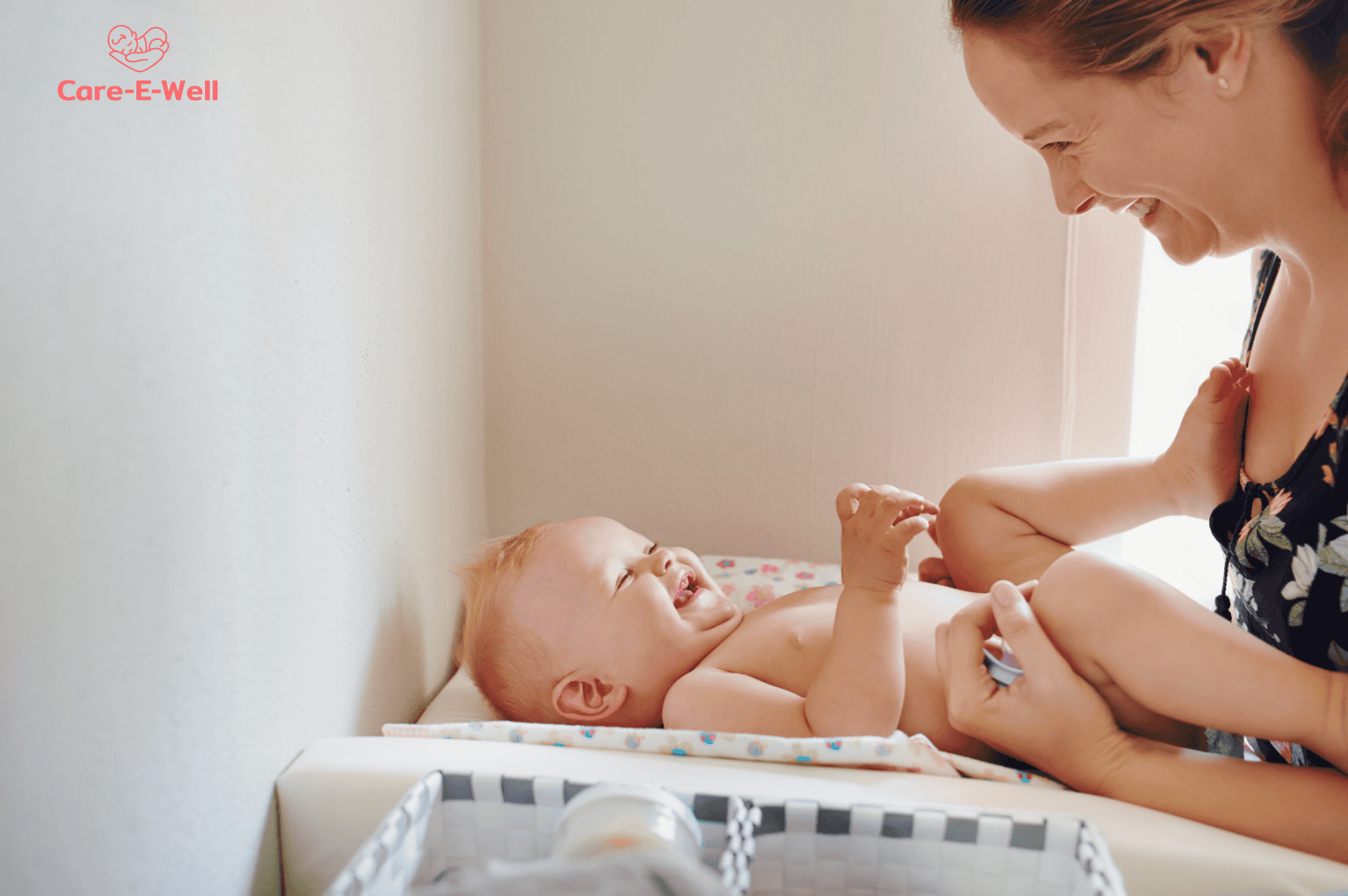
Diaper-free time can be a useful way to let the diaper area dry and reduce friction for a while, especially when a baby already has mild irritant redness. But it is not a required daily ritual and there is not strong evidence that a specific number of diaper-free minutes prevents diaper rash in every baby.
The bigger prevention factors are consistent: change stool promptly, avoid leaving skin very wet for long periods, clean gently, use a well-fitting diaper and protect irritated skin with a simple barrier when needed. Diaper-free time can support those steps, but it should not replace them.
Diaper-free time can help skin stay drier, but it is an optional supportive measure, not a magic treatment or a fixed daily prescription.
What is diaper-free time?
Diaper-free time simply means leaving the baby without a diaper for a short period while awake and supervised. The skin is exposed to air instead of being enclosed by absorbent material, elastic and clothing.
Families often use it after cleaning the diaper area, during mild redness or before putting on a fresh diaper. It can also be a playful floor-time routine for an older baby who enjoys moving without a bulky diaper.
How could diaper-free time help the skin?
Diaper-area irritation is promoted by a combination of moisture, stool contact and friction. Removing the diaper temporarily reduces occlusion and allows residual moisture on the skin to evaporate.
It also gives the skin a break from elastic edges and repeated rubbing. This can make mild irritant rash feel more comfortable, particularly when the baby has been stooling frequently.
The effect is practical rather than mysterious: less wetness and less friction can be kinder to an irritated skin barrier.
Does diaper-free time prevent diaper rash?
It may help as part of a broader skin-care routine, but parents should not treat it as a proven stand-alone prevention method. WHO newborn guidance emphasizes hygienic skin care, keeping babies clean, infection prevention and recognition of health problems rather than prescribing a set period of diaper-free time.
A baby who spends time without a diaper can still develop rash if stool remains against the skin, the diaper fits poorly, the baby has diarrhoea, a product irritates the skin or an infection is present.
Conversely, many babies with healthy skin do well without scheduled diaper-free sessions when changes are timely and the diaper fits comfortably.
How long should diaper-free time last?
There is no evidence-based duration that every baby needs. A few comfortable minutes may be enough to let the skin dry. Older babies may happily play without a diaper for longer on an easy-to-clean surface.
Stop when the baby becomes cold, uncomfortable, tired or ready to feed or sleep. For newborns, thermal protection matters. WHO emphasizes keeping newborns warm, so prolonged naked time is not appropriate simply to “air out” the skin.

How often should you do it?
There is no required frequency. Use diaper-free time when it is practical and useful, such as after a bowel movement, after a bath, or during a period of mild irritation.
If your baby has healthy skin and your routine already works, you do not need to add diaper-free time because social media or product advice suggests it is essential.
What is the safest setup?
- choose the floor or another low, stable surface
- use a clean washable mat or waterproof layer
- keep the room comfortably warm
- have a clean diaper and clothes ready
- stay within arm's reach
- keep pets away from the mat
- wash hands before and after diaper care
- clean urine or stool promptly
A changing table, bed or sofa is not a good place for extended diaper-free time because babies can roll or wriggle unexpectedly. Floor-level care removes the fall risk.
Can a newborn have diaper-free time?
Yes, briefly, if the baby is warm, awake and supervised. Newborns lose heat more easily than older babies, so keep sessions short and practical.
You can leave the lower body uncovered for a few minutes after cleaning while keeping the chest and upper body dressed or wrapped. Skin-to-skin contact can also provide warmth while supporting nurturing care, but the diaper area still needs to remain clean.
If the newborn is premature, low birth weight or has difficulty maintaining temperature, follow the neonatal or maternity team's advice rather than introducing extra uncovered time.
Does diaper-free time help an existing rash?
Mild irritant rash may feel better when the area is dry and not rubbing against a diaper. Brief air exposure can therefore be a useful supportive step.
It does not identify the cause of the rash. A fungal, bacterial, allergic or inflammatory condition may still require specific treatment. Improvement during diaper-free time does not prove that the rash was caused only by moisture.
Continue prompt stool changes and gentle cleaning. If a barrier ointment has been helping, reapply it as appropriate before the next diaper.
Should you wash the skin before every diaper-free session?
Clean visible urine and stool as needed, but do not over-wash healthy skin. Repeated soap, scrubbing and vigorous wiping can worsen irritation.
Plain lukewarm water and a soft cloth are a simple option, particularly when the skin is sore. Pat the area dry rather than rubbing it.
Should you apply cream before or after diaper-free time?
If the goal is simply to let clean skin dry, apply barrier ointment afterward, just before the fresh diaper. This allows the skin to air without a thick occlusive layer.
If a clinician has prescribed a medicated product, follow the specific instructions for timing and layering. Do not change the treatment schedule simply to create longer diaper-free sessions.
Can diaper-free time replace barrier cream?
No. They do different things. Air exposure reduces occlusion temporarily, while a barrier product reduces direct contact between the skin and urine or stool once the diaper is back on.
Some babies need neither when their skin is healthy. Others benefit from both during periods of frequent stooling or mild irritant rash.
Does it help with yeast diaper rash?
Diaper-free time may reduce moisture and improve comfort, but it does not treat Candida. A confirmed or strongly suspected fungal rash needs the antifungal treatment recommended by a healthcare professional.
Do not delay assessment of a persistent fold-involving or unusual rash because it seems slightly better while the diaper is off.
What if the baby pees during diaper-free time?
Expect it. Use a washable or waterproof mat and clean the skin and surface afterward. Urinating without a diaper is normal and does not mean the baby should immediately stop having diaper-free time.
Avoid placing absorbent pads with loose plastic, cords or other unsafe materials around a baby. A simple flat washable mat is enough.
What if the baby poops during diaper-free time?
Clean stool promptly and wash your hands. Stool can irritate the skin, so allowing it to remain on the mat or body defeats the purpose of reducing irritant contact.
If the baby has repeated watery diarrhoea, prioritize hydration and medical advice over attempts to keep the area continuously diaper-free.
Seek prompt medical advice for repeated watery diarrhoea with markedly fewer wet diapers, poor feeding or drinking, repeated vomiting, blood in stool, unusual sleepiness or a baby who looks unwell.
Can diaper-free time help with heat rash?
Reducing heat and occlusion may make the diaper area more comfortable, but not every red rash in a warm environment is heat rash. Irritant dermatitis, fungal infection and contact reactions can look similar.
Keep the room comfortable, avoid overdressing and seek assessment if the rash is severe, unusual or not improving.
Can you use diaper-free time overnight?
No. Diaper-free time is an awake, supervised activity. A sleeping baby should be placed in a safe sleep environment without improvised waterproof sheets, loose absorbent pads or other items added around the baby to manage urine.
Use a well-fitting diaper for sleep and follow current safe-sleep guidance. If a baby has significant rash, check the diaper more often and change stool promptly.
Do not add loose pads, towels, plastic sheets, positioners or improvised absorbent materials to the baby's sleep space for diaper-free sleeping.
Does diaper-free time help babies who hate diaper changes?
Sometimes. An older baby may enjoy a few minutes of movement and play between the old and new diaper, making the transition feel less abrupt.
Keep the routine predictable. Clean first, allow a short supervised play pause if practical, then put on the fresh diaper before moving to another activity.

What if the room is cold?
Skip it or keep it very brief. Newborn thermal care is more important than achieving a particular amount of air exposure.
You can still reduce moisture by patting the skin dry carefully before applying a fresh diaper. Diaper-free time is optional, so there is no benefit in making the baby cold to complete it.
What if the skin looks worse after diaper-free time?
Air exposure itself should not normally worsen an irritant rash, but the surface, cleaning products, laundry detergent on the mat or excessive cold may contribute to discomfort.
Return to simple care and check what changed. A rapidly worsening rash, blistering, swelling, open sores or an unwell baby needs assessment.
When should you seek medical advice for diaper rash?
- the rash is severe or rapidly worsening
- blisters, open sores, pus or crusting appear
- the rash spreads beyond the diaper area
- the baby is in significant pain
- the rash is not improving with simple care
- fever, poor feeding or unusual sleepiness develops
- a newborn looks generally unwell
- you suspect antifungal, antibiotic or steroid treatment may be needed
WHO and UNICEF emphasize early recognition of newborn danger signs. In the first weeks of life, use a lower threshold for professional assessment.
A simple diaper-free routine
- Change and clean the baby as usual.
- Pat the skin dry.
- Place the baby on a clean floor-level washable mat.
- Keep the baby warm and supervised.
- Allow a short comfortable period without a diaper.
- Clean any urine or stool promptly.
- Apply a simple barrier if the skin needs it.
- Put on a fresh, well-fitting diaper.
- Wash your hands.
That is enough. There is no need to time the session precisely or turn it into another parenting task that must be completed perfectly.
Frequently asked questions
Is 30 minutes of diaper-free time necessary every day?
No. There is no universal evidence-based daily duration. Use short periods when practical and comfortable.
Can diaper-free time cure diaper rash?
No. It can reduce moisture and friction, but persistent or infected rashes may need specific treatment.
Should newborns be left naked to prevent rash?
No. Keep newborns warm. Brief lower-body air exposure can be used when practical, but thermal protection comes first.
Is diaper-free time better than barrier cream?
They serve different purposes. Air exposure reduces moisture temporarily; barrier products protect skin once the diaper is on.
Do healthy babies need diaper-free time?
Not necessarily. If skin remains healthy with normal diaper care, scheduled diaper-free time is optional.
The key takeaway
Diaper-free time can help by temporarily reducing moisture, heat and friction around the diaper area. It is a practical supportive option, especially for mild irritation, but there is no fixed duration or frequency that every baby needs. Keep newborns warm, use a safe floor-level surface, supervise continuously and continue the basics that matter most: prompt stool changes, gentle cleaning, good fit and appropriate barrier protection. Persistent, severe or unusual rash needs professional assessment.
Sources and References
- World Health Organization — Caring for a newborn
- World Health Organization — Essential newborn care
- World Health Organization — Keeping newborns and children under 5 years clean and safe
- World Health Organization Regional Office for Europe — Newborn health
- World Health Organization — WHO recommendations on maternal and newborn care for a positive postnatal experience
- World Health Organization — Essential newborn care course, second edition
- World Health Organization — Raising the importance of postnatal care
- UNICEF Parenting — Newborn health warning signs
- UNICEF Uruguay — Cuidados del recién nacido: 10 consejos
Did this Insight help?
A little love for something worth reading.


