
Care-E-Well Insights
Disposable vs Cloth Diapers: Cost, Convenience and Skin Considerations
Disposable vs cloth diapers: compare real costs, convenience, skin care, laundry demands and environmental claims without the marketing hype.
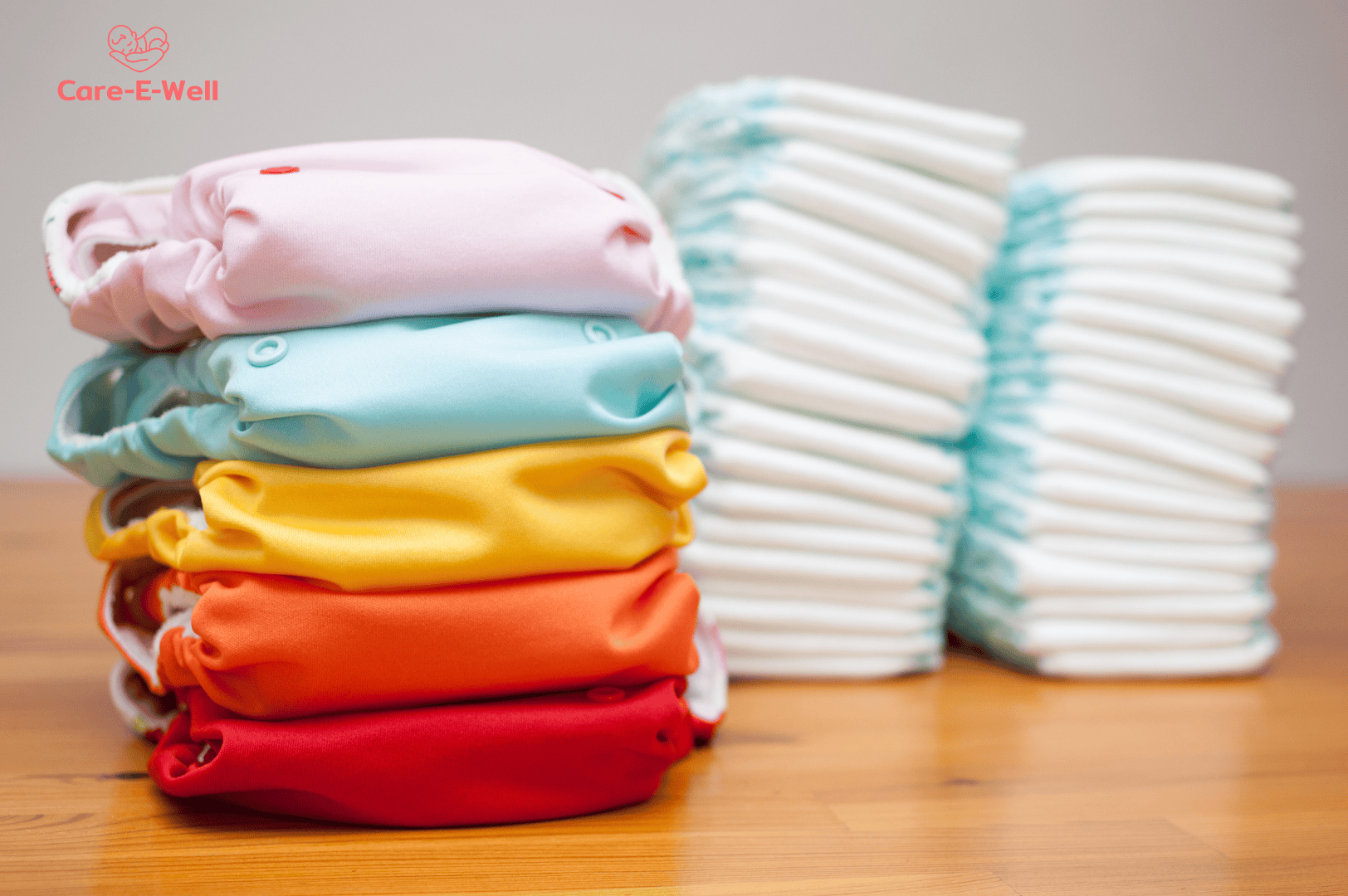
Disposable vs cloth diapers is not a question with one correct answer for every family. Disposable diapers are usually quicker to use and require no laundering. Cloth diapers can be reused and may reduce repeated purchases, but they require an upfront supply, washing, drying, storage and a routine that fits your home, childcare and travel needs.
Skin health does not automatically favour one system either. A well-fitting diaper that is changed appropriately and keeps stool away from the skin is more important than whether the absorbent material is disposable or washable. Many families also use both: cloth at home, disposables at night, during travel or when laundry capacity is limited.
The best diaper system is the one your family can use consistently, hygienically and comfortably. Cost, time, laundry access, fit and skin response all matter.
What is the main difference between disposable and cloth diapers?
A disposable diaper is designed for one use and is then discarded. Modern disposables typically combine an absorbent core, fluid-distribution layers, waterproof backing and elastic barriers.
Cloth diapers use washable absorbent materials with a waterproof or water-resistant cover, either as separate components or in an all-in-one design. Inserts, boosters and liners vary by system.
Both systems aim to contain urine and stool. The practical difference is what happens next: disposal versus washing and reuse.
Are disposable diapers more convenient?
Usually, yes. They are fast to put on, widely available, compact for travel and require no home washing. That can be particularly useful during the newborn period, illness, overnight use, daycare or travel.
Convenience also depends on access. A family living far from shops or dealing with recurring supply shortages may find reusable diapers more reliable once a cloth supply is established.
Disposable convenience comes with an ongoing need to buy, store and dispose of new diapers.
Are cloth diapers difficult to use?
They require a learning period, but the routine can become straightforward. Parents need enough clean diapers to cover the time between washes, a safe place to store used diapers, an appropriate washing method and enough drying capacity.
Different cloth systems have different levels of complexity. All-in-one diapers resemble disposables more closely, while prefolds, flats and fitted systems involve separate absorbent and waterproof layers.
There is no need to choose the most complicated system. A simpler routine that is washed and fitted reliably is more useful than a technically perfect system that becomes too burdensome.
Which option is cheaper?
It depends on the household. Disposable costs are spread over months or years. Cloth usually has larger upfront costs but can be reused, potentially across siblings, while adding expenses for detergent, water, electricity and sometimes paid laundry or drying.
Prices differ substantially by country, brand, diaper size, washing machine efficiency, energy tariff and whether cloth diapers are purchased new or second-hand. A universal “cloth saves X euros” claim would therefore be misleading.
How can you compare the real cost?
- purchase price of disposable diapers per month
- number of cloth diapers and covers needed
- inserts, liners or wet bags
- detergent
- water and electricity
- tumble-drying costs if used
- replacement elastics or worn components
- daycare requirements
- travel disposables if you plan a mixed system
- potential reuse for another child
Calculate using your own local prices. The financially cheaper system for one family may not be cheaper for another.

Which option is better for diaper rash?
Neither type guarantees prevention. Diaper rash is influenced by moisture, stool contact, friction, fit, cleaning products, diarrhoea and sometimes infection.
Highly absorbent disposables can keep the surface feeling drier after urine. Cloth materials vary: some systems use stay-dry liners, while others allow the baby to feel wetness sooner.
Regardless of system, stool should be changed promptly, the diaper should fit without excessive pressure and irritated skin should be cleaned gently.
Can cloth diapers cause more rash because they feel wetter?
They can contribute to prolonged moisture exposure if a wet cloth diaper remains on for too long, but that is not inevitable. Appropriate absorbency, timely changes and a suitable liner can reduce wetness against the skin.
If a baby develops recurring redness after switching to cloth, check change frequency, fit, detergent dosage, rinsing and whether the absorbent system is adequate.
Can disposable diapers irritate skin?
Any diaper can contribute to irritation through friction, heat or poor fit. Individual babies may also react to a lotion, fragrance or material in a particular product.
A reaction to one disposable brand does not mean all disposables are unsuitable. Try a simpler or differently constructed product and observe whether the pattern changes.
Does cloth detergent matter for skin?
Yes. Cloth diapers need enough detergent to remove urine, stool residues and body oils, but excessive residue can also irritate sensitive skin. Follow the detergent label, washing-machine instructions and diaper manufacturer's guidance rather than guessing.
If redness appears after a laundry change, review detergent type, dosage and rinsing. Do not compensate for poor washing by adding fragranced products, essential oils or repeated disinfectants.
Which system contains poop better?
Fit matters more than the category. A correctly fitted disposable or cloth diaper can contain normal infant stool, while either can blow out when it gaps at the waist or legs or when a very large loose bowel movement overwhelms the available space.
Cloth covers sometimes provide an additional elastic barrier around a fitted absorbent diaper. Disposables often use internal leak guards. The better system is the one that matches your baby's body shape.
Which is better overnight?
Overnight needs depend on how long the baby sleeps and how much urine the diaper must hold. Disposable overnight products provide extra absorbency in a compact format. Cloth systems can be boosted with extra absorbent inserts designed for that system.
More absorbency is useful only if fit remains comfortable. Excessive bulk can create leg gaps or pressure. Stool still needs prompt changing regardless of overnight capacity.
Which is easier with a newborn?
Many parents find disposables easiest during the first weeks because feeding, sleep and recovery already create a demanding routine. Cloth is also possible from birth if the diapers fit a small baby and the household can manage frequent washing.
If the umbilical cord stump is still attached, either diaper type should sit below it so the stump stays dry and is not rubbed.
There is no parenting advantage in starting cloth immediately if it creates stress. A later transition or mixed approach is reasonable.
Can daycare affect the decision?
Yes. Childcare settings may have their own hygiene and storage policies. Some readily accept cloth diapers if clean and soiled items are transported in appropriate bags; others may require disposables.
Check the actual policy before buying a large cloth system. A solution that works beautifully at home may still need a disposable backup for childcare.
What about travel?
Disposables are usually easier when clean water, washing machines and drying space are uncertain. Cloth can work for short trips when enough clean diapers and sealed storage are available.
Do not store heavily soiled reusable diapers in an unventilated hot bag for longer than necessary. Wash them according to the system's instructions when facilities become available.
Are cloth diapers automatically better for the environment?
Not automatically. Reuse can reduce the number of single-use products discarded, but cloth also requires water, detergent and energy for washing and drying. Environmental performance changes with washing temperature, machine efficiency, tumble drying, electricity source, number of reuses and whether diapers are used for more than one child.
Disposable impacts also vary by materials, manufacturing, packaging and waste treatment. Broad environmental claims should therefore be treated cautiously unless they describe a defined life-cycle assessment or verified label.
What does the EU Ecolabel tell parents about disposable diapers?
The European Commission's EU Ecolabel has criteria for absorbent hygiene products, including baby diapers. The current criteria restrict certain hazardous substances and allergenic fragrances and include requirements related to waste, absorption, leakage, skin dryness, fit and comfort.
The label does not mean a product has zero environmental impact. It gives parents a verified framework for comparing environmental and performance criteria rather than relying only on words such as “eco,” “green” or “natural.”
Is cloth always the “natural” choice?
Cloth materials can be made from cotton, synthetic fibres, blends or other textiles, and waterproof layers may use synthetic materials. “Natural” does not describe the full life cycle or guarantee better skin tolerance.
Likewise, disposable products can differ substantially in sourcing, chemicals, packaging and environmental certification. Compare specific products rather than treating either category as uniform.

Can you use both cloth and disposable diapers?
Absolutely. A mixed system is often practical.
- cloth at home and disposables during travel
- cloth during the day and extra-absorbent disposables at night
- disposables during the newborn weeks, then cloth later
- cloth most days with disposables during illness or heavy diarrhoea
- disposables at daycare and cloth at home
Mixed use can reduce pressure to make one system handle every situation.
What about diarrhoea?
Repeated watery stool increases skin irritation and makes hygiene more demanding with either diaper type. Change stool promptly, protect the skin and wash reusable diapers carefully.
The main medical concern is dehydration, especially in babies and young children.
Seek prompt medical advice for repeated watery diarrhoea with markedly fewer wet diapers, poor feeding or drinking, repeated vomiting, blood in stool, unusual sleepiness or a baby who looks unwell.
How should you choose for sensitive skin?
- Start with a diaper that fits securely without pressure.
- Use a simple cleaning routine.
- Avoid unnecessary fragrance if the baby is sensitive.
- Change stool promptly.
- Watch how the skin responds over several days.
- If using cloth, make sure the wash routine fully cleans and rinses the diapers.
- If using disposables, consider a different product if irritation repeatedly follows one brand.
- Seek professional assessment for persistent or unusual rash.
Do not change the diaper type, wipes, detergent and cream all at once if you are trying to identify an irritant.
Which option is better for families without a washing machine?
Disposables are usually more practical when reliable washing and drying are unavailable. Handwashing a full-time cloth supply is possible but creates substantial labour and makes consistent hygienic laundering harder.
A diaper choice should fit the household's real infrastructure rather than an idealized routine.
Which option creates less work?
Disposables reduce laundry but require shopping, rubbish handling and recurring stock management. Cloth adds washing, drying, assembling and storage but reduces the need to constantly buy full diaper supplies.
The relevant question is which type of work fits your household better.
Frequently asked questions
Are cloth diapers healthier?
Not inherently. Skin health depends more on dryness, stool exposure, fit, hygiene and individual tolerance.
Are disposable diapers safer for newborns?
Both can be used safely when they fit, are changed appropriately and keep the umbilical stump uncovered while it heals.
Does cloth always save money?
No. Savings depend on purchase price, laundering costs, reuse and local disposable prices.
Are disposables always worse for the environment?
Environmental impact varies across products and waste systems. Verified criteria such as the EU Ecolabel are more useful than vague marketing claims.
Is it okay to switch between cloth and disposable diapers?
Yes. A mixed system can be a practical way to balance convenience, cost and laundry capacity.
The key takeaway
Disposable vs cloth diapers is a practical trade-off, not a test of parenting quality. Disposables offer convenience and strong absorbency with ongoing purchase and waste. Cloth diapers are reusable but require an effective washing and drying routine. Neither type automatically prevents diaper rash or guarantees a smaller environmental footprint. Compare your local costs, laundry access, childcare needs, baby's fit and skin response, and consider a mixed system if that works best.
Sources and References
- European Commission — EU Ecolabel – Personal and animal care products: absorbent hygiene products
- European Commission — EU Ecolabel – Absorbent Hygiene Products User Manual
- European Commission — Circular economy: new EU Ecolabel criteria for absorbent hygiene products
- World Health Organization — Caring for a newborn
- World Health Organization — Essential newborn care
- World Health Organization — Keeping newborns and children under 5 years clean and safe
- World Health Organization — WHO recommendations on maternal and newborn care for a positive postnatal experience
- World Health Organization — Diarrhoeal disease
- UNICEF Parenting — Newborn health warning signs
- UNICEF Uruguay — Cuidados del recién nacido: 10 consejos
Did this Insight help?
A little love for something worth reading.


