
Care-E-Well Insights
Drowning First Aid: What to Do After a Water Emergency
Drowning first aid: check breathing, start CPR when needed and learn why rescue breaths matter after a child’s water emergency.
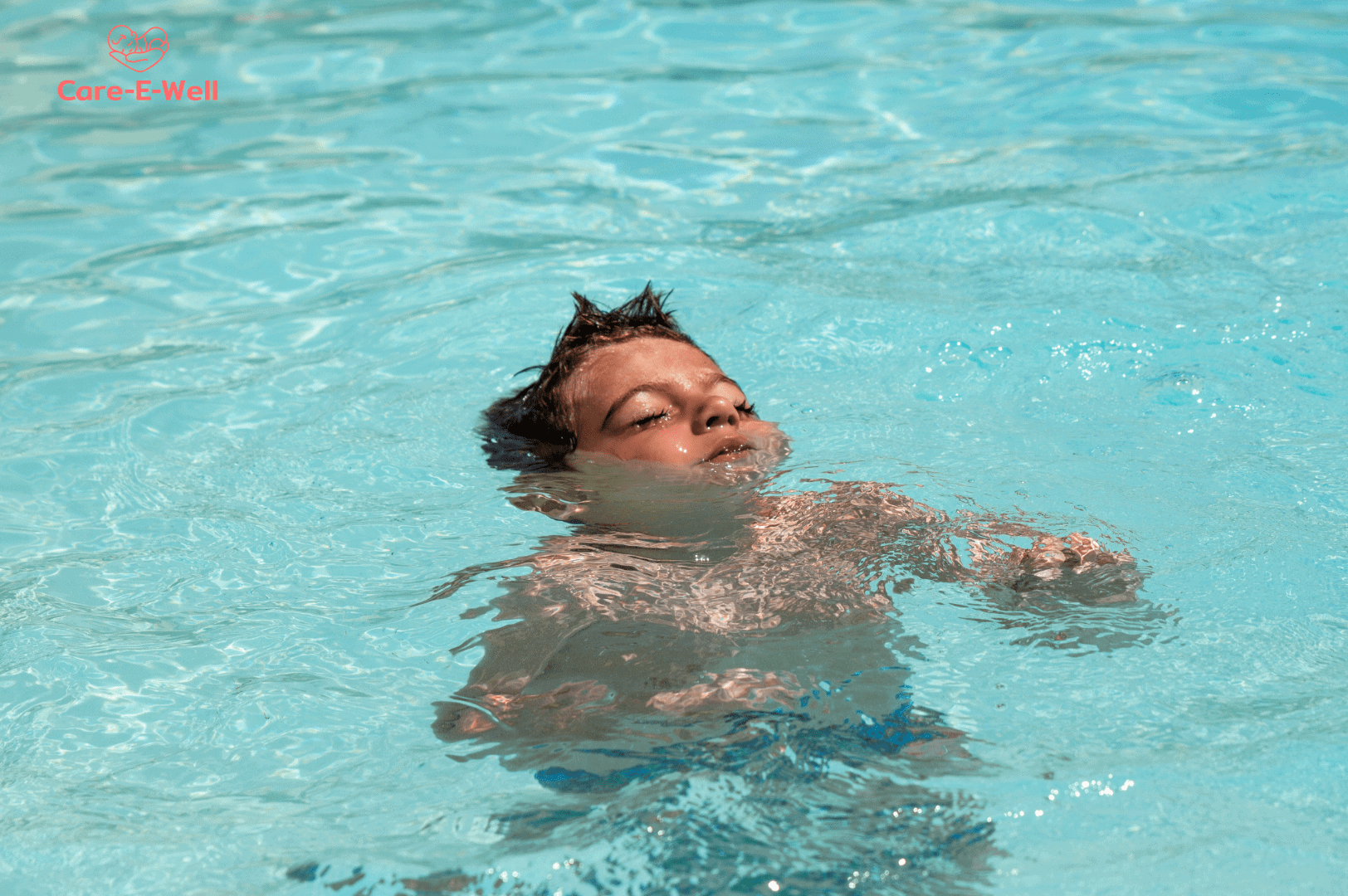
Drowning first aid starts with rescuer safety and rapid restoration of breathing. Get the child out of the water without putting yourself in danger, check responsiveness and normal breathing, and call emergency services. If the child is not breathing normally, start CPR immediately. Because drowning is primarily a problem of oxygen deprivation, rescue breaths are especially important when the rescuer is trained and able to provide them.
Do not waste time trying to “drain water” from the lungs by hanging the child upside down, pressing on the abdomen or performing routine abdominal thrusts. These manoeuvres delay ventilation and chest compressions. Once the child is breathing again, keep monitoring closely, protect them from cold and arrange appropriate medical assessment.
An unresponsive child who is not breathing normally after a water emergency needs immediate CPR and emergency medical help.
What should you do first in a drowning emergency?
The first priority is not becoming a second victim. Water rescue can be dangerous even for strong swimmers, particularly in moving water, cold water, surf, pools with electrical hazards or situations involving boats.
- Call for help and alert a lifeguard if one is present.
- Use a reach, throw or flotation-assisted rescue when possible.
- Enter the water only if you can do so safely and have the skills for the situation.
- Once the child is out, check responsiveness and normal breathing immediately.
- Call emergency services or have another person call.
- Start CPR if the child is not breathing normally.
- Use an AED as soon as one is available.
The safest rescue is one that saves the child without creating another casualty. Use flotation or reach from safety whenever possible.
Why are rescue breaths important after drowning?
In many sudden adult cardiac arrests, the heart stops first. Drowning is different: respiratory impairment and hypoxia usually occur before cardiac arrest. Restoring oxygen is therefore central to resuscitation.
Current resuscitation guidance recommends CPR that includes rescue breaths for people in cardiac arrest after drowning. A trained rescuer should follow the paediatric basic-life-support sequence taught in their region, including ventilations and chest compressions.
If you are unable or unwilling to give rescue breaths, chest compressions are still better than doing nothing. Follow emergency-dispatch instructions while help is on the way.
How do you know whether a child is breathing normally?
Look for normal chest movement and regular effective breaths. Occasional gasps, snorting or irregular agonal breaths are not normal breathing.
If the child is unresponsive and not breathing normally, begin CPR rather than spending a long time checking for a pulse. Lay rescuers should follow the emergency-dispatch or paediatric BLS instructions they have been trained to use.
Gasping is not normal breathing. If an unresponsive child only gasps after submersion, start CPR.
Should you give five rescue breaths first?
Resuscitation sequences differ slightly between international systems. Some paediatric and drowning protocols begin with initial rescue breaths, while others describe the sequence differently.
The consistent principle is that ventilations matter in drowning. Follow the current paediatric CPR sequence taught by your recognised local training provider and the emergency dispatcher rather than mixing steps from several protocols.
Should you perform CPR while the child is still in the water?
Chest compressions are ineffective in the water. The priority is to get the child onto a firm surface as quickly and safely as possible.
In-water rescue breathing is a specialist skill that may be considered by trained rescuers in selected circumstances. An untrained parent or bystander should focus on safe rescue and prompt resuscitation on land rather than attempting a complex manoeuvre that puts both people at risk.

Should you use an AED after drowning?
Yes. If the child is in cardiac arrest, use an automated external defibrillator as soon as it is available. Continue CPR while the AED is being obtained and prepared.
Move the child out of standing water and expose the chest. Dry the chest enough for electrode pads to adhere. Do not delay essential CPR unnecessarily while trying to make the child completely dry.
Use paediatric pads or the paediatric setting when available and appropriate for the child; if you are unsure, follow the AED prompts and emergency-dispatch instructions.
Should you try to remove water from the lungs?
No. Do not routinely perform abdominal thrusts, chest squeezing outside CPR, or upside-down drainage to remove water. Water that has entered the airways cannot be effectively emptied by these techniques.
Attempts to drain water delay the actions that matter most: ventilation, chest compressions when needed and emergency activation.
If a solid foreign body is visibly obstructing the airway, choking first aid may be relevant, but drowning itself is not treated with routine choking manoeuvres.
What if the child vomits during CPR?
Vomiting can occur during drowning resuscitation. If vomit blocks the airway, turn the child briefly onto the side, clear visible material from the mouth and resume CPR promptly.
Do not perform a blind finger sweep deep into the mouth. Remove only material you can clearly see and reach safely.
What if the child starts breathing again?
If the child remains unconscious but is breathing normally, place them in a recovery position on their side, keep the airway open and monitor continuously.
If they are awake, keep them resting and watch breathing, colour, alertness and coughing. Do not leave the child alone simply because they appear to have recovered.
Emergency clinicians should assess a child who required rescue breaths, CPR, had altered consciousness or has ongoing respiratory symptoms after a drowning event.
Which symptoms after a water emergency need urgent assessment?
- persistent coughing
- rapid, difficult or noisy breathing
- chest pain or marked chest discomfort
- blue, grey or unusually pale colour
- unusual sleepiness, confusion or reduced responsiveness
- repeated vomiting with respiratory symptoms
- weakness, collapse or fainting
- any period of unconsciousness
- any need for rescue breaths or CPR
Breathing difficulty, blue or grey colour, reduced consciousness, worsening cough or collapse after submersion requires immediate emergency care.
What about a child who coughed briefly but now seems completely normal?
A brief splash with a few coughs is different from a true drowning event with respiratory impairment. Not every child who swallows pool water needs an emergency department visit.
However, when there was submersion with breathing difficulty, persistent cough, abnormal behaviour, significant choking, loss of consciousness or uncertainty about what happened, seek medical advice. Very young children deserve a lower threshold because they may not describe symptoms clearly.
If symptoms develop or worsen after the event, do not wait for a routine appointment.
Is “secondary drowning” real?
Terms such as “secondary drowning,” “dry drowning” and “near drowning” are no longer preferred medical terminology. Drowning is defined as a process of respiratory impairment from submersion or immersion, with outcomes ranging from no morbidity to illness or death.
A child who has aspirated water can develop respiratory symptoms after the initial rescue, which is why ongoing cough, breathing difficulty or abnormal behaviour matters. This is not the same as a completely well child suddenly dying days later from a hidden form of “dry drowning.”
Watch the child, not frightening internet terminology. New or worsening breathing symptoms after a genuine submersion event need medical assessment.
How should you manage cold after drowning?
Remove wet clothing when practical, dry the child and protect them from further heat loss with blankets or dry clothing. Cold-water immersion can produce significant hypothermia.
A severely cold child may have slow or difficult-to-detect signs of life. Continue to follow emergency-dispatch and resuscitation instructions rather than assuming resuscitation is futile because the child feels cold.
Handle a profoundly hypothermic child gently and let emergency teams manage active rewarming and transport.
Does cold water improve the chance of survival?
Rare cases of prolonged cold-water submersion with good neurological recovery have been reported, especially when cooling occurs rapidly. However, cold water is not reliably protective and should never change prevention or delay rescue.
Outcome depends on many factors, including submersion duration, water temperature, time to effective rescue breathing and CPR, and the child’s condition. Parents should not use a single time threshold to decide whether resuscitation is worthwhile.
Should you immobilise the child’s neck?
Routine spinal immobilisation is not required for every drowning event and can delay resuscitation. Suspect spinal injury when there was a high-risk mechanism such as diving into shallow water, a boat collision, a fall from height or obvious trauma.
When trauma is suspected, minimise unnecessary neck movement while prioritising airway, breathing and circulation. Emergency services can guide spinal precautions.
What if the incident happened in a pool?
Remove the child from the water, begin the same breathing-focused first aid and call for help as needed. Chlorinated pool water does not change the immediate resuscitation priorities.
Do not delay CPR to search for water-quality information. The immediate threat is hypoxia, not whether the water was fresh, salt or chlorinated.

What if the child drowned in dirty or contaminated water?
The immediate first aid is still rescue, breathing support and CPR when needed. Highly contaminated water may influence later medical decisions, including infection monitoring, but it does not change the priority of restoring oxygen.
Routine preventive antibiotics are not automatically required after every drowning event. Clinicians decide based on exposure, symptoms and evidence of infection.
Should a child drink something warm after rescue?
An alert child who has had a very minor incident may eventually drink normally, but do not prioritise food or drink during emergency assessment.
A drowsy child, a child with breathing difficulty or one who may need procedures should not be given food or drink unless emergency professionals advise it. Focus on airway, breathing, warmth and transport.
What information is useful for emergency clinicians?
- estimated time the child was submerged
- whether the event was witnessed
- whether the child was breathing when removed
- whether rescue breaths or CPR were given
- whether an AED was used
- the type and temperature of the water if known
- any diving, fall, boat or head-injury mechanism
- vomiting, coughing or changes in consciousness
- relevant medical conditions
Exact times are often difficult to estimate during a frightening event. Give the best information you have without delaying treatment.
When can a child go home after a drowning event?
Disposition depends on the severity of the event, symptoms, oxygen levels, examination and clinical observation. There is no single home-observation rule that is safe for every child.
Children who remain completely asymptomatic after a minor event may not need prolonged hospital care, while children with respiratory symptoms, abnormal oxygenation, altered consciousness or a need for resuscitation require more intensive evaluation. Follow the treating team’s discharge instructions.
How can families reduce drowning risk?
- use close, attentive adult supervision around water
- use barriers around pools where appropriate
- empty accessible paddling pools, buckets and containers after use
- use properly fitted lifejackets for boating and relevant water activities
- teach children water competence as developmentally appropriate
- avoid relying on inflatable toys as safety devices
- keep bathroom and garden-water hazards in mind for toddlers
- have caregivers learn paediatric CPR
Swimming ability reduces risk but does not make a child drown-proof. Supervision, barriers and appropriate flotation work together rather than replacing one another.
Frequently asked questions
Should I hold a child upside down to drain water?
No. It delays ventilation and CPR and does not effectively remove water from the lungs.
Is compression-only CPR enough after drowning?
Full CPR with rescue breaths is preferred because drowning is a hypoxic event. If a rescuer cannot provide breaths, chest compressions are still better than no CPR.
Should I call emergency services if the child wakes up?
Yes if the child was unconscious, needed rescue breaths or CPR, has persistent coughing or breathing symptoms, or otherwise had significant respiratory impairment.
Can symptoms appear after the child initially seems better?
Yes, respiratory symptoms can evolve after aspiration. New or worsening cough, breathing difficulty, unusual tiredness or abnormal behaviour needs medical assessment.
Does fresh water versus salt water change first aid?
No. The immediate priorities are safe rescue, ventilation, CPR when needed and emergency care.
The key takeaway
Drowning first aid is about oxygen and time. Rescue the child without endangering yourself, check responsiveness and normal breathing, call emergency services and start CPR immediately if the child is not breathing normally. Rescue breaths are especially important after drowning when you are trained and able to give them. Do not try to drain water from the lungs or delay CPR for unnecessary manoeuvres. Once breathing returns, keep monitoring, prevent heat loss and seek medical assessment when there was respiratory impairment, altered consciousness or ongoing symptoms.
Sources and References
- Dezfulian C, McCallin T, Bierens J, et al. — 2024 American Heart Association and American Academy of Pediatrics Focused Update on Special Circumstances: Resuscitation Following Drowning
- Davis CA, Schmidt A, Sempsrott J, et al. — Wilderness Medical Society Clinical Practice Guidelines for the Treatment and Prevention of Drowning: 2024 Update
- Bierens JJL, Bray J, Abelairas-Gómez C, et al. — A systematic review of interventions for resuscitation following drowning
- Topjian A, Berg RA, Bierens JJLM, et al. — Brain Resuscitation in the Drowning Victim
- Schmidt A, Sempsrott J, Hawkins SC, et al. — Wilderness Medical Society Clinical Practice Guidelines for the Treatment and Prevention of Drowning: 2019 Update
- Schmidt A, Sempsrott J, Hawkins SC, et al. — Wilderness Medical Society Practice Guidelines for the Prevention and Treatment of Drowning
- Varner JD, Liu A — Pediatric Drowning: In Deep Water
- Best R, Harris B, Walsh J — Pediatric Drowning
- Pascual-Gomez LM, Petrass LA — Recognition of a Drowning Victim by the Layperson: A Systematic Review
- Idris AH, Bierens JJLM, Perkins GD, et al. — 2015 revised Utstein-style recommended guidelines for uniform reporting of data from drowning-related resuscitation
- Kříž D, Piantino J, Fields D, et al. — Pediatric Hypothermic Submersion Injury and Protective Factors Associated with Optimal Outcome
Did this Insight help?
A little love for something worth reading.


