
Care-E-Well Insights
Eating Out With a Baby Who Has Started Solids
Eating out with a baby on solids? Plan safe textures, allergens, hygiene, milk feeds and simple restaurant foods without pressure.
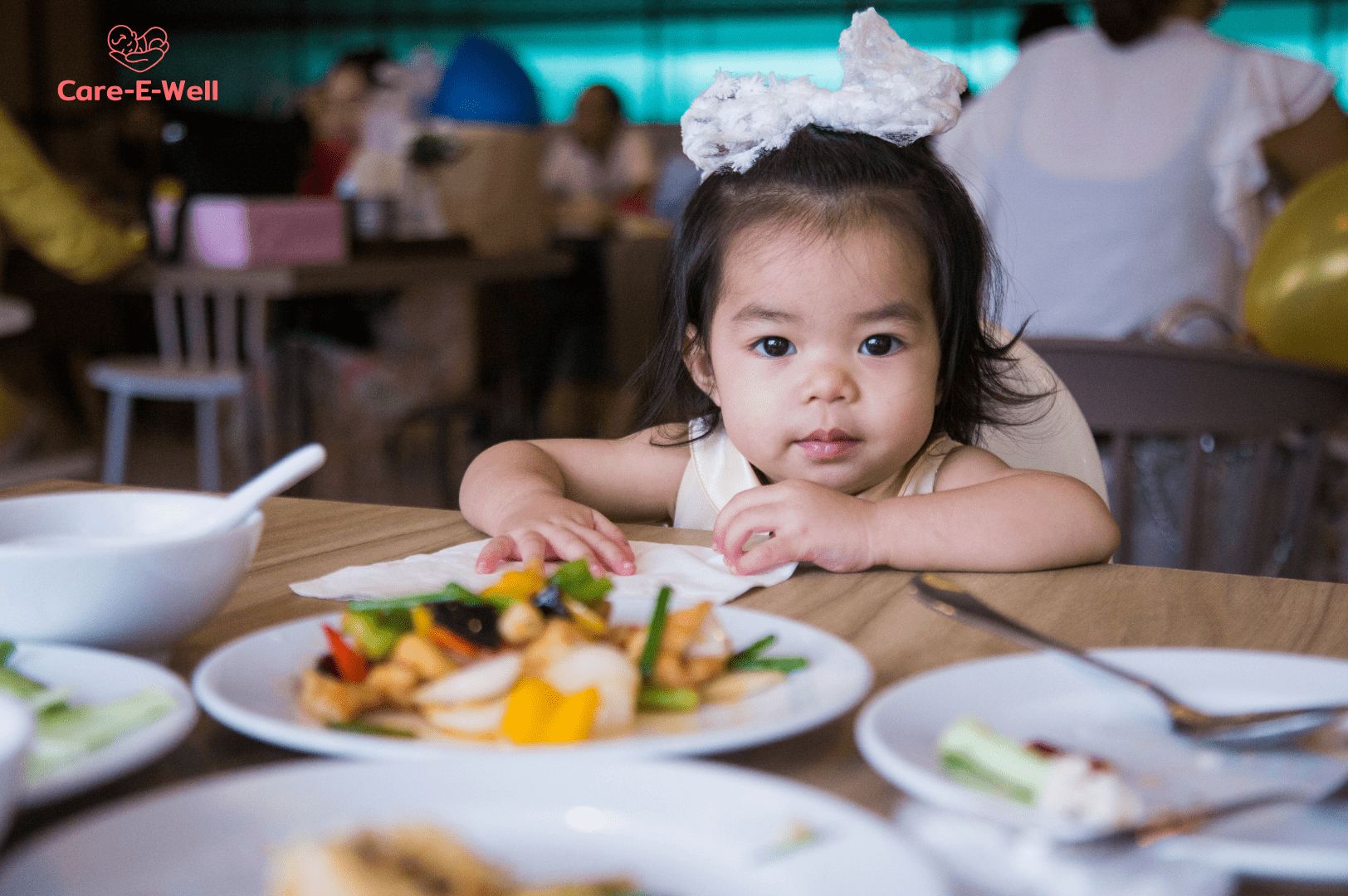
Eating out with a baby who has started solids does not require a suitcase of specialist foods or a perfectly timed restaurant meal. It does require a little planning around texture, hygiene, allergens, milk feeds and your baby's usual feeding skills.
The easiest approach is to keep the meal familiar in structure even when the setting is new. Choose foods your baby can manage safely, ask clear questions about ingredients, keep feeding responsive rather than trying to make the baby perform in public, and bring a simple backup option in case the menu does not work.
Do not measure a successful restaurant meal by how much your baby eats. Safe participation, exploration and a calm family experience are enough.
What should you plan before eating out?
Think about three things before you leave: what your baby can currently eat, when they are likely to be hungry, and what you will do if the restaurant cannot provide an appropriate option.
A baby early in complementary feeding may still take only small amounts of solid food. Breast milk or infant formula remains important, so the restaurant meal does not need to replace a milk feed simply because the family is eating.
Check the menu when possible
Look for simple foods you can adapt without relying on a special children's menu. Soft vegetables, plain grains, beans, egg, yogurt, tender meat or fish and suitable fruit may all work depending on your baby's age, allergy history and feeding skills.
Avoid assuming a dish is suitable because it looks simple. Sauces, dressings, marinades, stocks and toppings can change salt, sugar and allergen content.
Bring a backup food
A small familiar option can remove pressure from the meal. The backup is not a sign that eating out has failed; it gives you flexibility if the kitchen cannot adapt a dish or your baby is too distracted to manage something new.
If you transport perishable food, maintain safe temperature control. WHO and EFSA recommend keeping perishable food cold and avoiding prolonged time at room temperature.

How to choose food from a restaurant menu
Prioritise a manageable texture
WHO recommends gradually increasing food consistency and variety in line with the child's development. Choose foods your baby can already handle or a modest next step, rather than using a restaurant as the moment to introduce a difficult texture.
Ask the kitchen to leave off hard garnishes or whole high-risk pieces where possible. You can mash, shred or cut food at the table to match the baby's current skills.
Choose simple foods over heavily processed options
WHO's complementary-feeding guideline recommends diverse, nutrient-dense foods and advises limiting foods high in sugar, salt and unhealthy fats. Restaurant children's menus often feature salty fried foods or sweet options, but babies do not need a separate "kid food" category.
A well-cooked portion of the family meal, adapted to the baby's skills, can often be more useful than a processed children's dish.
Check temperature before serving
Food served hot to adults may be too hot for a baby. Allow it to cool and check the temperature before offering it. Do not repeatedly blow on or taste from the baby's spoon if you are trying to keep utensils separate and hygienic.
What about allergens when eating out?
In the European Union, restaurants, cafés and other providers of non-prepacked food must provide information about the presence of the 14 regulated allergens. That includes milk, egg, peanut, nuts, soy, fish, gluten-containing cereals, sesame and others.
Ask specific questions rather than saying only, "Is this safe for a baby?" If your child has a known allergy, name the allergen, ask which ingredients the kitchen uses and discuss cross-contact concerns. EU law requires allergen information, but it does not mean every kitchen can guarantee an allergen-free environment.
If your baby has a diagnosed food allergy or has previously had a significant reaction, follow the individual emergency and avoidance plan provided by their healthcare team when eating away from home.
Should you introduce a new allergen at a restaurant?
A busy restaurant is usually not the most controlled setting for a first exposure to a food you are specifically introducing as an allergen. At home you know exactly what you served and can observe the baby without travel or menu uncertainty.
After your baby has tried and tolerated a food, you can include it in meals outside the home, subject to your baby's individual allergy advice.
Hygiene when eating out with a baby
WHO's Five Keys to Safer Food apply outside the home too: clean hands, separation of raw and cooked foods, thorough cooking, safe temperatures and safe water and ingredients.
Wash or clean your hands before feeding the baby. Keep the baby's spoon and cup off obviously dirty surfaces. If you bring food from home, use clean containers and do not leave perishable food warm for extended periods.
Can a baby share food from an adult plate?
It can be practical to share suitable parts of an adult meal, but separate the baby's portion before adding extra salt, sauces or hard garnishes. Also separate it before multiple adults have eaten from the same food if you want to reduce saliva contamination.
Sharing family food can support the gradual transition to ordinary foods when texture and ingredients are appropriate.
How to handle restaurant distractions
Babies can eat very differently in a new environment. Noise, people, movement and unfamiliar seating may reduce appetite or make them more interested in watching than eating.
Do not compensate by pushing more bites. Responsive feeding means noticing the baby's cues and allowing them to stop. If they eat very little, continue the usual feeding rhythm later rather than turning the restaurant meal into a prolonged negotiation.
What if the baby throws food?
Throwing can be part of exploration, communication or a sign that the baby has finished. Offer small amounts at a time so food does not overload the table or tray.
Calmly remove food that is repeatedly thrown and decide whether the baby needs a pause. Public embarrassment is not a reason to force-feed or punish a baby for developmentally normal mess.
What should you bring?
- A bib and wipes or cloths.
- A familiar spoon if your baby uses one.
- The baby's usual cup.
- One simple backup food that travels safely.
- A clean container for any food you plan to portion.
- Any prescribed allergy medication or emergency plan relevant to your child.
- A small bag for messy items after the meal.
Keep the kit small. The purpose is to make ordinary family life easier, not to recreate your kitchen at the restaurant.
A simple ordering strategy
- Scan for a simple source of protein or iron, such as egg, beans, tender meat or fish where appropriate.
- Add a soft vegetable, fruit, grain or potato that can be adapted to the baby's texture.
- Ask for sauces, dressings and salty toppings separately when possible.
- Confirm allergen information if relevant.
- Portion the baby's food before adults heavily season or eat from it.
- Cut, mash or shred it to a safe texture.
- Offer a small amount and follow hunger and fullness cues.
What if there is nothing suitable on the menu?
Use the backup food and let the baby participate socially in the meal. One restaurant outing does not need to provide nutritional perfection. Across days, dietary variety matters more than making every individual meal complete.
If you frequently eat out, choose restaurants where staff can answer ingredient questions and adapt simple foods. Familiarity reduces stress for both parents and staff.

Long meals and milk feeds
Babies may not fit neatly into adult restaurant schedules. If a breastfeed or bottle is due, feed the baby rather than delaying just because you ordered solid food. Complementary feeding is a gradual addition to milk feeding, not an immediate replacement.
A restaurant may also coincide with tiredness. If the baby is too tired to eat safely and calmly, it can be better to stop solids and return to the normal routine later.
Frequently asked questions
Can my baby eat restaurant food with salt in it?
A small amount of family food occasionally is different from routinely choosing high-salt foods. WHO recommends limiting foods high in salt during complementary feeding, so choose plain or lightly seasoned options when available.
Are restaurant purées safer than finger foods?
Safety depends on preparation, hygiene and whether the texture matches the baby's skills. A smooth texture is not automatically safer if staff stored or handled the food poorly.
Should I bring a full meal from home every time?
Not necessarily. A backup option is useful, but many restaurants can provide simple foods that you can adapt. The more important skills are asking questions, choosing manageable textures and keeping feeding responsive.
What if my baby barely eats anything?
That can happen in a stimulating environment. End the meal when the baby consistently refuses, continue appropriate milk feeds and return to the usual routine later.
Conclusion
Eating out with a baby who has started solids becomes easier when you focus on a few essentials: safe texture, clean handling, clear allergen questions, modest expectations and responsive feeding. You do not need a perfect baby menu.
Bring one reliable backup, adapt simple family foods where possible, and let the baby take part without pressure. The outing is also a learning experience, not only a nutrition task.
Sources and References
- World Health Organization — WHO Guideline for complementary feeding of infants and young children 6–23 months of age — https://www.who.int/publications/i/item/9789240081864
- World Health Organization — Infant and young child feeding — https://www.who.int/news-room/fact-sheets/detail/infant-and-young-child-feeding
- World Health Organization — Complementary feeding — https://www.who.int/health-topics/complementary-feeding
- World Health Organization — Five keys to safer food — https://www.who.int/activities/promoting-safe-food-handling/five-key-to-safer-food
- UNICEF Parenting — Feeding your baby: 6–12 months — https://www.unicef.org/parenting/food-nutrition/feeding-your-baby-6-12-months
- UNICEF — Your baby's first foods — https://www.unicef.org/lac/en/parenting-lac/food-nutrition/babys-first-foods-video
- EFSA — Proper food handling — https://www.efsa.europa.eu/en/safe2eat/proper-food-handling
- European Commission — Allergies: allergen information in restaurants and cafés — https://food.ec.europa.eu/food-safety/campaign-2026/allergies_en
- European Commission — Mandatory food information — https://food.ec.europa.eu/food-safety/labelling-and-nutrition/food-information-consumers-legislation/mandatory-food-information_en
- European Commission — Food information to consumers legislation — https://food.ec.europa.eu/food-safety/labelling-and-nutrition/food-information-consumers-legislation_en
Estimated reading time: 9 minutes
Did this Insight help?
A little love for something worth reading.


