
Care-E-Well Insights
How Many Wet Diapers Should a Newborn Have?
How many wet diapers should a newborn have? Learn the six-diaper benchmark, early-day variation and warning signs of low urine output.
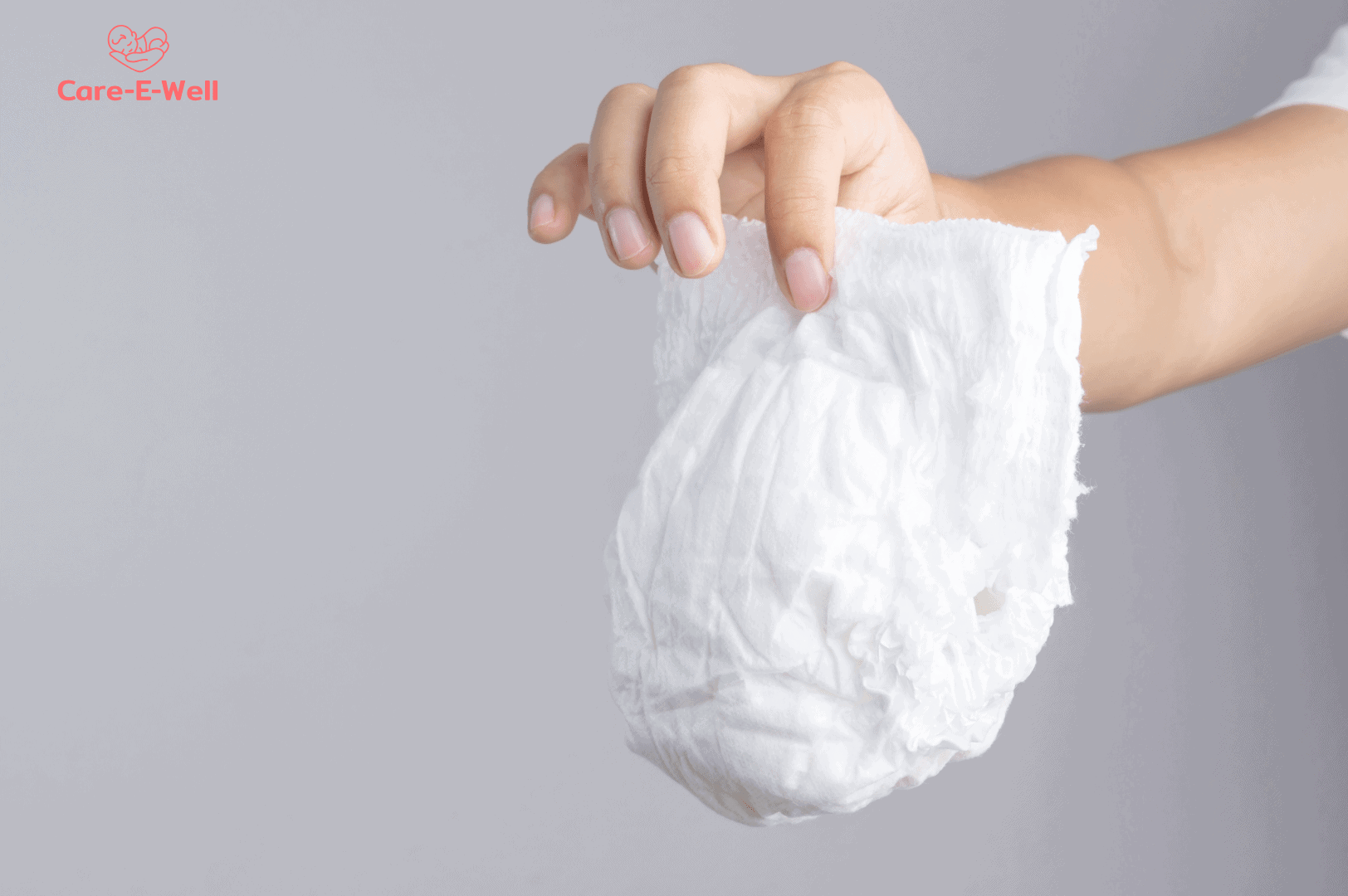
How many wet diapers should a newborn have? After the first few days, a well-fed newborn will usually produce at least six clearly wet disposable diapers in 24 hours. WHO uses at least six wet single-use nappies a day as one reassuring sign that a breastfed baby is taking in enough milk, together with normal growth and appropriate stool output.
The first days are different because milk intake and urine output are still increasing. Rather than judging one diaper in isolation, look at the trend: wet diapers should become more frequent as feeding becomes established. A sudden fall in urine output, no urine for many hours, poor feeding, unusual sleepiness or other signs of illness deserve prompt medical advice.
Wet diapers are a useful hydration clue, but they are not a stand-alone test of milk intake. Growth, feeding effectiveness, alertness and stool pattern matter too.
How many wet diapers are expected after the first few days?
Once feeding is established, at least six wet disposable diapers over 24 hours is a useful rule of thumb. WHO specifically lists at least six wet single-use nappies, or at least eight washable nappies, as a reassuring sign for a breastfed baby when stool output and growth are also appropriate.
UNICEF guidance similarly advises looking at the whole picture rather than counting feeds or minutes at the breast. After the first four days, fewer than six wet diapers per day can be one sign that a baby may not be taking in enough milk.
Some babies will wet more than six. The number is a lower-limit clue, not a target that a baby must hit exactly.
What about the first four days after birth?
Urine output normally builds during the first days as the baby moves from small amounts of colostrum to larger milk volumes. A newborn may not produce six heavy wet diapers immediately after birth.
Hospitals and maternity teams often monitor urine and stool alongside feeding, weight and general condition during this transition. If your baby is still in the first few days, use the discharge plan or feeding instructions from your maternity team rather than applying a later-newborn number too rigidly.
What matters is progression. The diapers should become wetter and more frequent as intake increases, rather than becoming progressively fewer.
How can you tell whether a diaper is truly wet?
Modern disposable diapers can feel surprisingly dry on the surface because the absorbent core pulls liquid away from the skin. A urine-indicator line can help when the diaper has one, but it is not essential.
If you are unsure how a wet diaper feels, pour a small measured amount of water into a clean diaper of the same type once, away from the baby, simply to learn the difference in weight and fullness. Do not try to estimate exact urine volume from how heavy a used diaper feels at home.
Cloth diapers behave differently and may need more frequent changing. That is why WHO gives a separate reference of at least eight washable nappies per day when using diaper output as a breastfeeding clue.

Does every small pee count as one wet diaper?
Not necessarily. A baby can urinate more than once into the same diaper, especially overnight or when a highly absorbent disposable diaper is used.
The practical goal is not to count individual urinations. Count clearly wet diapers over the day while also watching how the baby feeds, wakes, behaves and gains weight.
What colour should newborn urine be?
Newborn urine is usually pale yellow once intake is established. Very concentrated urine may look darker, especially when a baby is taking in less fluid.
In the first days, parents sometimes notice pink, orange or brick-coloured staining from urate crystals. This can occur during the early newborn transition, but persistent or repeated staining—especially with fewer wet diapers, poor feeding or weight concerns—should be discussed with a healthcare professional rather than assumed to be harmless.
Red urine, obvious blood, very dark brown urine or unusual staining that continues needs medical assessment.
Can a very absorbent diaper hide reduced urine output?
Yes. Large disposable diapers can spread a small amount of urine through a broad absorbent core, making the diaper look less obviously wet than expected. This is one reason trends are more useful than visual impressions.
If you are worried about hydration, do not rely on the diaper indicator alone. Count output over 24 hours and consider feeding, weight, mouth moisture, alertness and the baby's overall appearance.
What other signs suggest a newborn is getting enough milk?
Diaper output is most reassuring when it agrees with the rest of the picture. WHO and UNICEF emphasise responsive feeding and monitoring growth rather than using feed duration as a proxy for intake.
- the baby feeds effectively and regularly
- swallowing can be heard or seen during at least some feeds
- wet diaper output is appropriate for age
- stools are progressing normally for the baby's feeding pattern
- the baby wakes for feeds and has periods of normal alertness
- weight is being monitored and follows an appropriate trajectory
No single item proves intake is adequate. A baby can have frequent feeds and still transfer milk poorly, while another may feed efficiently in shorter sessions.
Does the six-wet-diaper rule apply to formula-fed newborns?
A formula-fed newborn should also produce regular urine when intake is adequate. However, the WHO six-wet-nappy statement is presented specifically as one sign that a breastfed baby is receiving enough breast milk.
For a formula-fed or combination-fed newborn, wet diaper output is still useful, but feeding volumes, weight and clinical context also matter. Follow the feeding plan given by your maternity or paediatric team, especially for premature babies, babies with jaundice or babies being monitored for weight gain.
What if a newborn suddenly has fewer wet diapers?
A noticeable fall from the baby's usual pattern matters more than one isolated lighter diaper. Reduced urine can reflect lower intake, increased fluid loss from vomiting or diarrhoea, illness or another medical problem.
UNICEF lists fewer wet diapers as a dehydration warning sign, particularly when combined with a dry mouth, unusual sleepiness or other changes.
Seek prompt medical advice if a newborn is producing clearly fewer wet diapers than expected, is feeding poorly, is unusually sleepy or difficult to wake, has repeated vomiting or diarrhoea, or looks unwell.
How long is too long without a wet diaper?
UNICEF's newborn warning-sign guidance advises contacting a healthcare professional if a baby is no longer urinating, particularly when there has been no urine for around eight hours.
A newborn who has gone many hours without urine should not simply be offered extra water. WHO recommends exclusive breastfeeding for the first six months when breastfeeding is established, with no additional water, and formula should always be prepared according to its instructions rather than diluted.
If urine output is low, the priority is to work out why the baby is not taking in or retaining enough fluid.
Can heat reduce the number of wet diapers?
Hot weather can increase fluid needs, but exclusively breastfed babies under six months do not need additional water simply because it is warm. WHO states that breast milk supplies the water a baby needs during exclusive breastfeeding.
Feed responsively and watch the baby. A marked reduction in urine, lethargy, a very dry mouth or other signs of dehydration still need medical advice.
Do stool and urine patterns need to be considered together?
Yes. During the first days, urine and stool changes are both useful signs of feeding transition. UNICEF notes that newborn stool moves from dark sticky meconium toward lighter transitional stool as milk intake increases.
If a newborn has both low urine output and very little stool after the early days, particularly with poor feeding or excessive weight loss, the baby should be assessed rather than waiting for the diaper count to improve on its own.

What if the baby is premature or medically fragile?
Preterm, low-birth-weight and medically complex newborns may have individual fluid, feeding and urine-output targets. General diaper-count rules should not replace the plan from the neonatal team.
WHO recommends additional feeding, growth and danger-sign monitoring for small and sick newborns. If your baby has recently left neonatal care, use the discharge plan as the primary reference.
Should you track every diaper?
You do not have to keep a permanent spreadsheet. During the first days or when feeding is being assessed, a simple 24-hour note can be useful because sleep deprivation makes counts easy to forget.
- note the time of each clearly wet diaper
- mark stools separately
- note feeds only if your maternity or lactation team has asked you to
- record any vomiting, diarrhoea or unusual sleepiness
- bring the record to the appointment if output is concerning
Once feeding and growth are clearly established, many families stop counting unless something changes.
Frequently asked questions
Is exactly six wet diapers required every day?
No. Six is a useful lower-limit rule of thumb after the first days, not a perfect daily target. Many healthy babies produce more.
Does a wetness indicator line prove the baby peed enough?
No. It only shows that moisture reached the indicator. It does not measure hydration or milk intake.
Can I give water if my newborn has fewer wet diapers?
Do not give extra water to a young baby unless a healthcare professional specifically instructs you to. Low urine output needs assessment of feeding and hydration.
Is one dry night diaper always a problem?
One lighter diaper can happen, but a clear change from the baby's usual pattern or many hours without urine deserves attention, especially in a newborn.
When should I call a doctor?
Call promptly for substantially reduced urine, around eight hours without urination, poor feeding, repeated vomiting or diarrhoea, unusual sleepiness, fever or a baby who otherwise looks unwell.
The key takeaway
After the first few days, how many wet diapers should a newborn have? At least six clearly wet disposable diapers in 24 hours is a useful reassuring benchmark, but it should be interpreted alongside feeding, stool output, growth and the baby's general condition. During the first days, look for urine output to increase as feeding becomes established. A sudden drop, many hours without urine or reduced output with poor feeding or lethargy needs prompt medical advice.
Sources and References
- World Health Organization — Breastfeeding: Questions and answers
- UNICEF Serbia — How do I know my baby is getting enough breastmilk?
- UNICEF Parenting — Newborn baby health: Mini Parenting Master Class
- UNICEF Parenting — Newborn health warning signs
- World Health Organization — Caring for a newborn
- World Health Organization Regional Office for Europe — Newborn health
- World Health Organization — WHO recommendations on maternal and newborn care for a positive postnatal experience
- World Health Organization — Essential newborn care course, second edition
- UNICEF Europe and Central Asia — How often should a newborn feed?
Did this Insight help?
A little love for something worth reading.


