
Care-E-Well Insights
How Much Sleep Do Babies Need by Age?
How much sleep do babies need by age? See practical 24-hour ranges for newborns, infants and toddlers, including naps.
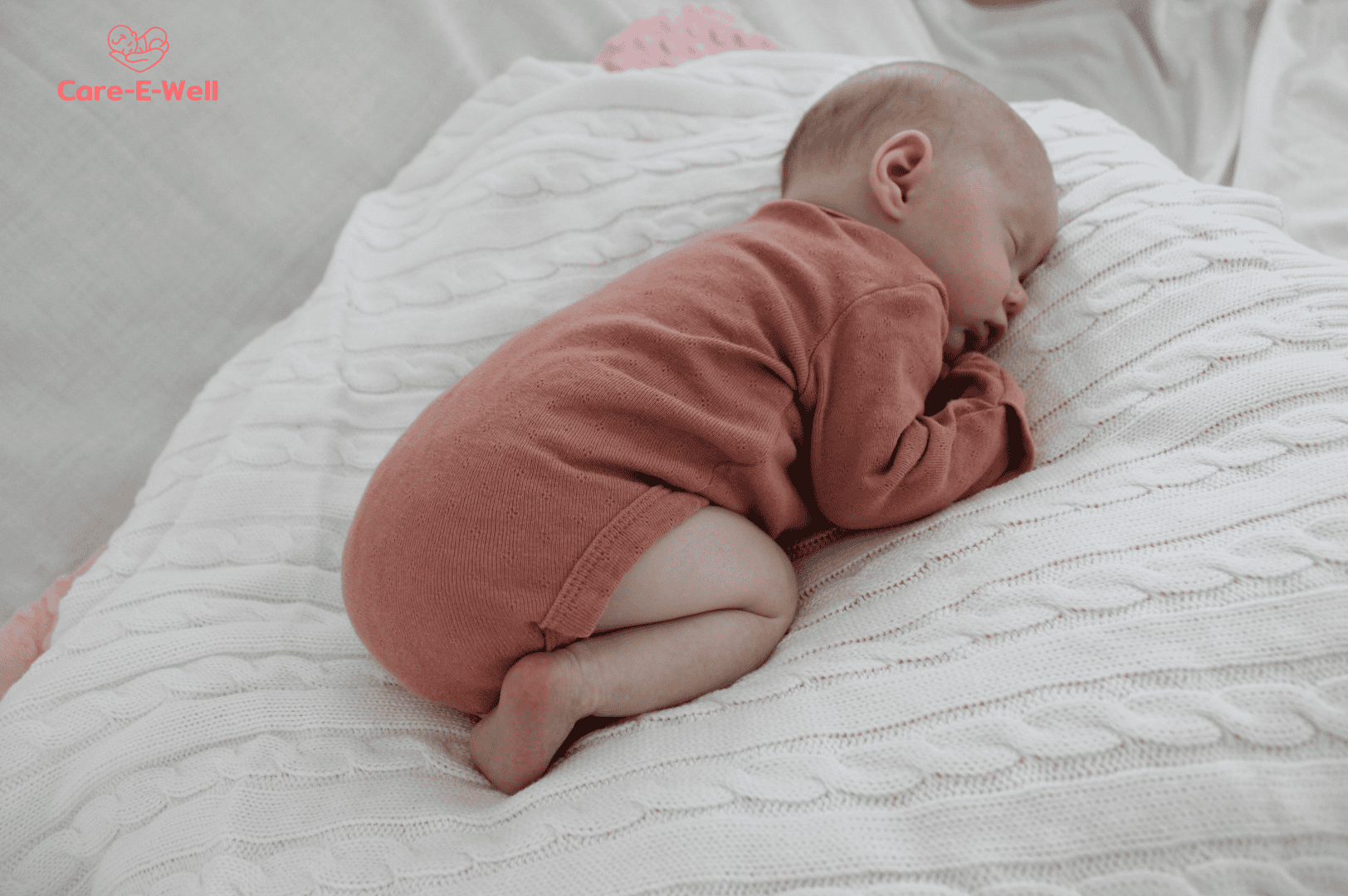
How much sleep do babies need by age? The answer is best given as a broad range, not an exact daily target. WHO guidance suggests about 14–17 hours of sleep in 24 hours for babies up to 3 months and 12–16 hours for babies aged 4–11 months, including naps. From 1 to 2 years, the range is about 11–14 hours.
These ranges are useful orientation, but normal infant sleep varies substantially. A baby may sleep more one day and less the next, and two healthy babies of the same age may have very different nap lengths, bedtimes and night-waking patterns. Look at the pattern over time together with feeding, growth, alertness and wellbeing.
Sleep ranges are guides, not quotas. Total sleep over 24 hours matters more than matching an exact nap length or bedtime.
How much sleep do newborns need?
WHO guidance places babies up to 3 months at roughly 14–17 hours of total sleep per 24 hours. Newborn sleep is usually fragmented across day and night rather than concentrated into a long nighttime block.
In the first weeks, circadian rhythms are immature and feeding needs are frequent. A newborn may sleep for a couple of hours, wake to feed and return to sleep repeatedly across the day.
Is 14–17 hours a strict newborn requirement?
No. It is a population-level range, not a diagnostic threshold. Research reviews show wide variation in reported newborn sleep depending on the baby, the measurement method and the population studied.
A newborn who sleeps somewhat outside the range is not automatically unhealthy. Concern rises when unusual sleep accompanies poor feeding, difficult waking, low urine output, poor growth, breathing problems or illness.
How much sleep do babies aged 4–11 months need?
WHO guidance suggests about 12–16 hours of total sleep in 24 hours, including naps. Across this period, sleep usually becomes more concentrated at night and daytime sleep gradually reduces.
The change is progressive rather than a switch at 4 months. Some babies have long nighttime stretches early; others continue waking several times. Both can fall within normal development.

How much sleep do 4- to 6-month-old babies need?
The broad 12–16-hour range still applies. At this stage, many babies have more noticeable day-night organisation and several daytime naps, but exact nap number and duration vary.
Do not assume that a baby needs less sleep simply because naps become shorter. Add the whole 24-hour pattern before deciding whether total sleep is low.
How much sleep do 7- to 9-month-old babies need?
The same broad 12–16-hour guidance applies. Many babies gradually consolidate daytime sleep into fewer naps as wake periods lengthen, but there is no universal month when a particular nap must disappear.
Motor development, illness, teething discomfort and changing feeding patterns can temporarily alter sleep without changing the child's underlying sleep requirement.
How much sleep do 10- to 12-month-old babies need?
Babies under 12 months remain within the 12–16-hour WHO range. Near the first birthday, many sleep most of their total hours at night and continue one or more daytime naps.
A 12-month-old who still needs two naps is not necessarily “behind,” and a child transitioning toward one nap is not automatically advanced. Nap transitions should fit the child's actual sleepiness and nighttime pattern.
How much sleep do 1- to 2-year-olds need?
WHO guidance suggests around 11–14 hours in 24 hours, including naps. Toddlers often have a more predictable nighttime period and fewer daytime sleep episodes than babies.
Many toddlers continue one daytime nap, but the timing of nap reduction varies. Behaviour, childcare schedules and family routines also influence when sleep happens.
Does all baby sleep need to happen at night?
No. Total sleep includes naps. Newborns obtain a large proportion of sleep during the day, while older infants gradually shift more sleep to nighttime as circadian rhythms mature.
A baby with several substantial naps may have a shorter nighttime total and still obtain an adequate amount across 24 hours.
How much nighttime sleep is normal?
There is no single nighttime number that applies to every baby because total sleep is divided differently between day and night. A systematic review found the longest nighttime sleep period generally increases during the first months, but variation remains large.
“Nighttime sleep” also does not necessarily mean uninterrupted sleep. A baby may accumulate many hours overnight while still waking to feed or resettle.
How many naps should a baby take?
Nap number decreases with development, but exact age charts should be treated cautiously. Newborns have multiple sleep episodes throughout the day. Over later infancy, these usually consolidate into fewer naps.
The most useful sign that a nap pattern is changing is not the baby's birthday. Look for repeated difficulty falling asleep at the usual nap, consistently short naps combined with a stable mood, or bedtime shifting because daytime sleep no longer fits.
Do short naps mean a baby is not sleeping enough?
Not necessarily. Some babies take short naps and compensate with more sleep at night or another nap later. A single 30-minute nap cannot tell you whether total sleep is adequate.
If short naps are accompanied by persistent irritability, very long periods awake, difficult settling and consistently low total sleep, review the whole routine rather than trying to lengthen one nap at any cost.
Can a baby sleep too much?
Some babies naturally sleep at the upper end of a normal range. More sleep is concerning when it represents a marked change or the baby cannot wake sufficiently for feeding and normal interaction.
Seek prompt medical assessment if a baby is unusually difficult to wake, feeds substantially less than normal, has abnormal breathing, is unusually floppy, has concerning colour changes or otherwise appears unwell.
Can a baby sleep too little?
One short day is usually not meaningful. Persistent low sleep can be associated with overtired behaviour, difficult settling and family exhaustion, but the number alone does not diagnose a disorder.
Consider whether pain, illness, eczema, reflux symptoms, breathing problems, an unsuitable schedule or an overstimulating environment is interfering. If sleep remains markedly reduced or the child seems unwell, discuss it with a healthcare professional.

Why do published sleep numbers differ?
Sleep studies use different methods. Parent questionnaires, sleep diaries, actigraphy and video observation do not always produce identical estimates. Studies also include different countries and cultural routines.
Castro Dias and colleagues found broad variability in infant sleep reference values across the first year. This is one reason precise month-by-month “ideal sleep” tables can give a false impression of certainty.
Does culture affect baby sleep?
Yes. Bedtime, nap timing, room-sharing practices and family schedules vary between countries and cultures. Cross-cultural studies show that sleep timing and routines can differ even when children are healthy.
The goal is not to reproduce one culture's schedule. Focus on adequate total sleep, safe sleep, a workable family rhythm and a child who is generally alert and functioning well when awake.
How should you track total sleep?
- Choose two or three ordinary days rather than one unusual day.
- Note when the baby actually sleeps, not only when you start the bedtime routine.
- Add nighttime sleep and naps together.
- Include normal night wakings as awake time if they are prolonged.
- Compare the pattern with broad age guidance rather than an exact internet schedule.
- Look at feeding, mood, alertness and growth alongside the sleep total.
Tracking can be useful temporarily when you are trying to understand a pattern. It does not need to become a permanent monitoring task if sleep and development are going well.
What matters more than the exact number?
- Safe sleep position and environment.
- Effective feeding and appropriate growth.
- Normal periods of alertness when awake.
- A sleep pattern that is reasonably workable for the family.
- Absence of concerning breathing or illness signs.
- Gradual developmental change rather than abrupt unexplained deterioration.
A healthy sleep pattern is more than a number. Safety, feeding, growth and how the baby functions when awake provide essential context.
Frequently asked questions
Is 12 hours of sleep enough for a baby?
It depends on age. Twelve hours is below the WHO range for a newborn but within the broad range for babies aged 4–11 months. Look at total sleep over several days and the child's wellbeing.
Should I wake my baby from naps to protect night sleep?
Not routinely, especially in young babies. In an older infant, a consistently late or very long nap may shift bedtime, but changes should consider total sleep and the child's cues.
Does a baby need exactly the same amount of sleep every day?
No. Daily variation is normal. Use several days to understand the pattern rather than trying to reproduce an identical total every 24 hours.
When should I ask a doctor about sleep duration?
Ask for assessment when unusually high or low sleep is persistent, represents a major change, or occurs with poor feeding, breathing problems, poor growth, severe daytime sleepiness or other illness signs.
Sources and references
- World Health Organization — Making sure newborns and children under 5 years sleep safely
- UNICEF UK Baby Friendly Initiative — Sleep and night-time resources
- Castro Dias C, Figueiredo B, Rocha M, Field T — Reference values and changes in infant sleep-wake behaviour during the first 12 months of life: a systematic review
- Chaput JP, Gray C, Poitras VJ, et al. — Systematic review of the relationships between sleep duration and health indicators in the early years (0–4 years)
- Paavonen EJ, Morales-Muñoz I, Pölkki P, et al. — Development of sleep-wake rhythms during the first year of age
- Lenehan SM, Fogarty L, O'Connor C, et al. — The Architecture of Early Childhood Sleep Over the First Two Years
- Messayke S, Davisse-Paturet C, Nicklaus S, et al. — Sleep habits and sleep characteristics at age one year in the ELFE birth cohort study
- Jeon M, Dimitriou D, Halstead EJ — A Systematic Review on Cross-Cultural Comparative Studies of Sleep in Young Populations: The Roles of Cultural Factors
- Perrella SL, Dix-Matthews A, Williams JE, et al. — Breastfeeding and Maternal Perceptions of Infant Sleep, Settle and Cry Patterns in the First 9 Months
Did this Insight help?
A little love for something worth reading.


