
Care-E-Well Insights
How Often Should You Bathe a Baby?
Find out how often to bathe a baby, when two or three baths a week is enough, and how to adjust the routine for delicate skin.
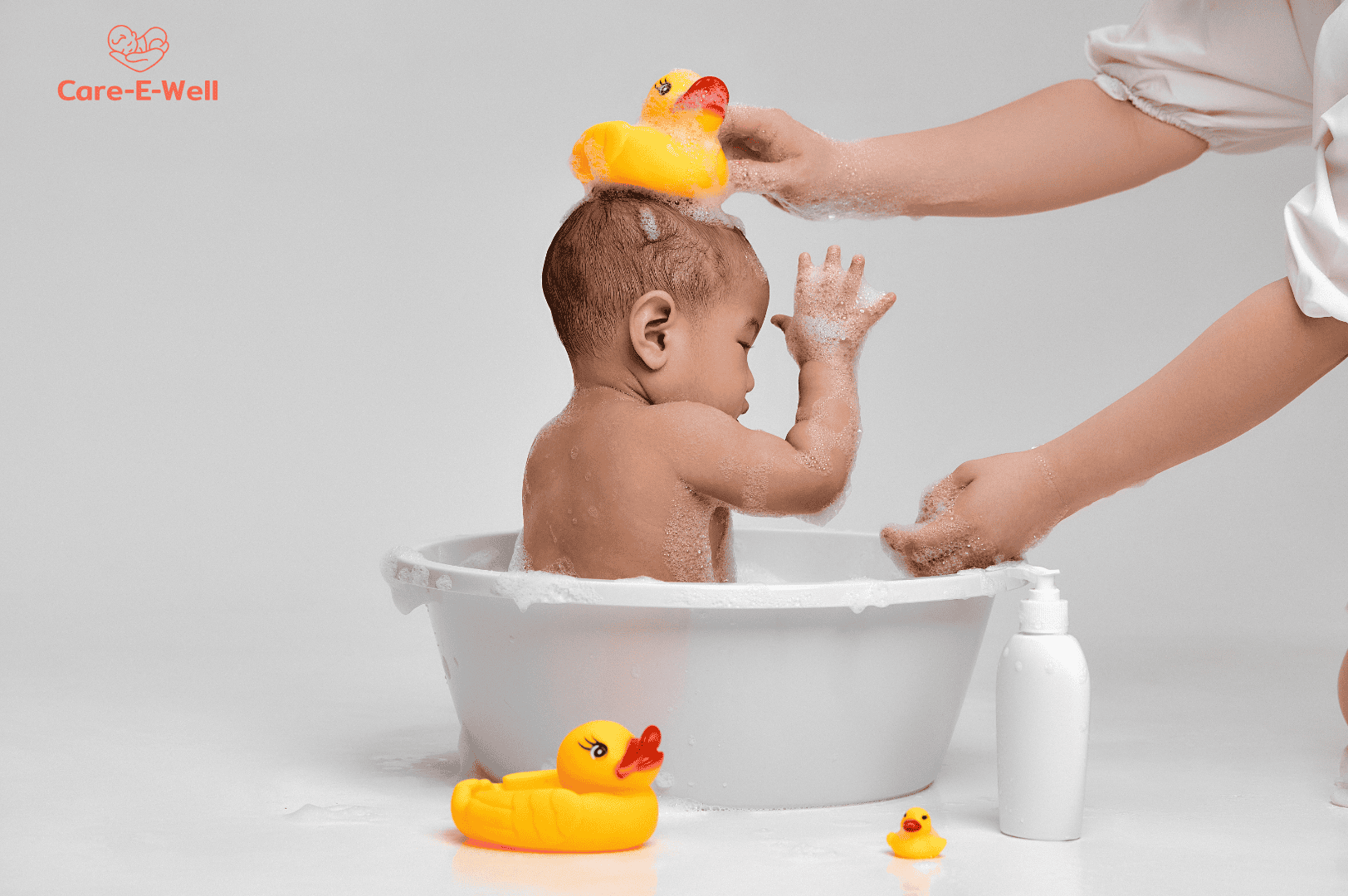
If you are wondering how often should you bathe a baby, there is no need to make a full bath part of every day. For many newborns and young babies, about two or three baths a week is a practical starting point, with gentle cleaning of the face, neck folds, hands and nappy area as needed between baths.
Babies differ, though. A warm-weather baby who gets sweaty or a baby who enjoys a short bath may bathe more often, while a newborn with dry or sensitive skin may do better with fewer full baths. The goal is comfortable hygiene without turning bathing into a routine that dries or irritates the skin.
A baby does not need a daily full bath to be clean. Two or three baths a week is often enough for a young baby, while spot cleaning handles everyday milk, dribble and nappy mess.
Is there one correct bathing frequency for every baby?
No. Research has not established one universal bathing schedule that every healthy infant must follow. A European expert roundtable on healthy infant skin care recommended bathing at least two to three times per week, noting that this was the minimum frequency used in the clinical studies they reviewed. UNICEF Uruguay gives a similar practical pattern for newborn care, suggesting bathing every two or three days once the umbilical cord has fallen and the navel is dry.
Those recommendations are useful guides rather than rigid rules. Your baby’s age, skin condition, climate, activity and family routine all matter. What matters most is that baths are safe, brief, comfortably warm and gentle on the skin.
How often should you bathe a newborn?
During the newborn period, you can keep hygiene simple. WHO recommends delaying the first bath for at least 24 hours after birth and prioritising warmth, skin-to-skin contact and feeding. After that, you still do not need to bathe a healthy newborn every day.
Between full baths, clean areas that actually become dirty. Milk can collect under the chin and in neck folds, spit-up can reach the hair, and the nappy area needs careful cleaning at every change. This targeted care usually keeps a newborn comfortable without unnecessary whole-body washing.
What about before the umbilical cord falls off?
Cord-care advice can vary by country and maternity service. WHO recommends keeping the stump clean and dry. UNICEF Uruguay advises partial washing with a damp sponge until the cord falls off, followed by regular bathing once the navel is dry. If your maternity team gave specific instructions, follow those instructions for your baby.
Does bathing every day harm a baby’s skin?
Not automatically. The evidence is more nuanced than “daily baths are bad.” Healthy infant skin can tolerate bathing, and randomized studies have found that appropriately formulated infant wash products can be compatible with normal skin-barrier development. However, bath frequency is only one part of the picture.
Long baths, very hot water, harsh soaps, repeated rubbing and unsuitable cleansers can all make dryness or irritation more likely. Observational research has also explored links between frequent bathing and atopic dermatitis, but observational associations do not prove that bathing itself causes eczema. Families should therefore focus on the complete skin-care routine rather than counting baths alone.
If your baby’s skin stays soft and comfortable, your routine is probably working. If it becomes dry, rough, red or irritated, shorten baths, review products and consider bathing less often.
What does the evidence say about baby skin care?
Infant skin is a functioning barrier at birth in healthy term babies, but it continues to mature after birth. Reviews of infant skin care emphasise mild cleansing and avoiding products that disrupt the skin surface. Traditional alkaline soap can be more irritating than appropriately formulated infant cleansers.
Clinical trials have compared water-only bathing with mild liquid cleansers. These studies generally did not find that carefully formulated baby cleansers damaged skin-barrier development in healthy term infants. That does not mean a cleanser is necessary at every bath. Plain water may be enough for much of the body, while a small amount of gentle cleanser can help where milk, stool, sunscreen or other residue needs removing.
When might a baby need more frequent bathing?
Some babies genuinely need more frequent washing. The answer should depend on what is happening on the skin rather than on a fixed calendar.
- Your baby has been sweating heavily in warm weather.
- Milk or spit-up repeatedly collects in skin folds.
- Your older baby is eating solid foods and regularly gets food into the hair or on the body.
- Your baby has been swimming and needs chlorine or other pool residue rinsed away.
- A healthcare professional has recommended a particular bathing or skin-care routine.
- Your baby simply enjoys a short bath and their skin tolerates the frequency well.
Even when bathing more frequently, keep the routine gentle. More frequent bathing does not require more cleanser, stronger products or longer time in the water.
When might fewer baths be better?
If the skin looks dry or irritated, reducing bath frequency can be one useful adjustment. You can also shorten bath time, use comfortably warm rather than hot water, stop fragranced or harsh products and pat rather than rub the skin dry.
Babies with eczema or another diagnosed skin condition may need a different routine. Bathing recommendations for eczema can depend on the child’s treatment plan, emollients and prescribed products, so follow individual medical advice rather than assuming that either daily or infrequent bathing is always best.
Seek professional advice if your baby has widespread redness, weeping or crusted skin, blisters, signs of infection, a rapidly worsening rash, or seems unwell. Bathing frequency alone should not be used to manage a significant skin problem.
How should you clean a baby between baths?
“No bath today” does not mean “no hygiene today.” Small, targeted cleans are often exactly what a baby needs.
- Clean the nappy area thoroughly at each change and dry gently.
- Wipe milk and dribble from the chin, cheeks and neck folds when needed.
- Clean behind the ears and in other skin folds if moisture or residue collects there.
- Wash hands when they become dirty, especially once your baby starts grabbing objects and food.
- Use a soft damp cloth for visible dirt on the face or body.
- Change damp or soiled clothes promptly.
Check folds after cleaning because trapped moisture can irritate skin. Patting them dry is usually kinder than rubbing.
How long should a baby bath last?
A young baby does not need a long soak to become clean. Short baths are easier for temperature control and reduce prolonged exposure to water. Have the towel, clean nappy and clothes ready before you start so your baby can be dried and dressed promptly.
As babies get older, they may enjoy bath time as play and connection. Longer baths can be comfortable for some older infants, but direct adult supervision remains essential throughout the entire bath, regardless of how well a baby can sit.
Does a bath need soap every time?
No. Avoid thinking of cleanser as the thing that makes a bath “count.” For routine baby bathing, water does much of the work. When a cleanser is useful, choose one specifically formulated for infant skin and use a small amount.
Evidence reviews and trials favour mild, appropriately formulated cleansers over traditional harsh soap. If a product leaves the skin tight, flaky, red or stinging, stop using it and reassess the routine.
Should you moisturise after every bath?
Not every healthy baby needs moisturiser after every bath. If the skin tends to become dry, a simple fragrance-free emollient may help, but evidence around routine emollient use for preventing eczema is mixed and depends on the population and product. Do not assume that more skincare products automatically mean better skin.
If your baby has eczema, very dry skin or another diagnosed condition, ask a healthcare professional which emollient to use and how often. The treatment plan matters more than a generic bathing schedule.

How can you tell if your bathing schedule suits your baby?
Look at your baby, not just the calendar. A good bathing baby frequency leaves the skin comfortable and the baby clean enough for daily life. You should not need to scrub, use heavily fragranced products or extend bath time simply because a schedule says it is “bath day.”
- Skin feels soft rather than tight or rough.
- There is no persistent redness or irritation after bathing.
- Skin folds stay clean and dry.
- Your baby stays comfortably warm during and after the bath.
- The routine is manageable and calm for your family.
FAQ
Is bathing a baby once a week enough?
For some very young babies, one full bath a week may still be compatible with good hygiene if the nappy area, face, hands and skin folds are cleaned as needed. However, several infant skin-care recommendations and clinical-study routines use about two to three baths per week as a practical baseline.
Can I bathe my baby every night as part of bedtime?
You can if your baby enjoys it, stays warm and their skin tolerates it well. Keep the bath short, avoid hot water and harsh soap, and consider making some evenings a water-only bath. A bath is not medically necessary for sleep, so there is no reason to continue a nightly bath if it causes dryness or stress.
Should I bathe my baby more often in summer?
Sometimes. If your baby sweats more, gets sticky or has residue in skin folds, extra baths or quick rinses may be useful. You can also use targeted cleaning rather than adding a full bath every time.
How often should I wash my baby’s hair?
Baby hair usually does not need shampooing every day. Wash the scalp when it is visibly dirty, sweaty or oily, using water or a small amount of gentle infant shampoo when needed. If there is persistent scaling or a scalp condition, ask a healthcare professional for appropriate care.
Does a baby need a bath after every poo?
No. Clean the nappy area thoroughly during the nappy change. A full bath is only needed if stool has spread beyond the area you can clean comfortably.
The key takeaway
For parents asking how often should you bathe a baby, two or three full baths a week is a sensible starting point for many newborns and young infants, but it is not a compulsory schedule. Clean messy areas between baths, keep full baths short and gentle, and adjust the frequency according to your baby’s skin and daily life. Comfortable, healthy skin matters more than achieving a particular number of baths.
Sources/References
- World Health Organization — Caring for a newborn
- World Health Organization Regional Office for Europe — Newborn health
- UNICEF Uruguay — Cuidados del recién nacido: 10 consejos
- Blume-Peytavi U, Lavender T, Jenerowicz D, et al. — Recommendations from a European Roundtable Meeting on Best Practice Healthy Infant Skin Care
- Blume-Peytavi U, Hauser M, Stamatas GN, et al. — Skin Care Practices for Newborns and Infants: Review of the Clinical Evidence for Best Practices
- Lavender T, Bedwell C, Roberts SA, et al. — Randomized, Controlled Trial Evaluating a Baby Wash Product on Skin Barrier Function in Healthy, Term Neonates
- Lavender T, Bedwell C, O’Brien E, et al. — Infant skin-cleansing product versus water: A pilot randomized, assessor-blinded controlled trial
- Larson JH, Heinlein J, Morris CD, et al. — Frequency of newborn bathing in the first 9 weeks of life and related factors: An observational study in a community-based sample from Meta-LARC
- Telofski LS, Morello AP, Mack Correa MC, Stamatas GN — The Infant Skin Barrier: Can We Preserve, Protect, and Enhance the Barrier?
Did this Insight help?
A little love for something worth reading.


