
Care-E-Well Insights
How Tight Should a Car Seat Harness Be?
A car seat harness should be snug, flat and free of slack. Learn how to check fit, avoid bulky clothing and know when adjustment is wrong.
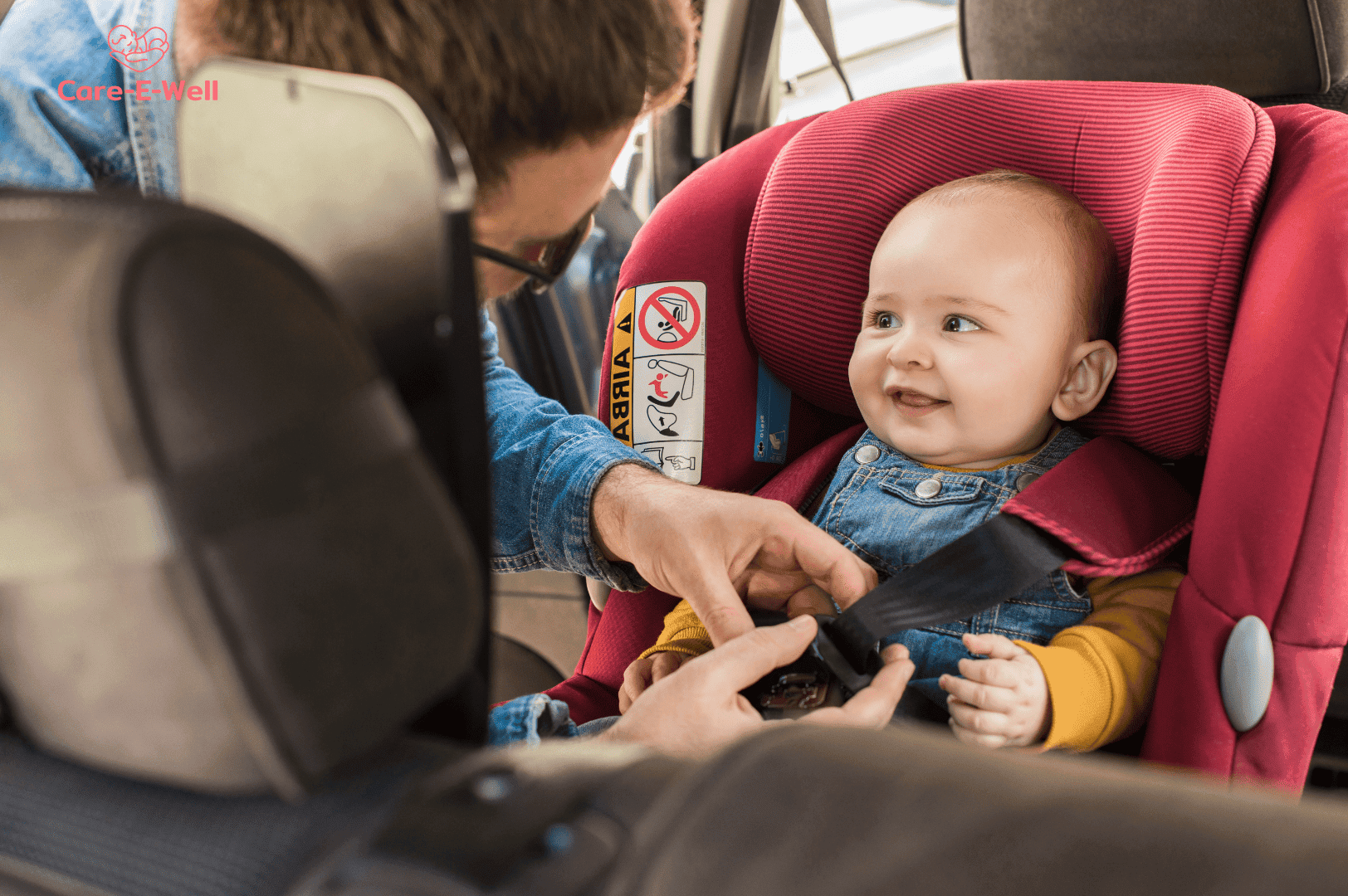
A car seat harness should be snug enough to lie close to the child’s body without avoidable slack, while remaining correctly positioned and comfortable enough for normal breathing. The webbing should lie flat rather than twisted, and the child should not be able to move substantially forward inside the harness before it begins restraining the body.
There is no single “pinch test” or finger-width rule that overrides every European child restraint. Harness designs differ, so the manufacturer’s instructions for the exact seat are the final reference.
Think “close, flat and correctly positioned,” not “as tight as physically possible.” The goal is to remove slack, not compress the child.
Why does harness tightness matter?
A harness works by controlling the child’s movement and distributing crash forces through the restraint system. If there is excessive slack, the child can gain additional movement before the harness loads, increasing excursion of the head and torso.
Crash and misuse research has identified loose internal harnesses as a meaningful restraint error. Studies of fatal child-passenger crashes have also linked harness looseness and incorrect routing with increased head movement or acceleration in some cases.
A harness that is correctly adjusted also helps keep the child in the intended position before a crash, which is particularly important for small children who cannot maintain adult-like posture independently.
How should the harness look on the child?
- The straps lie flat without twists.
- The webbing stays close to the shoulders, torso and hips.
- Obvious loops or folds of slack are removed.
- The buckle is fully engaged.
- The harness comes through the correct height or routing position for that restraint.
- No bulky layer is creating hidden compressible space underneath.
The harness should not be cutting into the child’s neck, forcing the shoulders into an unnatural position or creating pain. If correct tension seems uncomfortable, first check strap height, headrest height, clothing, buckle position and whether the child has outgrown the configuration.
Should you use the pinch test?
Some car-seat instructions and child-passenger-safety programmes use a pinch test at the shoulder: if webbing can be folded or pinched lengthwise, more slack may need to be removed. That can be a useful concept for some harnesses.
It should not be presented as a universal regulatory test for every R129 restraint. European seats use different harness geometries, adjusters and padding, and some manufacturers provide their own tension indicators or fit checks.
Use the test only if it is consistent with the instructions for your seat. The manufacturer’s specified fit always takes priority.

Can a harness be too tight?
Yes, in the sense that overtightening can make the child uncomfortable, distort the intended strap position or lead caregivers to make other compensating errors. The aim is not maximum force on the adjuster.
A correctly tightened harness should remove slack while allowing the child to breathe normally and sit in the position designed by the restraint.
If you have to pull extremely hard every time, check whether webbing is twisted, trapped behind the seat, caught under clothing, routed incorrectly or passing through the wrong headrest or harness position.
Why bulky clothing changes harness fit
Thick padded coats, snowsuits and other highly compressible layers can sit between the child and harness. A harness adjusted over the bulk may feel snug in the car but leave more space once the material compresses under crash loading.
Use thin, close-fitting layers beneath the harness when possible, secure the child, then add warmth over the harness with a blanket or coat placed backwards over the arms if appropriate.
The exact clothing advice should still follow the restraint manufacturer. Some seats have specific restrictions on garments, inserts or padding.
Does the harness need retightening every trip?
It should be checked every time the child is secured. Clothing thickness changes, straps can twist, another caregiver may loosen the harness, and the child grows.
You do not necessarily need to completely readjust the system from zero on every journey. But you should verify that the harness is lying correctly and that obvious slack has not returned.
A quick routine—sit the child fully back, buckle, flatten the straps, remove slack and confirm the headrest or harness height—takes only a few moments once it becomes familiar.
Should you tighten before or after fastening the buckle?
Follow the restraint’s sequence. Most integrated harnesses are easiest to manage by seating the child fully back, positioning the straps, fastening the buckle and then using the central adjuster to remove slack.
Some restraints have separate adjustments, impact shields or other systems. Do not assume a technique learned on one seat applies to another.
If several adults use the same seat, demonstrate the exact adjustment method rather than leaving everyone to improvise.
What if the harness keeps becoming loose?
First check whether the child or clothing is pulling slack from another part of the harness. Then inspect the webbing path for twists, folds or trapped sections.
Check whether the adjuster is functioning normally and whether any removable cover has been reinstalled correctly after washing. Never lubricate, modify or dismantle a harness adjuster unless the manufacturer instructs you to do so.
If the harness will not hold its adjustment, webbing is frayed, a buckle does not latch reliably or a component appears damaged, stop using the restraint until the manufacturer or an appropriate professional confirms it is safe.
Does harness tightness change between rear-facing and forward-facing?
The basic aim—remove unnecessary slack and keep the webbing flat—remains the same. However, the required strap height, routing and headrest position may differ between rear-facing and forward-facing configurations.
When you change direction or convert a multi-stage restraint, treat it as a new setup. Re-read the relevant section of the manual and reposition the harness as required.
Do not assume the harness can remain in the same slots or guide position after a configuration change.

What about harness pads?
Use only pads supplied with the restraint or specifically approved by the manufacturer. Pads can affect how the harness lies on the shoulders and how easily a caregiver judges tension.
Do not add aftermarket strap covers, cushions or thick padding just to prevent marks. If the approved harness causes persistent rubbing, confirm the strap height and fit and contact the manufacturer if needed.
Minor temporary pressure marks from a correctly fitted harness are different from skin injury, persistent pain or a strap cutting into the neck.
A five-second harness check before driving
- Child sitting fully back in the restraint
- Straps flat and untwisted
- Correct strap and headrest position
- Buckle fully latched
- Obvious slack removed according to the seat instructions
Then check that clothing or blankets have not slipped under the harness and that nothing interferes with the buckle or adjuster.
The key takeaway
A car seat harness should be snug, flat and close to the child without avoidable slack. It should not be tightened to the point of pain or distortion. Because harness systems differ, use the restraint manufacturer’s tension and fit instructions rather than relying on a universal finger-width or pinch rule.
Frequently asked questions
Should I be able to fit two fingers under the harness?
Do not use a fixed finger rule unless your restraint manufacturer specifies one. Finger size varies, and it can encourage either too much or too little tension.
Is the pinch test required under UN R129?
No. UN R129 regulates restraint performance and design; a pinch test is not a universal parent-facing requirement for every approved harness.
Can I tighten the harness over a winter coat?
Bulky compressible clothing can interfere with close harness fit. Use thinner layers beneath the harness unless your restraint manufacturer gives different approved instructions.
Why does my child complain when the harness is snug?
Check strap height, clothing, buckle position, headrest and whether the seat still fits. Correct harness tension should not require forcing the child into a painful position.
Sources/References
- UNECE — UN Regulation No. 129 – Rev.4
- World Health Organization — Occupant Restraints: A Road Safety Manual for Decision-Makers and Practitioners
- Whyte T et al. — Restraint Factors and Child Passenger Deaths in New South Wales, Australia
- Brown J et al. — The Characteristics of Incorrect Restraint Use Among Children Traveling in Cars in New South Wales, Australia
- Kopańska M et al. — Determinants of child restraint system selection and installation practices: implications for injury prevention and public health implementation
- Akinyemi Y, Komolafe M — Child Restraint use and Seating Position in Motor Vehicles: An Observational Survey in Ibadan Metropolis, Nigeria
- Wei Z — Analysis of the Effect of Infant Carrier’s Webbing Tension on 18-month-old Child Occupant’s Chest Accelerations in Frontal Crash Accidents Based on Experimental Validations
- Bilston LE et al. — Cross-chest clips in child restraints: A crash testing study
- Giannakakos AR et al. — Teaching installation and use of child passenger safety restraints
Did this Insight help?
A little love for something worth reading.


