
Care-E-Well Insights
How to Start Potty Training Without Pressure
Learn how to start potty training without pressure using readiness, calm routines, neutral accident responses and bowel comfort.
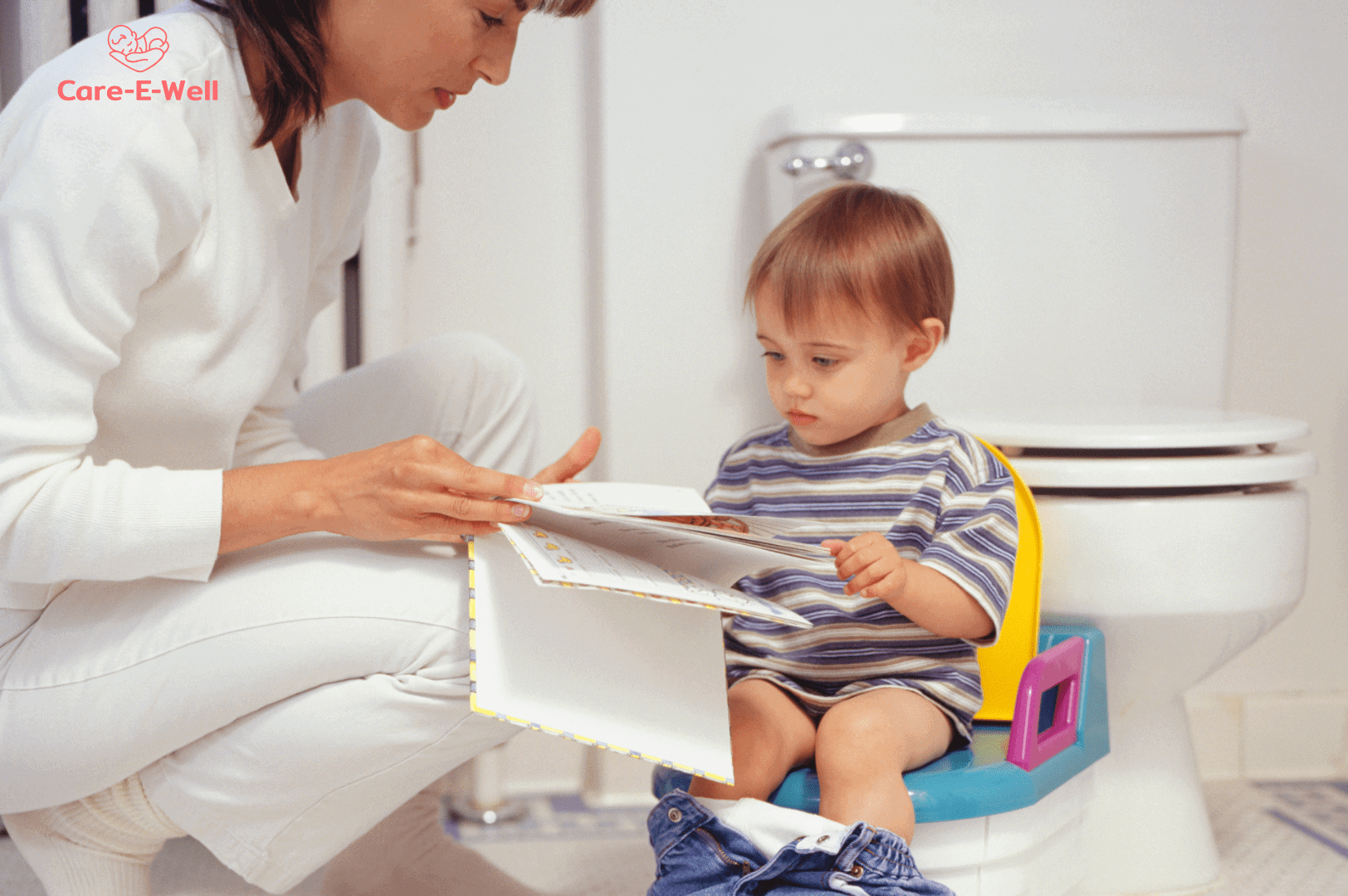
Learning how to start potty training without pressure does not mean doing nothing or waiting for your child to train themselves. It means providing a clear, predictable routine while avoiding shame, forced sitting, threats or turning every accident into a confrontation.
Toilet training is a developmental learning process. Research has not established one superior method for every child, but child-oriented approaches emphasise readiness and willingness, while studies of stool refusal and constipation show why discomfort and escalating conflict deserve attention rather than more pressure.
Low-pressure potty training still has structure: you guide the routine, while your child keeps control over whether urine or stool comes out.
What does “without pressure” actually mean?
Pressure is not the same as guidance. You can invite your child to sit at useful times, use consistent bathroom language, help with clothing and praise effort. Pressure begins when the adult tries to control an involuntary body function through repeated demands, shame, punishment, prolonged forced sitting or emotional bargaining.
A young child can choose whether to cooperate with sitting, but they cannot simply produce urine or stool on command every time. Keeping that distinction in mind helps parents respond to accidents as information rather than disobedience.
The evidence comparing toilet-training methods is limited. Reviews and observational studies repeatedly note that families use different approaches and that no single method has high-level evidence proving it best for all typically developing children.
Start with readiness, not a deadline
Before making a major change to diapers or daily routines, look for a cluster of readiness signs. These may include noticing wetness or bowel movements, staying dry for longer periods, following simple instructions, showing interest in the toilet and being able to sit securely.
Readiness is not an all-or-nothing checklist. A child can begin learning words and routines before being ready for consistent continence. If they are curious but not yet reliably aware of body signals, familiarisation may be a better first step than intensive training.
- name urine and bowel movements in simple, neutral language
- let the child see the potty or toilet setup before expecting use
- practise pulling easy clothing up and down
- offer brief sits at predictable moments
- talk about body signals without repeatedly asking “Do you need to go?”
- keep accidents calm and matter-of-fact
Make the toilet setup feel physically secure
A child who is worried about falling, the toilet opening or dangling feet has another problem to solve before they can relax enough to eliminate. Use a potty chair or a stable toilet reducer setup that lets the child sit securely.
If your child uses the adult toilet, firm foot support can improve comfort and stability. The goal is not a special product; it is a position in which the child can relax rather than balance or brace themselves.
Give the child time to become familiar with the setup. Sitting fully clothed for a moment can be a useful first step for a child who is hesitant.
Choose predictable opportunities instead of constant reminders
Repeatedly asking a toddler whether they need the potty can quickly make toileting dominate the day. A calmer approach is to offer opportunities at moments when elimination is more likely or when the routine naturally fits, such as after waking, around transitions or after a meal.
Research in young children has documented post-meal bowel activity, and bowel-management literature often uses the gastrocolic response as a reason for scheduled toilet opportunities after meals. For a healthy toddler learning toileting, this can simply mean offering a relaxed chance to sit rather than demanding a bowel movement.
Keep sits brief unless your child is comfortable staying longer. If nothing happens, end the attempt neutrally and continue the day.
What should you praise?
Praise the parts your child can control: telling you they need to go, walking to the bathroom, pulling down clothing, sitting willingly, trying, washing hands or telling you about an accident.
You can also celebrate a successful wee or bowel movement, but avoid making success so emotionally loaded that the child feels responsible for an adult's happiness. Warm acknowledgement is enough.
Rewards are used in many behavioural toilet-training programmes, but the research does not show that every typically developing toddler needs a sticker chart, sweets or prizes. If a simple reward helps your child participate, keep it predictable and proportionate rather than continually increasing the stakes.
How to respond to accidents without pressure
Accidents are expected while a child is learning to notice signals, interrupt play, manage clothing and reach the toilet in time. Responding neutrally keeps the focus on the skill rather than blame.
A simple response can be: “Your clothes are wet. Wee goes in the potty. Let's get changed.” Help as much as your child needs, then move on.
- avoid calling an accident naughty, lazy or babyish
- do not compare your child with siblings or other children
- avoid making the child sit immediately for a long period as punishment
- involve the child in reasonable cleanup only as a normal self-care step, not humiliation
- notice patterns that may help you offer the toilet earlier next time
Neutral does not mean pretending the accident did not happen. It means teaching the next step without adding shame.
Pay close attention to poop
Stool withholding can become a major barrier to toilet training. Prospective research has linked painful defecation and constipation with stool-toileting refusal, and one study found that constipation often appeared before refusal.
A child who hides to poop, stiffens, crosses their legs, stands on tiptoe or repeatedly asks for a diaper for bowel movements may be trying to avoid an uncomfortable or frightening experience. The first question should not be “How do I make them poop on the toilet?” but “Is pooping comfortable?”
Some children are happy to urinate in the toilet but refuse bowel movements there. That pattern does not automatically mean broader behaviour problems; research on stool-toileting refusal has found that affected children were not simply more behaviourally difficult than trained peers.
Seek healthcare advice if bowel movements are persistently hard or painful, your child repeatedly withholds stool, there is blood in the stool, marked abdominal swelling or significant ongoing pain. Addressing constipation may need to come before progressing toilet training.
What if your child says no?
A single “no” does not mean you must abandon the process, but repeated distress or escalating resistance is a signal to change your approach. First check for discomfort, fear of the toilet, an unstable seat, constipation, too-frequent prompting or a developmental mismatch.
You can reduce the demand while keeping the routine familiar. For example, invite rather than insist, shorten the sit, let the child choose between the potty and reducer, or return temporarily to simple familiarisation.
A short pause is not failure. Toilet training develops over time, and temporary setbacks are described as a normal part of child-oriented learning.
When resistance rises, look for the barrier before increasing the intensity.
A low-pressure potty-training plan
The following sequence gives parents enough structure to be consistent without trying to force continence.
- Observe readiness signs and your child's usual wetting and bowel patterns.
- Make sure bowel movements are comfortable before pushing toilet use.
- Set up a stable potty or toilet seat that your child can approach without fear.
- Introduce simple bathroom words and easy-to-remove clothing.
- Offer brief toilet opportunities at predictable times rather than asking constantly.
- Praise communication, participation and self-care skills.
- Respond to accidents calmly, help with changing and continue the routine.
- If resistance becomes strong, identify the likely barrier and reduce pressure.
- Increase independence gradually as your child begins noticing and acting on signals.
Some children make rapid progress once the pieces come together. Others need weeks or months of practice. Earlier initiation can sometimes mean a longer overall training period, so duration should not be used as a measure of parenting success.

What low-pressure potty training is not
It is not ignoring a child who is clearly ready. It is not avoiding all routines because you are afraid of creating pressure. And it is not allowing persistent constipation or painful stooling to continue indefinitely in the hope that the child will sort it out alone.
The aim is collaborative learning: adults make the environment predictable and manageable, while the child develops awareness and control at their own developmental pace.
Frequently asked questions
Should I put my toddler in underwear immediately?
There is no single evidence-based rule. Some families change to underwear early because wetness becomes easier to notice; others make the transition more gradually. Choose the approach that fits your child's readiness and your ability to respond calmly to accidents.
Should I use rewards for potty training?
Rewards can be part of toilet-training programmes, but they are not mandatory. Start with attention, praise and a clear routine. If you use an external reward, keep it simple and tied to a behaviour the child can control, such as sitting or telling you they need the toilet.
How often should I put my child on the potty?
There is no universal interval for typically developing toddlers. Use natural routine points and your child's patterns instead of very frequent compulsory sits. If prompting is creating conflict, reduce it.
What if my toddler asks for a diaper to poop?
Avoid turning the request into a showdown. Check for constipation or painful stooling and consider a gradual transition. Maintaining comfortable bowel movements is more important than winning a particular toilet attempt.
Can I pause potty training and try again later?
Yes. A pause can be sensible when resistance is intense, the child is not developmentally ready or the family cannot maintain a calm routine. Keep bathroom language positive so restarting later does not feel like beginning after a failure.
The key takeaway
If you want to know how to start potty training without pressure, combine readiness, predictable opportunities, calm accident responses and attention to bowel comfort. Your job is to teach and support the routine; your child's job is to gradually learn the body signals and control required to use it.
Sources and References
- Brazelton TB — A Child-Oriented Approach to Toilet Training
- Kiddoo D — Toilet training children: when to start and how to train
- Köstekçi YE, Başkan S, Topçu S, et al. — Evaluation of the effects of the toilet training process on the children's quality of life
- Sclar GD, Mosler H-J — Caregiver social support and child toilet training in rural Odisha, India: What types of support facilitate training and how?
- Taubman B — Toilet Training and Toileting Refusal for Stool Only: A Prospective Study
- Blum NJ, Taubman B, Nemeth NM — During Toilet Training, Constipation Occurs Before Stool Toileting Refusal
- Taubman B, Blum NJ, Nemeth NM — Stool Toileting Refusal
- van der Plas RN, Benninga MA, Taminiau JAJM, et al. — Treatment of defaecation problems in children: the role of education, demystification and toilet training
- Van Aggelpoel T, De Wachter S, Neels H, et al. — Observing postprandial bowel movements in diaper-dependent toddlers
- de Morais MB — Prevention of pediatric functional constipation: a narrative review
Did this Insight help?
A little love for something worth reading.


