
Care-E-Well Insights
Introducing Allergens to Babies: A Practical Evidence-Based Guide
Learn when and how to introduce common food allergens to babies, what the evidence says about delay, and which reactions need urgent help.
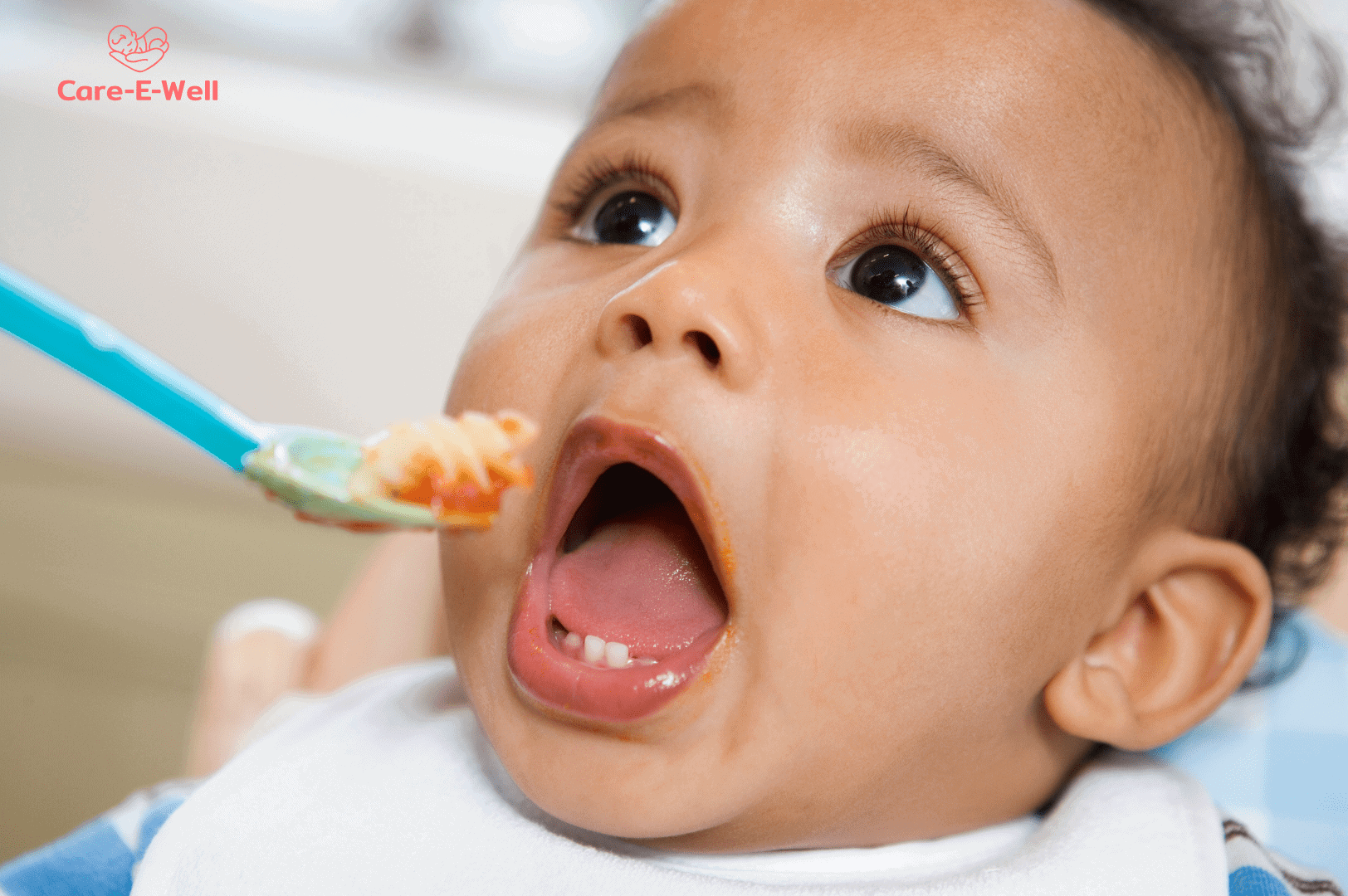
Introducing allergens to babies does not mean delaying peanut, egg or other common allergenic foods for years. Modern evidence has moved away from routine avoidance. Once a baby is developmentally ready for complementary foods, common allergens can be introduced in age-appropriate forms rather than being deliberately postponed.
The strongest prevention evidence is for peanut and egg. Evidence for other allergens is less definitive, so the goal is a varied diet—not a complicated race to introduce everything on the same day.
Delaying common allergens is not a proven way to prevent food allergy. Introduce them in safe textures once complementary feeding is established, with extra planning for high-risk babies.
Which foods are common allergens?
In Europe, common labelled allergens include milk, egg, peanut, tree nuts, wheat and other gluten-containing cereals, soy, fish, shellfish, sesame, celery, mustard and lupin. Not all are equally relevant as first foods, and several require careful texture preparation.
A baby should never receive whole nuts because of choking risk. Nut and peanut products need to be smooth, thinned or mixed into an age-appropriate food.
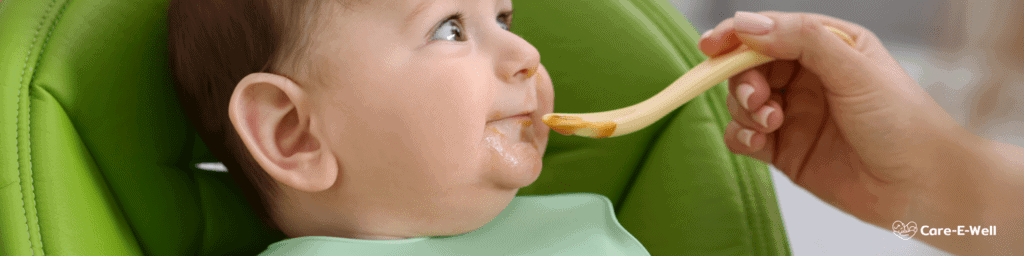
When should allergenic foods be introduced?
WHO recommends complementary feeding from around 6 months. EFSA’s review found no evidence-based reason to delay complementary foods solely because they are allergenic, while randomized trials show benefit from earlier introduction of peanut and some evidence for egg.
For most healthy babies, a practical approach is to begin allergens after the baby is ready for solids and can safely manage the chosen texture. Do not start solids before developmental readiness simply to meet a theoretical allergy-prevention deadline.
How should you introduce a new allergen?
- Choose a day when the baby is well.
- Use one allergenic food in a clearly identifiable, age-appropriate form.
- Begin with a small taste and increase if it is tolerated.
- Keep the baby with an alert adult who can notice symptoms.
- Once tolerated, continue including the food in the normal diet rather than treating introduction as a one-time test.
Introducing one new allergen at a time can make a reaction easier to interpret, although evidence does not require long multi-day waiting periods between every new food.
What symptoms can indicate an allergic reaction?
Reactions can include hives, facial or lip swelling, repeated vomiting, coughing, wheeze, breathing difficulty, sudden lethargy or collapse. Symptoms can vary, and a baby may have more than one at once.
Breathing difficulty, tongue or throat swelling, collapse, marked colour change or rapidly progressing symptoms can signal a severe allergic reaction. Seek emergency medical help immediately.
Which babies need an individualized plan?
Infants with severe eczema, a known food allergy or a previous immediate reaction to a food deserve professional guidance before home introduction of the relevant allergen. LEAP specifically studied babies at high risk because of severe eczema, egg allergy or both, and excluded some infants who already appeared strongly sensitized.
High-risk does not automatically mean “avoid”. It means introduction may need assessment, testing or supervision depending on the child.
Why peanut and egg get special attention
The LEAP randomized trial showed that regular peanut consumption in high-risk infants dramatically reduced later peanut allergy compared with avoidance. The EAT trial and meta-analyses also support early peanut introduction, while egg trials show a preventive signal that is stronger with cooked forms than raw egg.
Evidence is not equally strong for wheat, fish, sesame, milk or tree nuts. These foods can still be introduced as part of a varied complementary diet, but parents should not assume the same quantified preventive effect.
Do allergens need to stay in the diet?
Evidence from peanut studies involved ongoing consumption, not a single exposure followed by months of avoidance. Once a baby tolerates an allergenic food, keep serving it in normal age-appropriate meals reasonably regularly.
There is no need to turn this into a stressful dosing schedule for a healthy baby. Consistency matters more than perfection.

The key takeaway
Introducing allergens to babies is best approached as part of normal complementary feeding: start when the baby is ready for solids, use safe textures, avoid unnecessary delay, watch for reactions and keep tolerated foods in the diet. High-risk infants need an individualized plan rather than blanket avoidance.
Frequently asked questions
Should I wait several days between every allergen?
Long waiting periods are not required by the prevention evidence. Introducing allergens separately can simply make reactions easier to identify.
Can I introduce allergens while breastfeeding?
Yes. Complementary foods are added while breastfeeding can continue.
Does early introduction guarantee my baby will not develop an allergy?
No. It can reduce risk for some allergens, especially peanut, but it cannot prevent every food allergy.
Should I rub food on the baby's skin first?
No. Skin exposure is not a reliable home allergy test and may irritate eczema. Introduce food orally in an age-appropriate form unless a clinician advises otherwise.
Sources/References
- European Food Safety Authority — Age to start complementary feeding of infants
- Du Toit G et al. — Randomized Trial of Peanut Consumption in Infants at Risk for Peanut Allergy
- Du Toit G et al. — Effect of Avoidance on Peanut Allergy after Early Peanut Consumption
- Perkin MR et al. — Randomized Trial of Introduction of Allergenic Foods in Breast-Fed Infants
- Ierodiakonou D et al. — Timing of Allergenic Food Introduction to the Infant Diet and Risk of Allergic or Autoimmune Disease
- Tuballa A et al. — Introduction of allergenic food to infants and allergic and autoimmune conditions: a systematic review and meta-analysis
- Chan ES et al. — Early introduction of foods to prevent food allergy
- Yakaboski E et al. — Early Introduction of Food Allergens and Risk of Developing Food Allergy
- Caffarelli C et al. — Solid Food Introduction and the Development of Food Allergies
Did this Insight help?
A little love for something worth reading.


