
Care-E-Well Insights
Is a Second-Hand Car Seat Safe to Use?
A second-hand car seat may be usable only with a known history, intact parts and valid approval. Use this safety checklist before buying.
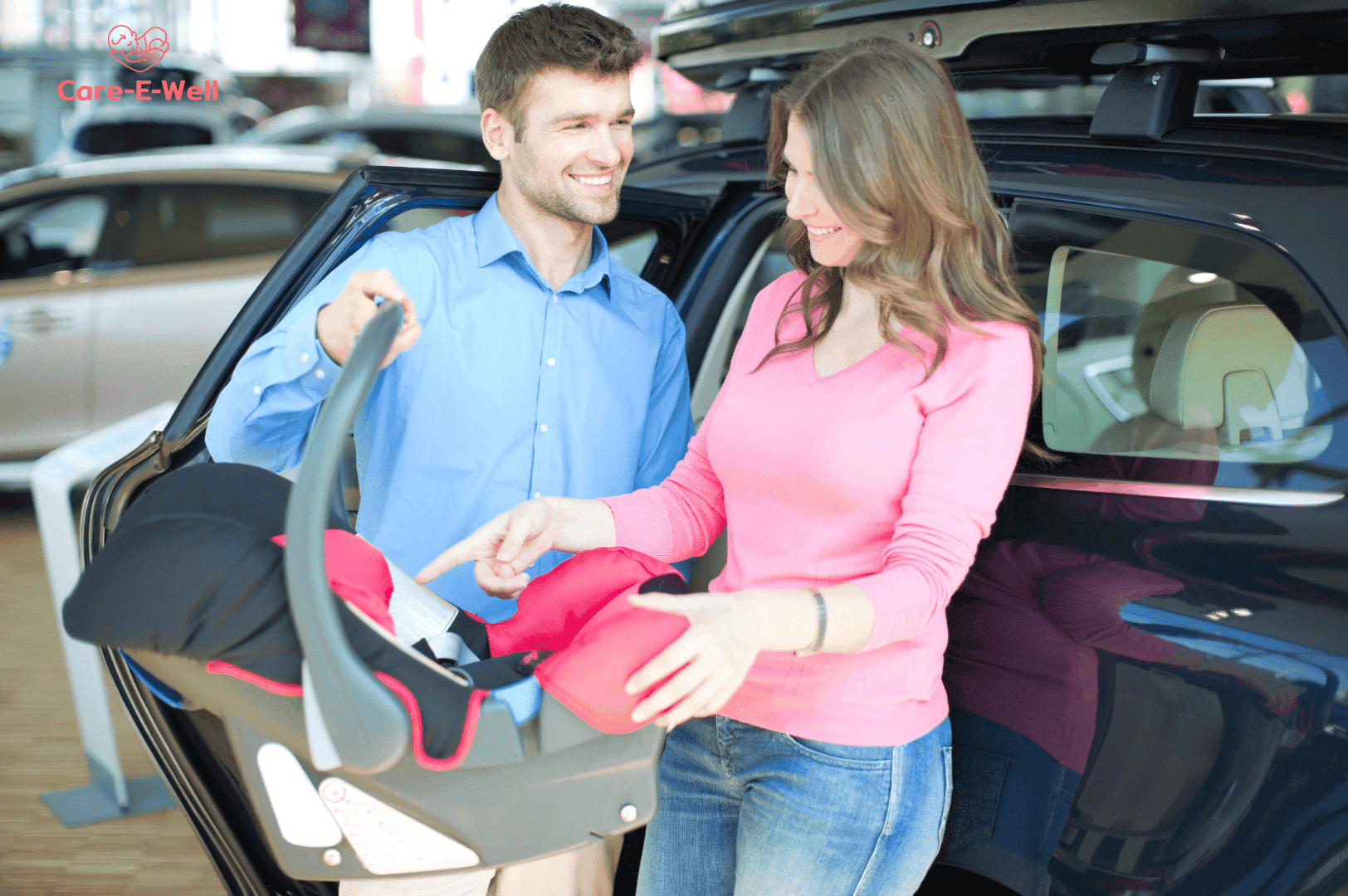
A second-hand car seat can be safe only when you can verify its history, identity, condition, approval and completeness. If you cannot establish whether it has been involved in a crash, whether important parts are missing, or whether the model is still suitable for use, the uncertainty itself is a safety problem.
The safest second-hand seat usually comes from someone you trust who can give you its full history and all original components and instructions. A bargain from an unknown seller may look perfect while giving you no reliable way to assess hidden crash history, unauthorised modifications or missing safety information.
With a used car seat, “looks fine” is not enough. You need a traceable seat, known history, intact components and an approval range that still suits your child and vehicle.
Why does the history of a second-hand seat matter?
Child restraints are safety-critical systems designed to manage crash forces. Their protective performance depends on the shell, energy-managing materials, harness, buckles, attachment points and other components working together as tested.
Damage is not always obvious from the outside. A seat may have been exposed to crash forces, improper storage, chemical cleaning, heat, missing replacement parts or modifications that are difficult for a new owner to identify.
Research on child restraints consistently shows that misuse and incorrect installation reduce protection. A used seat adds another layer of uncertainty if the new user does not know its configuration or no longer has the instructions.
Is a second-hand car seat automatically unsafe?
No. Ownership history alone does not make a restraint unsafe. A clean, complete, undamaged seat with a known history and valid approval can remain usable when it is still within the conditions set by the manufacturer and the relevant regulation.
The problem is verification. If the seat’s identity, crash history or parts cannot be confirmed, parents cannot confidently know whether they are using the same safety system that was originally approved and tested.
What should you know about the seat's crash history?
Ask whether the restraint has ever been in a collision while installed in a vehicle, even if no child was sitting in it. Then follow the restraint manufacturer’s post-crash instructions.
Replacement guidance after a crash is not identical for every product or jurisdiction. Do not create your own rule based on visible damage or how “minor” the crash felt.
If the seller cannot give you a reliable crash history, it is safer to choose a seat with a known history.

Check the approval label and exact model
A used restraint should still have its approval label and model identification. In Europe, modern child restraints are commonly approved under UN Regulation No. 129, which specifies categories and performance requirements for enhanced child restraint systems.
The label helps you identify the restraint, its approved child-size range and the regulatory framework under which it was tested. Missing or unreadable identification makes it harder to verify instructions, compatible components or safety actions that may affect the model.
Do not buy a seat whose identity is uncertain or whose label has been removed.
Does a car seat have an expiry date?
UN regulations do not create one universal consumer “expiry date” that applies identically to every child restraint. Manufacturers can specify a service life or replacement period for their products, and those instructions should be followed.
With a used seat, determine the manufacturing date and check the manufacturer’s current instructions for the model. Do not assume that a seat is safe indefinitely simply because it has not visibly deteriorated.
Plastics, foams, harness materials, buckles and labels can age or be affected by storage conditions. More importantly, an older seat may no longer have readily available instructions or replacement components.
Make sure every required part is present
Compare the actual seat with the parts list in its instructions. Missing inserts, belt guides, harness pads, buckle components, ISOFIX connectors, support legs, top tethers or other structural parts can change how the restraint works.
Not every pad or insert is safety-critical, but parents should not decide that by appearance. Use only parts supplied or explicitly approved for that model.
Avoid homemade repairs, replacement webbing, third-party buckles, drilled holes, added foam or accessories that alter the seat.
Inspect the seat carefully
Before use, inspect the shell, harness, buckle, adjustment mechanisms, anchorage points and energy-absorbing materials. Look for cracks, deformation, frayed webbing, melted areas, corrosion, broken guides, damaged connectors or parts that do not lock and release normally.
Check under the cover as far as the instructions allow. Cosmetic wear is different from structural damage, but if you cannot tell what you are seeing, stop and seek advice rather than guessing.
Do not use a child restraint with cracks, structural deformation, damaged harness webbing, a malfunctioning buckle or other damage that could affect restraint performance.
Ask how the seat was cleaned
Cleaning matters because harness webbing, buckle mechanisms and energy-managing materials can be damaged by methods that are not approved for the product. Strong chemicals, soaking, machine washing or heat may be prohibited for certain components.
A used seat that smells heavily of solvents, has bleached or stiffened webbing, or has obviously altered foam deserves caution. If the cleaning history is unknown and the materials appear changed, the seat may not be a good choice.
Always follow the exact cleaning instructions for the model you are considering.
Check for safety notices or recalls
Use the model identification and manufacturing information to check whether any official corrective action, recall or safety notice applies. Depending on the product, this information may come from the manufacturer or relevant national market-surveillance authority.
A recall does not always mean the seat must be discarded; some are resolved with a replacement component or updated instruction. But you need to know whether the required remedy has been completed.
Will the used seat fit your child?
A second-hand restraint is only useful if the child is within its approved stature and mass range and the harness or belt can be positioned correctly. Do not buy a seat just because the seller says it is appropriate for a certain age.
UN R129 uses stature prominently in classifying enhanced child restraints. Check the actual approval label rather than relying on an advertisement.
For a rear-facing seat, confirm that your child has not reached any stated rear-facing limit. For a booster, confirm that the vehicle belt fits through the guides and across the child correctly.
Will it fit your vehicle?
Vehicle compatibility is just as important as child fit. Check whether the restraint uses ISOFIX, the vehicle belt, a support leg, top tether or a combination of approved attachment methods.
Make sure the chosen seating position provides the required anchorages and that the vehicle manual permits the setup. A support leg, for example, must be used only where the vehicle and restraint instructions allow it.
Do not assume a seat is compatible because the seller used it in a similar car.

Is buying from family or friends better?
It can be because the history is easier to verify. You may know whether the seat was in a crash, how it was stored, whether parts were lost and how it was cleaned.
Still perform the same checks. Familiarity with the previous owner does not replace inspection, model verification or current instructions.
What should you ask a seller?
- What is the exact model and manufacturing date?
- Is the approval label present and readable?
- Has the restraint ever been in a vehicle crash?
- Has any part ever been replaced or repaired?
- Are all original required components present?
- Are the original or current instructions available?
- How was the seat cleaned and stored?
- Has any safety notice or recall affected this model?
- Why is the seat being sold?
If the answers are vague or contradictory, walk away. A child restraint is not a good place to accept uncertainty simply because the price is attractive.
When is a new seat the better choice?
Choose a new restraint when you cannot verify the used seat’s history, when labels or instructions are missing, when parts are unavailable, when the condition is uncertain or when the seat does not fit your child and vehicle well.
A new seat also provides a clearer chain of ownership and current instructions. It does not guarantee correct use, however; installation and harness errors remain common even with new restraints.
Whatever you buy, spend time learning the exact installation and fit checks for that model.
The key takeaway
A second-hand car seat is not automatically unsafe, but it should only be used when its history is trustworthy and its identity, approval, condition, components and instructions can all be verified. If you cannot answer those questions confidently, choose a restraint with a known history instead.
Frequently asked questions
Is a used car seat from a sibling safe?
It can be if you know its full history, it has not been subject to an unresolved safety issue, all parts are intact and it remains within the manufacturer’s permitted service life and approved child-size range.
Can I use a seat if it looks perfect after a crash?
Do not decide based on appearance. Follow the manufacturer’s post-crash instructions for that exact model.
What if the used seat no longer has its instructions?
Obtain the correct current instructions for the exact model before using it. If the seat cannot be identified well enough to verify its installation, limits and required parts, choose another restraint.
Can I replace a missing insert with a generic one?
No. Use only components supplied or explicitly approved for that specific restraint.
Sources/References
- UNECE — UN Regulation No. 129 – Rev.4: Enhanced Child Restraint Systems
- European Commission — Children – Seat belts and child restraints
- Brown J, Elkington J, Hunter K et al. — A Process Evaluation Protocol for Examining the Impact of Instructions for Correct Use of Child Car Seats
- Campbell H, Macdonald S, Richardson P — High levels of incorrect use of car seat belts and child restraints in Fife
- Durbin DR, Hoffman B — Child Passenger Safety
- Fleisher L, Erkoboni D, Halkyard K et al. — Are mHealth Interventions to Improve Child Restraint System Installation of Value?
- Weaver NL, Brixey SN, Williams J et al. — Promoting Correct Car Seat Use in Parents of Young Children
- Ahmad I, Fildes B, Logan D et al. — Restraint Use for Child Occupants in Dubai, United Arab Emirates
- Cameron L, Segedin E, Nuthall G — Safe restraint of the child passenger
- Dulf D, Peek-Asa C, Jurchiş F et al. — Safety seat and seat belt use among child motor vehicle occupants, Cluj-Napoca, Romania
Did this Insight help?
A little love for something worth reading.


