
Care-E-Well Insights
ISOFIX vs Seat Belt Installation: Which Is Better?
ISOFIX can simplify installation, but a correct seat-belt install can also be safe. Compare compatibility, errors and key trade-offs.
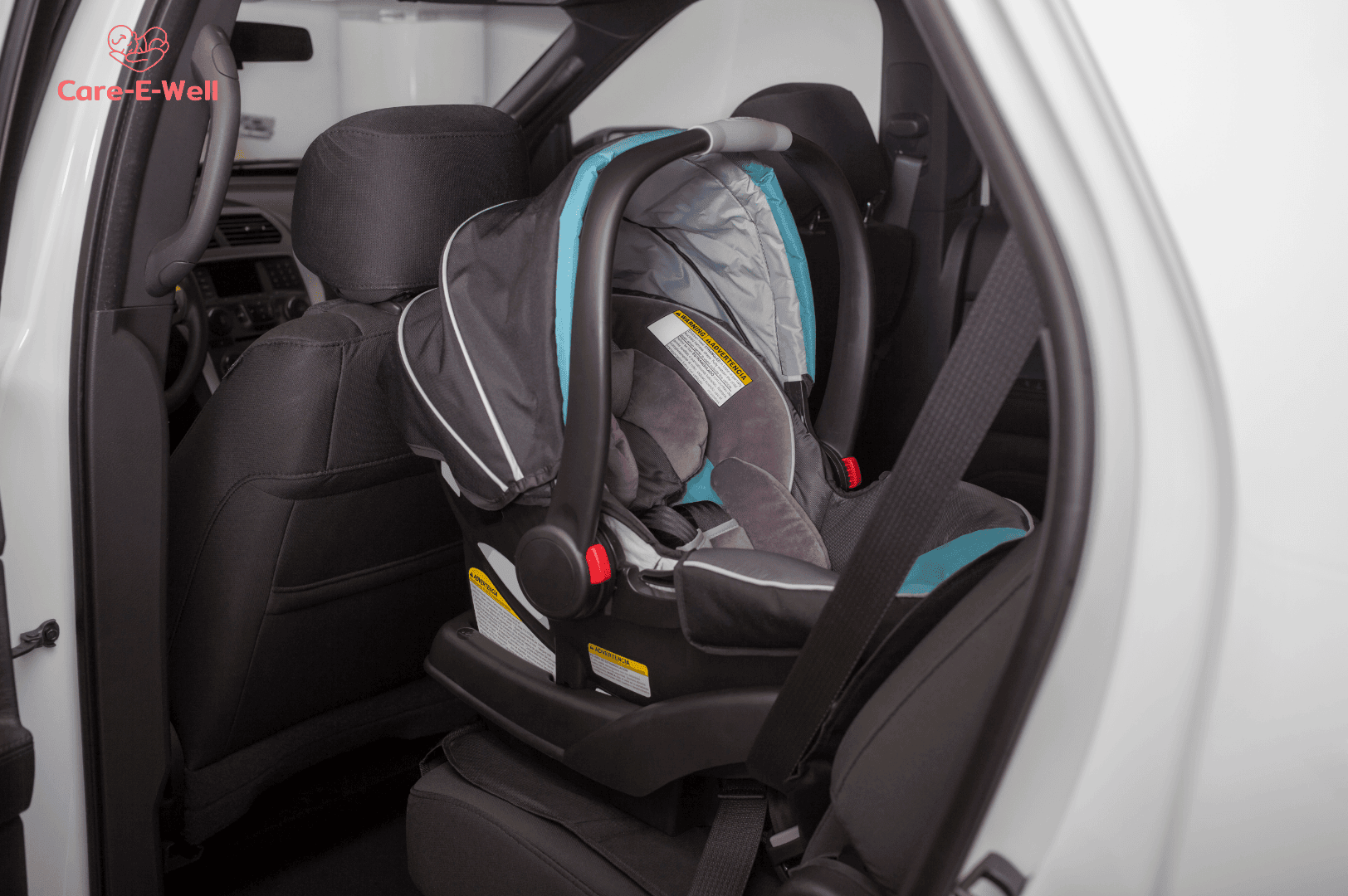
ISOFIX is often easier to install consistently, but it is not automatically safer than a correctly installed seat-belt child restraint. Both systems can provide strong protection when the restraint permits that method, the vehicle is compatible and the caregiver follows the instructions exactly.
The real comparison is therefore not “ISOFIX good, seat belt bad.” It is which approved installation you can complete correctly in your specific car, with all required support legs, tethers, belt routing and locking features in place.
A correctly installed approved seat is the goal. The attachment method is only one part of the complete child-restraint system.
What is ISOFIX?
ISOFIX connects a compatible child restraint to dedicated lower anchorages built into the vehicle. UNECE vehicle regulations standardize ISOFIX and i-Size seating positions to improve compatibility and reduce reliance on routing the adult seat belt around the restraint.
Depending on the restraint, ISOFIX may use rigid arms or another approved connector design. Most ISOFIX child restraints also need a way to control rotation, such as a support leg or top tether.
The lower connectors alone are therefore not always the complete installation. Parents should follow every indicator and every additional attachment required by the manual.
How does seat-belt installation work?
A belt-installed child restraint uses the vehicle’s approved seat belt to secure the restraint. You route the belt through a specific path in the shell or base, sometimes through a built-in lock-off or tensioning system.
Many R129 restraints use the vehicle belt successfully. A seat-belt installation can also be useful in a vehicle seating position that has no ISOFIX lower anchorages, provided the restraint and vehicle allow it.
The main challenge is that the belt path, locking method and tension must all be correct. A twisted belt, wrong routing path or loose installation can reduce the intended performance.

Is ISOFIX safer in a crash?
There is no simple universal answer. Engineers developed ISOFIX partly to improve standardization and reduce certain installation problems, but a well-installed seat-belt system can also restrain the seat effectively.
Recent evidence shows that misuse can occur with both systems. A 2026 study of child-restraint selection and installation practices reported errors including loose installation, incorrect routing and poor harness fit even where ISOFIX was widely used.
Australian observational data also found no statistically significant difference in installation error rates by anchorage method in that sample. That does not mean ISOFIX has no practical advantages; it means the hardware cannot replace correct use.
What are the practical advantages of ISOFIX?
- Connectors attach directly to designated vehicle anchorages.
- Many systems provide visual or audible confirmation when locked.
- There is no need to route the vehicle belt around the seat when ISOFIX is the approved method.
- A compatible base can make repeated removal and reattachment of an infant carrier simpler.
- Standardized anchorage locations can reduce some vehicle-to-vehicle variation.
These features can make installation easier to repeat, particularly for families who frequently remove an infant carrier from a base.
However, caregivers can still misuse ISOFIX. Common problems include attaching only one side, failing to push the connectors fully home, ignoring a red indicator, omitting the support leg or top tether, or using a seating position that is not approved.
What are the advantages of seat-belt installation?
- It may allow installation in seating positions without ISOFIX.
- Many approved restraints have excellent built-in belt tensioning or lock-off systems.
- It can be useful in older vehicles.
- Some restraints are specifically designed around belt installation and make the belt path clear.
- It avoids assuming that every visible metal anchor is an ISOFIX point.
Seat-belt installation can also provide flexibility when fitting several child restraints across one rear bench, although you still need to check actual compatibility carefully.
The disadvantages are mostly user-dependent: routing can be more complex, belt geometry varies between vehicles, and slack or twisting may be less obvious than a failed ISOFIX indicator.
What does i-Size add to the picture?
“i-Size” is part of the UN R129 framework and includes standardized compatibility concepts between approved restraints and i-Size seating positions. It does not mean every R129 restraint uses only ISOFIX, and it does not mean every ISOFIX restraint fits every vehicle position.
Check the restraint’s approval and vehicle compatibility information. Some R129 seats are universal within specific i-Size categories, while others are vehicle-specific or use the adult belt.
Parent-facing labels can be confusing, so the product manual is more reliable than assuming that one logo guarantees every possible installation.
Is ISOFIX better for infant carriers?
A compatible ISOFIX base can make an infant carrier easier to click in and out without rerouting the vehicle belt each trip. Indicators can also help confirm that the carrier has locked to the base.
A belt-installed infant carrier can still be safe when installed exactly as approved. The critical points are the correct belt path, correct recline, no twisting, proper handle position where specified and correct harness fit around the baby.
If caregivers frequently alternate between belt installation and a base, make sure everyone understands both methods rather than assuming one automatically translates to the other.
What about support legs and top tethers?
They matter regardless of how secure the seat feels. A support leg transfers load to the vehicle floor and helps limit rotation. A top tether connects a forward-facing restraint to a designated anchorage and can reduce forward movement.
Use these components only at the anchorages or contact points the manuals specify. Never attach a top tether to a luggage hook or headrest post unless the vehicle explicitly identifies that point as the tether anchorage.
Do not omit a required support leg, top tether or other anti-rotation component. Crash testing evaluates the restraint as a complete system.
Can you use ISOFIX and the seat belt together?
Only when the restraint manufacturer explicitly says to use both in that configuration. Many seats use one attachment method at a time.
Adding a second attachment method can alter belt loads, shell movement and the way the restraint manages crash energy. “More attachment” is not automatically “more safety.”
If the instructions show ISOFIX-only installation, use ISOFIX only. If they show belt installation, use the specified belt method. If the restraint allows both as alternatives, select one method unless the instructions specifically require a combined installation.

Which is easier to get right?
For many parents, ISOFIX can reduce the number of routing decisions and provide clearer installation feedback. That is a genuine practical advantage.
But the entire installation still includes vehicle compatibility, seating position, support-leg or tether use, recline and child harnessing. Studies of restraint misuse show that errors do not disappear when one component becomes simpler.
The best system for your family is therefore the one that fits your child and vehicle and that every regular caregiver can install and use correctly.
How to choose between ISOFIX and seat belt
- Confirm that the restraint permits both methods you are considering.
- Check the vehicle manual for compatible seating positions.
- Test whether the support leg, tether and seat geometry work correctly.
- Try the actual installation before purchase when possible.
- Consider who will install or move the seat.
- Prefer the method you can reproduce correctly rather than the one that sounds more advanced.
If you regularly move the restraint between cars, test both vehicles. A method that works beautifully in one car may be awkward or incompatible in another.
The key takeaway
In the ISOFIX vs seat belt installation comparison, neither label guarantees safety by itself. ISOFIX can simplify attachment and offer useful indicators, while a correctly routed and tightened vehicle belt can also provide an approved installation. Compatibility and correct use matter more than choosing a system based on reputation alone.
Frequently asked questions
Is ISOFIX mandatory under UN R129?
No. UN R129 includes ISOFIX and i-Size concepts, but R129-approved restraints can also use other approved installation methods, including vehicle-belt installation.
Is a seat-belt installation old-fashioned?
No. Many modern restraints use and permit belt installation. The key is correct routing, locking and compatibility.
Can you install an ISOFIX seat in the centre rear seat?
Only if that vehicle position has approved ISOFIX anchorages and the restraint permits the installation. Do not “borrow” inner anchorages from the two outer seats unless the vehicle explicitly allows it.
Does a green ISOFIX indicator mean everything is correct?
It confirms only the connection represented by that indicator. You still need to check the support leg or tether, recline, seat compatibility and the child’s harness.
Sources/References
- UNECE — UN Regulation No. 129 – Rev.4
- UNECE — Addenda to the 1958 Agreement: UN Regulation No. 145 ISOFIX anchorages and i-Size seating positions
- World Health Organization — Occupant Restraints: A Road Safety Manual for Decision-Makers and Practitioners
- Kopańska M et al. — Determinants of child restraint system selection and installation practices: implications for injury prevention and public health implementation
- Whyte T et al. — Restraint Factors and Child Passenger Deaths in New South Wales, Australia
- Brown J et al. — The Characteristics of Incorrect Restraint Use Among Children Traveling in Cars in New South Wales, Australia
- Giannakakos AR et al. — Teaching installation and use of child passenger safety restraints
- Jiang L et al. — Will Smart Improvements to Child Restraints Increase Their Popularity?
- Wei Z — Analysis of the Effect of Infant Carrier’s Webbing Tension on 18-month-old Child Occupant’s Chest Accelerations in Frontal Crash Accidents Based on Experimental Validations
Did this Insight help?
A little love for something worth reading.


