
Care-E-Well Insights
Leaking Breasts: What Is Normal and How to Manage It
Leaking breasts while breastfeeding? Learn what is normal, how to stay comfortable, why leakage is not a supply test and when to get help.
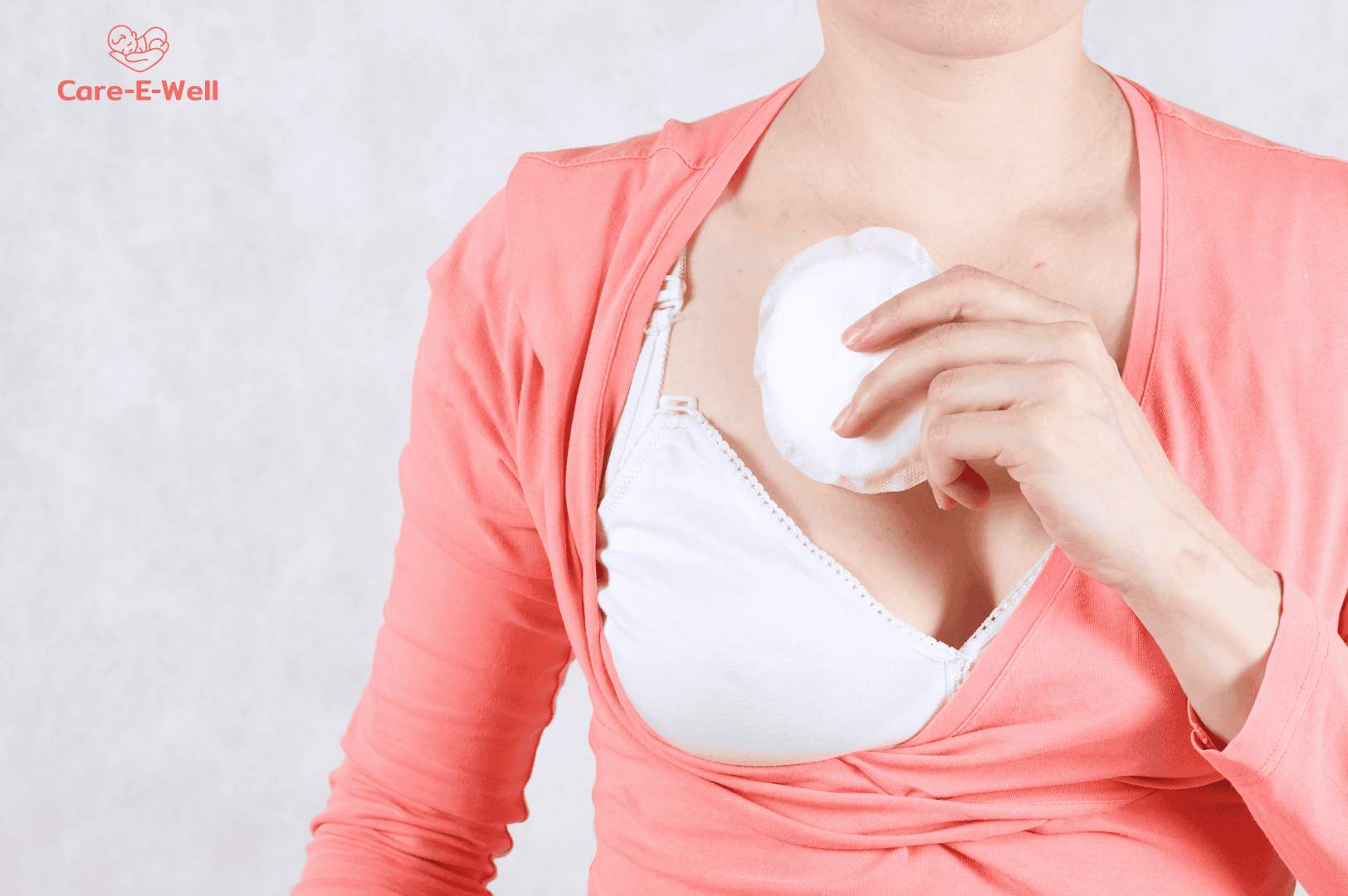
Leaking breasts are a common part of lactation, especially while milk production and feeding patterns are settling. One breast may drip while your baby feeds from the other, milk may leak when you hear or think about your baby, or you may wake with damp clothing after a longer sleep stretch.
Leakage varies enormously. Some parents leak frequently and others hardly ever, even with a completely adequate milk supply. The amount that appears on a breast pad cannot tell you how much milk your baby receives or how much your breasts can produce.
Leaking is not a milk-supply test. Heavy leakage does not prove oversupply, and never leaking does not mean your supply is low.
Why do breasts leak milk?
Milk is stored mainly within the milk-producing structures of the breast and becomes available to flow when the milk-ejection reflex occurs. Nipple stimulation triggers oxytocin release, which contracts myoepithelial cells around the alveoli and moves milk toward the nipple.
That reflex can happen during breastfeeding or pumping, but it can also occur when feeding is anticipated. Leakage can therefore appear from the opposite breast during a feed or at other times when milk ejection occurs.
Is leaking normal in the first weeks of breastfeeding?
Yes. Early lactation is a period of rapid adjustment. Milk volume rises, breasts may become fuller between feeds and the relationship between milk production and your baby’s usual intake is still developing. Leakage can be particularly noticeable during this period.
It often becomes less dramatic as lactation becomes more established, but there is no deadline by which leaking must stop. Some parents continue to leak for months, while others stop much earlier.
Why does the other breast leak during feeding?
Milk ejection is a hormonal reflex that can affect both breasts even when your baby is feeding from only one. Research using ultrasound and pumping measurements shows that milk ejections are repeated events during a feed or expression session and that their pattern is relatively characteristic within an individual.
If milk drips or sprays from the unused side, a clean absorbent pad or passive collection device can help with comfort. You do not need to pump the opposite breast simply because it is leaking.
Does leaking mean you have oversupply?
Not by itself. Oversupply, or hyperlactation, means milk production persistently exceeds the baby’s needs and is usually recognised from a broader pattern, not from leakage alone.
- Breasts may remain persistently overfull despite effective feeding.
- Milk flow may be forceful enough that the baby coughs, gulps or repeatedly pulls off.
- Large amounts may be removed regularly in addition to what the baby drinks.
- Recurrent engorgement or inflammatory breast symptoms may occur.
- The baby may struggle more with flow at the start of feeds.
A parent can leak heavily without having clinically important oversupply. Conversely, someone with high production may not leak much at all.

Does not leaking mean low milk supply?
No. Leakage depends on individual anatomy, milk-ejection patterns, breast fullness and how easily milk escapes between feeds. It is not a validated measure of milk production.
More useful indicators of adequate intake are effective swallowing during feeds, age-appropriate urine and stool output and growth over time. UNICEF guidance specifically cautions against judging milk intake from indirect signs such as feed duration or how settled a baby appears.
Can hearing your baby cry make milk leak?
It can. Milk ejection is influenced by neuroendocrine signals, and some parents notice tingling, spraying or leaking in response to their baby’s cry, thoughts of feeding or a familiar feeding routine. Others never experience this response consciously.
Neither pattern is better. Some people feel every let-down clearly; others have effective milk ejections without any obvious sensation.
Why do breasts leak at night?
A longer interval between milk removals can leave the breasts fuller, and a spontaneous milk-ejection reflex may then cause leakage. Newborn feeding is also distributed across day and night, so nighttime leaking may simply occur around normal night feeds or waking cues.
If you repeatedly wake painfully overfull because feeds have suddenly become much less frequent, express only enough for comfort unless you have a different feeding plan. Routinely pumping large volumes at night can add milk-removal stimulation and may maintain more production than your baby needs.
How can you manage leaking breasts day to day?
Management is mainly about comfort, skin protection and avoiding unnecessary stimulation.
- Use absorbent nursing pads inside a well-fitting bra if they help keep clothing dry.
- Change damp pads regularly so wet material does not remain against the nipple for long periods.
- Choose breathable, non-irritating materials if your skin is sensitive.
- Carry a spare top or pad when you are away from home if leakage is unpredictable.
- Place a towel under you at night if that is more comfortable than sleeping in a bra.
- Avoid tight pressure over the breast, particularly if you are prone to tender inflammatory areas.
If a pad or adhesive product causes itching, burning, redness or a rash, stop using it and consider a simpler material. Persistent nipple or areola irritation may need assessment for dermatitis or another skin problem.
Managing leakage should make breastfeeding easier, not create more milk removal than you actually need.
Are breast shells and milk collectors the same as breast pads?
No. A breast pad absorbs leaked milk. A passive shell or collector catches milk that would otherwise leak. Some devices sit gently against the breast, while others create suction and actively draw milk out.
That distinction matters if you are already prone to oversupply. A device that removes additional milk repeatedly may provide more stimulation than a simple absorbent pad. If you notice increasing fullness, forceful flow or recurrent engorgement after using a suction collector, reduce unnecessary extra milk removal and reassess your routine.
Should you pump whenever your breasts leak?
Usually not. Leakage is not a signal that the breast needs to be emptied. Pumping is useful when you actually need expressed milk, when a feed is missed, when your baby cannot transfer enough milk or when pumping is part of an individualized plan.
Pumping automatically after every leak can turn a harmless inconvenience into additional milk removal. In established lactation, milk production responds strongly to how much milk is removed over time.
Can you stop leakage by pressing on the nipple?
Gentle brief pressure may reduce dripping for some people, but avoid painful squeezing or strong compression. Do not use tight binding or sustained pressure to try to prevent milk from coming out.
If you are in the middle of a spontaneous let-down, placing a clean pad over the nipple is usually simpler than repeatedly pinching the tissue.
What if leaking suddenly becomes much heavier?
A change in leakage can happen when feeding intervals change, your baby begins sleeping longer, pumping increases or milk production rises. Look at the whole pattern rather than the wetness alone.
If heavier leaking appears together with persistently overfull breasts, forceful let-down, recurrent inflammation or a baby who struggles with milk flow, oversupply may be contributing. Skilled breastfeeding support can help reduce unnecessary milk removal without cutting supply too abruptly.
What if only one breast leaks?
Breastfeeding is often asymmetrical. One breast may produce more milk, have a stronger milk ejection or simply leak more easily. A one-sided difference is usually not concerning when both breasts are comfortable and feeding is going well.
Seek assessment if the leaking is accompanied by blood, pus-like discharge, a new breast lump, significant pain, skin changes or nipple discharge that does not resemble milk.
New bloody or pus-like nipple discharge, a persistent breast lump, significant one-sided pain or rapidly worsening breast changes should be assessed medically rather than assumed to be normal lactation leakage.
What if leaking causes sore skin?
Constant dampness and friction can irritate sensitive nipple or areola skin. Change wet pads, avoid fragranced products and use gentle washing rather than repeated scrubbing. If the skin becomes itchy, scaly, weepy or increasingly red, consider dermatitis or another skin condition rather than simply applying more nipple products.
Painful cracks, spreading redness or signs of infection deserve assessment, especially when breastfeeding or pumping is also causing repeated mechanical trauma.

Can leaking interfere with breastfeeding in public or at work?
It can be inconvenient, but simple preparation usually makes it manageable. Absorbent pads, spare clothing and access to your usual pumping routine when you genuinely need to express can reduce stress.
If you are returning to work, expression frequency should be based on maintaining your feeding plan and comfort—not on trying to prevent every drop of leakage. The amount you leak into clothing is not a useful target for adjusting pumping volume.
When should leaking breasts be assessed?
Ordinary milk leakage without pain or other breast symptoms usually needs no treatment. Get breastfeeding or medical support when leaking is part of a larger problem such as persistent oversupply, painful engorgement, recurrent mastitis, nipple damage or difficulty with the baby managing milk flow.
Seek medical assessment for leakage mixed with unexplained blood or pus, a new persistent lump, fever with worsening breast inflammation, severe pain or other breast changes that do not fit your normal lactation pattern.
A practical leaking-breasts plan
- Treat leakage as a comfort issue, not a measure of supply.
- Use absorbent pads or another low-stimulation option if needed.
- Change damp materials regularly to protect the skin.
- Avoid pumping solely because milk leaked.
- Notice whether suction collectors are adding more milk removal than intended.
- Watch for a broader oversupply pattern if breasts remain persistently overfull.
- Use infant swallowing, output and growth—not leaking—to judge milk intake.
- Seek assessment for pain, inflammation, unusual discharge or persistent breast changes.
Leaking breasts can be messy, but they are usually a normal variation in lactation. They often reflect milk ejection and breast fullness rather than a problem that needs fixing. Keep yourself comfortable, avoid turning every leak into an extra pumping session, and judge breastfeeding by effective milk transfer and your baby’s growth rather than by how dry your clothes stay.
Frequently asked questions
Why do I leak from one breast while feeding on the other?
Milk ejection can occur in both breasts at the same time. The unused breast may therefore drip or spray even though your baby is feeding only from the other side.
Is it normal never to leak breast milk?
Yes. Some parents rarely or never leak and still have a full milk supply. Leakage is not a reliable indicator of production.
Does heavy leaking mean I should pump more often?
No. Pump according to actual feeding or expression needs. Extra pumping can increase milk removal and may worsen oversupply in someone who is already producing more than needed.
When will my breasts stop leaking?
There is no fixed timetable. Leakage often becomes less noticeable as lactation settles, but individual variation is wide and some parents continue to leak for many months.
Sources and references
- World Health Organization — Breastfeeding
- UNICEF — Breastfeeding: The Science of Milk Production
- UNICEF — How Do I Know My Baby Is Getting Enough Breastmilk?
- Gardner H, Kent JC, Lai CT, et al. — Milk ejection patterns: an intra-individual comparison of breastfeeding and pumping
- Gardner H, Kent JC, Lai CT, et al. — Comparison of maternal milk ejection characteristics during pumping using infant-derived and 2-phase vacuum patterns
- Kent JC, Mitoulas LR, Cregan MD, et al. — Volume and Frequency of Breastfeedings and Fat Content of Breast Milk Throughout the Day
- Johnson HM, Eglash A, Leeper K, et al. — ABM Clinical Protocol #32: Management of Hyperlactation
- Jiang B, Hua J, Wang Y, et al. — Evaluation of the impact of breast milk expression in early postpartum period on breastfeeding duration
- Gridneva Z, Warden AH, McEachran JL, et al. — Maternal and Infant Characteristics and Pumping Profiles of Women That Predominantly Pump Milk for Their Infants
Did this Insight help?
A little love for something worth reading.


