
Care-E-Well Insights
Newborn Bathing and Hygiene: Complete Guide for Parents
Newborn bathing and hygiene: learn when to give the first bath, how often to bathe, cord and skin care, safe cleaning and warning signs.
Newborn bathing and hygiene does not need to be complicated. A newborn needs warmth, clean hands from caregivers, gentle cleaning of urine and stool, dry umbilical cord care and occasional bathing that does not chill or overstimulate them. WHO recommends delaying the first bath for at least 24 hours after birth, while prioritising drying, skin-to-skin contact, feeding and thermal care.
After that first day, there is no need to turn bathing into a rigid daily task. Some newborns enjoy a short bath; others become cold or unsettled quickly. You can keep the face, neck, hands and diaper area clean between baths and bathe when it fits the baby's needs and your household routine. The most important safety rule is constant hands-on supervision around water.
A clean newborn does not need to smell like soap. Warmth, gentle cleaning, dry cord care and safe supervision matter more than frequent products or long baths.
When should a newborn have the first bath?
WHO advises delaying the first bath for at least 24 hours after birth. This supports thermal protection and allows immediate newborn priorities such as thorough drying, skin-to-skin contact and early feeding to come first.
If bathing has to happen earlier for a medical or local-care reason, the maternity team should manage warmth carefully. A premature, low-birth-weight or medically unwell baby may need an individualized bathing plan.
Once you are home, you do not need to “catch up” with extra bathing. Start when your baby is warm, stable, fed enough to be comfortable and you have time to do it calmly.
Does a newborn need a bath every day?
No universal daily bathing rule applies to every healthy newborn. WHO's essential newborn guidance focuses on thermal care, infection prevention, dry cord care, feeding and recognition of danger signs rather than requiring a daily tub bath.
Between baths, clean the areas that actually become dirty: the diaper area after stool, milk from neck folds, saliva around the mouth, and visible dirt on the hands or face. This keeps hygiene targeted without repeatedly washing the entire skin surface.
If your baby's skin becomes dry or irritated, simplify the routine and consider whether baths, soaps or fragranced products are being used more often than necessary.
What do you need before starting a newborn bath?
- a clean baby bath or stable basin intended for bathing
- warm clean water
- two clean soft cloths or washcloths
- a towel within arm's reach
- a clean diaper
- clean clothes
- a mild baby cleanser only if you plan to use one
- any cord-care supplies specifically recommended by your baby's healthcare team
Prepare everything before the baby goes near the water. Once bathing starts, do not leave to answer the door, retrieve a towel or find a clean diaper.
Never leave a newborn alone in or beside bath water, even for a few seconds. If you must move away, take the baby with you.
How warm should the bath water be?
Use comfortably warm water, never hot water. Check it before putting the baby in and follow local healthcare guidance or the bath-equipment instructions if you use a thermometer.
Newborns lose heat quickly, so room temperature, bath duration and what happens immediately afterward matter as much as the water itself. Keep the room comfortably warm, have the towel ready and dry and dress the baby promptly.
Exact temperature guidance is best followed from your local maternity or paediatric service because household hot-water systems and measuring methods differ. The practical safety rule is to prevent both scalding and chilling.
How much water should you use?
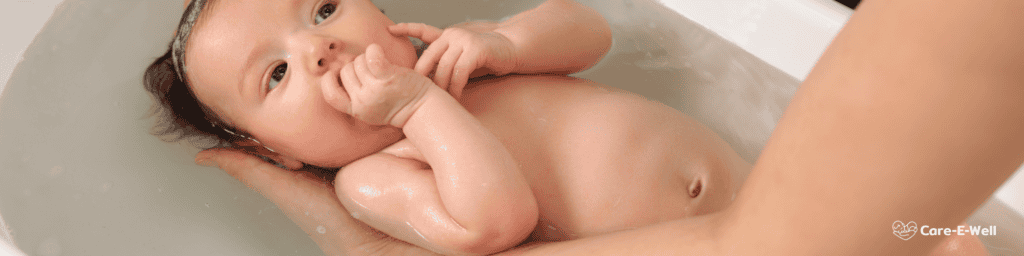
You only need enough water for a short controlled bath. More water does not clean the baby better and increases the amount of water around a very small child.
Keep one hand supporting the baby throughout. Do not rely on a bath seat, insert or cushion to provide supervision.
What is a simple step-by-step newborn bath routine?
- Wash your hands and prepare all supplies.
- Fill the bath with warm water and check it before bringing the baby.
- Undress the baby only when everything is ready.
- Support the head and neck securely as you lower the baby into the water.
- Keep one hand on the baby throughout the bath.
- Clean the face gently, using plain water around the eyes.
- Wash behind the ears, under the chin and in the neck folds.
- Clean the arms, hands, chest, back, legs and skin folds.
- Clean the diaper area last.
- Lift the baby out securely and place them immediately into the waiting towel.
- Pat the skin dry, especially in folds.
- Put on a clean diaper and clothes.
The exact order can vary. What matters is secure handling, gentle cleaning, short exposure to water and avoiding cross-contamination from the diaper area to the face.
How should you clean a newborn's face?
Plain clean water is usually enough. Use a soft damp cloth and gently wipe the forehead, cheeks, around the mouth and behind the ears.
For the eyes, use a clean part of the cloth for each eye and wipe gently rather than scrubbing. Do not put soap, wipes or cosmetic products directly into the eyes.
Dried milk around the mouth or chin can soften with warm water before wiping. Repeated rubbing often causes more irritation than the milk residue itself.
How should you clean the neck folds?
Milk, saliva and sweat can collect beneath a newborn's chin and in the neck creases. Gently separate visible folds, wipe away residue and pat them dry.
Persistent moisture can contribute to irritation. You do not need powder in the folds; keeping them clean and dry is the simpler approach.
If the skin becomes raw, weepy, foul-smelling or increasingly red, seek advice rather than repeatedly washing or applying several products.
How should you wash a newborn's hair and scalp?
Hair does not need shampoo at every bath. Water may be enough; if you use shampoo, choose a mild baby product, use a small amount and rinse gently. Avoid picking or scraping scalp scales, and seek advice if the scalp is bleeding, oozing or very inflamed.
Should you use soap on a newborn?
Soap is not necessary over the entire body at every bath. Warm water is enough for many routine washes, especially in the early newborn period.
If a cleanser is useful, choose a mild product designed for baby skin and use it sparingly. Strong fragrance, adult body wash, antibacterial cleansers and essential-oil mixtures add ingredients without being necessary for routine newborn hygiene.
If a product repeatedly causes redness or stinging, stop it and return to a simpler routine.
How do you care for the umbilical cord during bathing?
WHO recommends clean, dry cord care. Keep the stump dry and do not routinely apply ointments or other substances unless your baby's healthcare team has given a specific instruction.
You do not need to scrub the stump during every wash. If it becomes wet, pat it dry gently. If urine or stool contaminates it, remove visible contamination carefully with clean water and dry the area.
Fold the diaper below the stump when possible so it is not trapped in moisture or repeatedly rubbed.
Seek prompt medical advice for spreading redness around the cord, increasing swelling, pus, significant bleeding, fever, poor feeding, reduced activity or a newborn who looks unwell.
Can you bathe a baby while the cord stump is still attached?
The key WHO principle is keeping the cord clean and dry. Families may use brief bathing or partial washing according to local maternity guidance, as long as the stump is not left wet and the baby stays warm.
You do not need to soak the cord to clean it, and you do not need to postpone all body hygiene until it falls off. If your maternity service has given a specific cord-and-bath routine, follow that plan.
How do you clean the diaper area?
Remove stool promptly and clean the external skin gently with lukewarm water and a soft cloth or a well-tolerated baby wipe. Pat dry instead of scrubbing.
For a baby girl, clean the external vulval area and work from front toward back after stool. Do not insert wipes, water or products into the vagina.
For an uncircumcised baby boy, clean the outside of the penis and scrotum and do not force the foreskin backward. A recently circumcised baby needs the wound-care instructions provided by the treating clinician.
Should the diaper area be washed in the bath after every poop?
No. A full bath is unnecessary for most bowel movements. A diaper change with careful local cleaning is enough.
A bath may be convenient after a large blowout, but remove the bulk of stool first so the bath water does not become the main cleaning method. Wash your hands after handling stool.
How should you clean a newborn's hands?
Newborn hands can collect milk, lint and skin debris because the fingers are often tightly flexed. Open the hand gently, clean the palm and between the fingers with water, then dry carefully.
Caregiver hand hygiene is even more important. WHO recommends washing hands with soap and water before handling a newborn, especially after toilet use, diaper changes or contact with stool.

What are the biggest newborn bath safety risks?
- leaving the baby unattended, even briefly
- hot water and scalding
- chilling a newborn during a long bath
- slippery handling
- reaching away for supplies while the baby is in water
- relying on a bath seat or support instead of an adult's hand
- leaving water in a tub or bucket where another child can access it
- using concentrated cleaning products within a child's reach
WHO identifies drowning as a major preventable injury risk for young children. In a newborn bath, prevention means uninterrupted adult supervision and a prepared environment.
What should you do after the bath?
Lift the baby securely, wrap them immediately in a dry towel and pat rather than rub. Dry the neck, armpits, groin and other folds carefully.
Check the skin, cord and diaper area while the baby is dry and warm. Apply a simple moisturizer or barrier product only where it is useful, then dress the baby.
Empty the bath water immediately after use and store the bath or basin so it cannot collect accessible standing water.
When should skin changes be checked?
Mild dryness or peeling can often be managed with simpler bathing and fewer products. Seek professional assessment for a rash that is severe, rapidly spreading, blistered, weeping, crusted, very painful or associated with fever or a baby who seems unwell.
Also seek advice for persistent discharge or swelling around the eyes, umbilical cord or genitals, or for skin changes that do not improve when irritating products are stopped.
Newborn danger signs include poor feeding, reduced activity, fever or abnormal temperature, breathing difficulty, blue colour and other significant changes in behaviour or appearance. Use a low threshold for medical assessment in the first weeks of life.
Frequently asked questions
Can I bathe my newborn every day?
You can use short gentle baths if your baby's skin tolerates them, but a daily full bath is not required for hygiene. Clean high-contact areas between baths.
Should I wait for the cord to fall off before bathing?
Follow your maternity service's advice. WHO's core recommendation is clean, dry cord care; if the stump gets wet, dry it carefully.
Do newborns need soap?
Not at every bath. Warm water is enough for much routine cleaning. If you use cleanser, keep it mild and baby-appropriate.
Can I leave the baby in the bath while I grab a towel?
No. Take the baby with you if you need to move away. Continuous supervision is essential.
What if my newborn's skin gets drier after bathing?
Reduce bath frequency or duration, simplify cleansers and consider a simple moisturizer. Severe or persistent skin problems need assessment.
The key takeaway
Newborn bathing and hygiene is safest when it stays simple. Delay the first bath for at least 24 hours unless there is a specific care reason, keep the baby warm, prepare supplies before starting and never leave a newborn alone near water. Clean the face, folds, hands and diaper area gently between baths, use minimal products, keep the umbilical cord clean and dry, and watch for signs of infection or illness. A short calm routine is enough; more washing is not automatically better care.
Sources and References
- World Health Organization — Caring for a newborn
- World Health Organization — Essential newborn care
- World Health Organization — Essential Newborn Care Course, Second Edition
- World Health Organization — Early essential newborn care: clinical practice pocket guide, 2nd edition
- World Health Organization — WHO recommendations on maternal and newborn care for a positive postnatal experience
- World Health Organization — Keeping newborns and children under 5 years clean and safe
- World Health Organization — Newborn health interventions
- World Health Organization — Drowning
- UNICEF Parenting — Newborn health warning signs
- UNICEF Parenting — Newborn baby health: Mini Parenting Master Class
Did this Insight help?
A little love for something worth reading.


