
Care-E-Well Insights
Nosebleeds in Children: The Correct First-Aid Steps
Nosebleeds in children: sit up, lean forward and pinch the soft nose for 10–15 minutes. Learn what not to do and when to seek help.
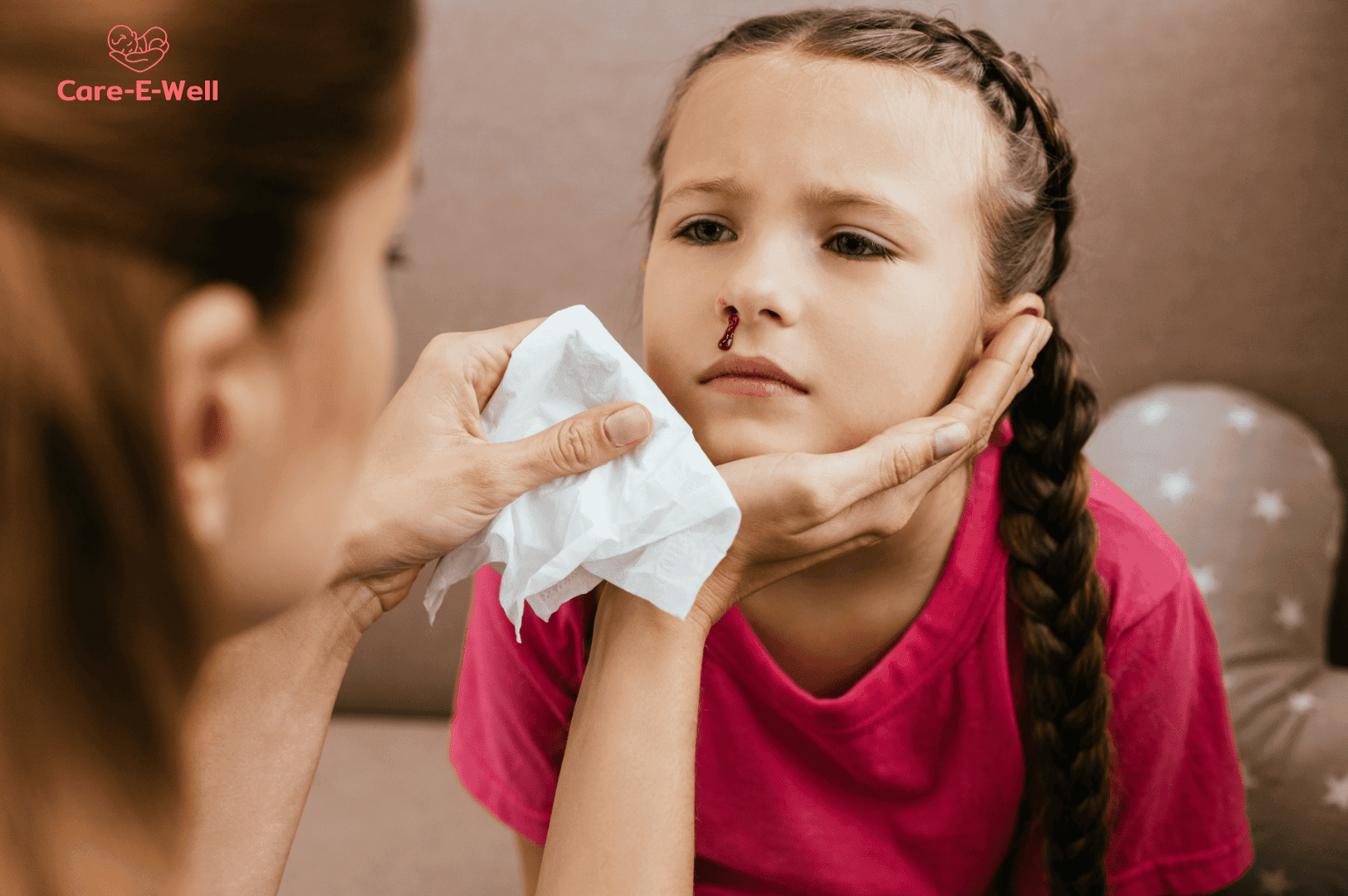
Most nosebleeds in children come from the front of the nose and stop with correct pressure. Sit the child upright, lean them slightly forward, and pinch the soft lower part of the nose firmly against the septum. Keep the pressure continuous for 10–15 minutes without releasing it to check.
Do not tilt the head back. That can make blood run down the throat, where it may be swallowed or inhaled and can trigger coughing, gagging or vomiting. The key first-aid action is sustained compression in the right place—not ice, tissues pushed into the nostril or repeated checking.
For a typical childhood nosebleed: sit up, lean forward, pinch the soft part of the nose, and keep holding for 10–15 uninterrupted minutes.
What are the correct first-aid steps for a nosebleed?
- Sit the child upright.
- Lean the head and upper body slightly forward.
- Ask the child to breathe through the mouth.
- Pinch the soft, fleshy part of the nose just above the nostrils—not the hard bony bridge.
- Keep steady pressure for 10–15 minutes without letting go.
- Encourage an older child to spit out blood that reaches the mouth rather than swallowing it.
- Reassess after the full pressure interval.
A timer helps because 10 minutes can feel much longer when a child is upset. If you release pressure every minute to see whether bleeding has stopped, the clot can be disrupted and bleeding may continue.
Where exactly should you pinch?
Pinch the soft lower third of the nose so the nostrils are compressed against the septum. This targets the anterior nasal vessels responsible for most childhood nosebleeds.
Pinching the bony bridge higher up the nose does not compress the usual bleeding site effectively.
Why should the child lean forward?
Forward positioning helps blood drain out of the nose rather than toward the throat. This reduces swallowing of blood and makes it easier to judge whether active bleeding is continuing.
A child who swallows a large amount of blood may later feel nauseated or vomit. That can make an ordinary nosebleed look more alarming and can restart bleeding.
Why is tilting the head back wrong?
Tilting backward does not stop the bleeding source. It simply directs blood toward the throat, where it may be swallowed or, particularly in a distressed or drowsy child, interfere with the airway.
This is one of the most persistent nosebleed first-aid myths and is a common target of public education studies.

How long should you keep pressure on?
Clinical guidelines commonly recommend continuous compression for at least several minutes, with 10–15 minutes widely used in first-aid instructions. The important point is that the pressure is firm and uninterrupted.
If bleeding continues after one correctly performed interval, repeat sustained compression. If it remains active after a second proper attempt, is heavy, or the child is becoming unwell, seek medical advice or urgent care.
Seek urgent help sooner if bleeding is very heavy, the child is pale or faint, has breathing difficulty, has significant facial or head trauma, or has a known bleeding disorder with difficult-to-control bleeding.
Should you put tissue or cotton inside the nostril?
Do not routinely stuff tissues or cotton into the nose as home first aid. Removing improvised packing can disturb the clot and restart bleeding, and small pieces can be left behind.
Medical nasal packing is different and may be used by clinicians when compression and other treatments are insufficient.
Does ice help stop a nosebleed?
A cool pack may feel soothing, but compression is the proven first-line action. A scoping review of cryotherapy for epistaxis found insufficient evidence to show that applying ice to the nose, face or neck reliably stops bleeding.
If you use a wrapped cool pack for comfort, do not let it replace direct pressure and do not apply ice directly to the skin.
Should the child blow their nose?
During active bleeding, the priority is compression. After the bleeding stops, avoid vigorous nose blowing or picking for a period because either can disrupt the fresh clot.
If a clinician gives specific instructions about gently clearing clots before treatment, follow those instructions. Home first aid should stay simple.
What commonly causes nosebleeds in children?
In children, recurrent anterior nosebleeds often relate to dry or irritated nasal lining, nose picking, minor trauma, colds or allergic inflammation. The front of the nasal septum has a dense network of superficial vessels that can bleed easily.
A single brief nosebleed after rubbing or picking the nose is usually very different from frequent unexplained bleeding accompanied by bruising or bleeding elsewhere.
When should a recurrent nosebleed be medically assessed?
- nosebleeds are frequent or increasingly common
- bleeding is difficult to stop despite correct pressure
- the child also bruises unusually easily
- there is gum bleeding or other unexplained bleeding
- the child seems pale, tired or unwell
- episodes are consistently from one side with nasal blockage or discharge
- there is a family history of a bleeding disorder
- the child takes medicine that affects blood clotting
Most recurrent childhood epistaxis is benign, but persistent or unusually severe bleeding can occasionally reveal an underlying bleeding disorder or local nasal problem.
Are nosebleeds normal in babies?
Nosebleeds are much less typical in infants than in school-age children. A baby with spontaneous or recurrent nasal bleeding deserves a lower threshold for medical assessment, particularly when there is no clear minor injury.
Significant trauma, a nasal foreign body, illness or a bleeding problem may need to be considered depending on the circumstances.
What if the nosebleed followed a hit to the face?
A small bleed after minor nasal trauma can often be managed with the same forward position and soft-nose compression. However, major facial trauma needs a different level of assessment.
Seek urgent care after significant trauma if the nose looks markedly deformed, there is severe swelling, breathing through the nose is obstructed, there is loss of consciousness, persistent vomiting, neurological symptoms or bleeding that remains heavy.
Do not try to straighten a visibly deformed nose yourself.
What if something is stuck in the nose?
A foreign body can cause one-sided bleeding, discharge or a bad smell. Do not repeatedly probe with cotton buds, tweezers or fingers because the object can be pushed farther back.
A suspected button battery in the nose is an emergency because it can rapidly damage tissue and requires urgent removal.
If a button battery may be in the nose, seek emergency medical care immediately.
What should the child do after the bleeding stops?
- rest quietly for a while
- avoid picking or rubbing the nose
- avoid vigorous nose blowing
- avoid very strenuous activity immediately after a significant bleed
- follow any clinician advice about nasal moisturising or treatment of allergy
If dryness is contributing to recurrent episodes, a clinician may recommend measures to keep the nasal lining moist. The best product depends on age and local practice.
Can recurrent nosebleeds cause anaemia?
Most ordinary childhood nosebleeds are too small and infrequent to cause significant blood loss. Repeated heavy episodes can contribute to iron deficiency or anaemia in some children.
Medical assessment is appropriate when recurrent bleeding is substantial or the child develops pallor, unusual fatigue, shortness of breath on exertion or other symptoms that could reflect anaemia.

When is a nosebleed an emergency?
Emergency assessment is warranted when bleeding is massive or cannot be controlled, the child has difficulty breathing, becomes faint or unusually weak, is coughing or vomiting large amounts of blood, or the nosebleed follows major trauma.
Children with known serious bleeding disorders may have an individual emergency plan. Follow that plan rather than generic first-aid timing.
The amount of blood can look dramatic because it spreads quickly on tissues and clothing. Judge urgency by whether bleeding responds to correct pressure and by how the child looks and feels.
How can recurrent nosebleeds sometimes be prevented?
Reducing local irritation can help when dryness and picking are the main triggers. Keep fingernails short, discourage nose picking and address persistent nasal irritation or allergy with a healthcare professional.
If nosebleeds continue despite simple measures, an ear, nose and throat clinician may examine the septum and consider treatments such as cautery in selected children.
Frequently asked questions
Should my child lie down during a nosebleed?
No. Sitting upright and leaning forward is preferred because it helps blood drain out rather than toward the throat.
Should I pinch the bridge of the nose?
No. Pinch the soft lower part of the nose just above the nostrils.
Can I stop after five minutes if the bleeding looks better?
It is better to complete a sustained pressure interval. Releasing too soon can disrupt the forming clot.
Is a cold pack enough?
No. Evidence for cryotherapy is weak. Direct compression is the first-line action.
When should frequent nosebleeds be checked?
Seek medical advice when episodes are frequent, severe, difficult to stop or accompanied by unusual bruising, other bleeding, pallor or a family history of bleeding problems.
The key takeaway
Correct first aid for nosebleeds in children is simple: sit the child upright, lean forward and pinch the soft lower nose continuously for 10–15 minutes. Do not tilt the head back or release pressure repeatedly to check. Ice may be used for comfort but should not replace compression. Heavy bleeding, breathing problems, significant trauma, faintness or bleeding that will not stop needs urgent assessment, while frequent or unexplained episodes deserve medical review.
Sources and References
- Tunkel DE, Anne S, Payne SC, et al. — Clinical Practice Guideline: Nosebleed (Epistaxis)
- Tunkel DE, Anne S, Payne SC, et al. — Clinical Practice Guideline: Nosebleed (Epistaxis) Executive Summary
- Tunkel DE, Holdsworth SM, Alikhaani JD, et al. — Plain Language Summary: Nosebleed (Epistaxis)
- Sowerby LJ, Rajakumar C, Davis M, et al. — Epistaxis first-aid management: A needs assessment among healthcare providers
- Berry D, Carlson JN, Singletary EM, et al. — Use of Cryotherapy for Managing Epistaxis in the First Aid Setting: A Scoping Review
- Dunne H, Abouabdallah M, Roscamp J, et al. — Exploring knowledge of first aid in epistaxis—25 years on
- AlZabin A, Almajed E, Altamimi R, et al. — Parental first aid literacy in epistaxis: do parents know what to do?
- Recht M, Chitlur M, Lam DJ, et al. — Epistaxis as a Common Presenting Symptom of Glanzmann’s Thrombasthenia, a Rare Qualitative Platelet Disorder
- Hewett Brumberg EK, Douma MJ, Alibertis K, et al. — 2024 American Heart Association and American Red Cross Guidelines for First Aid
Did this Insight help?
A little love for something worth reading.


