
Care-E-Well Insights
Potty Training Accidents: What’s Normal and How to Respond
Potty training accidents are common. Learn what is normal, how to respond calmly, reduce accidents, and when to seek medical advice.
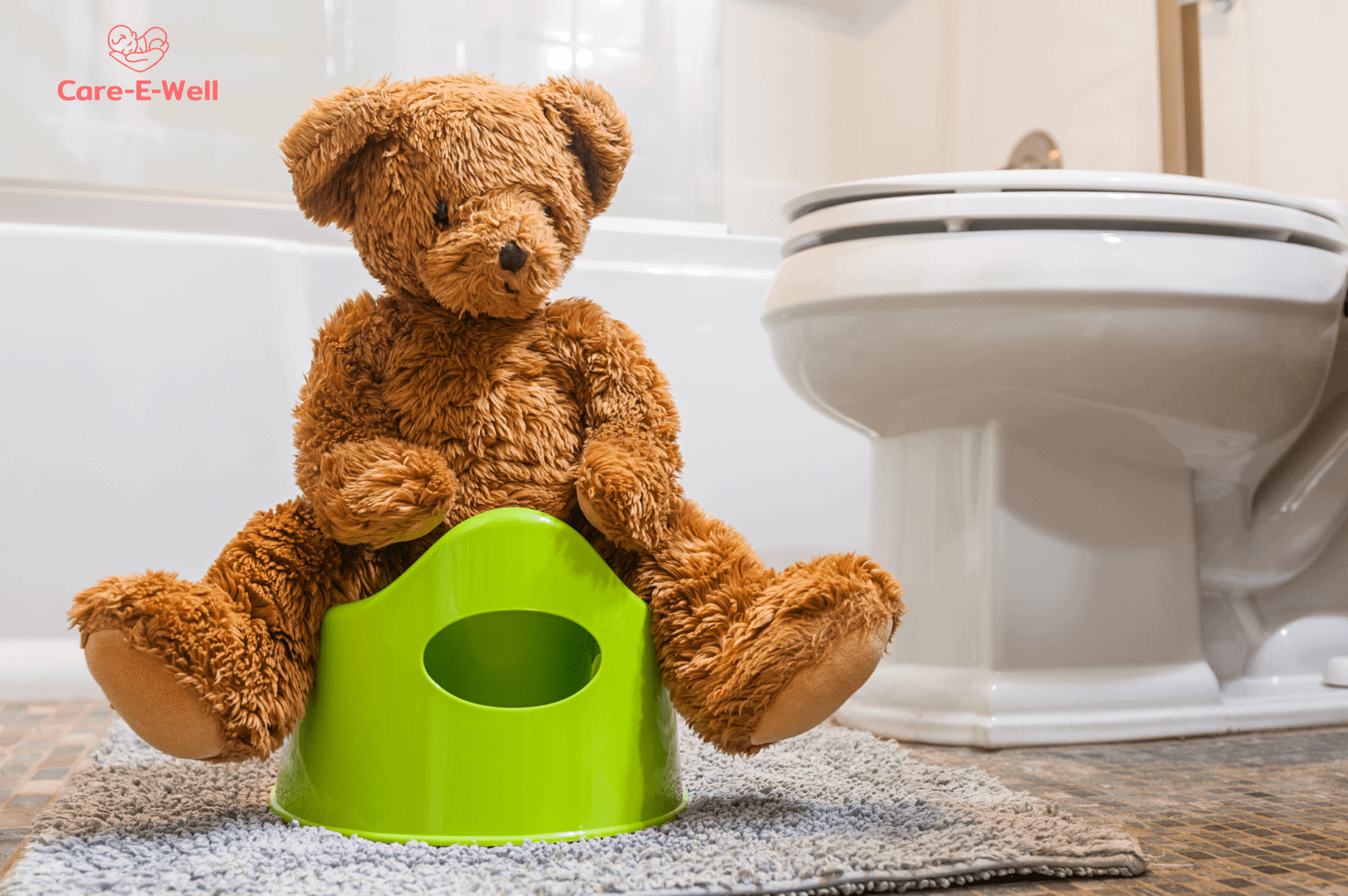
Potty training accidents are a normal part of learning for many toddlers. A child can understand what the potty is, stay dry for longer stretches and still occasionally wet or soil their clothes because recognising the urge, stopping an activity, getting to the toilet and managing clothing all have to happen in sequence.
The most helpful response is usually calm and practical: help your child get clean, briefly name what happened and move on. Accidents become more informative when you look for patterns—during intense play, after long gaps between toilet visits, during constipation, or after a major change—rather than treating each one as misbehaviour.
An accident is part of the learning process, not proof that potty training has failed. Look for patterns, keep the response neutral and support the skill your child is still building.
Are potty training accidents normal?
Yes. Toilet independence develops gradually. A child has to notice bladder or bowel signals early enough, communicate or act on them, reach the toilet, manage clothing and relax or release in the right place. Those steps do not become reliable all at once.
Research on toileting development shows wide individual variation in when readiness skills emerge and when daytime continence becomes consistent. Reviews also note that no single toilet-training method has been proven superior for every child.
Early in training, accidents are especially understandable when the child is distracted, tired, excited or learning in a new environment. What matters more than one wet pair of trousers is the overall direction: is awareness improving, are dry intervals lengthening, and is the child increasingly able to reach the potty in time?
Why do accidents happen even after several dry days?
A dry streak can make it feel as though training is complete, but early continence is often fragile. The child may have succeeded because an adult prompted at the right times, the daily routine was predictable or they happened to notice each urge early enough.
Then a different day arrives. They drink more, become absorbed in play, visit a new place, wear harder clothing or miss a usual toilet opportunity. An accident can happen without the child having “forgotten” the skill.
This is one reason it is more useful to think of toilet learning as consolidation rather than a switch from untrained to trained. Skills become more reliable through repeated successful experiences in different situations.
Common reasons for potty training accidents
- the child notices the urge too late
- play is more interesting than stopping for the toilet
- an adult has reduced prompting before the child can self-initiate reliably
- clothing is difficult to remove quickly
- the toilet is farther away or unfamiliar
- the child is tired, ill or out of routine
- constipation or stool withholding is interfering with bowel or bladder function
- a stressful family or childcare change has disrupted a developing routine
- the child is being asked to hold urine for too long
These causes need different solutions. A child who waits too long during play may need predictable reminders. A child who suddenly has stool accidents with hard bowel movements needs constipation assessed rather than more potty pressure.

How should you respond to a potty accident?
Keep your response brief and neutral. You do not need to pretend the accident did not happen, but you also do not need a lecture.
A simple response might be: “Your trousers are wet. Pee goes in the potty. Let’s get you dry.” Help with changing according to your child’s developmental ability, then return to the day.
Neutral accident responses are used in behavioural toilet-training research as part of broader teaching packages. The evidence does not show that shame or punishment improves normal toilet learning, and a negative emotional response can make a child more reluctant to communicate about accidents.
The teaching moment is short: notice, clean up, remind and continue. Long discussions rarely teach the body-awareness skill that was missing.
Should a child help clean up after an accident?
It is reasonable for a child to participate in age-appropriate self-care without turning cleanup into punishment. They might place wet underwear in the laundry basket, pull on clean trousers or wash their hands with help.
The difference is the tone and purpose. “Let’s get clean and put these clothes in the basket” teaches routine. Making a child scrub the floor, remain in wet clothes or perform a burdensome cleanup as a consequence adds shame and is not necessary for learning continence.
Should you remind your child to use the potty?
Often, yes—especially early in training. Self-initiation is a separate skill from being able to urinate when an adult brings the child to the potty.
Use a small number of predictable opportunities rather than asking every few minutes. Useful times may include after waking, before leaving home, before a long car journey and at natural transitions in the day. If your child has a consistent bowel pattern, a relaxed opportunity after a meal may also fit their routine.
Gradually reduce reminders as the child begins recognising and acting on urges independently. If accidents increase sharply after you remove all prompting, that may simply mean the support was faded faster than the skill developed.
What if accidents happen because my child is too busy playing?
Toddlers can notice an urge and still decide—consciously or not—that play is more urgent. Their ability to interrupt a rewarding activity, plan the next steps and act before the bladder empties is still developing.
Build toilet opportunities around transitions instead of repeatedly interrupting the child in the middle of play. “Bathroom, then snack” or “potty before we go outside” can feel more predictable than constant questions.
When you do see clear body signals such as suddenly freezing, holding the genital area, squatting or doing a familiar “pee dance,” calmly direct the child to the toilet rather than asking a question whose automatic answer may be no.
Do frequent accidents mean my child was not ready?
Not necessarily. Some accidents are expected during learning. However, if nearly every void happens in clothing, the child shows little awareness before or after elimination, or every toilet interaction becomes a struggle, the current training intensity may exceed the child’s readiness.
You can reduce pressure while continuing to teach the building blocks: bathroom vocabulary, easy clothing, noticing wet versus dry, sitting comfortably and following a simple toileting routine.
There is no evidence-based number of accidents that defines whether a toddler is ready. Look at the overall pattern and the child’s ability to participate.
When accidents may point to constipation
Stool accidents deserve special attention when they appear alongside hard stools, painful bowel movements, withholding or long gaps between stools. Functional constipation can cause fecal soiling when softer stool leaks around retained stool, and constipation can also be associated with urinary symptoms.
A child may hide, stiffen, cross the legs, stand on tiptoe or squeeze the buttocks when trying to withhold stool. Those behaviours can look like straining even though the child is actually trying not to poop.
Seek healthcare advice if accidents are accompanied by persistent hard or painful stools, repeated stool withholding, fecal soiling, blood in the stool, significant abdominal swelling, vomiting, severe or worsening pain, poor growth or a child who appears unwell.
What if accidents suddenly increase after the child was doing well?
First check the basics. Has the routine changed? Is the child ill, overtired or starting a new childcare setting? Are they drinking or urinating much more than usual? Have bowel movements become hard or painful? Is the bathroom less accessible than before?
A short-lived increase can happen during developmental transitions. Stressful life events have been associated with urinary and defecation problems in observational research, although an accident after a change does not prove that stress caused it.
Return temporarily to the supports that previously worked: predictable toilet opportunities, easy clothing, calm reminders and neutral cleanup. Avoid announcing that the child has “gone backwards.”
Is this an accident or potty training regression?
The terms overlap, but they are useful in different ways. An occasional accident during an otherwise improving learning process is not necessarily regression.
Regression usually describes a more noticeable loss of previously reliable toileting behaviour—for example, a child who had been consistently using the toilet begins having repeated accidents or requesting diapers again.
The distinction is not a medical diagnosis. What matters is whether the change is brief and understandable or persistent enough that you should investigate constipation, urinary symptoms, stress, illness or another developmental concern.
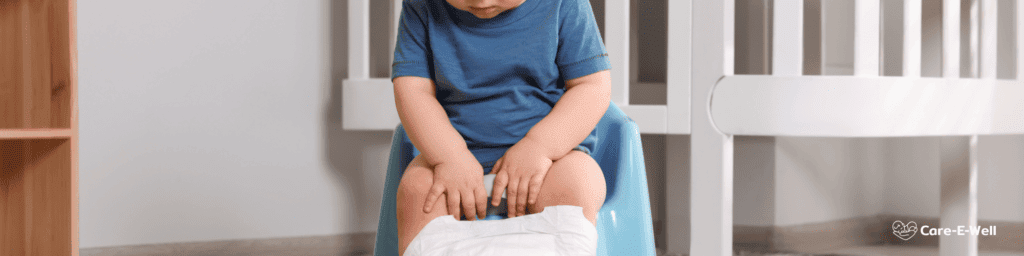
When should daytime wetting be medically assessed?
A newly training toddler does not need medical assessment for every urine accident. Seek advice when wetting is persistent beyond what seems developmentally expected, begins suddenly after established continence, or occurs with other urinary or general symptoms.
Ask a healthcare professional about new or persistent wetting accompanied by pain or burning with urination, fever, unusually frequent or urgent urination, weak or abnormal urine stream, recurrent urinary infections, constipation, excessive thirst, unexplained weight loss, neurological symptoms or a marked change after a long period of reliable continence.
Childhood urinary incontinence is heterogeneous. Research identifies biological, developmental and psychosocial factors, so persistent wetting should not automatically be labelled laziness or behavioural defiance.
How to reduce accidents without increasing pressure
- Make sure the potty or toilet is easy to reach.
- Choose clothing your child can lower quickly.
- Offer toilet opportunities at predictable transitions.
- Watch for your child’s individual body signals.
- Gradually reduce prompts rather than stopping them abruptly.
- Keep bowel movements soft and comfortable.
- Respond to accidents with a short, neutral routine.
- Praise communication, self-initiation and participation rather than only perfect dryness.
- Review patterns if accidents suddenly increase.
- Seek professional advice when pain, constipation, urinary symptoms or persistent loss of established continence is present.
A simple accident log for a few days can help if you are stuck. Record approximately when the child drinks, uses the toilet and has accidents. The goal is not to monitor every minute but to reveal predictable windows that you can support.
Frequently asked questions
How many potty training accidents are normal?
There is no evidence-based number that applies to every toddler. Accidents are expected during learning, and frequency should generally decrease as awareness, self-initiation and toilet skills become more reliable.
Should I put my child back in diapers after an accident?
One accident is not a reason to abandon training. If accidents are constant and the child shows little readiness or significant distress, reducing training intensity may be appropriate. For stool withholding, a temporary diaper strategy may sometimes be used while constipation and fear are addressed.
Is my child having accidents on purpose?
Usually you cannot infer intent from the accident itself. Late body awareness, distraction, difficulty stopping play, constipation, fear or limited self-initiation are common practical explanations.
Should I reward dry pants all day?
You can acknowledge success, but rewards are often more useful for actions the child can control directly, such as telling you they need the toilet, walking to the bathroom or sitting cooperatively. Dryness depends on several developmental and physiological steps.
When should I worry about a sudden return of accidents?
Investigate when a previously reliably continent child develops repeated new accidents, especially with pain, constipation, urinary urgency, excessive thirst, illness or other concerning symptoms. A major life change can also affect toileting, but do not assume stress is the cause without checking physical factors.
The key takeaway
Potty training accidents are usually part of learning, especially while a child is still developing body awareness and self-initiation. Respond neutrally, make the routine easy, look for patterns and keep constipation on your troubleshooting list. When accidents become persistent, painful or represent a clear loss of established continence, shift from “training harder” to finding the reason.
Sources and References
- Kimball V — The Perils and Pitfalls of Potty Training
- Wu HY — Can evidence-based medicine change toilet-training practice?
- Perez BC, Bacotti JK, Peters KP, et al. — An extension of commonly used toilet-training procedures to children with autism spectrum disorder
- Donnelly MG, Karsten AM — Resolving Barriers to Continence for Children with Disabilities: Steps Toward Evidence-Based Practice
- Joinson C, Grzeda M, von Gontard A, et al. — A prospective cohort study of biopsychosocial factors associated with childhood urinary incontinence
- Jacob H, Grodzinski B, Fertleman C — Fifteen-minute consultation: problems in the healthy child—toilet training
- Philips EM, Peeters B, Teeuw AH, et al. — Stressful Life Events in Children With Functional Defecation Disorders
- Tabbers MM, DiLorenzo C, Berger MY, et al. — Evaluation and treatment of functional constipation in infants and children: evidence-based recommendations from ESPGHAN and NASPGHAN
- Rajindrajith S, Devanarayana NM, Benninga MA — Childhood constipation: Current status, challenges, and future perspectives
Did this Insight help?
A little love for something worth reading.


