
Care-E-Well Insights
Potty Training for Daycare or Nursery: Keeping Routines Consistent
Potty training for daycare or nursery? Learn how to align routines, prompts, clothing and accident responses between home and childcare.
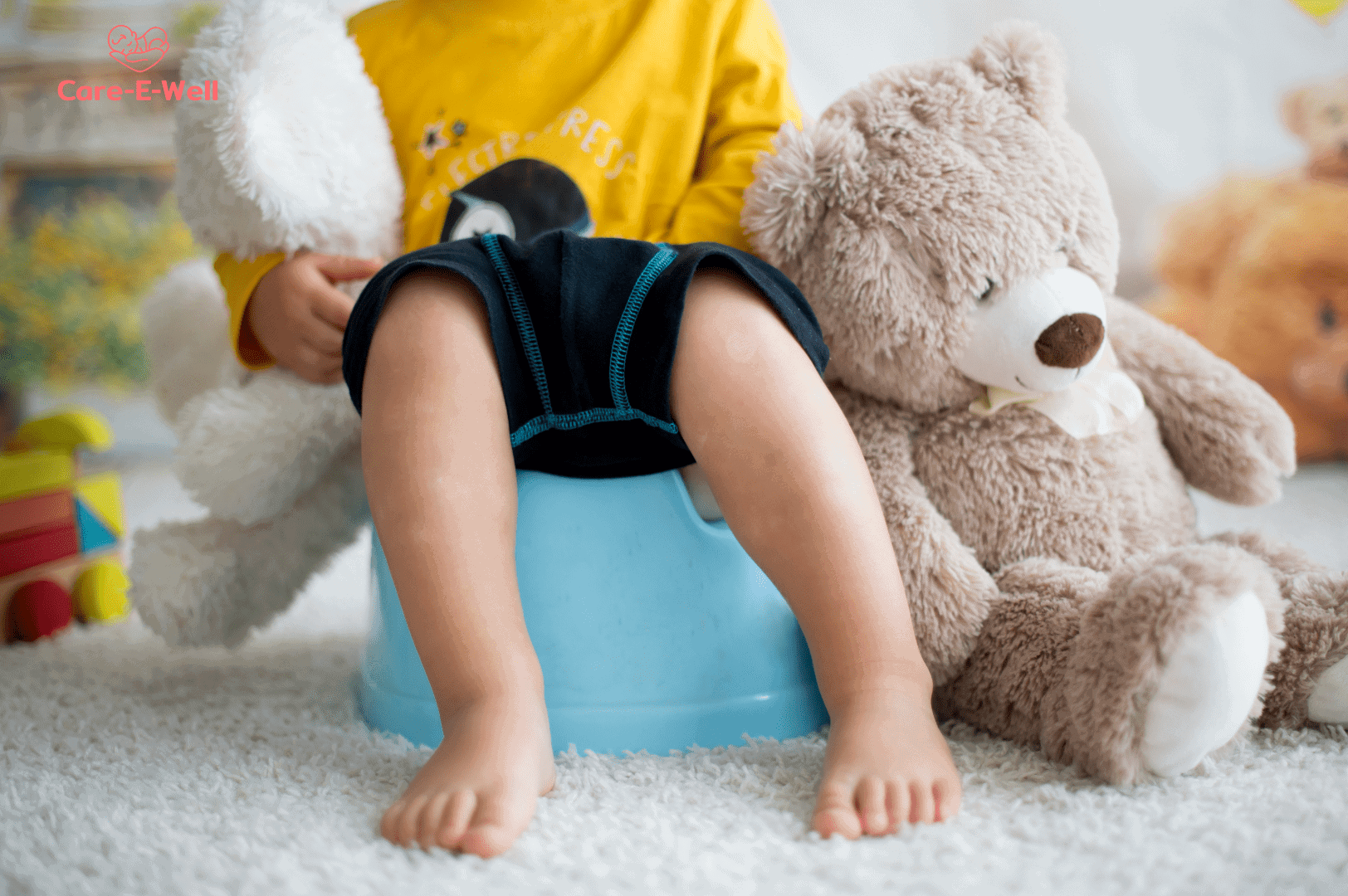
Potty training for daycare or nursery works best when home and childcare use the same basic signals, language and response to accidents. They do not need to follow an identical timetable. The aim is to make the child’s expectations predictable enough that using the toilet feels like the same skill in two different places.
Before training starts, ask the nursery what they can realistically support: when toilets are offered, whether they allow underwear or training pants, how they manage accidents, what clothing works best and how they communicate bowel or urine patterns. Then agree on a simple plan that both sides can sustain.
Consistency means matching the important principles—not reproducing the exact home routine at daycare minute by minute.
Why potty training can look different at daycare and at home
A toddler may use the toilet confidently at home and still have accidents at nursery. The environments ask different things of the child. At home, the toilet is familiar, an adult may notice subtle body signals and the child can interrupt play easily. In childcare, there are other children, group transitions, unfamiliar bathrooms and fewer opportunities for one-to-one prompting.
Daycare is also not a minor part of the training environment for many families. Research from childcare settings shows that toilet learning is often a shared responsibility between parents and daycare staff, and studies have specifically examined structured training delivered within daycare centres.
That means differences between settings should be expected and planned for rather than interpreted as defiance or proof that training has failed.
What should stay consistent between home and nursery?
You do not need identical routines. Focus on the parts that help the child understand what happens next.
- the same simple words for pee, poop, potty or toilet
- similar cues for when a toilet visit is offered
- easy clothing the child can manage
- a calm, brief response to accidents
- encouragement for communication and participation
- no shaming or punishment
- attention to constipation, withholding or painful stools
- a shared plan for gradually reducing adult prompts
These are the transferable parts of toilet learning. A child can learn that “toilet before we go outside” applies both at home and nursery even if the exact clock time differs.
Talk to daycare before removing diapers
Ask for the centre’s policy before sending your child in underwear for the first time. Policies can be shaped by staffing, hygiene procedures, room routines and local requirements, so the nursery may not be able to implement every home strategy.
Useful questions include:
- What signs of readiness do you usually look for?
- At what times do you normally offer the toilet?
- Can my child ask to go outside those routine times?
- Do you use potty chairs, child-sized toilets or seat reducers?
- What clothing is easiest for staff to manage?
- How many spare outfits should I send?
- How are accidents handled?
- Will you tell me about bowel movements, withholding or repeated wetting?
- How do you support a child who is afraid of the nursery toilet?
The goal is not to make the nursery defend its system. It is to identify where home and childcare can align and where you need a practical compromise.

Should daycare follow the exact same toilet schedule as home?
Usually not. A rigid schedule that works in one household may not fit a room of toddlers. Research in daycare has tested structured group toilet-training approaches, showing that organised toileting can be implemented in childcare, but that does not establish one universal schedule as best for every child.
Instead, agree on predictable opportunities around natural transitions. Common examples include after arrival, before going outside, before a nap, after waking or before going home.
If your child tends to poop at a predictable time, share that information. A relaxed toilet opportunity around the usual bowel window can be more useful than simply adding more frequent sits throughout the day.
Keep toilet prompts similar
A child who is asked every five minutes at home but only offered the toilet at set transitions in nursery may rely heavily on adult prompting in one setting and miss urges in the other.
Use short, neutral language. For example, “It’s toilet time before we go outside” is clearer than repeatedly asking, “Do you need to pee?” when the child’s automatic answer is no.
As self-initiation improves, both home and nursery can gradually reduce reminders. The timing does not have to be perfectly synchronised, but both settings should be working toward the same long-term skill: the child noticing and acting on body signals.
What if daycare uses a potty but home uses a toilet?
This is usually manageable. Children can learn that different bathrooms contain different equipment. The important issue is whether the setup feels stable, comfortable and accessible.
If your child strongly prefers one setup, ask whether nursery has a similar option. A child who uses a seat reducer and foot support at home may feel insecure on a large toilet with dangling feet. Conversely, a child accustomed to a regular toilet may be uninterested in a floor potty.
Avoid turning equipment differences into a test. If the child can use both safely and comfortably, flexibility can actually help generalise the skill.
Choose daycare-friendly clothing
Clothing matters more in a group setting because staff cannot always respond the instant a child gives a subtle signal. The child benefits from being able to lower clothing quickly.
- elastic-waist trousers or leggings
- underwear that is easy to pull down
- dresses or loose garments that do not create complicated fastenings
- spare socks as well as trousers and underwear
- shoes that tolerate an occasional accident
Avoid complicated belts, overalls, difficult buttons and layered outfits during the early phase if they slow the child down.
How should daycare respond to accidents?
The ideal response is brief, calm and non-shaming: help the child change, remind them where urine or stool goes and continue the day.
Behavioural toilet-training research often uses neutral accident responses within larger teaching packages. Modern reviews also increasingly question unnecessarily restrictive or punitive components. For a typically developing toddler, there is no reason to make an accident emotionally costly.
Age-appropriate participation is fine. The child may pull on clean trousers or place wet clothes in a designated bag. Cleanup should remain self-care, not punishment.
What if the child is dry at home but has accidents at nursery?
First, investigate the environmental difference rather than assuming the child “knows better.” Ask when accidents happen.
- during intense group play
- while waiting for an adult
- shortly before scheduled toilet times
- during outdoor play
- after large drinks
- around nap transitions
- because the child does not want to use the nursery toilet
- alongside hard stools or withholding
A pattern often suggests the solution. Accidents during outdoor play may call for a toilet opportunity before going outside. Accidents only in the nursery bathroom may point to fear, privacy, stability or sensory discomfort.
If the child is still early in training, they may also need more prompting at nursery than they need at home until the skill generalises.
Watch bowel habits across both settings
Constipation can quietly derail toilet learning. A child may poop at home but withhold all day at nursery, or staff may notice stiffening, hiding or repeated attempts to avoid the bathroom that parents never see.
Share bowel information when it is relevant. Hard stools, painful bowel movements, long gaps between stools, very large stools and fecal soiling deserve attention.
Seek healthcare advice for persistent painful or hard stools, repeated withholding, fecal soiling, blood in the stool, significant abdominal swelling, vomiting, severe pain, poor growth or a child who appears unwell.
The aim is not to make childcare staff diagnose constipation. Their observations can help parents and healthcare professionals see a pattern that spans the whole day.
What if the nursery says your child is not ready?
Ask what they are seeing. “Not ready” can mean many things: the child has no awareness before accidents, refuses the bathroom, cannot manage clothing, becomes distressed during sits or needs more adult support than the setting can provide.
Compare that with home behaviour. If the child succeeds only when an adult prompts constantly, self-initiation may still be developing. If the child is capable but afraid of the nursery bathroom, the problem may be environmental rather than general readiness.
Work from the specific barrier. A vague disagreement about readiness is harder to solve than “she will sit at home but cries when the automatic flush activates at nursery.”

What if daycare wants potty training but you do not think your child is ready?
Training should not become a contest between adults. Share what you are observing and ask which skills the nursery believes are present.
Research on readiness shows wide variation in when toilet-related developmental skills emerge, and age alone is not a sufficient criterion. If the child is highly resistant, has painful stools or shows little awareness of elimination, increasing pressure may not be productive.
A staged plan can still build skills: bathroom familiarity, easy clothing, sitting comfortably for a short time and using common toileting words.
Create a one-page home-and-daycare plan
Keep it simple enough that every caregiver can follow it.
- Write the words you use for pee, poop and toilet.
- List the most useful toilet transition times.
- Note the child’s typical body signals.
- Explain whether the child needs help with clothing or wiping.
- State how you respond to accidents.
- Note any known toilet fears or equipment preferences.
- Include relevant constipation or withholding information.
- Agree how daycare will report important patterns.
- Decide when reminders can gradually be reduced.
- Review the plan after several days rather than changing it after every accident.
Consistency becomes much easier when adults are not relying on memory or assumptions about what the other setting is doing.
Frequently asked questions
Can daycare potty train my child if we have not started at home?
Daycare can contribute substantially to toilet learning, and structured programmes have been studied in childcare settings. However, the skill is easier to generalise when parents and carers communicate and the child receives compatible support at home.
Should I send my child to nursery in underwear from day one?
Follow the nursery policy and the child’s readiness. Some settings may prefer a planned transition. If underwear begins, send ample spare clothing and agree on how accidents will be handled.
Does daycare need to use the same potty as home?
No. The setup should be safe, stable and comfortable, but children can learn to use different toilet equipment in different places.
What if my child refuses to poop at nursery?
Do not force prolonged sitting. Ask about privacy, fear and bowel comfort, and monitor for withholding or constipation. Persistent painful stools, long gaps between bowel movements or soiling should be discussed with a healthcare professional.
How often should home and daycare communicate?
Enough to identify meaningful patterns without turning every toilet visit into a report. Early in training, a short daily update on accidents, successful self-initiation and bowel concerns can be useful; communication can reduce as the skill stabilises.
The key takeaway
Potty training for daycare or nursery is most successful when adults coordinate the parts that matter: language, predictable opportunities, easy clothing, neutral accident responses and attention to bowel comfort. Home and childcare do not need identical schedules. Build a plan both settings can actually sustain, use differences as clues when problems appear, and gradually reduce adult support as the child becomes more independent.
Sources and References
- Kaerts N, Vermandel A, Van Hal G, et al. — Toilet training in healthy children: Results of a questionnaire study involving parents who make use of day-care at least once a week
- Kaerts N, Van Hal G, Vermandel A — Toilet training in daycare centers in Flanders, Belgium
- Van Aggelpoel T, De Wachter S, Neels H, et al. — Implementing a new method of group toilet training in daycare centres: a cluster randomised controlled trial
- Vermandel A, Van Kampen M, De Wachter S, et al. — The efficacy of a wetting alarm diaper for toilet training of young healthy children in a day-care center: A randomized control trial
- Wyndaele J-J, Kaerts N, Wyndaele M, Vermandel A — Development Signs in Healthy Toddlers in Different Stages of Toilet Training: Can They Help Define Readiness and Probability of Success?
- Sejkora E, Igler EC, Davies WH, et al. — Parent-reported toilet training practices and the role of pediatric primary care providers
- Brazelton TB — A Child-Oriented Approach to Toilet Training
- Schum TR, Kolb TM, McAuliffe TL, et al. — Sequential acquisition of toilet-training skills: A descriptive study of gender and age differences in normal children
- Kiddoo D — Toilet training children: when to start and how to train
- Donnelly MG, Karsten AM — Resolving Barriers to Continence for Children with Disabilities: Steps Toward Evidence-Based Practice
Did this Insight help?
A little love for something worth reading.


