
Care-E-Well Insights
Potty Training Resistance: What to Do When a Child Says No
Potty training resistance? Learn why toddlers say no, how to reduce battles, spot constipation and decide when to pause or seek help.
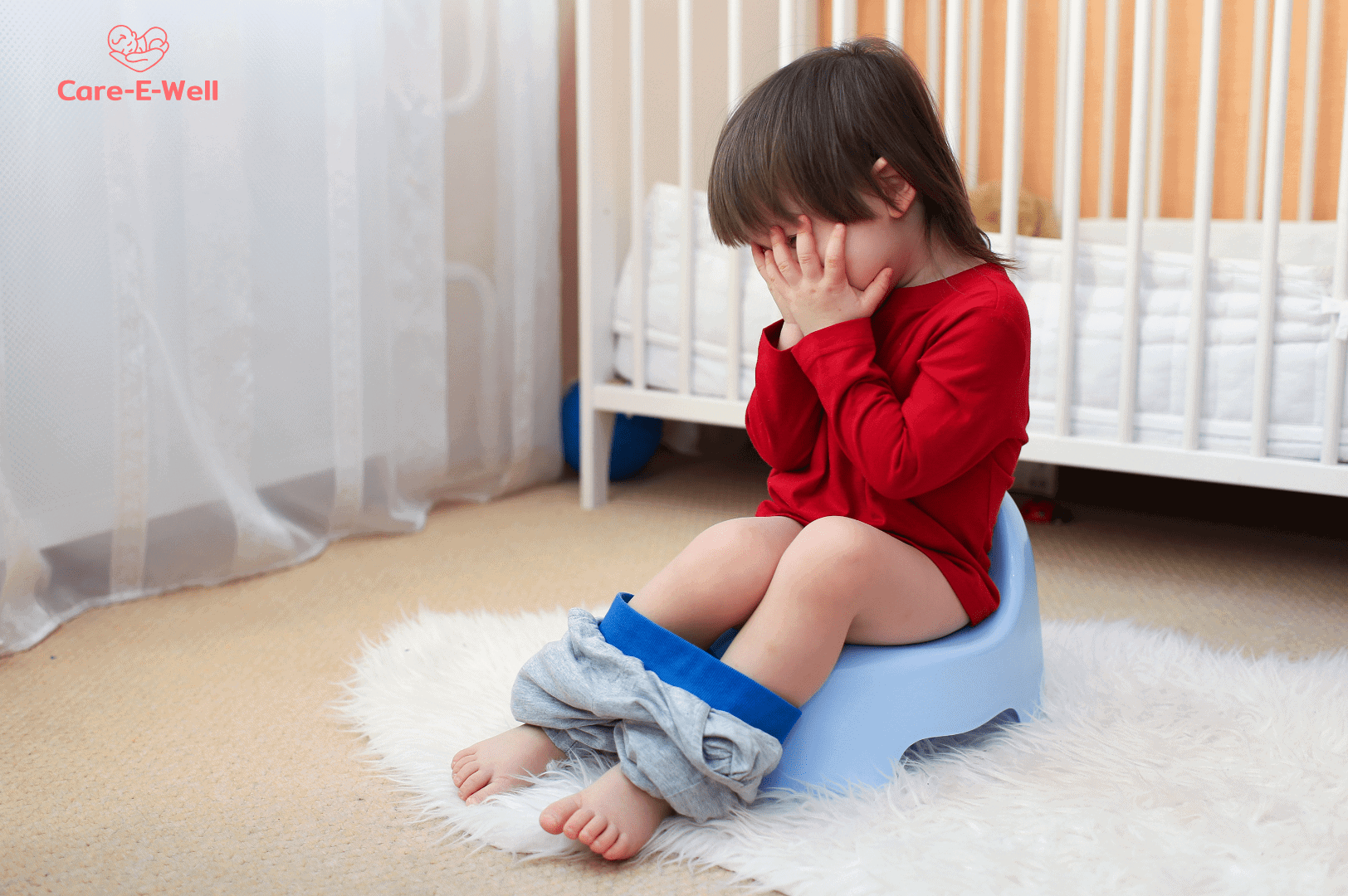
Potty training resistance is usually a reason to investigate before you push harder. A toddler who says “no” may be showing that the timing is wrong, the toilet feels frightening or unstable, bowel movements hurt, reminders have become overwhelming, or they simply need more control over a new self-care skill.
Resistance does not automatically mean a child is stubborn or has a behaviour problem. Research on stool-toileting refusal has found important links with constipation and painful defecation, and children who refused stool toileting were not simply more behaviourally difficult than their toilet-trained peers.
When a child resists the potty, treat the “no” as useful information. Find the barrier before increasing the pressure.
What does potty training resistance look like?
Resistance can range from mild reluctance to intense distress. Some children simply say no when invited. Others run away, stiffen their bodies, cry when placed near the toilet, hold urine or stool, insist on a diaper for bowel movements, or willingly sit but refuse to release.
These patterns are not all the same problem, so they should not all get the same response. A child who fears the flush needs something different from a child whose bowel movements are painful or a child who has not yet developed enough awareness to know when they need to go.
Is potty training resistance normal?
Some resistance and temporary setbacks are common during toilet learning. Child-oriented approaches recognise that toileting develops gradually and depends on readiness, willingness and several skills arriving together.
The scientific evidence does not identify one universal training method that prevents resistance. Families use different approaches, and research reviews have repeatedly noted limitations in the evidence comparing them.
What matters most is whether resistance is brief and manageable or persistent enough to interfere with toileting, bowel comfort or daily life.
First, check whether your child is actually ready
A toddler may understand what the potty is without being ready to use it consistently. Look for growing awareness of wetness or elimination, the ability to follow simple instructions, enough motor control to sit securely and some willingness to participate.
If your child has almost no awareness of urination or bowel movements and every attempt requires the adult to direct the entire process, a slower introduction may be more productive than intensive training.
You can keep teaching bathroom words, practising clothing skills and making the potty familiar without demanding immediate continence.

Check for fear and physical discomfort
The adult toilet can feel enormous to a small child. A large opening, unstable reducer, dangling feet, loud flush or fear of falling can make sitting stressful even when the child is otherwise ready.
Watch what happens before the refusal. Does your child approach the potty happily but panic when sitting? Do they use a floor potty but reject the toilet? Do they become tense only when you flush?
- use a stable seat that fits the child comfortably
- provide firm foot support when using an adult toilet
- let a fearful child explore the setup while clothed
- avoid flushing while the child is sitting if the sound worries them
- offer a potty chair if the adult toilet feels too intimidating
A small change in equipment can sometimes remove what looked like a behavioural battle.
Constipation can look like resistance
This is one of the most important possibilities to rule out. Prospective research has linked constipation and painful defecation with stool-toileting refusal, and one study found that constipation often occurred before the refusal developed.
A child may hide to poop, cross their legs, stiffen, stand on tiptoe, ask for a diaper or refuse to sit because they are trying to avoid a bowel movement that they expect to hurt. Research has also associated hiding while defecating with stool withholding and constipation.
If urination on the toilet is going well but bowel movements are a battle, do not assume the child is deliberately choosing the harder option. Pooping may feel physically or emotionally different.
Seek healthcare advice if your child has persistent hard or painful stools, repeated stool withholding, blood in the stool, marked abdominal swelling or significant ongoing pain. Treating constipation may need to take priority over toilet-training progress.
What to do when every potty invitation gets a “no”
Reduce the number of opportunities for conflict. If you have been asking every few minutes, reminding repeatedly or negotiating each sit, your child may begin refusing the invitation before even checking what their body feels.
Instead, build a small number of predictable opportunities into the day. Offer the potty at natural transitions, after waking or at times when you have noticed your child often eliminates. Keep the invitation calm and the sit brief.
Give limited choices that preserve the routine: “Potty chair or toilet?” “Before or after we put on your socks?” “Do you want me to wait by the door or stay beside you?” Choices can give a toddler some control without making toileting a lengthy negotiation.
What if your child sits but will not pee or poop?
Sitting is only one part of the skill. A child may be able to cooperate with the routine but not yet recognise the urge early enough or relax enough to release on demand.
Avoid extending the sit until something happens. End it neutrally and try again later. Praise the participation your child can control rather than turning elimination into the price of getting off the toilet.
If the child repeatedly waits until a diaper is back on before releasing, consider whether the toilet feels unsafe, whether they are withholding, or whether the sensory experience of eliminating without a diaper is unfamiliar.
What if your child will pee in the potty but refuses to poop?
Stool-only refusal is a recognised toilet-training pattern. Studies have found associations with constipation, painful defecation and withholding, but it should not automatically be interpreted as a general behaviour disorder.
Keep bowel movements comfortable and lower the emotional stakes. If your child insists on a diaper to poop, a gradual transition may be more useful than abruptly removing the only situation in which they feel able to release.
The goal is eventually comfortable toilet use, not winning a single bowel movement. If stool withholding develops, professional guidance can help you avoid a cycle of pain, fear and further withholding.
Should you use rewards for potty training resistance?
Positive reinforcement is part of many toilet-training programmes, but rewards are not a cure for every form of resistance. A sticker cannot solve constipation, fear of falling or lack of developmental awareness.
If you use a reward, connect it to a behaviour the child can control, such as walking to the bathroom, sitting briefly or telling you about a body signal. Keep praise warm but low-pressure.
Avoid escalating rewards until the child feels they are negotiating a major prize for every toilet visit. The routine should gradually become an ordinary part of daily self-care.
How should you respond to accidents during resistance?
Keep the response simple and neutral. Help your child change, state where urine or stool belongs and continue the day. Shame, teasing or comparison with another child adds emotional pressure without teaching the missing skill.
Accidents can also help you see patterns. If they repeatedly happen at the same time, during intense play or shortly after a predictable routine point, adjust your next invitation accordingly.
An accident is data about timing and awareness, not evidence that your child is refusing to learn.
When is a pause better than pushing through?
A pause can be sensible when every toilet interaction has become a fight, the child shows intense fear, readiness signs are weak or a major family disruption makes consistency difficult.
Pausing does not require removing the potty from sight or treating the attempt as a failure. Keep language neutral, continue normal bathroom routines and return to active training when the child is more receptive.
If resistance is caused by constipation or pain, however, “waiting it out” is not enough. Address the underlying bowel problem with appropriate healthcare guidance.

A step-by-step plan for potty training resistance
The goal is to identify the barrier and rebuild cooperation, not to increase control.
- Observe when resistance happens and whether it differs for urine and stool.
- Check for hard stools, painful bowel movements or withholding.
- Make sure the potty or toilet setup feels stable and physically comfortable.
- Reduce repeated prompting if toileting has become the main topic of the day.
- Offer a few predictable opportunities and simple choices.
- Praise participation and communication rather than demanding elimination.
- Respond to accidents without shame or punishment.
- If distress escalates, reduce the intensity or pause active training.
- Seek professional advice when pain, constipation, persistent withholding or broader developmental or elimination concerns are present.
This approach may feel slower than forcing repeated sits, but it gives you better information about what your child actually needs in order to progress.
When should persistent refusal be professionally assessed?
Consider discussing ongoing toilet refusal with a paediatric healthcare professional when it persists despite a calm, developmentally appropriate approach, particularly if constipation, painful defecation, stool withholding, urinary symptoms or broader developmental concerns are involved.
Research on toilet refusal in older preschool children suggests that persistent refusal can have different underlying patterns, so an individual assessment is more useful than assuming every child needs the same behavioural strategy.
Frequently asked questions
Should I force my toddler to sit on the potty?
Repeated forced sitting is unlikely to solve the reason for resistance and can intensify conflict. Offer structured opportunities, but if your child is highly distressed, investigate readiness, fear, equipment and bowel comfort.
How long should I pause potty training after resistance?
There is no evidence-based fixed number of days. Pause long enough for the conflict to settle and for the barrier to be addressed, then reintroduce the routine gradually.
What if my child only wants to poop in a diaper?
Keep the situation calm and check for constipation. Stool-only refusal is well described in the literature. A gradual transition may be preferable to removing the diaper abruptly if doing so causes withholding.
Can potty training resistance be a sign of constipation?
Yes. Constipation and painful defecation are strongly relevant when a child resists bowel movements on the toilet, and research suggests constipation can precede stool-toileting refusal.
Is my child being stubborn if they say no to the potty?
You cannot tell from the word “no” alone. Resistance may reflect autonomy, fear, discomfort, low readiness or too much prompting. Look at the pattern before deciding how to respond.
The key takeaway
Potty training resistance is best handled by reducing the battle and identifying the barrier. Check readiness, physical comfort and constipation first; keep invitations predictable, accidents neutral and choices simple. When a child says no, the most useful next step is usually understanding why.
Sources and References
- Kimball V — The Perils and Pitfalls of Potty Training
- Kiddoo D — Toilet training children: when to start and how to train
- Brazelton TB — A Child-Oriented Approach to Toilet Training
- Taubman B — Toilet Training and Toileting Refusal for Stool Only: A Prospective Study
- Blum NJ, Taubman B, Osborne ML — Behavioral Characteristics of Children With Stool Toileting Refusal
- Blum NJ, Taubman B, Nemeth NM — During Toilet Training, Constipation Occurs Before Stool Toileting Refusal
- Taubman B, Blum NJ, Nemeth NM — Stool Toileting Refusal
- Taubman B, Blum NJ, Nemeth NM — Children Who Hide While Defecating Before They Have Completed Toilet Training
- Niemczyk J, Equit M, El Khatib D, et al. — Toilet Refusal Syndrome in Preschool Children
- Köstekçi YE, Başkan S, Topçu S, et al. — Evaluation of the effects of the toilet training process on the children's quality of life
- de Morais MB — Prevention of pediatric functional constipation: a narrative review
Did this Insight help?
A little love for something worth reading.


