
Care-E-Well Insights
Potty Training Rewards: Helpful Motivation or Too Much Pressure?
Potty training rewards can help some toddlers. Learn what to reward, when stickers or praise may help, and how to avoid pressure.
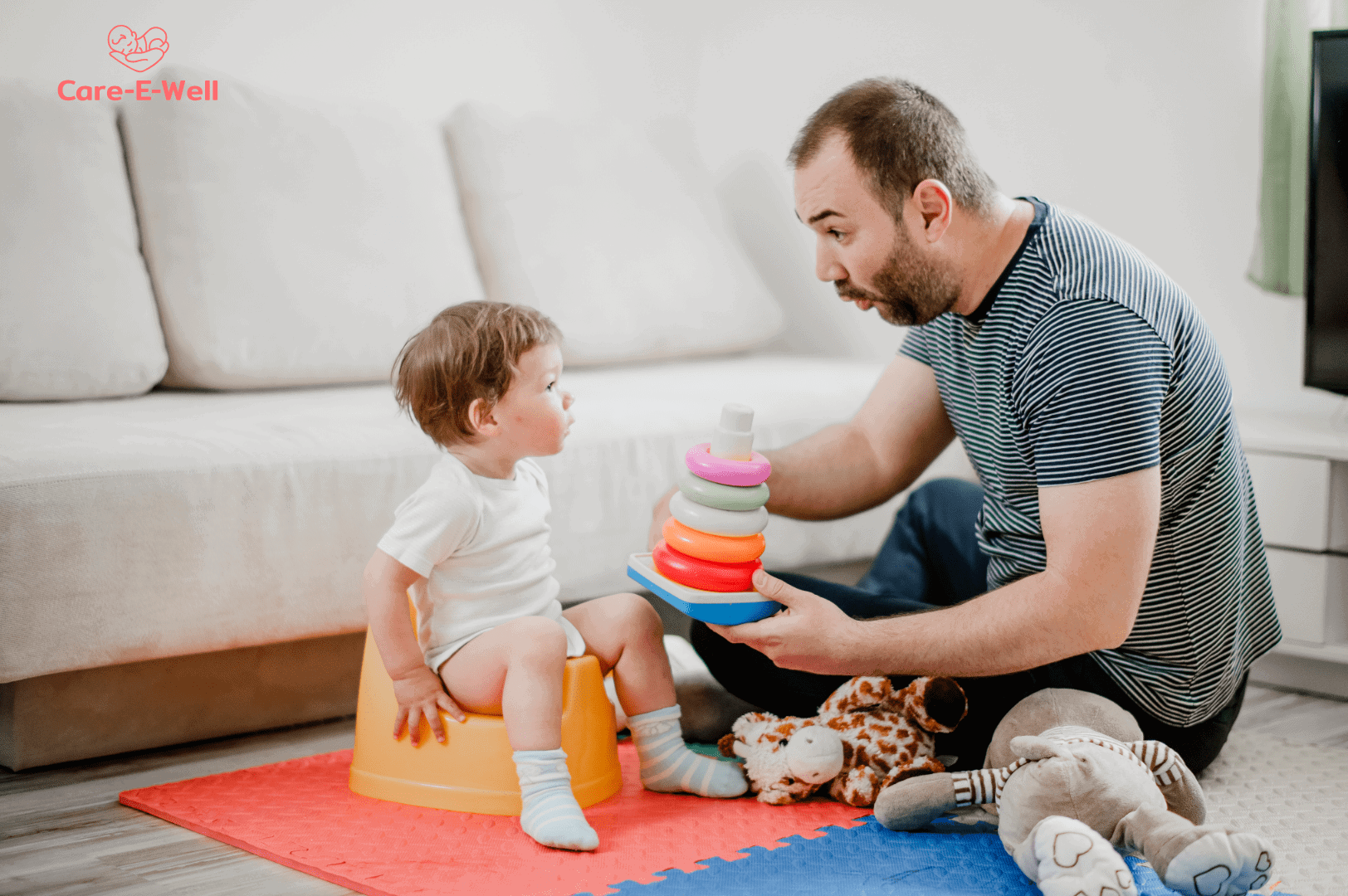
Potty training rewards can be helpful for some children, but they are not required for successful toilet learning. Praise, stickers or a small preferred activity may motivate a toddler to practise a new routine, especially when the reward is tied to something the child can actually choose—such as telling you they need the toilet, sitting briefly or pulling their trousers down.
Rewards become less helpful when every pee or poop turns into a high-stakes performance, the prize keeps getting bigger, or the child feels they have disappointed you after an accident. The evidence supports reinforcement as one component of some toilet-training programmes, but it does not show that sticker charts or treats are necessary—or superior—for every typically developing toddler.
Reward the learning behaviours a child can control. Do not make affection, approval or family calm depend on perfect dryness.
Do potty training rewards actually work?
Positive reinforcement is a well-established learning principle, and toilet-training studies have included praise, preferred items and other rewards within behavioural programmes.
However, the research is more complicated than “give a sticker and potty training works.” Many studies test packages containing several elements at once—underwear, scheduled sits, prompting, reinforcement and accident procedures—so it can be difficult to isolate which component caused improvement.
A component analysis in young children specifically evaluated underwear, a dense sitting schedule and differential reinforcement, showing that reinforcement can be part of an effective behavioural approach. Other studies in daycare and developmental-disability settings also use positive reinforcement.
That evidence does not establish a universal reward system for every healthy toddler. Child-oriented approaches can also succeed without elaborate prizes.
What counts as a potty training reward?
A reward does not have to mean sweets or toys. Reinforcement simply means something that makes a desired behaviour more likely to happen again.
- specific praise
- a sticker
- a stamp or mark on a chart
- choosing a short song
- choosing the next book
- a high-five or celebratory gesture the child enjoys
- a small preferred activity
- a tangible item in a structured programme
For many toddlers, immediate social acknowledgement is enough: “You told me you needed to pee and came to the bathroom.” The reward should fit the child rather than becoming a performance designed for adults.
Reward the step, not only the result
Toilet independence is a chain of skills. A child has to notice body signals, interrupt an activity, communicate, reach the bathroom, manage clothing, sit or stand safely, eliminate, wipe with appropriate help, dress and wash hands.
If you reward only urine or stool appearing in the toilet, you ignore many important behaviours that the child can control more directly.
Better reward targets include:
- telling an adult about an urge
- walking to the bathroom when prompted
- sitting calmly for a reasonable time
- trying an unfamiliar toilet
- pulling clothing down or up
- flushing when appropriate
- washing hands
- helping with a neutral cleanup routine after an accident
These targets also allow progress on a day when the child simply did not need to eliminate during the planned sit.

Should you reward dry pants?
Be cautious. Staying dry reflects several factors: recognising urges early enough, access to a toilet, adult prompting, bladder function and the child’s ability to interrupt play.
In a structured behavioural programme, reinforcement for dry intervals can be one planned component. At home with a typically developing toddler, however, making an entire dry morning the only route to a reward can create frustration because one accident wipes out hours of successful behaviour.
If you use a chart, shorter and controllable goals usually make more sense than “stay dry all day.”
Should you reward poop in the toilet?
This is where pressure can rise quickly. A child cannot produce a bowel movement simply because a sticker, sweet or toy is waiting.
If the child is already comfortable pooping and only needs a little motivation to transition from diaper to toilet, a small reward may help some families. But if the child is withholding, afraid or passing hard painful stools, increasing the reward does not solve the underlying problem.
Painful defecation and constipation are closely linked with stool toileting refusal. A child who is afraid to poop may need bowel comfort and gradual exposure rather than a larger prize.
Seek healthcare advice for persistent hard or painful stools, repeated stool withholding, fecal soiling, blood in the stool, significant abdominal swelling, vomiting, severe pain, poor growth or a child who appears unwell.
Praise can be more useful than a complicated chart
Praise is immediate, free and easy to fade. It also lets you name the skill: “You noticed your body and told me,” or “You pulled your trousers down by yourself.”
Keep praise warm but proportionate. Some children love enthusiastic celebration; others become uncomfortable when toilet use suddenly produces cheering, photos or an audience.
Follow the child’s temperament. A quiet “You did it” may be more reinforcing than a family celebration.
Do sticker charts help?
Sticker charts can make progress visible and may motivate some children, but toilet-specific evidence showing that charts are uniquely effective in typically developing toddlers is limited.
If you use one, make it simple:
- Choose one or two behaviours to reinforce.
- Give the sticker immediately after the behaviour.
- Tell the child exactly what earned it.
- Keep the target achievable.
- Do not remove earned stickers after accidents.
- Review whether the child still cares about the chart.
- Fade the chart once the routine becomes established.
A chart that requires ten perfect dry days before anything happens is too delayed for many toddlers and can become more about parental monitoring than learning.
Can rewards create too much pressure?
Yes, depending on how they are used. A reward system can unintentionally communicate that elimination is something the child must perform to keep adults happy.
Pressure is more likely when:
- the reward is very large
- the child is repeatedly asked to “try harder”
- accidents cause visible disappointment
- an earned reward is taken away after wetting
- siblings are compared
- the child is promised a major prize for pooping despite constipation or fear
- parents keep increasing the reward when the child resists
- the child is forced to sit until the target happens
If the reward system is producing more negotiation, tears or withholding, stop and reassess the barrier rather than increasing the incentive.
What about punishment for accidents?
Avoid punishment and shame. Older intensive toilet-training literature sometimes included punitive or overcorrection procedures, but contemporary behavioural reviews increasingly focus on less restrictive approaches and question unnecessary punishment.
An accident should lead to a neutral practical response: help the child change, briefly remind them where urine or stool goes, and continue the day.
Age-appropriate participation in changing clothes or putting wet items in the laundry is self-care. It becomes punishment when cleanup is deliberately burdensome, humiliating or prolonged.
Rewards cannot fix a readiness problem
A highly desirable prize may produce cooperation for a few toilet sits, but it cannot create body awareness, bladder maturation or comfort that is not there yet.
Readiness skills emerge over a broad age range. If a child rarely notices elimination, becomes very distressed on the toilet or needs constant prompting for every step, an increasingly elaborate reward system may be masking a mismatch between expectations and current ability.
Build the underlying skills instead: bathroom familiarity, easy clothing, short comfortable sits, communication and recognition of body signals.
Rewards cannot fix constipation
Constipation deserves its own solution. A child with a painful stool may learn very quickly that withholding avoids pain in the short term.
No sticker chart changes the fact that passing a hard stool hurts. When constipation is treated and bowel movements become comfortable, the child may become much more willing to use the toilet without any increase in rewards.
Watch for hard stools, very large stools, long gaps between bowel movements, hiding, stiffening, crossing the legs or fecal soiling.
How to fade potty training rewards
Toilet use ultimately needs to function without a prize every time. Once the behaviour is reliable, gradually reduce the external reward while keeping ordinary social acknowledgement.
You might move from a sticker for every successful toilet trip to a sticker for self-initiation, then to occasional praise, then simply treat toilet use as a normal part of the day.
Fading does not have to happen on a fixed timeline. If the child loses interest in the reward naturally while the skill remains stable, that is often a sign that the external system is no longer needed.

When a reward system is worth trying
A simple reward may be useful when the child appears ready, understands the routine and is mildly reluctant or distracted rather than frightened or physically uncomfortable.
It can also help reinforce a specific missing step—for example, telling an adult before urinating, sitting briefly on an unfamiliar toilet or completing handwashing.
Use it as one tool in a broader routine, not as the entire strategy.
When to skip rewards and solve another problem
- the child has painful or hard stools
- the child is withholding poop
- the toilet setup feels unstable
- public toilets cause intense fear
- the child does not recognise urges
- the child is being prompted so often that resistance is escalating
- accidents suddenly increase after established continence
- urinary pain, unusual frequency or excessive thirst is present
In these situations, the reward is not addressing the reason toileting is difficult.
Seek healthcare advice for persistent toileting problems accompanied by painful urination, recurrent urinary infections, excessive thirst, unexplained weight loss, significant constipation, fecal soiling, neurological symptoms or a marked unexplained loss of established continence.
A low-pressure reward plan
- Pick one controllable skill.
- Choose a small reward the child actually likes.
- Explain the target in one simple sentence.
- Reinforce the behaviour immediately.
- Keep accidents neutral.
- Never remove already earned rewards.
- Do not increase the prize to overcome fear or pain.
- Watch whether the system reduces or increases conflict.
- Fade rewards as the skill becomes routine.
- Stop the system if toileting is becoming more pressured.
A good reward plan should make the routine clearer and lighter. If it makes the bathroom feel like a negotiation every time, it is no longer serving its purpose.
Frequently asked questions
What is the best potty training reward?
There is no single best reward. Specific praise, a sticker or a small preferred activity may be enough. Choose something immediate, modest and sustainable.
Should I give a reward every time my child pees in the potty?
You can during an early learning phase if it is working, but you do not have to. Consider rewarding communication, self-initiation and other controllable steps, then fade the reward as the routine becomes established.
Are sticker charts necessary for potty training?
No. They are an optional motivational tool. Research does not show that every typically developing child needs a sticker chart to learn toilet use.
Should I reward my child for staying dry all day?
Usually it is better to reinforce smaller behaviours the child directly controls. All-day dryness depends on many factors, and one accident should not erase the child’s successes.
What if rewards worked for pee but not poop?
Check bowel comfort and fear before increasing the reward. Stool withholding and painful defecation often require a different approach from urine training.
The key takeaway
Potty training rewards can support learning, but they should remain small, specific and optional. Reinforce actions the child can control, keep accidents neutral and fade external rewards as the routine becomes normal. If a child is frightened, withholding, constipated or not developmentally ready, a bigger prize is unlikely to solve the problem. Find the barrier first.
Sources and References
- Greer BD, Neidert PL, Dozier CL, et al. — A component analysis of toilet-training procedures recommended for young children
- Perez BC, Bacotti JK, Peters KP, et al. — An extension of commonly used toilet-training procedures to children with autism spectrum disorder
- Donnelly MG, Karsten AM — Resolving Barriers to Continence for Children with Disabilities: Steps Toward Evidence-Based Practice
- Osos JA, Higbee TS, Mecham ML, et al. — Standardized to Individualized Behavior Analytic Toilet Training Package for Autistic Preschoolers
- Van Aggelpoel T, De Wachter S, Neels H, et al. — Implementing a new method of group toilet training in daycare centres: a cluster randomised controlled trial
- Vermandel A, Van Kampen M, De Wachter S, et al. — The efficacy of a wetting alarm diaper for toilet training of young healthy children in a day-care center: A randomized control trial
- Sejkora E, Igler EC, Davies WH, et al. — Parent-reported toilet training practices and the role of pediatric primary care providers
- Kiddoo D — Toilet training children: when to start and how to train
- Brazelton TB — A Child-Oriented Approach to Toilet Training
- Blum NJ, Taubman B, Osborne ML — Behavioral Characteristics of Children With Stool Toileting Refusal
Did this Insight help?
A little love for something worth reading.


