
Care-E-Well Insights
Pull-Ups vs Diapers: When Does the Difference Matter?
Pull-ups vs diapers: compare fit, absorbency, standing changes and toilet-learning convenience without treating either option as a milestone.
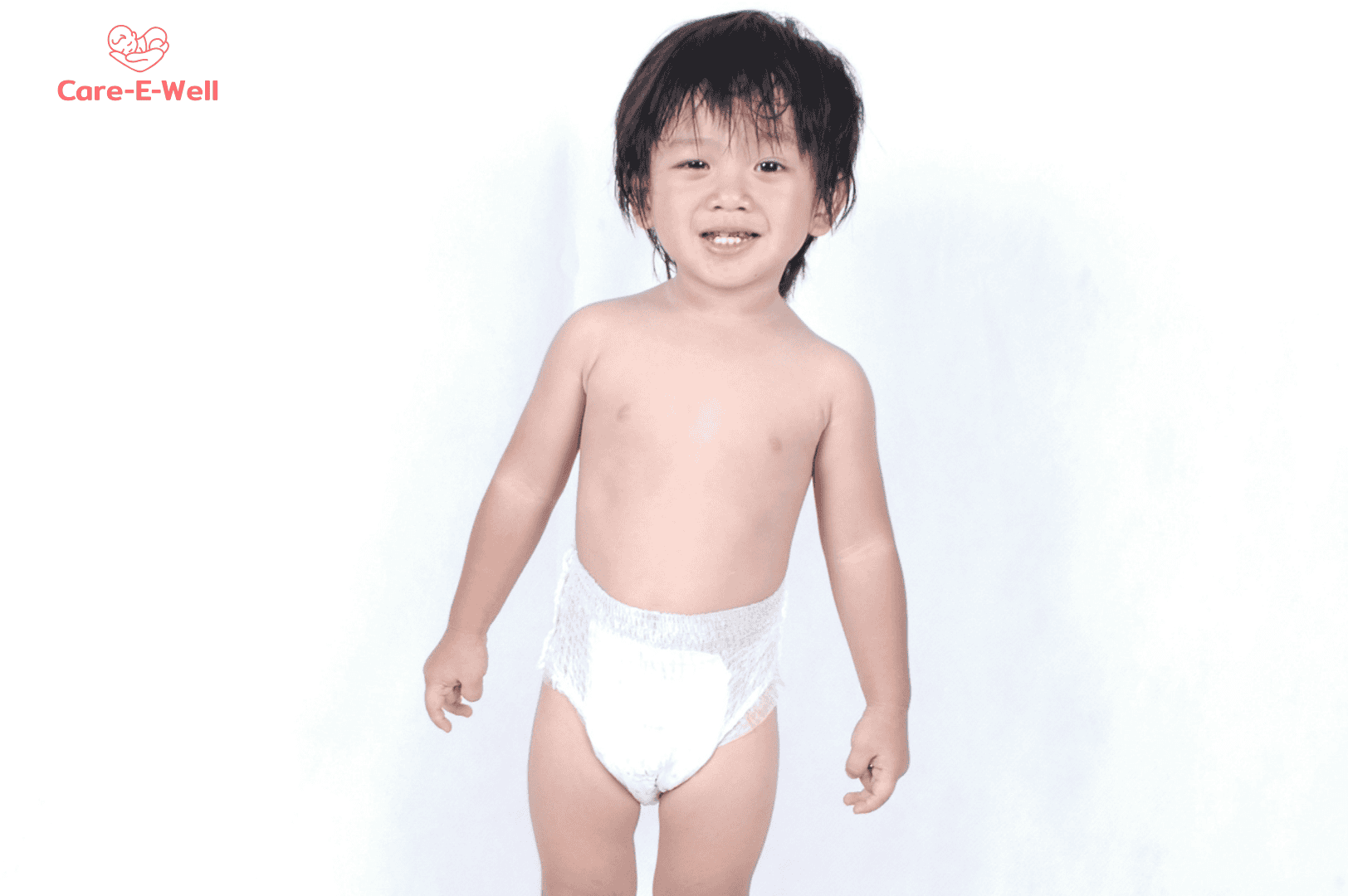
Pull-ups vs diapers matters most when a child starts participating in dressing and toilet routines. A taped diaper is usually easier for adults to put on while a child is lying down. A pull-up or diaper pant can be pulled up and down like underwear, which can make standing changes and early toilet independence easier.
Neither option creates toilet readiness, and neither one is required for successful potty training. The useful question is practical: which design helps your child stay comfortable, hygienic and involved in the routine you are currently using?
Pull-ups are a tool for independence and convenience, not a developmental milestone. A child can learn toileting in diapers, pull-ups, underwear or a combination.
What is the basic difference between pull-ups and diapers?
Traditional disposable diapers usually fasten with tabs at the sides. They can be opened and closed while the child is lying down and are convenient for babies who need frequent changes.
Pull-ups, diaper pants or training pants have an elastic waist and are usually pulled over the hips. Many also have tear-away side seams so an adult can remove a soiled garment without pulling it down the child's legs.
Absorbency, fit and side construction vary by product. Some pull-ups are designed mainly as absorbent diaper pants; others are marketed specifically for toilet-training transitions.
Are pull-ups less absorbent than diapers?
Not necessarily. Product ranges differ too much for a universal rule. Some diaper pants have absorbency similar to taped diapers, while some training products are intentionally thinner or designed to let the child notice wetness sooner.
Compare the actual product, not only the label. If your child regularly leaks, check fit, capacity and change timing rather than assuming every pull-up is less absorbent.
When do pull-ups become useful?
They become particularly useful when a child wants to stand during changes, can help pull clothing up and down, is beginning to use a potty or toilet, or attends childcare where standing changes are common.
- the child dislikes lying down for every change
- standing changes are easier in public bathrooms
- the child wants to dress independently
- toilet trips are becoming part of the day
- caregivers want clothing that can be lowered quickly
- the child can practise pulling the waistband up and down
These are convenience signals, not a checklist that a child must complete before switching.
Do pull-ups mean it is time to potty train?
No. Clothing does not determine developmental readiness. Toilet learning involves body awareness, communication, motor skills, routines and a child's willingness to participate.
WHO and UNICEF early-childhood guidance emphasizes responsive caregiving: noticing children's signals, supporting emerging skills and responding without unnecessary pressure. That principle fits toilet learning well.
A child can wear pull-ups for months before consistently using the toilet, or never use them at all.
Can pull-ups make toilet training harder?
They can be less helpful if they allow everyone to continue the exact same diaper routine while expecting the child to somehow learn toileting automatically. The product itself is not the problem; the routine around it matters.
If you are using pull-ups for toilet learning, give the child opportunities to practise lowering them, sit on the potty or toilet when appropriate, notice body cues and participate in clean-up and handwashing.
Avoid framing accidents as failure. Learning a new body-care skill usually includes inconsistent days.

Can a child learn in normal diapers?
Yes. A taped diaper does not prevent learning. Parents can still offer the potty, talk about body signals, involve the child in changes and gradually increase independence.
A diaper may actually be easier during phases of frequent stool accidents, travel, illness or when a child strongly resists standing changes.
Are pull-ups closer to underwear?
They look and function more like underwear because they pull up and down, but they are still absorbent continence products. The child may not experience wetness in the same way as cotton underwear, depending on the product.
That can be helpful or less helpful depending on the child. Some children benefit from the security of absorbency while they practise; others understand the transition more clearly once they begin wearing ordinary underwear during predictable toilet-learning periods.
Should you switch directly from diapers to underwear?
You can, but you do not have to. There is no single transition path that suits every family.
- diapers can remain for naps or nights while daytime learning begins
- pull-ups can be used for outings while underwear is practised at home
- some children use pull-ups only at childcare
- others move from diapers directly to underwear
- some alternate depending on constipation, illness, travel or stress
Consistency in language and routine matters more than using identical clothing in every setting.
What about poop accidents?
Stool accidents are usually easier to manage in a product that opens at the sides. If a pull-up has tear-away seams, use them rather than dragging a soiled garment down the child's legs.
Clean the skin gently, place stool and used products according to local sanitation rules and wash hands afterward.
If a child is withholding stool, passing hard painful bowel movements or becoming distressed about pooping, treat that as a separate toileting problem rather than trying to solve it by changing diaper style.
Seek medical advice for persistent painful stooling, blood in stool, significant abdominal pain, repeated stool withholding with distress, vomiting, poor growth or other signs that the child is unwell.
Are pull-ups better for standing diaper changes?
Often, yes. A mobile toddler may cooperate more easily when they can stand and hold onto a stable support while an adult changes a urine-only pull-up.
Stool changes still require careful cleaning of the buttocks and skin folds. If a standing change makes thorough cleaning difficult, use a floor mat or another safe position.
Never perform a standing change on a raised surface where a moving child could fall.
Do pull-ups help children dress themselves?
They can. Pulling a waistband down and up is a useful self-care skill that resembles managing underwear.
Make it easy enough to succeed. Avoid very tight trousers, complicated bodysuits or multiple layers when a child is learning to reach the toilet independently.
Responsive caregiving means helping only as much as needed, then allowing the child to complete the part they can manage.
Should you call them diapers or underwear?
Use clear language that matches the product and your family's routine. Calling a highly absorbent pull-up “underwear” may confuse some children if they are also learning that ordinary underwear is not designed to hold urine.
Simple phrases work well: “This is your pull-up,” “You can pull it down for the potty,” or “Underwear stays dry, and pee goes in the toilet.”
Avoid shaming labels such as “baby diaper” to pressure an older toddler into changing.
What about overnight use?
Night dryness follows its own developmental timetable and often comes later than daytime toileting. A child who uses the toilet independently during the day may still need an absorbent diaper or pull-up while sleeping.
Choose overnight protection based on leakage, comfort and the child's ability to manage the garment—not on whether the package says “training.”
Do not remove reliable nighttime protection simply to prove that daytime toilet learning is complete.
Are pull-ups better for daycare or nursery?
They can be convenient, especially when staff use standing changes or help several mobile toddlers. But childcare settings may have specific hygiene policies and may prefer products with tear-away sides.
Ask what the setting actually requires before buying a large supply. The best home product may not be the easiest product for group care.
Which is better for travel?
Pull-ups can be convenient in small public toilets because a child can often step into a clean one while standing. Taped diapers can be easier after a large stool accident because they open completely.
For travel, pack whichever product you can change confidently in unfamiliar spaces and bring a few more than you expect to need.
Which is better for diaper rash?
Neither category automatically prevents rash. Skin health depends more on stool contact, wetness, friction, fit, cleaning and individual product tolerance.
If a pull-up is tighter around the waist or thighs, check for pressure marks. If the child is very active, notice whether elastic is rubbing the groin.
Change stool promptly and simplify skin care if redness appears.
Can pull-ups hide wetness from the child?
Some highly absorbent products keep the surface feeling dry, which may make wetness less noticeable. Whether that matters depends on how you are teaching toilet awareness.
You can still build awareness by naming what happened during a change: “Your pull-up is wet. Next time we can try the toilet when your body tells you pee is coming.”
Do not repeatedly ask a child to stay in a wet garment so they “learn the feeling.” Skin comfort and hygiene still come first.

Should you use rewards when switching to pull-ups?
A reward system is not required. For many children, participation itself is enough: choosing the pull-up, pulling it down, flushing, washing hands and returning to play.
Praise effort and specific skills rather than making the garment into a test of maturity.
How can you make the transition easier?
- Explain what the new garment is and how it opens.
- Practise pulling it down when the child is calm.
- Choose clothes the child can manage.
- Keep toilet access easy.
- Offer routine opportunities without forcing.
- Let the child help with dressing.
- Respond to accidents calmly.
- Wash hands after toileting and stool changes.
The goal is increasing participation, not eliminating every accident immediately.
Does a child need to be dry before using pull-ups?
No. Pull-ups are absorbent products and can be used before, during or after toilet learning begins. Some families use them simply because their mobile toddler no longer tolerates taped diaper changes.
If toilet learning is not currently a goal, you can still use pull-ups as everyday diaper pants.
What if the child refuses pull-ups?
There is no need to force the switch. The child may dislike the tighter waistband, standing to dress, a new texture or simply the change in routine.
Return to the product that works and try again later if there is a practical reason to do so. Toilet learning does not depend on wearing a particular garment.
Handwashing still matters
Pull-ups can make toileting feel more independent, but young children still need help with hygiene. UNICEF and WHO recommend handwashing after toilet use and after handling faeces.
Use soap and water, help the child rub all hand surfaces and dry hands afterward. Keep the routine predictable enough that handwashing becomes part of toileting rather than an optional final step.
Frequently asked questions
What age should a child switch to pull-ups?
There is no universal age. Switch when the design becomes useful for mobility, standing changes or toilet participation.
Are pull-ups only for potty training?
No. They can simply be an alternative diaper style for active toddlers.
Are pull-ups worse for toilet training?
Not inherently. They become less useful only if the routine never gives the child a chance to practise toileting skills.
Should my child wear pull-ups at night after daytime training?
If nighttime wetting continues, absorbent protection is reasonable. Night dryness often develops later than daytime control.
Can I use diapers outside and underwear at home?
Yes. Mixed routines can work when the expectations are explained calmly and consistently.
The key takeaway
Pull-ups vs diapers matters mainly for convenience and independence. Taped diapers are easy for full changes; pull-ups can support standing changes, self-dressing and quicker toilet access. Neither product determines readiness or guarantees successful potty training. Choose the garment that fits well, protects the skin and supports the skills your child is currently learning, and keep the transition responsive rather than pressured.
Sources and References
- World Health Organization — Improving early childhood development: WHO guideline
- World Health Organization — Child Health and Development: Nurturing care
- World Health Organization — Helping children learn, be happy and thrive
- World Health Organization — Recommendations on interventions along the life course: child
- UNICEF — Care for Child Development
- UNICEF Parenting — How to teach your kids handwashing
- World Health Organization — Guidelines on hand hygiene in community settings
- World Health Organization — Keeping newborns and children under 5 years clean and safe
- UNICEF Europe and Central Asia — LearnECD
Did this Insight help?
A little love for something worth reading.


