
Care-E-Well Insights
Room Temperature for Baby Sleep: How Warm Is Too Warm?
Room temperature for baby sleep: learn how to prevent overheating, choose layers and judge comfort without relying on one magic number.
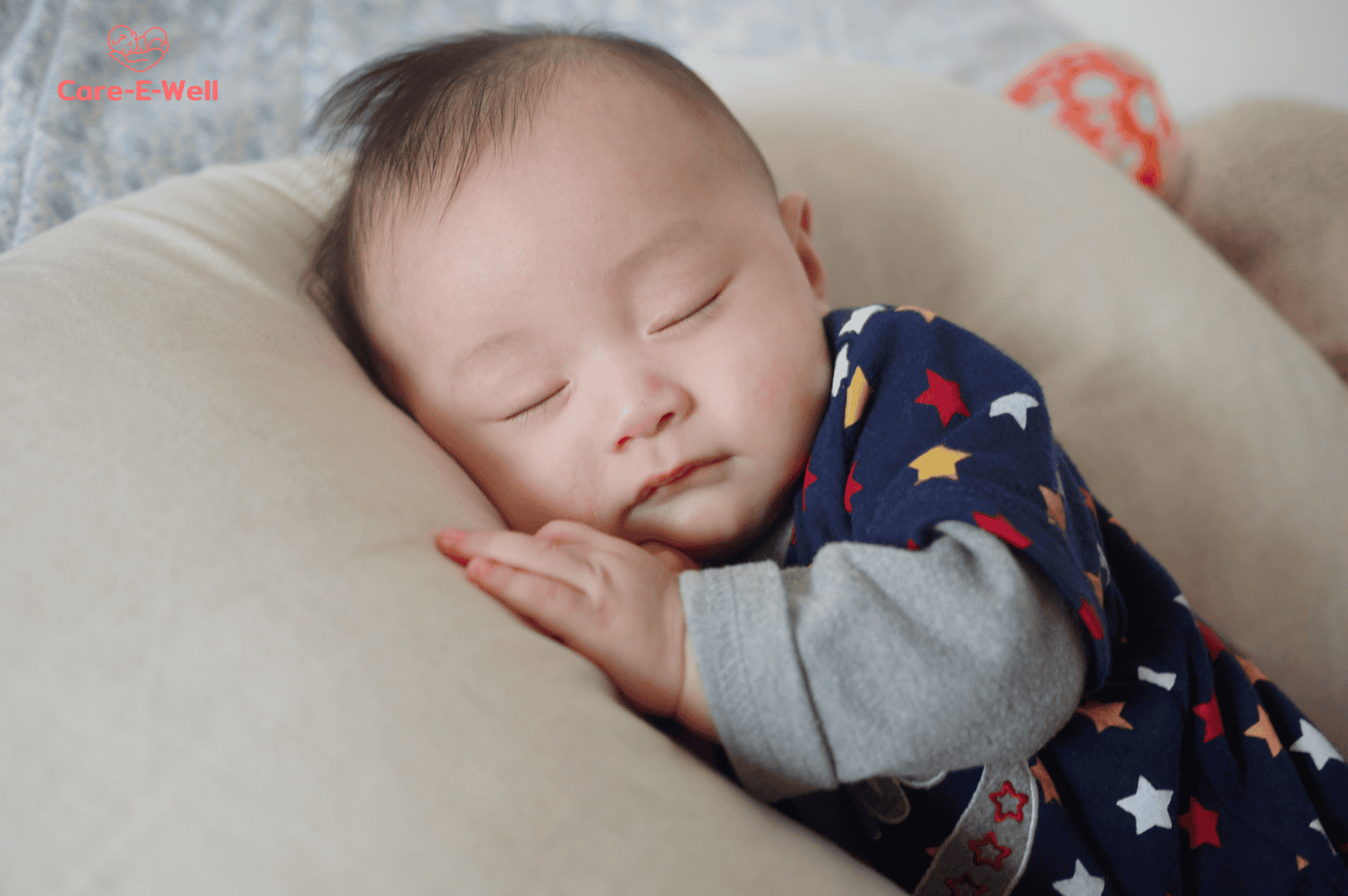
The safest answer is not one exact thermostat number. For baby sleep, overheating matters, but research does not establish a single universal room temperature at which every baby becomes “too warm.” Clothing, bedding, air movement, humidity, illness, sleep position and the baby's individual physiology all affect thermal comfort.
A practical goal is a comfortably cool room in which your baby is not hot, sweaty or heavily bundled. Use light, appropriate sleep clothing, keep the head uncovered indoors during sleep, and adjust layers rather than trying to achieve a perfect number on the thermostat.
Room temperature is only one part of thermal safety. The baby's clothing, bedding and ability to lose heat matter just as much as the number on the wall.
Why does overheating matter during baby sleep?
Infants regulate body temperature differently from adults and cannot independently remove clothing or bedding when they become too warm. Research on sudden infant death syndrome, or SIDS, has repeatedly identified overheating and thermal stress as modifiable concerns within the broader sleep environment.
This does not mean warmth alone causes SIDS. SIDS is multifactorial, and studies cannot reduce risk to one environmental variable. Thermal stress can interact with other factors such as prone sleeping, heavy wrapping, head covering and a very warm environment.
The useful message for parents is therefore not “keep the room at exactly X degrees.” It is “avoid creating a heat load your baby cannot easily dissipate.”
Is there an ideal room temperature for baby sleep?
There is no single evidence-based temperature that can be guaranteed ideal for every infant, every season and every sleep setup. Different organisations and countries sometimes publish practical temperature ranges, but those figures are guidance rather than a biological switch between safe and unsafe.
The research base is stronger for avoiding overheating than for prescribing one precise bedroom temperature. Studies of SIDS risk have looked at combinations of room heating, clothing, bedding, sleep position, weather and signs of thermal stress rather than establishing one universal home thermostat threshold.
This matters because a baby lightly dressed in a moderately warm room may experience a very different heat load from a baby wearing several layers under heavy bedding in the same room.
How can you tell whether your baby is too warm?
Look at the baby, not just the thermostat. A baby who is comfortably warm should not feel hot or clammy and should not be sweating because of the sleep environment.
- Check the chest, upper back or back of the neck rather than relying on hands and feet
- Look for sweating or damp hair
- Notice whether the skin feels unusually hot or flushed
- Check whether clothing or bedding feels excessive for the room
- Consider whether heating, direct sun or poor air circulation has changed the room since bedtime
Hands and feet can feel cooler than the trunk without meaning the baby is dangerously cold. Adding layers solely because the feet feel cool can lead to unnecessary over-bundling.
If the baby's chest or upper back feels comfortably warm rather than hot or sweaty, you usually do not need to add extra layers just because the hands feel cool.
What should a baby wear to sleep in a warm room?
Use the lightest sleep clothing that keeps your baby comfortable. In warmer conditions, that may mean fewer layers than you would wear during winter. The exact combination depends on the fabric, room conditions and whether you use an appropriately fitted infant sleep bag.
Avoid compensating for uncertainty by adding hats, thick blankets or multiple insulating layers. Covering the head reduces an important route for heat loss, and loose bedding also introduces separate safe-sleep hazards.
If you use a sleep bag, follow its own instructions about sizing, clothing underneath and environmental conditions. Do not add heavy bedding over the top simply because you are worried the baby may become cold.

What should a baby wear in a cooler room?
A cooler room does not automatically mean a baby is unsafe. Add appropriate clothing layers while keeping the sleep surface clear and the head uncovered. The aim is warmth without heavy wrapping or loose bedding around the face.
Recheck the baby's trunk after the room has cooled rather than making large changes in advance. Central heating can also make rooms warmer later in the night, so a setup that seems right at bedtime may become excessive if heating increases.
If your home becomes unusually cold because of a heating failure or severe weather, prioritise a safe source of room warmth and appropriate clothing. Avoid placing heating devices, hot-water bottles or other hot objects in the infant sleep space.
Do babies need more layers than adults?
Rules such as “always add one extra layer” are too simplistic to use as a safety guarantee. The right amount depends on the baby's age, clothing materials, room conditions and whether the baby is in a sleep bag or other approved sleep clothing.
Use your own comfort as one clue, then check the baby directly. If you are comfortable in light indoor clothing and your baby is hot and sweaty under several layers, the baby's setup needs adjusting.
Premature babies and infants with medical conditions may have different thermal needs. Follow the baby's clinical team's advice rather than a generic online layering rule when medical factors affect temperature regulation.
What about swaddling in a warm room?
Swaddling adds insulation, so room warmth and clothing underneath need to be considered together. Avoid thick materials and excessive layers beneath a swaddle.
Swaddling also has safety considerations beyond temperature. It should not restrict breathing or hip movement, and it must be stopped when the baby shows signs of attempting to roll because a swaddled baby who rolls cannot use the arms normally to reposition.
A swaddle is not a reason to make the room warmer. If the baby feels hot or sweaty, reduce the thermal load rather than assuming the baby needs the same wrapping in every season.
Does a fan make baby sleep safer?
A fan can improve air movement and may make a warm room feel more comfortable, but it is not a substitute for reducing excessive room heat, removing unnecessary layers or following safe-sleep guidance.
Keep any fan and its cord safely out of reach and do not direct a strong stream of air at the baby's face. There is not enough evidence to treat fan use as a stand-alone protection against SIDS.
During hot weather, focus on the whole environment: shade the room from direct sun where practical, ventilate safely when outdoor conditions allow, reduce unnecessary clothing and monitor the baby for overheating.
What about air conditioning?
Air conditioning can be useful during very hot weather. The goal is a comfortable environment, not a dramatically cold room. Avoid positioning the cot directly in a strong cold airflow.
Air conditioning can also change humidity and make parents think the baby needs much heavier clothing. Reassess the baby's trunk rather than automatically adding layers because the room feels cool to an adult who has just come in from outside.
Should the heating stay on all night?
There is no universal need to keep heating on continuously. What matters is maintaining a reasonable environment without overheating the baby.
If your home's temperature remains stable, continuous heating may be unnecessary. If it becomes very cold overnight, controlled heating may be useful. Either way, avoid placing the cot next to a radiator, heater or other direct heat source.
A thermostat is helpful for seeing trends, but it cannot tell you how warm the baby is under clothing and bedding. Combine the room reading with a physical check of the baby.
Can a baby get too hot while contact sleeping or bed-sharing?
Close body contact adds warmth. A baby sleeping against an adult can receive heat from the adult as well as clothing and bedding. This is one reason thermal load must be considered differently from a baby sleeping alone on a separate surface.
Bed-sharing also introduces risks unrelated to temperature. UNICEF UK guidance emphasises discussing the circumstances that increase risk, including smoking, alcohol, drugs and sleeping with a baby on a sofa or chair. A separate firm, flat infant sleep surface remains the lower-risk default.
Never use a sofa or armchair as a planned sleep place with a baby. If you are becoming drowsy while holding or feeding your baby, move the baby to an appropriate infant sleep surface as soon as possible.
Does fever change what a baby should wear to sleep?
Yes. A baby who is unwell or feverish does not need to be heavily wrapped to “sweat it out.” Extra insulation can make heat loss more difficult.
Dress an unwell baby comfortably and follow medical advice for the illness. Feeding and hydration also matter, particularly during hot weather or fever.
Seek prompt medical advice if a baby is unusually hot and also has poor feeding, unusual sleepiness, breathing difficulty, repeated vomiting, a marked change in responsiveness or other signs of illness. Very young infants can become unwell quickly, so do not assume significant warmth is only caused by the bedroom.
What should you do during a heat wave?
During unusually hot weather, the aim is to reduce avoidable heat exposure while continuing safe sleep. Keep the room shaded from direct sun when practical, ventilate safely, use cooling equipment appropriately and reduce excess clothing.
Offer feeds responsively. Babies may feed differently in hot weather, and breastfeeding babies may ask to feed more frequently. Do not give extra water to a young exclusively breastfed infant simply because the weather is hot unless a qualified health professional has advised it for a specific reason.
Check your baby more often if the room is unusually hot. If the baby remains hot despite removing excess layers or seems unwell, seek medical guidance rather than relying on a fan or thermostat adjustment alone.

What does safe sleep look like alongside temperature control?
Temperature management works alongside, not instead of, the core safe-sleep principles. WHO advises placing babies on their back for sleep during the first year and making sure breathing remains unobstructed.
- Use a firm, flat infant sleep surface
- Keep the baby's face and head uncovered
- Keep the sleep space clear of pillows, bulky bedding and soft objects
- Avoid smoke exposure
- Avoid overheating and excessive wrapping
- Keep direct heaters, cords and hot objects away from the cot
These measures address different risks. A perfectly controlled room temperature cannot make a soft, cluttered or obstructed sleep space safe.
Frequently asked questions
Is a warm bedroom dangerous for a baby?
Warmth becomes concerning when the baby's total heat load is excessive. A warm room combined with heavy clothing, thick bedding or head covering can make overheating more likely. There is no single temperature at which every room suddenly becomes dangerous.
Should I wake my baby to check their temperature at night?
Routine waking is not usually necessary for a healthy baby solely to check room temperature. If conditions are unusually hot, the baby is ill or you are concerned about overheating, check the baby's trunk and overall wellbeing.
Why are my baby's hands cold when the room feels warm?
Hands and feet often feel cooler than the trunk because peripheral circulation differs from central body temperature. Check the chest, back or back of the neck before deciding that more layers are needed.
Can I use a blanket because the room is cool?
For young infants, a clear sleep surface and appropriately fitted sleep clothing are preferable to loose or bulky bedding around the face. Choose clothing or a suitable sleep bag rather than adding soft objects to the sleep space.
Do I need a room thermometer?
A room thermometer can be useful for noticing whether the room is becoming much warmer or cooler, but it is only one tool. It cannot replace checking the baby's clothing, bedding and physical signs of comfort.
The key takeaway
Room temperature for baby sleep is best managed as part of the baby's total thermal environment. Research supports avoiding overheating, but it does not justify a universal thermostat number that guarantees safety for every baby.
Keep the room comfortably cool, use light and appropriate sleep clothing, keep the head uncovered, avoid heavy wrapping and check the baby's trunk rather than hands or feet. If a baby feels unusually hot and also seems unwell, seek medical advice rather than assuming the room is the only cause.
Sources and references
- World Health Organization. Making sure newborns and children under 5 years sleep safely. https://www.who.int/tools/your-life-your-health/life-phase/newborns-and-children-under-5-years/making-sure-newborns-and-children-under-5-years-sleep-safely
- UNICEF UK Baby Friendly Initiative. Research on Bed Sharing, Infant Sleep and SIDS. https://www.unicef.org.uk/babyfriendly/news-and-research/baby-friendly-research/infant-health-research/infant-health-research-bed-sharing-infant-sleep-and-sids/
- Bach V, Libert JP. Hyperthermia and Heat Stress as Risk Factors for Sudden Infant Death Syndrome: A Narrative Review. https://doi.org/10.3389/fped.2022.816136
- Auger N, Fraser WD, Smargiassi A. Ambient Heat and Sudden Infant Death: A Case-Crossover Study Spanning 30 Years in Montreal, Canada. https://doi.org/10.1289/ehp.1307960
- Elabbassi EB, Bach V, Makki M, et al. Assessment of dry heat exchanges in newborns: influence of body position and clothing in SIDS. https://doi.org/10.1152/jappl.2001.91.1.51
- Cronin de Chavez A, Ball HL, Ward Platt M. Bi-ethnic infant thermal care beliefs in Bradford, UK. https://doi.org/10.1108/IJHRH-06-2015-0019
- Scheers-Masters JR, Schootman M, Thach BT. Heat Stress and Sudden Infant Death Syndrome Incidence: A United States Population Epidemiologic Study. https://doi.org/10.1542/peds.113.6.e586
- Efe E, Sarvan S, Kukulu K. Sleep Practices and Environment and the Risk of Sudden Infant Death Syndrome in Turkey. https://doi.org/10.1111/j.1744-6155.2007.00120.x
- Gaertner VD, Postpischil J, Brandstetter S, et al. Implementation of safe infant sleep recommendations during night-time sleep in the first year of life in a German birth cohort. https://doi.org/10.1038/s41598-023-28008-1
Did this Insight help?
A little love for something worth reading.


