
Care-E-Well Insights
What Is the Safest Bath Water Temperature for a Baby?
Baby bath water should be about 37–38°C. Learn how to check it, prevent scalds and keep bath time comfortably warm.
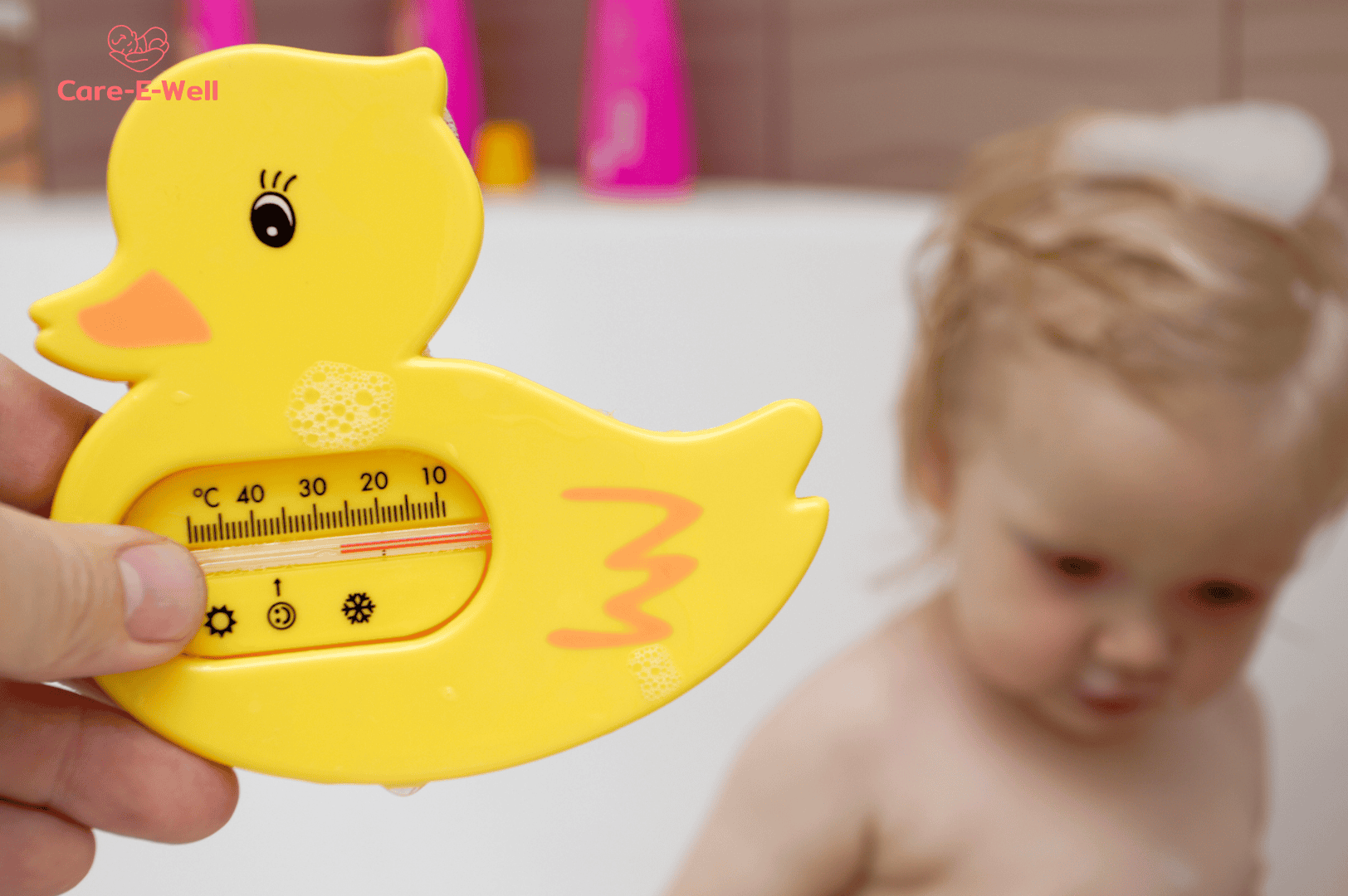
The safest bath water temperature for a baby is around body temperature. UNICEF recommends about 37–38°C (98.6–100.4°F) as an ideal range. The water should feel comfortably warm, never hot, and you should check it before your baby goes into the bath.
Temperature matters because babies can be burned by water that an adult may tolerate, while water that is too cool can make a young baby lose heat quickly. A thermometer gives you the clearest check, but safe preparation also means mixing the water thoroughly, testing it with your hand and never putting a baby into a bath while hot water is still running.
Aim for 37–38°C (98.6–100.4°F). Mix the bath water well and check it before your baby enters.
What is the safest bath water temperature for a baby?
UNICEF’s child-safety guidance describes 37–38°C as ideal for bath water. This is close to normal body temperature and gives a useful target that is warm enough for comfort without deliberately making the bath hot.
You do not need to chase an exact decimal. A bath thermometer may fluctuate slightly as water moves and cools. The important point is to stay around the recommended range and avoid temperatures that feel distinctly hot.
Why can hot bath water be dangerous for babies?
Hot water can cause a scald injury. WHO identifies hot liquids as a major cause of thermal burns and specifically includes lowering the temperature of hot-water taps among burn-prevention measures. Young children are particularly vulnerable to burns and scalds in the home.
Research on tap-water scalds shows that injury severity rises sharply as water temperature rises. Studies of thermostatic mixing valves have therefore focused on reducing excessively hot water delivered at the bath tap. This is a different number from the temperature you actually want in the bath: the safe outlet limit is designed to reduce severe scald risk, while the water you bathe a baby in should be much cooler, around 37–38°C.
Never put a baby into water that feels hot, and never add hot water while your baby is already in the bath. If the bath is too cool, take your baby out before adjusting the water.
Should you use a bath thermometer?
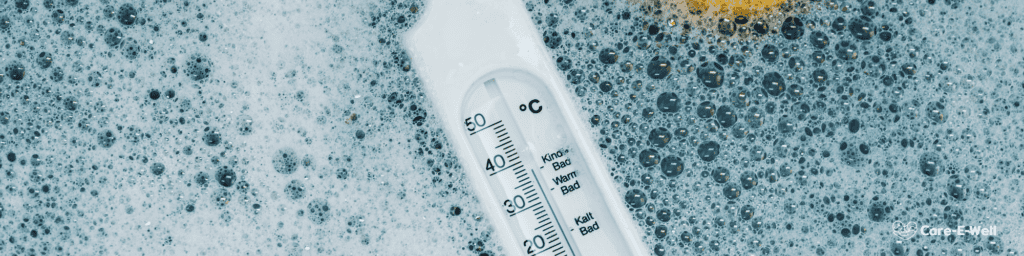
A bath thermometer is a simple way to check the water and can be especially reassuring during the newborn months. UNICEF recommends either running an open hand through the water or using a bath thermometer before placing a child in the bath.
A thermometer does not replace basic safety. Water can have hotter and cooler pockets if it has not been mixed properly, and a reading in one spot may not represent the whole bath. Swirl the water thoroughly and check more than one area.
What if you do not have a thermometer?
Mix the water well, then run your open hand through it. It should feel comfortably warm rather than hot. Because adult perception varies, a thermometer is preferable when you are uncertain, but you do not need to postpone necessary cleaning just because you do not own one.
Do not rely on seeing steam or on how warm the bathroom feels. Those are poor guides to the actual water temperature.
How should you prepare bath water safely?
- Gather the towel, clean nappy, clothes and washing supplies before you fill the bath.
- Fill the bath without your baby in it.
- Add and mix the water until it reaches about 37–38°C.
- Stir or swirl the water so there are no hot pockets.
- Check with a bath thermometer and/or your open hand.
- Turn the taps off completely before bringing your baby to the bath.
- Put your baby in only when the water temperature is confirmed and everything you need is within reach.
Preparing everything first also helps you maintain continuous supervision. You should never need to leave a baby in the bath to fetch a towel, cleanser or phone.
Is 40°C too hot for a baby bath?
It is warmer than the 37–38°C range UNICEF identifies as ideal, so there is no reason to aim for 40°C for routine baby bathing. A baby does not need hotter water to become cleaner.
If your thermometer reads above the target range, add cooler water before the baby enters, mix thoroughly and check again. If the baby is already in the bath, lift them out first rather than trying to correct the temperature around them.
Can bath water be too cold?
Yes. Newborns and small babies can lose heat quickly, especially when wet. WHO newborn-care guidance prioritises thermal protection and advises delaying the first bath for at least 24 hours after birth. During later baths, comfortably warm water, a warm room and prompt drying help reduce unnecessary cooling.
A bath does not need to become hot to prevent chilling. Keep the bath relatively short, have a dry towel ready and wrap your baby promptly when the bath is finished.
What room temperature do you need?
There is no single room-temperature number in the sources used for this guide that applies to every home and every baby. The practical aim is a comfortably warm, draft-free space where your baby will not become chilled while undressed and wet.
Prepare the room before undressing your baby. If your newborn is premature, low birth weight or has difficulty maintaining body temperature, follow the temperature and bathing advice given by the neonatal or paediatric team.
How can you reduce the risk of tap-water scalds at home?
Bath safety starts before the water reaches the tub. UNICEF recommends setting the home water heater no higher than 50°C (122°F) where this can be done safely, or using a thermostatic mixing valve when the heater temperature cannot be changed. WHO also recommends lowering hot-water tap temperatures as a burn-prevention measure.
These engineering measures matter because young children become mobile quickly. A toddler may turn a tap or climb toward a bath before a caregiver expects it. Research has shown that thermostatic mixing valves can reduce excessively hot bath-tap temperatures, although supervision remains essential.
The water heater setting and the bath temperature are not the same thing. A heater limit helps prevent scalds; the water in a baby’s bath should still be mixed down to about 37–38°C.
What if you use a mixer tap?
Mixers make it easier to reach a comfortable temperature, but they do not guarantee that the water is safe. Check the final bath water every time. Temperature can change because of boiler settings, pressure changes or other water use in the home.
Keep your baby away from the tap itself during the bath. Metal fixtures and freshly running hot water can be hotter than the bath water.
Does the bath need to stay at exactly 37–38°C?
No. Water naturally cools during a bath. You do not need to keep topping it up to preserve a perfect reading. For a young baby, a short bath usually ends before the cooling becomes a problem.
Adding hot water during the bath creates a preventable hazard because it can produce a local pocket of much hotter water. If the bath becomes uncomfortably cool, end the bath, dry your baby and warm them outside the tub.
What should you do if the water was accidentally too hot?
Remove your baby from the heat source immediately. If there is a burn or scald, WHO advises cooling the affected area with cool running water and advises against applying ice, oils or pastes. Significant burns, burns involving sensitive areas, or any burn in a very young baby warrant prompt medical assessment.
If your baby has been scalded, seek medical advice promptly. Call emergency services for a severe burn, extensive injury, breathing difficulty, reduced responsiveness or any situation that appears life-threatening.
What about bath temperature when a baby has a fever?
A bath should not be used to force a baby’s temperature down with cold water. UNICEF advises lukewarm bathing or a lukewarm washcloth for comfort and warns against water cold enough to make a child shiver.
Fever in a young baby can require prompt medical assessment. Follow age-specific medical advice rather than trying to manage a significant fever by changing bath temperature.
FAQ
Is 37°C warm enough for a baby bath?
Yes. It sits within UNICEF’s ideal 37–38°C range and is close to body temperature.
Is 38°C safe for a newborn bath?
It is at the upper end of UNICEF’s ideal range. Check the water carefully, keep the room warm and keep the bath short. Newborns with medical or temperature-stability concerns may need individual guidance.
Can I test baby bath water with my hand?
Yes. UNICEF advises running an open hand through the water as one way to check it. A bath thermometer adds a more objective reading, especially when you are learning the routine.
Should I keep the hot tap running during the bath?
No. Fill, mix and test the water before the baby enters, then turn the taps off. Never add hot water around a baby who is already in the tub.
What is the safest water-heater setting for a home with children?
UNICEF recommends a water-heater setting no higher than 50°C (122°F), or a thermostatic mixing valve if changing the heater setting is not possible. Local building and water-safety requirements can differ, so follow applicable regulations and professional installation advice.
The key takeaway
For parents asking what is the safest bath water temperature for a baby, use about 37–38°C (98.6–100.4°F). Prepare the water before your baby enters, mix it thoroughly and check it every time. Keep the bath comfortably warm rather than hot, and combine temperature control with uninterrupted adult supervision.
Sources/References
- UNICEF Parenting — How to babyproof your home
- UNICEF Parenting — Burns, scalds and fire-related injuries
- World Health Organization — Burns
- World Health Organization — Caring for a newborn
- Wei Q, Kang SM, Lee JH — Designing a Smart Bath Assistive Device Based on Measuring Inner Water Temperature for Bathing Temperature Monitoring
- Kendrick D, Stewart JA, Smith S, et al. — Randomised controlled trial of thermostatic mixer valves in reducing bath hot tap water temperature in families with young children in social housing
- Zou K, Wynn P, Miller P, et al. — Preventing childhood scalds within the home: Overview of systematic reviews and a systematic review of primary studies
- Mao S, McKenzie LB, Xiang H — Injuries Associated With Bathtubs and Showers Among Children in the United States
- Clouatre E, Pinto R, Banfield J, et al. — Incidence of Hot Tap Water Scalds After the Introduction of Regulations in Ontario
Did this Insight help?
A little love for something worth reading.


