
Care-E-Well Insights
Salt for Babies: How Much Is Too Much?
Babies need sodium but not added salt. Learn what WHO and EFSA guidance means, where hidden salt comes from and how to reduce it.
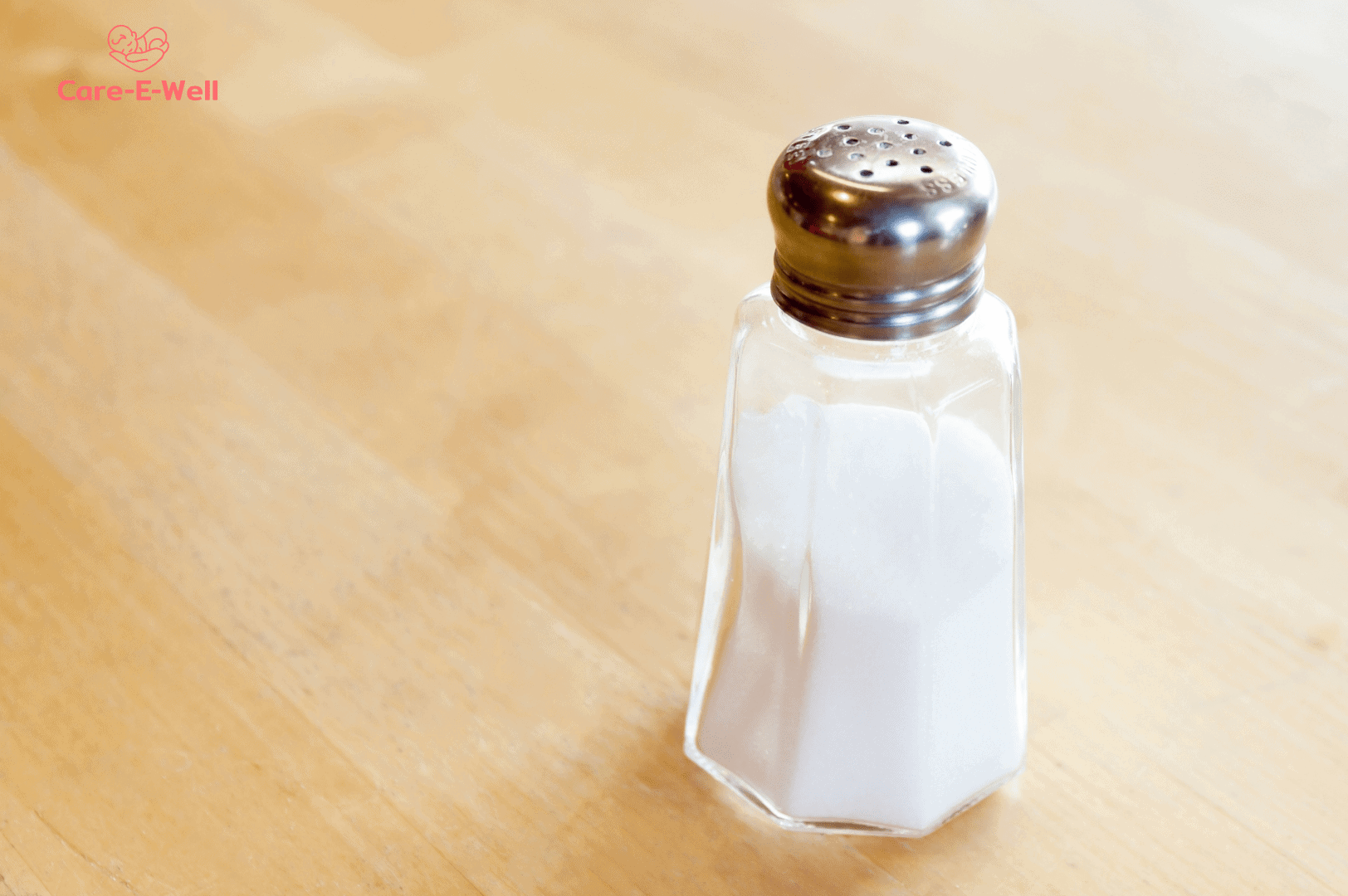
Babies need sodium because it is an essential nutrient, but that does not mean parents need to add salt to baby food. WHO advises that salt should not be added to complementary foods for infants and young children. Breast milk, formula and ordinary foods already provide sodium, and processed family foods can add more surprisingly quickly.
The most useful approach is therefore not to count every grain of salt at home. Prepare the baby’s portion without added salt when practical, choose lower-sodium packaged foods, and remember that sodium can come from bread, cheese, sauces, processed meats and snacks as well as the salt shaker.
Babies need sodium, but added table salt is usually unnecessary. The practical goal is to avoid building meals around salty processed foods and not add salt specifically for the baby.
Why do babies need sodium at all?
Sodium helps regulate fluid balance and is involved in nerve and muscle function. It is an essential nutrient, so “no added salt” does not mean “zero sodium.”
EFSA sets an adequate intake for sodium of about 0.2 g per day for infants aged 7–11 months, derived from estimated needs and intake data. Dietary reference values are population-level scientific reference points, not a target parents need to calculate at every meal.
How much salt is that?
Sodium and salt are not the same measurement. Table salt is sodium chloride, so food labels may list either salt or sodium depending on the market and product.
In everyday European shopping, labels commonly display salt. The important point is not to convert every bite into a daily equation. A baby can receive sodium naturally from foods and milk, and the total can rise quickly when adult processed foods are introduced.
Should I add salt to baby food?
WHO’s current healthy-diet guidance states that salt and sugars should not be added to complementary foods from six months. This keeps the diet focused on nutrient-dense foods without unnecessarily increasing sodium exposure.
It is reasonable to cook family food with little or no salt and season adult portions afterward. Herbs, garlic, onion, lemon, mild spices and the natural flavours of foods can add variety without relying on salt.

Is one salty meal dangerous?
A single ordinary family meal that contains some salt is not the same as chronic excessive sodium intake. The aim is a low-salt overall pattern, not panic over an isolated exposure.
Concern is greater when high-sodium foods become routine, when a baby consumes very salty food in a large amount, or when there is a medical condition affecting fluid or electrolyte balance.
If a baby has consumed an unusually large amount of salt or develops severe thirst, repeated vomiting, unusual drowsiness, marked irritability, weakness or seizures, seek urgent medical advice. Do not try to correct suspected salt poisoning at home.
Which foods can be high in salt?
- Processed meats such as sausages, ham and cured meat.
- Stock cubes, bouillon powders and many ready-made sauces.
- Crisps, savoury snacks and salted crackers.
- Some breads and bakery products.
- Many cheeses.
- Canned or jarred foods packed in brine.
- Takeaway and restaurant foods.
- Some commercial toddler snacks and savoury baby products.
A food does not have to taste extremely salty to contribute meaningful sodium. Maalouf et al. found that dietary sodium sources in infants and toddlers shift as complementary foods expand, particularly toward commercially prepared and family foods.
Is cheese too salty for babies?
Cheese can contribute protein, calcium and energy but some varieties are high in salt. It does not need to be banned; portion size, frequency and the rest of the meal matter.
If cheese is used, combine modest amounts with lower-sodium foods rather than pairing several salty ingredients together. Compare labels because sodium content varies substantially between products.
What about bread?
Bread is often overlooked because it does not taste intensely salty, yet it can be a regular sodium source. Small amounts can fit within a balanced diet, especially when the rest of the meal is unsalted.
For babies who eat bread frequently, comparing labels and choosing lower-salt options can reduce cumulative intake without changing the entire family diet.
Are homemade baby meals always lower in salt?
Not automatically. Homemade food can become high in sodium if parents use stock cubes, salty sauces, cured meats or generous added salt.
Conversely, commercial baby food is not automatically high in sodium. The label is more informative than the category. Research comparing infant and family foods shows wide variation in sodium content (Hilbig et al., 2015; Erickson et al., 2018).
Why does early salt exposure matter?
Childhood eating patterns are shaped partly by repeated exposure. Koyama and Yoshiike found associations between parent and child sodium intake, supporting the practical idea that family food habits influence what children learn to eat.
Research also links higher sodium intake with higher blood pressure in children, although an infant’s individual long-term risk cannot be predicted from a few meals. A review by Lava et al. describes evidence that salt exposure and blood pressure relationships begin early in life.
Does baby-led weaning increase salt intake?
It can if the baby simply receives salty adult food without adaptation, but baby-led feeding itself is not the cause. In the BLISS randomized trial, sodium intake was higher in the intervention group at one measured age, illustrating how food choices within a self-feeding pattern can matter (Erickson et al., 2018).
The solution is not to abandon finger foods. Offer family-style foods prepared with less salt, include fresh or minimally processed options and add adult seasoning after the baby’s portion is removed.
How to reduce salt without making food bland
- Use herbs and mild spices.
- Add flavour with vegetables, tomato, garlic, onion or lemon.
- Rinse canned pulses or vegetables packed with added salt where appropriate.
- Compare labels within the same food category.
- Use unsalted or lower-salt stocks if stock is needed.
- Keep salty processed meats and snacks occasional rather than routine.
- Season adult portions after setting aside the baby’s food.
What if the family eats a high-salt diet?
A baby’s complementary-feeding period can be a useful reason to reduce salt for everyone. Family patterns matter, and observational studies show parent and child sodium intakes can be related.
Changes do not have to be dramatic. Lower the salt used in cooking gradually, choose fewer highly processed foods and let adults add salt at the table if they still want more.

Are low-sodium diets risky for babies?
Healthy babies do need sodium, but routine complementary foods and milk normally provide it. Deliberate extreme sodium restriction is not the goal and may be inappropriate in babies with special medical needs.
Premature infants and children with kidney, heart, endocrine or gastrointestinal conditions can have different electrolyte requirements. Follow the clinical team’s advice rather than general internet guidance.
Frequently asked questions
Can babies have food cooked with a little salt?
An occasional small amount in shared family food is different from routinely adding salt to the baby’s meals. WHO recommends not adding salt to complementary foods, so low-salt cooking is the preferable default.
Is sea salt healthier for babies?
No form of culinary salt avoids the sodium issue. Sea salt, rock salt and ordinary table salt all contribute sodium chloride.
Should I calculate my baby’s sodium every day?
Most healthy families do not need to calculate every milligram. Focus on not adding salt, limiting high-sodium processed foods and following professional advice if your baby has medical needs.
When can children start eating normal salted family food?
There is no single switch date. Family meals should become progressively appropriate for the child while remaining moderate in salt. WHO advises avoiding high-salt foods in young children as part of a healthy diet.
Conclusion
Salt for babies is best handled by avoiding added salt and keeping highly salted processed foods from becoming everyday staples. Babies need sodium, but they can obtain it from milk and food without adults deliberately seasoning their meals with salt.
Sources/References
- World Health Organization. Healthy diet. https://www.who.int/news-room/fact-sheets/detail/healthy-diet
- World Health Organization. WHO Guideline for complementary feeding of infants and young children 6–23 months of age. https://www.who.int/publications/i/item/9789240081864
- European Food Safety Authority. Dietary reference values for sodium. DOI: https://doi.org/10.2903/j.efsa.2019.5778
- Koyama T, Yoshiike N. Association between Parent and Child Dietary Sodium and Potassium Intakes. DOI: https://doi.org/10.3390/nu11061414
- Lava SAG, Bianchetti MG, Simonetti GD. Salt intake in children and its consequences on blood pressure. DOI: https://doi.org/10.1007/s00467-014-2931-3
- Masztalerz-Kozubek D, Zielinska-Pukos MA, Rust P, et al. The Use of Added Salt and Sugar in the Diet of Polish and Austrian Toddlers. DOI: https://doi.org/10.3390/ijerph17145025
- Erickson LW, Taylor RW, Haszard JJ, et al. Impact of a Modified Version of Baby-Led Weaning on Infant Food and Nutrient Intakes. DOI: https://doi.org/10.3390/nu10060740
- Maalouf J, Cogswell ME, Yuan K, et al. Top sources of dietary sodium from birth to age 24 months. DOI: https://doi.org/10.3945/ajcn.114.099770
- Hilbig A, Foterek K, Kersting M. Home-made and commercial complementary meals in German infants. DOI: https://doi.org/10.1111/jhn.12325
Did this Insight help?
A little love for something worth reading.


