
Care-E-Well Insights
Should You Replace a Car Seat After a Crash?
Learn when a car seat may need replacing after a crash, why appearance alone is not enough and which safety checks matter.
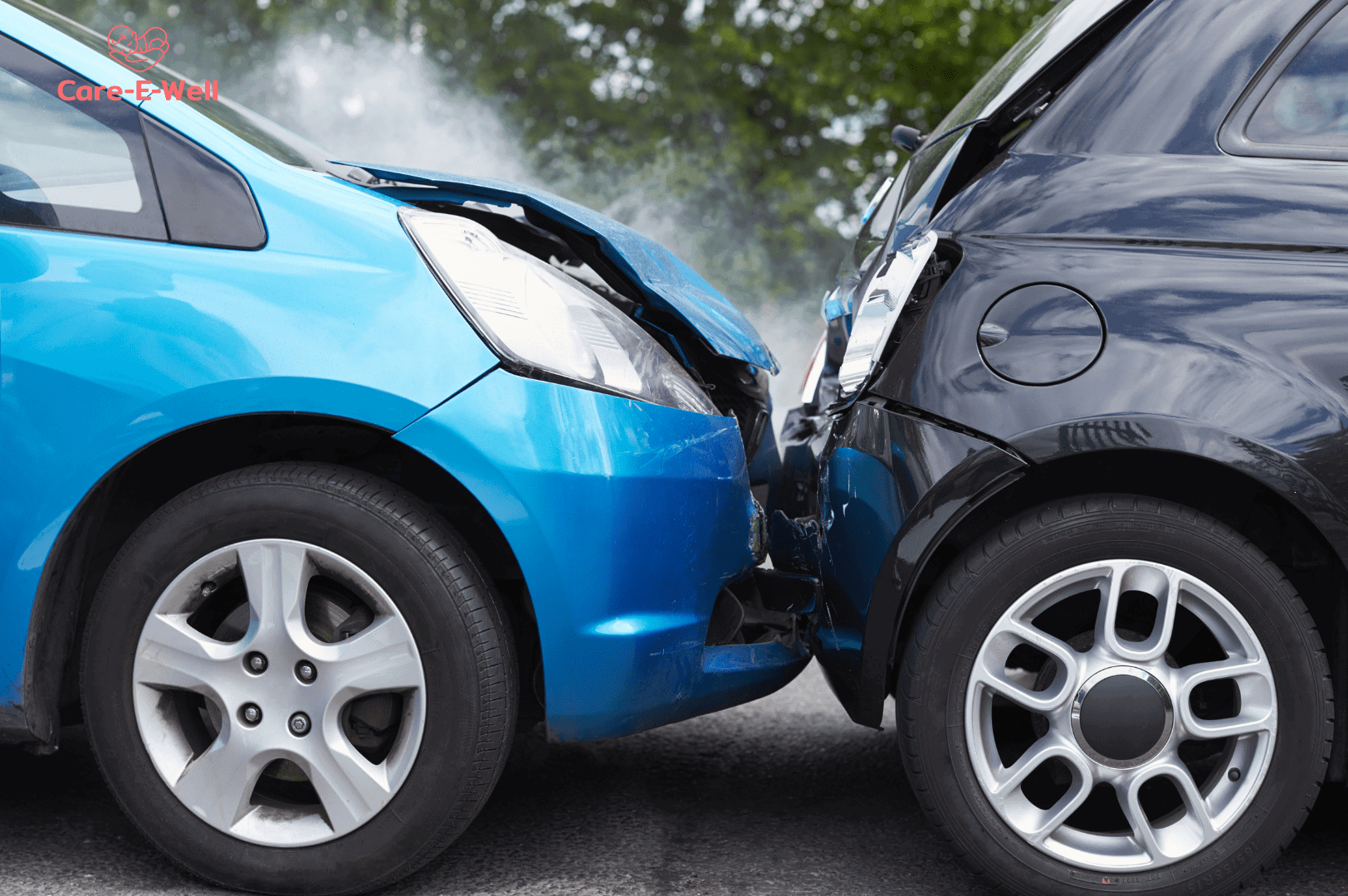
A car seat may need to be replaced after a crash, but there is not one universal rule that applies to every restraint, every collision and every manufacturer. The safest next step is to stop guessing from appearance alone and check the exact post-crash instructions for your child restraint.
A seat can look normal after a collision while having experienced substantial crash forces, and visible damage is only one reason a restraint may no longer be suitable. If the manufacturer instructs replacement after the type of crash involved, the seat has visible damage, parts are missing or distorted, or its crash history cannot be established, do not continue using it simply because the shell looks intact.
After a crash, treat the child restraint as safety equipment that has been loaded in an event—not as ordinary furniture that can be judged only by whether it looks broken.
Why can a crash affect a child restraint?
A child restraint works by controlling movement and distributing crash forces through its shell, harness, belt path, ISOFIX attachments, support leg, top tether and other structural components. UN Regulation No. 129 sets performance requirements for enhanced child restraint systems, including dynamic crash testing, because the restraint is designed as a complete safety system rather than a collection of interchangeable parts.
During a collision, these components can be exposed to loads far beyond normal everyday use. Damage may be obvious, such as a cracked shell or bent connector, but not every material change can be identified reliably by a quick visual inspection at home.
Research on child-passenger injuries consistently shows that protection depends on the restraint being appropriate for the child and used as intended. Incorrect, incomplete or compromised restraint use can reduce the protection the system was designed to provide.
Does every crash automatically mean the car seat must be replaced?
Not necessarily. Post-crash replacement policies can differ between restraint manufacturers and models, which is why a universal rule such as “every seat must always be replaced after any bump” is too broad. The opposite rule—“replace only if you see damage”—is also unsafe because appearance alone does not prove that the restraint remains within its intended condition.
Use the instructions supplied for the exact restraint. If the manual says the seat must be replaced after a collision, follow that instruction. If the policy distinguishes between crash circumstances, use the manufacturer’s stated criteria rather than creating your own threshold from vehicle repair cost, airbag deployment or how dramatic the crash felt.
If the instructions are missing or unclear, obtain the current instructions for that exact model and approval version before using the seat again. A child-restraint professional can help with fit and installation, but they cannot certify hidden structural integrity unless the restraint manufacturer provides a procedure for doing so.

What signs mean the restraint should not be used?
Visible structural damage is a clear reason to stop using a restraint. That includes cracking, deformation, broken or stressed attachment points, damaged ISOFIX connectors, a support leg or top tether that no longer operates normally, damaged harness hardware, or components that do not lock and adjust as designed.
- Cracks, whitening, deformation or separation in the shell or base
- Bent, loose or damaged ISOFIX connectors or anchor hardware
- A support leg, rebound component or top tether that is damaged or no longer functions normally
- Harness webbing, buckles or adjusters that are cut, torn, distorted or malfunctioning
- Missing energy-absorbing foam, inserts or structural parts required for use
- A seat that cannot be installed or adjusted exactly as the instructions require
Do not glue, drill, heat, straighten, sew, tape or otherwise repair a structural child-restraint component unless an official repair procedure for that exact restraint explicitly permits it. Changes to tested components can alter how loads travel through the system.
What if the seat looks completely fine after the crash?
A normal appearance is reassuring only in a limited sense: it tells you there is no obvious visible damage. It does not establish that the seat was not exposed to relevant forces or that every component retained its tested properties.
This is why the decision should come from the seat-specific post-crash instructions, not from a home inspection alone. In safety engineering, the absence of visible failure is not the same as proof that a component remains unchanged.
If a restraint has been involved in a crash and you cannot verify what the manufacturer requires, pause use until you can clarify the policy. When another suitable restraint is available, use that rather than experimenting with an uncertain seat.
What information should you record after a crash?
Before the vehicle is repaired or the child restraint is discarded, document the event. This can make discussions with the restraint manufacturer, insurer or local child-safety service much easier.
- Record the restraint brand, exact model, approval information and serial or production details available on the label.
- Photograph the restraint in the vehicle before moving it if this can be done safely.
- Photograph the installation points, belt routing, ISOFIX connections, support leg and top tether where relevant.
- Note where the vehicle was hit, whether airbags deployed and which seating position the child restraint occupied.
- Photograph any visible damage to the restraint, base, vehicle seat, belt or anchor area.
- Keep the restraint instructions and proof of purchase if available.
These details do not determine by themselves whether the seat is safe to reuse, but they provide a more accurate record than memory alone.
Can an insurer decide whether the car seat is safe?
An insurer may determine whether replacement cost is covered, but insurance reimbursement and technical suitability are different questions. A decision about payment does not override the restraint’s usage instructions.
If the restraint requires replacement under its instructions, ask the insurer what documentation is needed. Do not keep using the seat solely because reimbursement has not yet been approved.
What if the crash happened when no child was in the seat?
The restraint itself can still experience crash forces because it is attached to the vehicle. Whether replacement is required therefore does not depend only on whether a child occupied it at the time.
Check the same model-specific post-crash instructions. Also inspect the vehicle anchorage area and seat belt used to install the restraint, because vehicle components may require assessment or repair after a collision as well.
What about a detachable infant carrier and its base?
Treat the carrier and base as components of the restraint system. Depending on the product, either or both may have been loaded during the crash. Do not assume the carrier can automatically be kept because the base stayed in the car, or that only the visibly damaged component needs replacement.
Follow the instructions for the exact carrier-and-base combination. If one component is replaced, confirm that the remaining component is approved for use with the replacement rather than mixing parts from similar-looking products.
Should you buy a crash-involved seat second-hand?
Avoid using a second-hand restraint if its crash history cannot be verified. A seller may genuinely believe the seat is safe because it has no visible damage, but an unknown history removes information you need to make a sound safety decision.
A used seat is easier to assess when you know its full history, have the instructions and required components, can identify its approval and model details, and can confirm that it has not been involved in circumstances requiring replacement.

What should you do with a seat that must be replaced?
Prevent a condemned restraint from returning to use. Follow local waste or recycling arrangements where available, and make it clear that the seat is not suitable for reuse. Do not donate or sell a restraint that the manufacturer says should be replaced after a crash.
Remove detachable accessories only if doing so does not create a misleading “complete” seat that someone might retrieve and use. Local disposal systems differ, so use the method recommended in your area.
A practical post-crash checklist
- Make sure every child involved receives any medical assessment that is needed first.
- Stop using the restraint if there is visible damage or malfunction.
- Identify the exact restraint model and approval information.
- Read the exact post-crash replacement instructions for that model.
- Document the restraint, vehicle seating position and crash circumstances.
- Contact the appropriate insurer or local service about replacement reimbursement if relevant.
- Replace the restraint when its instructions require replacement or when its integrity or history cannot be established reliably.
- Never improvise structural repairs or combine unapproved components.
The key takeaway
Whether you should replace a car seat after a crash depends on the exact restraint and the circumstances specified in its instructions. Do not rely on appearance alone, and do not invent a personal “minor crash” threshold. When replacement is required, treat it as part of restoring the child’s tested restraint system before the next journey.
Frequently asked questions
Can I keep using a car seat if there are no cracks?
Lack of visible cracks does not prove that the restraint is suitable for reuse. Follow the exact model’s post-crash instructions.
Does airbag deployment automatically decide whether the car seat needs replacing?
Airbag deployment can describe crash severity, but it should not replace the seat-specific criteria. Use the manufacturer’s instructions for that restraint.
Can a child-restraint technician inspect a crashed seat and declare it safe?
A technician can identify installation or visible-condition problems, but hidden structural integrity cannot generally be confirmed by a visual fitting check alone. Seat-specific post-crash instructions remain central.
Should the base be replaced too?
It may need to be. Treat the base as part of the restraint system and follow the instructions for the exact carrier-and-base combination.
Sources/References
- UNECE — UN Regulation No. 129 – Rev.4: Enhanced Child Restraint Systems
- World Health Organization — Occupant restraints: a road safety manual for decision-makers and practitioners
- Whyte T et al. — Restraint Factors and Child Passenger Deaths in New South Wales, Australia
- Giovannini E et al. — Pediatric motor vehicle crashes injuries: A systematic review for forensic evaluation
- Brown J et al. — A Process Evaluation Protocol for Examining the Impact of Instructions for Correct Use of Child Car Seats
- Mirman JH et al. — Caregivers' confidence in performing child safety seat installations: what matters most?
- Mirman JH et al. — Evaluating the Effect of a Mechanical Adjunct to Improve the Installation of Child Restraint Systems to Vehicles
- Weaver NL et al. — Promoting Correct Car Seat Use in Parents of Young Children
- Huang YY et al. — Restraint use and injury in forward and rear-facing infants and toddlers involved in a fatal motor vehicle crash
Did this Insight help?
A little love for something worth reading.


