
Care-E-Well Insights
Signs Your Child Is Ready for Potty Training
Learn the practical signs of potty-training readiness, what not to overinterpret and when it may be better to wait or slow down.
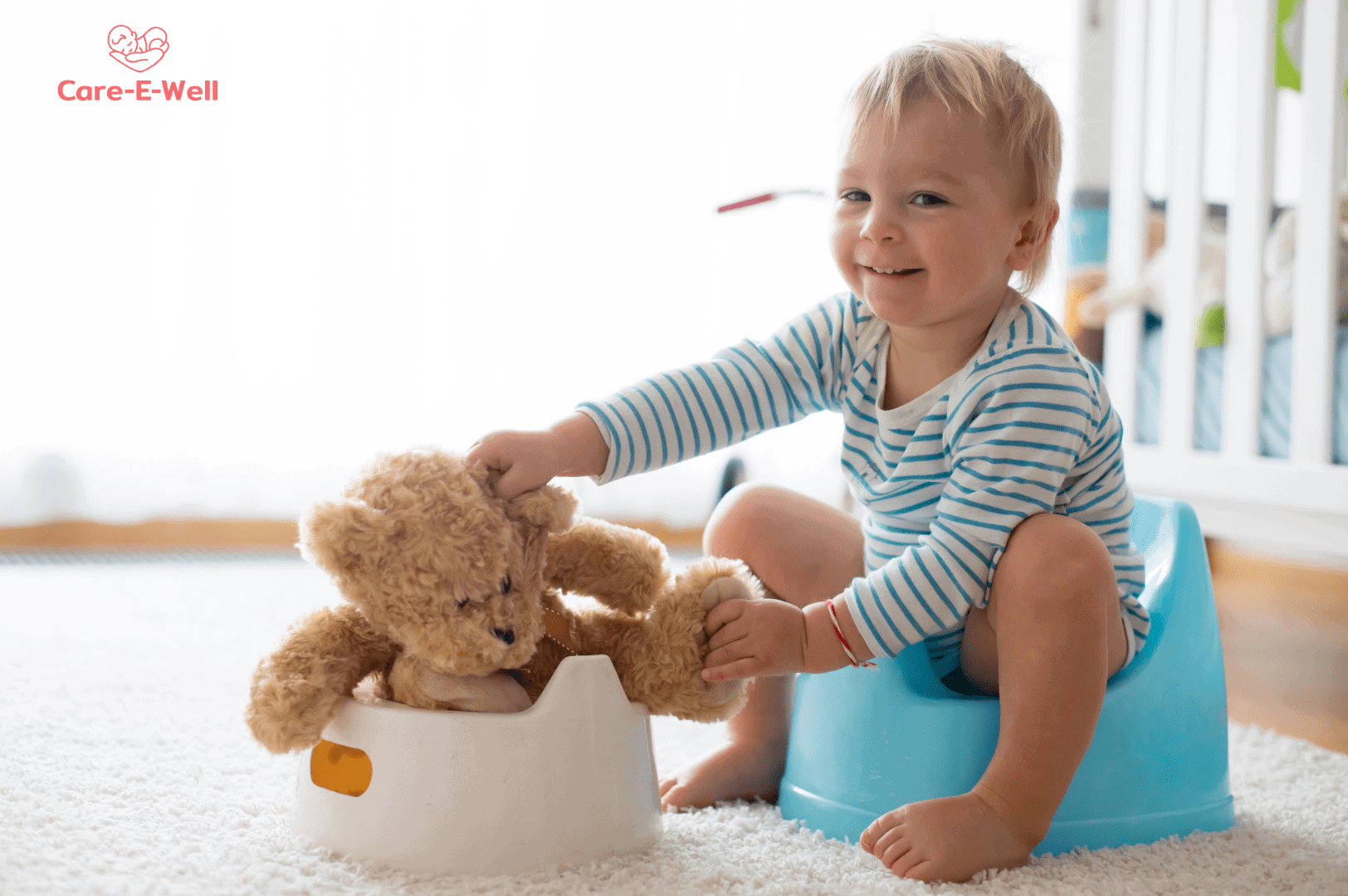
Signs your child is ready for potty training are more useful than a birthday alone. UNICEF notes that some children may show interest in potty training around age 2, but early childhood development varies widely. Readiness is usually a combination of physical, communication, cognitive and emotional skills rather than one single milestone.
You do not need to wait until every sign is perfect. The practical question is whether your child can begin participating in the toileting sequence with support and without the process becoming a constant fight.
Potty-training readiness is a cluster of abilities and interest—not a pass-or-fail checklist.
Is there a specific age when children should be ready?
No single age reliably tells you that a child is ready. UNICEF's developmental guidance describes growing independence, language, ability to follow instructions and possible interest in potty training around age 2, while also stressing that children develop differently.
Some children show several readiness signs earlier, while others need more time. Starting later is not automatically a developmental problem, and starting earlier does not guarantee faster completion.
Sign 1: Your child shows interest in the potty or toilet
Interest can look like following a caregiver to the bathroom, asking what the toilet is for, wanting to flush, sitting on a potty with clothes on or talking about underwear.
Interest is useful because it gives you an opening to teach without forcing. It does not mean the child must immediately stop using nappies.
Sign 2: Your child can communicate basic needs
Toileting becomes easier when a child can communicate in some way that they need help, are wet or soiled, want to sit, or are finished. Communication does not have to mean long sentences; words, signs, gestures or consistent behaviour can all help.
UNICEF notes that by around age 2 many children use short phrases and follow simple instructions. These broader communication skills can support toilet learning.
Sign 3: Your child can follow a simple routine
Potty training is a sequence: stop an activity, go to the bathroom, manage clothing, sit, wipe with help, dress and wash hands. A child who can follow simple one- or two-step instructions is beginning to have the cognitive skills needed to participate.
They do not need to perform the whole sequence independently. Readiness means they can join the routine and gradually learn more of it.

Sign 4: Your child has enough mobility to reach and use the setup
The child should be able to get to the potty or bathroom with appropriate help and sit in a stable position. UNICEF's 2-year milestone guidance describes rapidly developing movement and independence, which supports participation in self-care routines.
If a child has a mobility difference or disability, conventional readiness lists may not apply. Toilet learning can still be supported through individual adaptations and family-centred professional guidance.
Sign 5: Your child starts noticing wetness, stool or body sensations
Growing awareness may appear as telling you after they have peed or pooped, pausing before a bowel movement, hiding to poop, touching the nappy, asking for a change or showing discomfort when wet.
Awareness after the event is still progress. The developmental sequence often moves from noticing afterwards, to noticing while it is happening, to recognising the sensation before it happens.
Sign 6: Your child can participate in clothing changes
Pulling trousers down, helping lift them up or cooperating with dressing makes toileting easier. Full dressing independence is not required.
If fasteners are complicated, change the clothing rather than concluding that the child is not ready. Elastic-waist trousers can remove an unnecessary barrier.
Sign 7: Your child can sit briefly without distress
The child needs to tolerate sitting on the potty or supported toilet long enough to learn what happens there. A brief sit is enough at first.
Fear, crying or intense resistance every time the potty appears is a reason to reduce pressure. UNICEF's common-parenting-concerns material emphasises realistic, developmentally appropriate approaches rather than escalating control.
Sign 8: Your child is increasingly interested in independence
Toddlers often want to copy adults and do things themselves. UNICEF describes growing independence around age 2, alongside the boundary-testing that can make parents feel as if the child is simultaneously "ready" and resistant.
Use that drive constructively. Offer choices that do not change the essential boundary: "Potty or toilet?" "Blue underwear or green?" "Do you want to walk or hold my hand to the bathroom?"
Sign 9: The family can provide a reasonably consistent routine
Readiness is not only about the child. Caregivers need enough capacity to respond calmly, offer regular opportunities and tolerate accidents.
If the household is in the middle of major disruption, a short delay can be sensible. UNICEF notes that stress and transitions can cause developmental regression, including temporary changes in toileting.
What signs are often overinterpreted?
Staying dry for one unusually long period
A single long dry stretch does not prove complete bladder control. Look for a recurring pattern together with awareness and participation.
Hiding to poop
Hiding may show awareness and a desire for privacy, but it can also accompany fear or withholding. Treat it as information, not automatic proof that the child is ready to poop in the toilet.
Wanting to wear underwear
Interest in underwear can be motivating, but clothing preference alone does not create bladder or bowel awareness.
Being a certain age
Age provides context, not a guarantee. Children develop self-care skills at different rates, and a responsive approach adapts to the individual child.
Does a child need to say "I need to pee" before training starts?
No. Many children learn the language while they learn the routine. You can begin by labelling what is happening: "Your nappy is wet," "Pee goes in the potty," or "You stopped playing—maybe your body is telling you something."
Over time, the child's communication can move from reacting after an event to recognising the sensation earlier.
What if some readiness signs are present but others are not?
Start gently rather than launching an intensive programme. Put the potty in the bathroom, practise sitting without pressure, use simple words and invite the child at predictable times.
If the child becomes increasingly interested and successful, build the routine. If resistance grows or every attempt becomes a struggle, scale back.
Signs it may be better to wait or slow down
- The child becomes very distressed whenever the potty or toilet is suggested.
- Sitting is physically uncomfortable or unstable.
- There is ongoing painful stool or obvious withholding.
- The child cannot yet participate in a simple routine even with support.
- The family is experiencing a major transition and consistency is not realistic.
- Previous progress has regressed during stress and the child needs reassurance first.
Waiting does not mean doing nothing. You can keep teaching body words, model bathroom routines, support dressing skills and make the potty familiar.
If toileting involves persistent pain, constipation, blood in stool, pain with urination, or you have broader concerns about your child's development or loss of previously acquired skills, seek professional advice.
A readiness check you can use this week
- Notice whether your child is curious about the toilet or potty.
- Observe how they communicate wetness, stool or body sensations.
- See whether they can follow simple directions during dressing and handwashing.
- Check whether they can reach and sit on the chosen setup safely with support.
- Offer one or two brief, pressure-free potty opportunities.
- Watch the response: curiosity and participation matter more than producing pee or poop.
- Decide whether to continue, keep practising gently, or pause for a few weeks.
Readiness is not the same as being fully trained
A ready child will still have accidents. They may recognise bowel signals before bladder signals, use the potty at home but not childcare, or stay dry during the day while needing night-time protection.
Potty training is a collection of skills learned over time. Readiness simply means the child has enough foundations to begin practising.

What about regression after a child seemed ready?
Regression does not erase readiness. UNICEF describes temporary backward steps as common when children face stress, transitions or developmental demands.
Return to predictable routines and reduce emotional intensity. If a child had been fully independent and suddenly loses toileting skills alongside other concerning changes, seek individual assessment.
Frequently asked questions
Is 18 months too early to start?
Some children may show interest and relevant skills earlier than others, but age alone should not drive the decision. A gentle introduction can be different from expecting full training.
Is 3 years too late?
Not automatically. Children vary. Look at the whole developmental picture and family context. If you have concerns about development, bowel or bladder health, discuss them with a professional.
Does my child have to be dry for two hours?
A recurring ability to stay dry can be useful information, but a fixed two-hour dry period should not be treated as a universal mandatory rule. Readiness is broader than one timing threshold.
Should childcare decide when we start?
Childcare can be an important partner, but the most effective plan is one that caregivers and family can use consistently and that respects the child's development.
Conclusion
The strongest signs your child is ready for potty training are growing interest, communication, ability to follow routines, mobility, body awareness and willingness to participate. No single sign or birthday is enough on its own.
Start small, watch how your child responds and let readiness guide the pace. If the process creates fear, pain or escalating conflict, slowing down is often more useful than pushing harder.
Sources and References
- UNICEF Parenting — Your toddler's developmental milestones at 2 years — https://www.unicef.org/parenting/child-development/your-toddlers-developmental-milestones-2-years
- UNICEF Agora — Common parenting concerns — https://agora.unicef.org/course/info.php?id=23672
- UNICEF Armenia — Parents Meeting TV Show: Potty training — https://www.unicef.org/armenia/en/parents-meeting-tv-show-follow-our-season-5
- UNICEF Parenting — Child regression: What it is and how you can support your little one — https://www.unicef.org/parenting/child-development/what-is-childhood-regression
- UNICEF Parenting — How to prepare your child for a new sibling — https://www.unicef.org/parenting/child-care/preparing-for-a-new-sibling
- World Health Organization — Improving early childhood development: WHO guideline — https://www.who.int/publications/i/item/97892400020986
- World Health Organization — Summary: Improving early childhood development WHO guideline — https://www.who.int/publications/m/item/improving-early-childhood-development-who-guideline-summary
- World Health Organization — Nurturing care for early childhood development — https://www.who.int/publications/i/item/9789241514064/
- World Health Organization — Nurturing care handbook — https://www.who.int/publications/i/item/9789240058415
- World Health Organization — Operationalizing nurturing care for early childhood development — https://www.who.int/publications/i/item/9789241516471
Estimated reading time: 9 minutes
Did this Insight help?
A little love for something worth reading.


